REVIEW · SARAJEVO
Crossroads of Cultures – Sarajevo Walking Tour
Book on Viator →Operated by Toureedoo - Sarajevo City Tours · Bookable on Viator
Sarajevo history fits on your shoestring. In just about 2 hours, this walk connects major faiths and big political moments through real streets—Catholic, Orthodox, Jewish, Islamic—and ends at landmarks you’ll recognize immediately. I like that you get an organized route with a guide who keeps the story clear (and the vibe friendly), and I also like that several key stops include entry tickets so you’re not constantly checking prices. One thing to plan for: a couple of the museum/building entries during the walk are not included, so you may need extra cash if you want to go inside those specific sites.
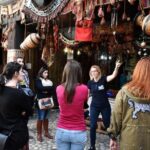
You’ll start at Muvekita 7 and head out with your guide, with a small group capped at 15 people. I found the stop-by-stop structure makes it easy to get your bearings fast, even if it’s your first time in Sarajevo. The route is short enough to stay lively, but it’s still a walking tour in central streets, so wear comfy shoes and expect some time standing outside before you enter places.
The highlight is how the tour shows Sarajevo as a practical crossroads, not just an abstract idea. You’ll hear why this city’s mix of cultures isn’t only about buildings—it’s also about how people lived together, traded, prayed, and argued. If there’s a drawback, it’s that you’ll cover a lot in a short window, so if you prefer slow museum time, you may want to pick one or two indoor stops to revisit later.
In This Review
- Key things you’ll notice on this tour
- What this Sarajevo walking tour does well (and for whom)
- Price and value: $24.08 for a 2-hour guided city story
- The walking route: your stop-by-stop Sarajevo map
- Sacred Hearth Cathedral: the first big faith marker
- Jewish Museum of Bosnia and Herzegovina: one community’s preserved story
- Sarajevo Meeting of Cultures: the city’s message in one stop
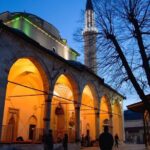
- Gazi Husrev-beg Mosque: central Islamic architecture and local meaning
- Old Sarajevo Clock Tower: time as a city landmark
- Morica Han: Sarajevo’s preserved old caravan spirit
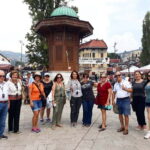
- Sebilj Brunnen (Fountain): Pigeon Square at the heart of things
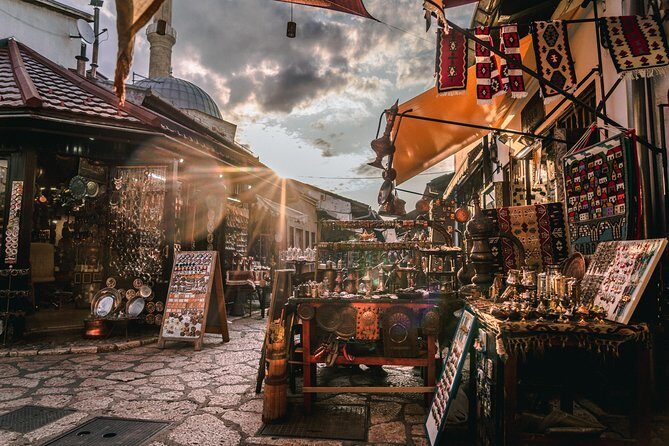
- Kazandžiluk: crafts and Bosnian coffee culture
- Bravadžiluk Street: where the tour points you for cevapi and burek
- Sarajevo City Hall: Austro-Hungarian architecture outside and inside
- Latin Bridge: the 1914 event that shook the world
- Serbian Orthodox Cathedral: faith landmark with an optional entry
- Pijaca Markale: the city market for practical, everyday Sarajevo
- Eternal Flame: WWII memory in plain stone and fire
- Guides make or break it: what you can expect from Adnan-style storytelling
- Timing, weather, and what to wear
- Entrance fees you should mentally budget for
- Food and coffee: how to turn the tour into a real day in Sarajevo
- Should you book Crossroads of Cultures in Sarajevo?
- FAQ
- How long is the Crossroads of Cultures Sarajevo Walking Tour?
- What does the tour cost?
- Is the tour offered in English?
- Do I get a mobile ticket?
- What attractions include admission, and which ones don’t?
- Where does the tour start?
- Is Sarajevo City Hall entrance included?
- What’s the group size limit?
- What if the weather is bad?
- Can I bring a service animal?
Key things you’ll notice on this tour
- A faith-and-culture route that moves from Sacred Heart Cathedral to Gazi Husrev-beg Mosque and on to the Orthodox cathedral area
- Included entries at several stops (cathedral, culture meeting site, Morica Han, and Sebilj fountain) so you get value without extra planning
- A guide with real local energy, and in past tours Adnan has been singled out for being helpful and smiling through the walk
- Crafts and coffee culture at Kazandžiluk, where you can learn how Bosnian coffee fits into daily life
- Food recommendations built into the walk, especially for cevapi and burek around Bravadžiluk Street
- A 1914 turning-point stop at Latin Bridge, connecting street corners to world history
What this Sarajevo walking tour does well (and for whom)
This tour is built for people who want the “big Sarajevo” without spending a whole day. You’ll move through 15 focused stops, and the guide ties each one to a bigger theme: how the city became a meeting place of East and West, and what different communities meant to Sarajevo over time.
I like that the pace is realistic. It’s only around 2 hours, and the itinerary is broken into short segments—most stops are about 5 to 10 minutes. That keeps you from getting tired or lost, especially in a place where street names and landmark names can be a little confusing at first.
It’s also a good match if you want a balanced view. The route doesn’t treat Sarajevo’s mix of cultures as a postcard. It treats it as lived geography: religious buildings, marketplaces, and street-level craft areas all sit side by side.
Who it fits best:
- First-time visitors who want a smart orientation
- Travelers who enjoy stories told on the street, not just through captions
- People who like architecture and city planning, not only museum collections
Who might want to reconsider:
- If you hate walking or you need long seated time, you may find the constant short moves a bit much (the tour says most people can participate, but this is still city walking)
- If you’re the type who wants deep indoor time, you’ll likely want to extend your day at the museum/buildings that cost extra
You can also read our reviews of more walking tours in Sarajevo
Price and value: $24.08 for a 2-hour guided city story
At about $24.08 per person for roughly 2 hours, the value comes from two places: the guide and the included stops. The tour includes your guide, and several of the landmark entries are explicitly included. That matters in Sarajevo because some of the “must-see” sites aren’t always free.
Also, group size is capped at 15. For a walking tour, that’s a sweet spot: small enough to ask questions and stay together, big enough that the experience doesn’t feel awkwardly quiet.
What’s not included is also part of the value calculation. You may pay extra if you want to go into the sites where admission is listed as not included (like the Jewish Museum of Bosnia and Herzegovina, Sarajevo City Hall, and the Serbian Orthodox Cathedral). If you’re mainly there for outdoor architecture and street views, you can still get a lot out of the walk without paying more.
The walking route: your stop-by-stop Sarajevo map
The tour starts in front of the Toureedoo office at Muvekita 7. You’ll meet your guide there, then you’ll walk the city center loop and return to the same meeting point at the end. Start time is 10:30 am, and the tour uses a mobile ticket.
Along the way, you’ll hit a stack of landmarks that “explain themselves” once someone connects the dots.
Sacred Hearth Cathedral: the first big faith marker
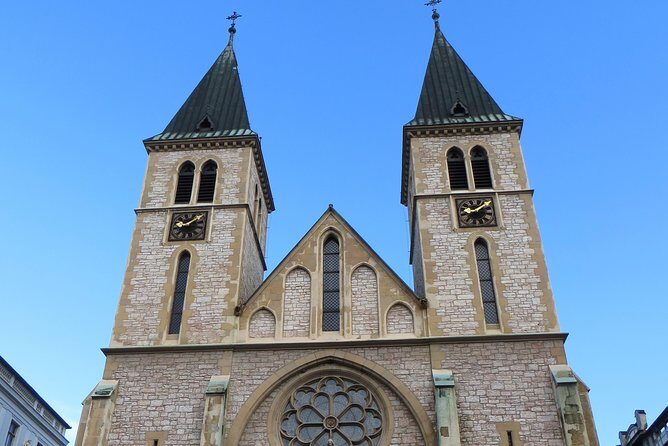
You begin with the Sacred Heart Cathedral (Katedrala Srca Isusova). The guide covers why it matters and what you should notice. Since entry is included here, you don’t have to decide on the spot whether it’s worth paying for.
Practical note: cathedrals usually reward a slower look. Use the indoor moment to study the details, because later stops move quickly.
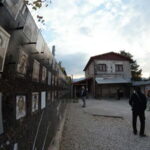
Jewish Museum of Bosnia and Herzegovina: one community’s preserved story
Next is the Jewish Museum of Bosnia and Herzegovina, tied to the first Jewish temple built in Sarajevo. Entry here is not included, so if you decide to go inside, budget for it.
Even if you skip the interior, the guide’s framing of the site helps you see the building as a cultural anchor, not just a standalone landmark. This stop adds depth to the “crossroads” idea by showing how faith life has been documented and preserved.


Sarajevo Meeting of Cultures: the city’s message in one stop
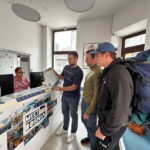
Then you’ll reach the Sarajevo Meeting of Cultures site. Entry is included, and it’s used to explain why Sarajevo is seen as a place where east meets west.
This is the kind of stop that can feel abstract if you wander alone. With a guide, it becomes a real, physical point in your route—something you can point to later when you’re trying to explain Sarajevo to someone else.
Gazi Husrev-beg Mosque: central Islamic architecture and local meaning
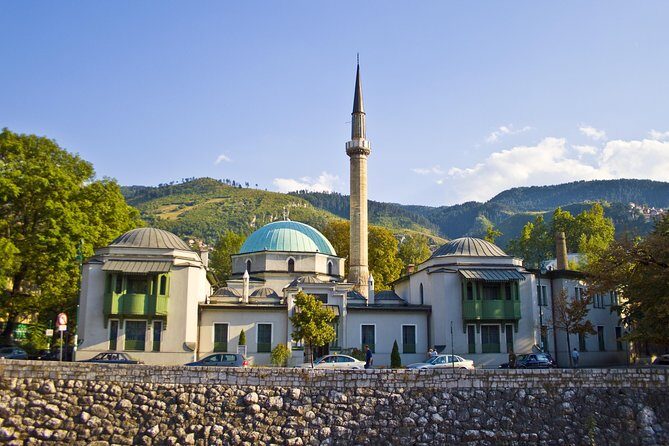
You’ll visit the Gazi Husrev-beg Mosque, the central mosque in Bosnia and Herzegovina. Entry is free on this stop. The guide’s job here is to help you interpret what you’re looking at—architecture, significance, and the mosque’s role in the city’s identity.
If you want a respectful visit: dress appropriately and move quietly. Even when entry is free, keep your focus on observing.
Old Sarajevo Clock Tower: time as a city landmark
The Old Sarajevo Clock Tower is a short stop but it works well as a “reset” in the route. The guide explains why the clock tower matters, and it becomes a reference point for the rest of what you’ll see—especially when you’re later comparing different historical layers across the city.
Morica Han: Sarajevo’s preserved old caravan spirit
At Morica Han, you’ll visit what the tour describes as the only preserved han (a kind of old lodging/caravan stop) in Sarajevo. Entry is included here.
This is one of those stops that feels more “alive” than a static building, because you can imagine merchants and travelers moving through. If you enjoy old urban trade spaces, don’t rush this one.
Sebilj Brunnen (Fountain): Pigeon Square at the heart of things
The iconic Sebilj Brunnen (often called the Pigeon Square) is next. Entry is included.
Even if you’ve seen photos, it hits differently in person because it’s surrounded by everyday city motion. This is also a great point for quick photo breaks without losing the tour thread.
Kazandžiluk: crafts and Bosnian coffee culture
In Kazandžiluk, the focus shifts to craft traditions and how Bosnian coffee fits the culture. Entry is free at this stop.
I like this part because it shifts from monuments to routines. A city’s identity isn’t only in cathedrals and bridges; it’s in what people make and drink.
Bravadžiluk Street: where the tour points you for cevapi and burek
Then you’ll walk through Bravadžiluk Street, where the guide recommends where to taste cevapi and burek.
This is useful because food streets can be confusing if you don’t know what’s good. The guide’s recommendations are a practical way to turn the history walk into a full Sarajevo day.
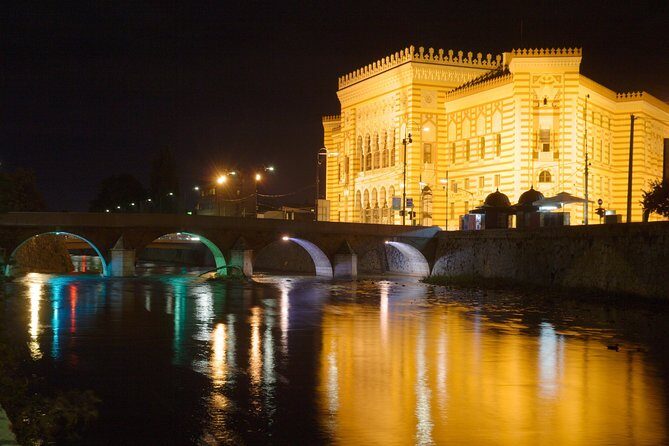
Sarajevo City Hall: Austro-Hungarian architecture outside and inside
You’ll see Sarajevo City Hall, described as one of the most beautiful buildings from the Austro-Hungarian period. Entry is not included.
Even if you don’t go inside, it’s a strong visual contrast within the route. If you do pay for entry, set expectations accordingly: the tour keeps moving, so you’ll want to use the time efficiently.
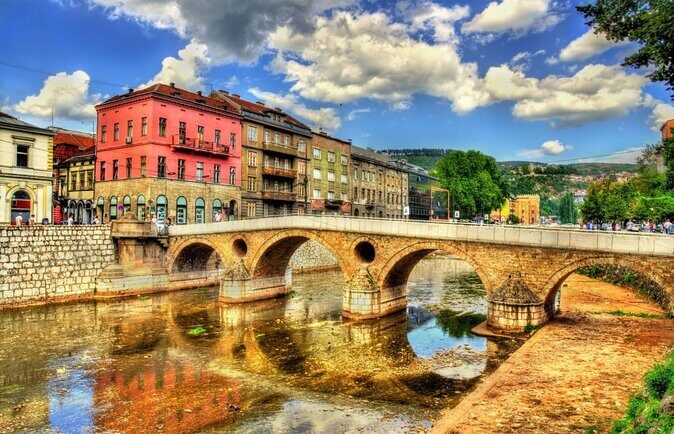
Latin Bridge: the 1914 event that shook the world
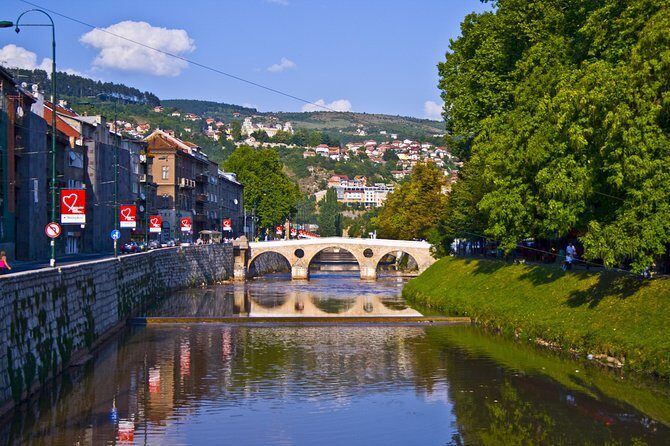
Next is Latin Bridge, connected to the Sarajevo Assassination 1914. You’ll spend about 20 minutes here, longer than most stops, because the guide has room to walk you through why this moment matters.
This stop is the emotional core for a lot of visitors—not because it’s heavy for the sake of heaviness, but because the location is real. You’re standing where history turned, not reading it from a page.
Serbian Orthodox Cathedral: faith landmark with an optional entry
Then you’ll pass the Serbian Orthodox Cathedral, with the guide sharing the story behind it. Entry is not included for this stop.
If you’re the type who likes to see inside major churches when possible, you’ll need to plan extra time and budget if you want to go in.
Pijaca Markale: the city market for practical, everyday Sarajevo
At Pijaca Markale, you’ll visit the city market area where people buy fruits, vegetables, and meat products. Entry is free.
This is a good “breather” stop. It brings the whole route back down to daily life: not politics, not monuments—just commerce and food.
Eternal Flame: WWII memory in plain stone and fire
Finally, you reach the Eternal Flame, a WWII fighters monument. Entry is free.
This stop works as a closing note because it ties Sarajevo to a wider European story and shows how public memory is kept in the open. It’s also a quiet ending spot for photos and reflection.
Guides make or break it: what you can expect from Adnan-style storytelling
The tour experience you’re buying is mostly the guide. In the feedback you can sense a pattern: the guide, Adnan, is repeatedly praised for being friendly, smiling, and helpful while explaining culture and history in a way that stays understandable.
If you’re the kind of traveler who likes to ask questions mid-walk, this setup is good. The route is short enough that the guide can respond without derailing the whole group.
Also, the atmosphere tends to feel personal rather than scripted. One theme that shows up is that coffee and local warmth sometimes appear before the tour starts, including Bosnian coffee. Don’t count on it as a guarantee every day, but it fits the human, local style people describe.
Timing, weather, and what to wear
The tour runs about 2 hours, starting at 10:30 am. It’s designed to fit into a day without stealing your whole afternoon.
The experience requires good weather. That matters in Sarajevo because you’ll spend a lot of time moving between outdoor landmarks and waiting briefly at each stop. If it’s raining, bring a light rain layer and a small umbrella or waterproof shoes.
What to wear:
- Comfortable walking shoes (you’ll be on your feet for the whole loop)
- Layers (mornings can feel cooler, and you’ll be outside most of the time)
- Respectful clothing if you plan to go inside religious sites
Entrance fees you should mentally budget for
Some stops include entry, and some do not. The ones called out as not included are:
- Jewish Museum of Bosnia and Herzegovina
- Sarajevo City Hall
- Serbian Orthodox Cathedral
If you want the full “inside” experience at those, you’ll likely need extra spending. If your goal is the guided story and the exterior architecture, you can still do the tour while keeping your budget under control.
Food and coffee: how to turn the tour into a real day in Sarajevo
A good walking tour shouldn’t leave you stuck wondering where to eat. Here, the guide points you toward the classics:
- Cevapi and burek recommendations around Bravadžiluk Street
- Bosnian coffee culture at Kazandžiluk
I’d treat this as your built-in permission to stop for a meal afterward without overthinking it. Use the walk to learn what to order, then follow your guide’s suggestions when hunger hits.
Should you book Crossroads of Cultures in Sarajevo?
Book it if you want:
- A tight, guided introduction to Sarajevo’s faith mix, city layers, and major landmarks in about 2 hours
- Included access at several key stops so you get good value for the money
- A friendly local guide experience, with Adnan specifically mentioned for helpful, clear explanations
Skip or adjust if:
- You need lots of museum time. The walk is efficient, not slow.
- You’re allergic to walking. Even with short stops, it’s still a continuous city walk.
If you’re visiting Sarajevo for the first time and you want a smart route that connects the dots between cultures, this is the kind of tour that makes the rest of your day easier—because now the streets actually mean something.
FAQ
How long is the Crossroads of Cultures Sarajevo Walking Tour?
It’s approximately 2 hours.
What does the tour cost?
The price is $24.08 per person.
Is the tour offered in English?
Yes, it’s offered in English.
Do I get a mobile ticket?
Yes, the tour uses a mobile ticket.
What attractions include admission, and which ones don’t?
Admission is included for some stops such as the Sacred Hearth Cathedral, Sarajevo Meeting of Culture, Morica Han, and Sebilj fountain. Admission is not included for the Jewish Museum of Bosnia and Herzegovina, Sarajevo City Hall, and the Serbian Orthodox Cathedral.
Where does the tour start?
The meeting point is Muvekita 7, Sarajevo 71000, Bosnia and Herzegovina.
Is Sarajevo City Hall entrance included?
No, entrance to Sarajevo City Hall is not included.
What’s the group size limit?
The tour has a maximum of 15 travelers.
What if the weather is bad?
This experience requires good weather. If it’s canceled due to poor weather, you’ll be offered a different date or a full refund.
Can I bring a service animal?
Yes, service animals are allowed.
You Might Also Enjoy

More Walking Tours in Sarajevo
More Tours in Sarajevo
- Fall of Yugoslavia, Sarajevo War Tour with Tunnel of Hope Museum and Frontlines
★ 5.0 · 1,314 reviews

More Tour Reviews in Sarajevo
- Fall of Yugoslavia, Sarajevo War Tour with Tunnel of Hope Museum and Frontlines
★ 5.0 · 1,314 reviews