REVIEW · SARAJEVO
Sarajevo: Grand Walking Tour Through Time and Cultures
Book on GetYourGuide →Operated by Sarajevo Insider City Tours & Excursions · Bookable on GetYourGuide
Sarajevo history is a walk you can feel. This 3-hour route threads Ottoman and Austro-Hungarian influences into real street scenes, with major stops like the Latin Bridge and Baščaršija Old Town. You also get the city’s modern multicultural story, told through landmarks that sit a few minutes apart.
I like two things a lot: first, the way the tour pairs big European moments (yes, the Franz Ferdinand assassination) with everyday places like craft streets and market lanes. Second, the guides bring the city to life with clear explanations and lots of time for questions, and I saw that with guides named Kenan, Elma, Bojan, and Elga in recent tour experiences.
One thing to consider: it’s a walking tour on uneven, historic streets. Even though it’s listed as wheelchair accessible, it’s also marked as not suitable for mobility impairments, so if walking is a problem for you, double-check before booking and plan on comfortable shoes and real stamina.
In This Review
- Key things I’d circle before you book
- A 3-hour Sarajevo loop that connects East and West fast
- Before you go: shoes, timing, and the food reality
- Latin Bridge: the World War I start point, explained at street level
- Emperor’s Mosque and monastery: religion you can actually point to
- Sarajevo Brewery, City Hall, and the House of Spite: architecture with opinions
- Bravadžiluk and Kazandžiluk: where Sarajevo’s craft culture shows up
- Sebilj Fountain and Baščaršija: your fast orientation to the Old Town
- Baklava ducan, Gazi Husrev-beg Mosque, and the city’s daily pauses
- Sarajevo Meeting of Cultures and the Museum of the Jews of Bosnia
- Sacred Heart Cathedral and the Nativity of the Theotokos: churches you can actually compare
- City Market Hall and the Eternal Flame: modern memory in the center
- Price and logistics: why $21 can be good value
- Who this tour is best for (and who should pass)
- Should you book this Sarajevo walking tour?
- FAQ
- How long is the Sarajevo Grand Walking Tour Through Time and Cultures?
- How much does the tour cost?
- What’s included in the price?
- Are food and drinks included?
- What languages is the live guide available in?
- Is the tour wheelchair accessible?
- Can I get a full refund if my plans change?
Key things I’d circle before you book
- Latin Bridge and the Franz Ferdinand story explained in street-level context
- Baščaršija + Sebilj Fountain as your quick orientation to the Old Town
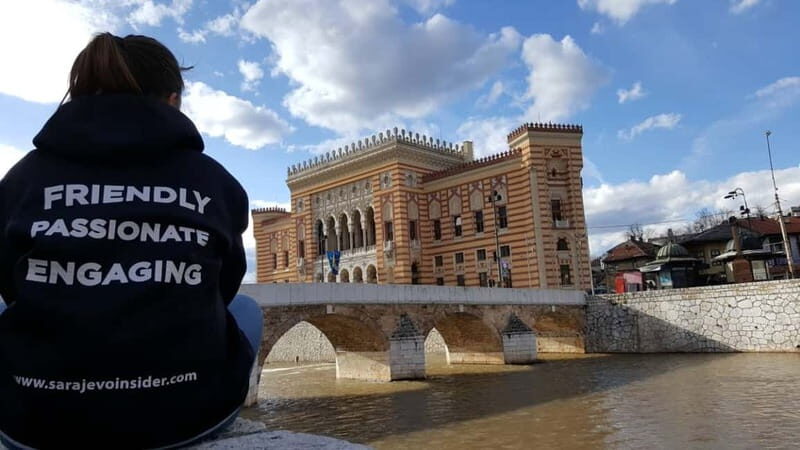
- Neo-Moorish City Hall and other architecture that shows the city’s layers
- Craft lanes like Bravadžiluk and Kazandžiluk for a hands-on feel of local trade
- Faiths side by side at mosques, synagogues, and churches
- A short, practical format: 3 hours, licensed guide, and a city map included
A 3-hour Sarajevo loop that connects East and West fast
Sarajevo works best when you see it on foot. This tour is built for first-timers who want context without spending a whole day crisscrossing the city.
At $21 per person for a 3-hour guided walk, you’re not paying for a long bus ride or a bunch of stops that feel random. You’re paying for someone to connect the dots: Ottoman-era streets, Austro-Hungarian architecture, and the city’s later Yugoslav and modern chapters—right where you’re standing.
The pace is also one reason this format works. You move between photo stops and guided walking stretches, so you’re not stuck listening the whole time. It’s the kind of outing that helps you get your bearings fast before you decide what to do next.
You can also read our reviews of more walking tours in Sarajevo
Before you go: shoes, timing, and the food reality
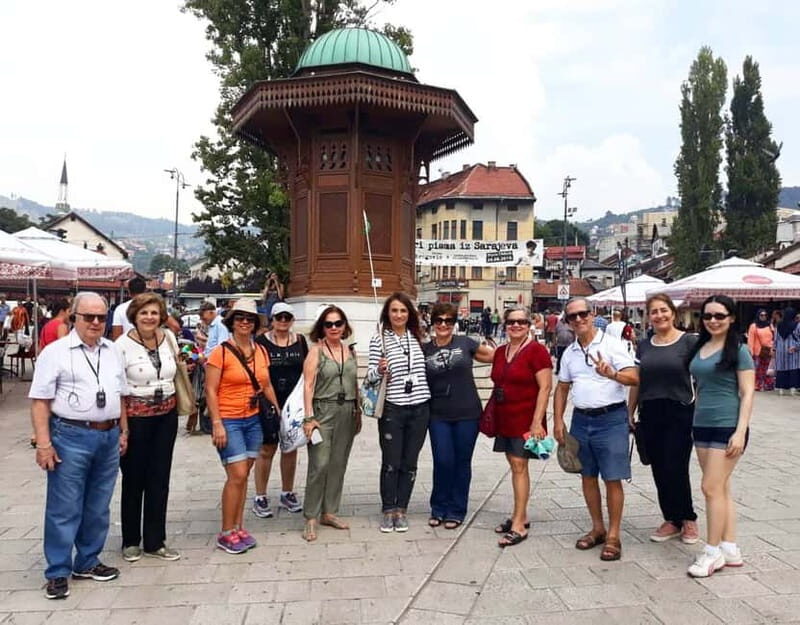
Bring comfortable shoes and comfortable clothes. The route is mostly walking, and you’ll want footwear that can handle historic paving and short climbs.
Food and drinks aren’t included. That matters because the tour does hit places associated with snacks and local eating (like the baklava stop), but you’ll need to buy anything you want on your own. The good part: you’ll see exactly where the city’s food culture lives, so your later meal choices feel smart instead of guessy.
Meeting point details can vary by option. One starting point listed is near UPN BiH (Insider City Tours and Excursions), but the exact spot may shift depending on what you booked—so I’d check your confirmation the day before and arrive a bit early.
Latin Bridge: the World War I start point, explained at street level
You begin with a stop at the Latin Bridge, with a photo break plus guided time on-site. This is the centerpiece for anyone visiting Sarajevo for the World War I connection, because it’s tied to the assassination of Archduke Franz Ferdinand.
What you’ll like here is how the guide uses the physical setting to make the story make sense. Instead of reciting dates from a book, you watch how a single moment can ripple far beyond one city. Guides also tend to connect this moment to Sarajevo’s long role as a meeting point between East and West, which prevents the tour from feeling like a one-issue visit.
If you’re the type who only has a short window in Sarajevo, this stop alone makes the walk feel efficient. You’re standing at the place, hearing the why, and then you’re already moving on to the rest of the city’s layers.
Emperor’s Mosque and monastery: religion you can actually point to
After the Latin Bridge, the tour moves to Emperor’s Mosque for a photo stop and guided walk time. It’s one of those landmarks that instantly tells you you’re in a city where religion and culture shaped the urban form.
Next comes a monastery stop (photo plus short guided time). Even without a long sit-down explanation, this kind of pacing helps you learn the city’s map of belief—where religious spaces sit in the story of Sarajevo’s streets.
The larger point is how the tour frames coexistence. Sarajevo is presented as a place where different communities have lived side by side, and you can feel that theme as you bounce between landmarks tied to different traditions.
Sarajevo Brewery, City Hall, and the House of Spite: architecture with opinions
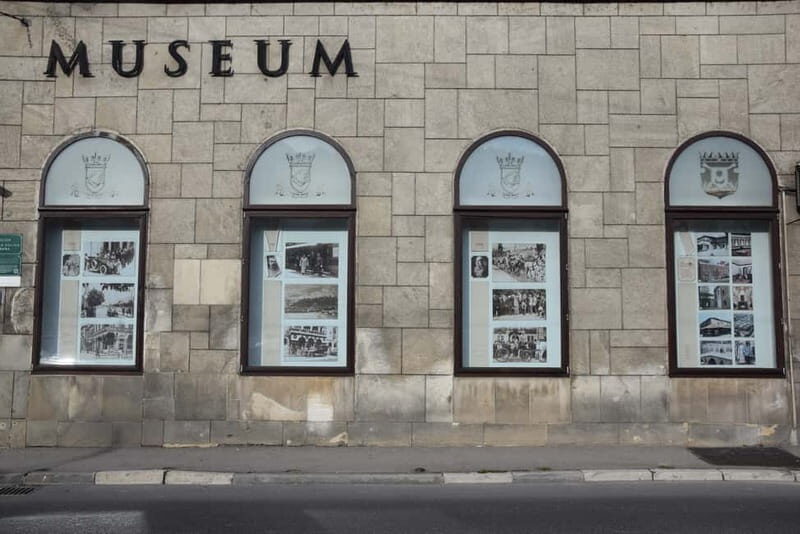
A quick photo and guided stop at Sarajevo Brewery comes early, and it adds a small dose of the city’s everyday life. Not every historic tour gives you this balance; you don’t want all your time stuck in monuments.
Then you hit Sarajevo City Hall, which the highlights describe as neo-Moorish in character. Seeing that style in Sarajevo helps you understand the city’s Austro-Hungarian-era influence without turning the tour into an architecture lecture.
From there, you pass by the House of Spite. The name alone gets people curious, and the guide’s job here is to explain the local story behind it—so you leave with more than a photo.
You also get a View point stop (about 15 minutes), where you can pause and take in the area. This is a smart part of the route because it gives your legs and your brain a break before you move into the market and craft lanes.


Bravadžiluk and Kazandžiluk: where Sarajevo’s craft culture shows up
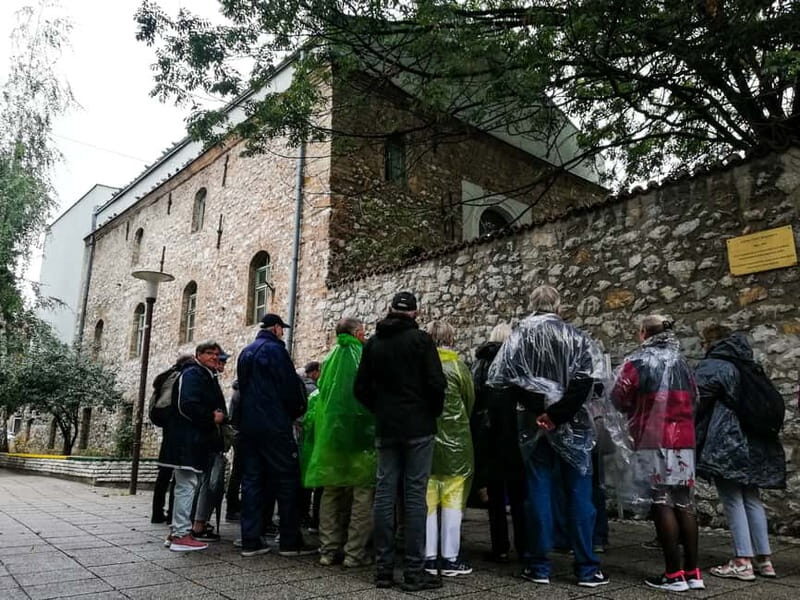
Now the tour shifts into the kind of Sarajevo you can shop with your eyes. Stops include Bravadžiluk and Kazandžiluk, each with photo time plus guided exploration.
These streets are tied to traditional crafts and local trade culture. What makes them valuable on a guided tour is context: you learn what you’re looking at and why those crafts mattered to the city’s identity. You’re not just walking through shops—you’re learning the logic behind the layout of the Old Town.
A stop at Morića Han follows, again with photo and guided time. You’ll feel the rhythm of the area change here, like you’ve stepped into a different slice of Old Town life—one that’s still built around movement, meeting, and commerce.
Sebilj Fountain and Baščaršija: your fast orientation to the Old Town
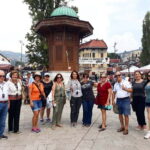
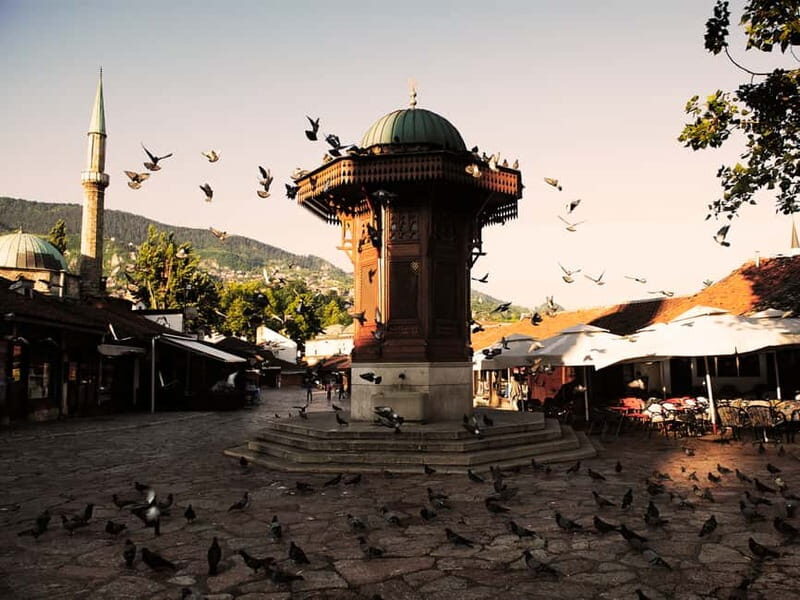
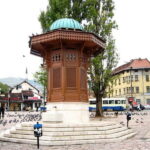
The tour returns to one of Sarajevo’s most famous symbols: Sebilj. It’s a photo stop with guided time, right in the heart of Baščaršija.
Sebilj is more than a landmark for photos. It’s a useful anchor point for understanding how the Old Town works: streets funnel into plazas, and stories attach themselves to corners, fountains, and crossings.
The guide also uses this section to talk about legends and stories tied to iconic sites. That’s one of the tour’s strengths, because it blends factual context with the kind of local narrative that helps you remember what you saw.
After Sebilj, you continue through Old Town stops that keep the focus on Sarajevo’s cultural mix. This is where the tour’s theme—East meeting West—starts to feel personal, because you’re surrounded by places that show how different communities shaped the same city.
Baklava ducan, Gazi Husrev-beg Mosque, and the city’s daily pauses
Next comes Baklava ducan Sarajevo for a photo and guided visit. Since food and drinks aren’t included, think of this stop as a cultural checkpoint. You’ll learn what to look for and where the local sweets fit into the Old Town experience.
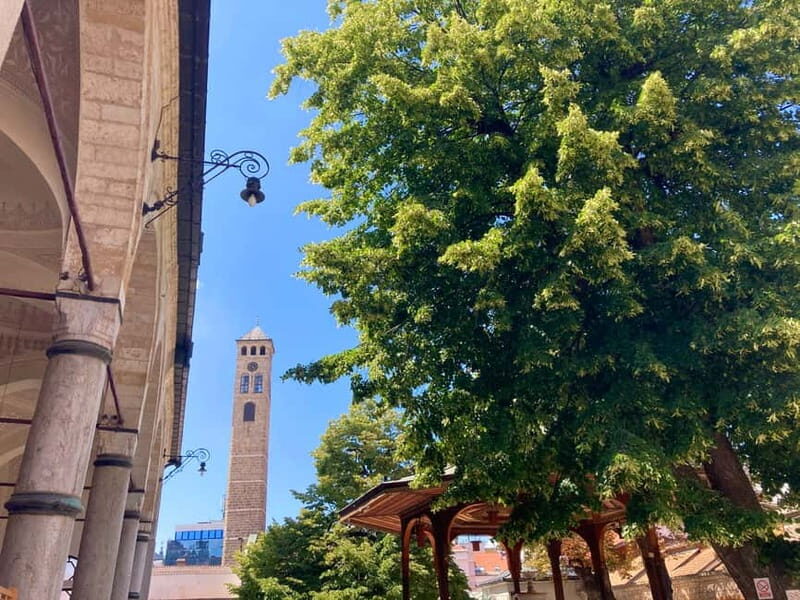
Then the tour heads to Gazi Husrev-beg Mosque for photo time and guided walking. Mosque stops matter here because they make the city’s religious diversity visible as part of the streetscape, not as a separate box on your itinerary.
In other words: you’re not just collecting sights; you’re building a picture of how Sarajevo’s communities lived close together. That’s the point of the tour’s later stops too.
Sarajevo Meeting of Cultures and the Museum of the Jews of Bosnia
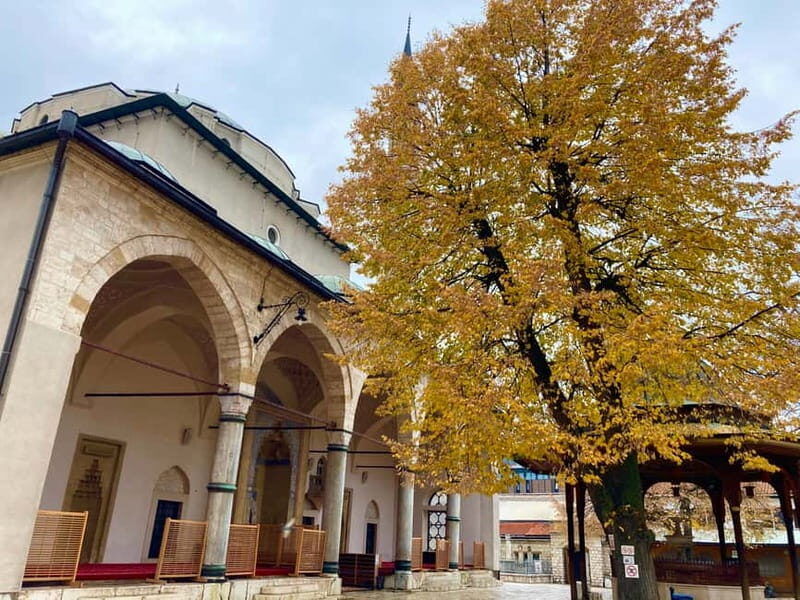
You’ll spend guided time at Sarajevo Meeting of Cultures, again with photo stop and walking. This part reinforces the tour’s core message: Sarajevo has been a crossroads for centuries.
Then there’s the Museum of the Jews of Bosnia and Herzegovina. This stop adds depth to the multicultural theme by giving it historical grounding.
What I appreciated in recent tour experiences is how guides handle complex topics with care. People reported that the explanations felt factual and balanced, even when the subject matter touches on difficult periods. That’s important in Sarajevo, because emotions and history can overlap quickly if you’re not guided well.
Sacred Heart Cathedral and the Nativity of the Theotokos: churches you can actually compare
After the museum, you visit Sacred Heart Cathedral, Sarajevo, followed by the Cathedral Church of the Nativity of the Theotokos. Both include photo and guided walking time.
These stops aren’t just checkboxes. When you visit them back to back with mosque and museum time, you start to see the city’s faith map more clearly. It becomes easier to understand why Sarajevo’s identity is tied to coexistence, not separation.
Also, guides often explain how different eras influenced architecture and urban design across the same central area. Even if you don’t call yourself an architecture person, you’ll probably notice patterns once the guide points them out.
City Market Hall and the Eternal Flame: modern memory in the center
The tour ends with the heart-of-town stops at City Market Hall, Sarajevo, then Eternal Flame for photo and guided time.
City Market Hall is a good finale because it ties together everything you’ve learned about trade and everyday city life. After seeing mosques, churches, and historic buildings, you get a sense of what people do now—how Sarajevo still lives in its central spaces.
The Eternal Flame stop brings in modern memory. Even when you don’t have every detail in your head beforehand, a guided visit helps you place it within the city’s broader story.
When the walk finishes, you’ll likely feel like Sarajevo isn’t just a set of photos. It’s one story told through buildings, streets, and community spaces—still moving today.
Price and logistics: why $21 can be good value
Let’s talk value plainly. For $21 and 3 hours, you get a licensed tour guide plus a city map. The big value isn’t the map—it’s the guide’s ability to connect the key landmarks into a coherent timeline you can remember.
You’re also not stuck with a giant crowd. The tour offers private or small groups, and in one recent experience, a booking ended up being a private tour because only one person signed up. That kind of group size difference matters: you get more conversation and more room for questions.
Guides also stand out for pacing. In recent tour experiences, people repeatedly praised guides for balancing serious events with warm local storytelling and a sense of humor. Names that came up included Kenan, Elma, Bojan, Hannah, Hamza, Tarek, Maryam, Suad, and Elga—so if you see a guide listed in your booking, it can be worth noting.
Who this tour is best for (and who should pass)
This is a strong pick if you’re visiting Sarajevo for the first time and want a “greatest hits” route that still feels meaningful. It’s especially good for:
- history and culture lovers who want key events explained in context
- solo travelers or small groups who like asking questions
- anyone who wants a clear Old Town orientation before choosing museums or neighborhoods later
It may not suit you if:
- walking is hard for you (the tour is marked both as wheelchair accessible and as not suitable for mobility impairments, so check your personal needs carefully)
- you want zero walking and zero uneven ground
Quick tip: wear shoes that you trust. You’re covering a lot of central Sarajevo on foot, and comfortable footwear is the difference between a great day and a sore one.
Should you book this Sarajevo walking tour?
I’d book it if you want an efficient way to understand Sarajevo’s layered identity—Ottoman, Austro-Hungarian, and modern—without feeling lost. The Latin Bridge, Baščaršija, Sebilj, City Hall, and the mix of mosques, churches, and the Museum of the Jews of Bosnia give you a solid mental map in just 3 hours.
If you’re the kind of traveler who learns best by seeing and asking questions, this format fits you well. If you’re mobility-limited or hate uneven paving, contact the provider first and don’t gamble on your comfort.
FAQ
How long is the Sarajevo Grand Walking Tour Through Time and Cultures?
It lasts 3 hours.
How much does the tour cost?
The price is $21 per person.
What’s included in the price?
A licensed tour guide and a city map are included.
Are food and drinks included?
No. Food and drinks are not included.
What languages is the live guide available in?
The guide is listed as available in German, French, Italian, Spanish, English, Croatian, and Serbian (depending on the booking).
Is the tour wheelchair accessible?
The activity info lists wheelchair accessible, but it also states it is not suitable for people with mobility impairments. If you have mobility needs, check with the provider before booking.
Can I get a full refund if my plans change?
Yes. You can cancel up to 24 hours in advance for a full refund.
You Might Also Enjoy
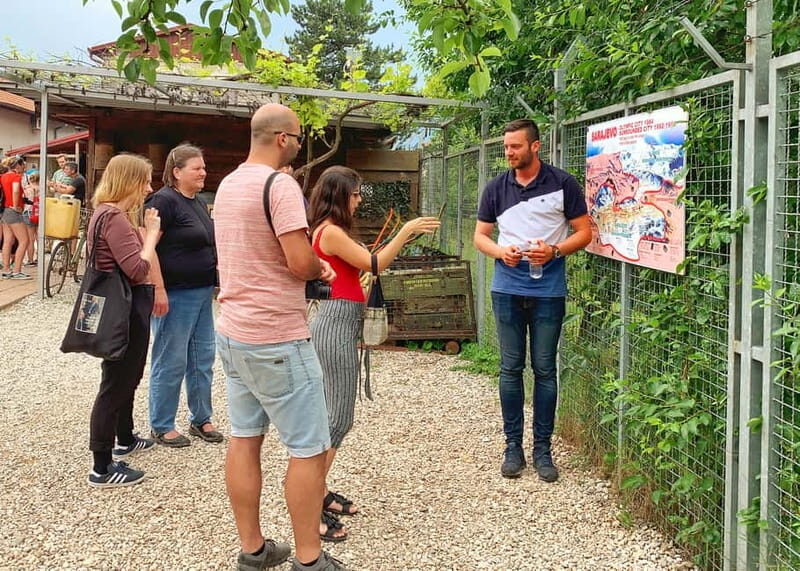
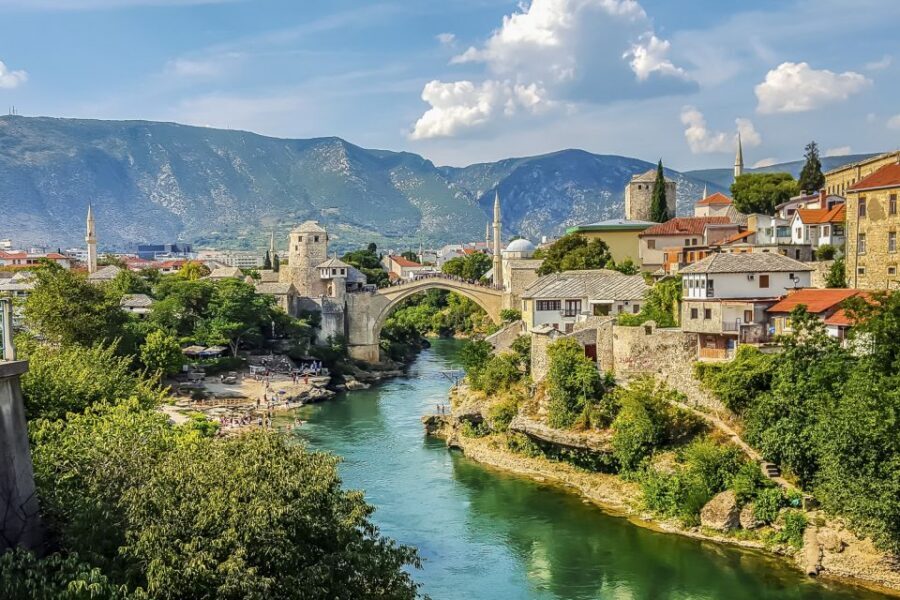
More Walking Tours in Sarajevo
More Tours in Sarajevo
- Fall of Yugoslavia, Sarajevo War Tour with Tunnel of Hope Museum and Frontlines
★ 5.0 · 1,314 reviews

More Tour Reviews in Sarajevo
- Fall of Yugoslavia, Sarajevo War Tour with Tunnel of Hope Museum and Frontlines
★ 5.0 · 1,314 reviews