REVIEW · SARAJEVO
Fall of Yugoslavia, Sarajevo War Tour with Tunnel of Hope Museum and Frontlines
Book on Viator →Operated by Meet Bosnia Travel · Bookable on Viator
Siege stories play out in real streets. This 4-hour Sarajevo tour connects the Tunnel of Hope and Sniper Alley with Olympic-era landmarks and the big panoramic payoffs from Trebević. You’ll move between stops by air-conditioned vehicle while your guide keeps the timeline of the siege clear and human.
I especially like two things. Walking the logic of the War Tunnel feels concrete, not abstract, when you learn it was Sarajevo’s only link to the outside world during the four-year siege. And I love the ending stretch on Trebević: free time for the bobsleigh and luge track plus viewpoints where the city’s geography finally makes sense.
One practical drawback to plan for: the Tunnel of Hope museum ticket is not included in the tour price.
In This Review
- Key highlights to look for
- Quick orientation: a 4-hour siege timeline you can actually follow
- Yellow Fortress panorama and the defenders’ cemetery view
- Olympic Complex drive-by: Holiday Inn memories, children’s hospital, and stadium cemetery
- Sarajevo War Tunnel (Tunnel of Hope): what 800 meters really means
- Passing Sniper Alley and Gavrilo Princip: war geography in plain sight
- Trebević Vidikovac: the viewpoint that reorders everything
- Bobsleigh and luge track stop: Olympic-era space during wartime memory
- Guides and small-group energy: why the storytelling lands
- What you’ll learn about the fall of Yugoslavia and the siege
- Price and value: what $36.28 covers, and what you should budget
- Who this tour suits best (and who should be careful)
- Should you book this Sarajevo War Tunnel and frontlines tour?
- FAQ
- How long is the Sarajevo War Tour with Tunnel of Hope and frontlines?
- What’s included in the tour price?
- Is the Tunnel of Hope museum ticket included?
- Where does the tour start and where does it end?
- Is the tour offered in English?
- How big are the groups?
- Is free cancellation available?
Key highlights to look for
- Tunnel of Hope as Sarajevo’s lifeline on a route that mattered for 4 years
- Sniper Alley passed in a way that explains why everyday life became dangerous
- Yellow Fortress panorama plus the defenders’ cemetery view that puts the siege in context
- Olympic Complex stops that connect 1984 sports venues with 1990s survival
- Trebević viewpoints that give you scale, elevation, and perspective
- Bobsleigh and luge track time paired with a cable-car-friendly finish area
Quick orientation: a 4-hour siege timeline you can actually follow
This tour is built for people who want context without feeling buried in facts. You get hotel pick-up, bottled water, and a comfortable ride between key sites, so you’re spending your energy on seeing and understanding rather than logistics.
The pace is also designed to keep you oriented. You start with a high viewpoint that frames the entire city, then move into the places where the siege became physical: the tunnel, the streets, and the edges where forces could see and target. The last stops on Trebević shift the mood back toward landscape and distance, which is exactly what you want after heavy material.
If you’re traveling in English, that helps a lot. The tour is offered in English, and you’ll get time to ask questions as the guide connects the dots from the fall of Yugoslavia to the siege of Sarajevo and the aftereffects that shaped the city.
You can also read our reviews of more museum experiences in Sarajevo
- Fall of Yugoslavia, Sarajevo War Tour with Tunnel of Hope Museum and Frontlines
★ 5.0 · 1,314 reviews

Yellow Fortress panorama and the defenders’ cemetery view
The day begins at the Yellow Fortress, which is basically made for orientation. From here you can take in a sweeping perspective of Sarajevo as your guide sets the stage for what the siege meant on the ground. You’ll also see the defenders’ cemetery in the distance, which turns the view from pretty to purposeful.
This is one of the best openings you can ask for in Sarajevo. Instead of jumping straight to grim sites, you get a mental map first: where the city sits, what’s higher, and why certain places mattered. When you later hear about movements, supply, and targeting, you’re not guessing at scale anymore.
You spend about 25 minutes here, and that time is enough. It gives you the big-picture view, then lets the guide move you along before you start mentally repeating the same sights.
Olympic Complex drive-by: Holiday Inn memories, children’s hospital, and stadium cemetery
After the fortress, you’ll ride around the Olympic complex area. This is not sports nostalgia. It’s Sarajevo’s habit of reusing major infrastructure under totally different rules, and the contrast lands hard.
Expect to pass the destroyed children’s hospital and the grave connected to Sarajevo’s Romeo and Juliet story. You’ll also see the stadium cemetery area as part of this sweep. Even from a car, it’s effective because the guide explains how these sites sit inside the broader siege geography.
One detail I liked here is the way the tour treats the former Hotel Holiday Inn as a real wartime landmark. It was a main location for journalists and visiting UN peacekeepers during the siege. That turns the site into something you can picture in your head: press, international attention, and the reality of living inside a besieged city.
The Olympic Stadium area and cemetery stops also help you understand something important about Sarajevo after 1992. Memorial spaces don’t sit “somewhere else.” They’re mixed into the city’s daily geography, so you keep seeing them as you move.
Sarajevo War Tunnel (Tunnel of Hope): what 800 meters really means
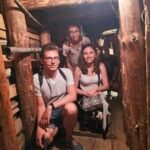
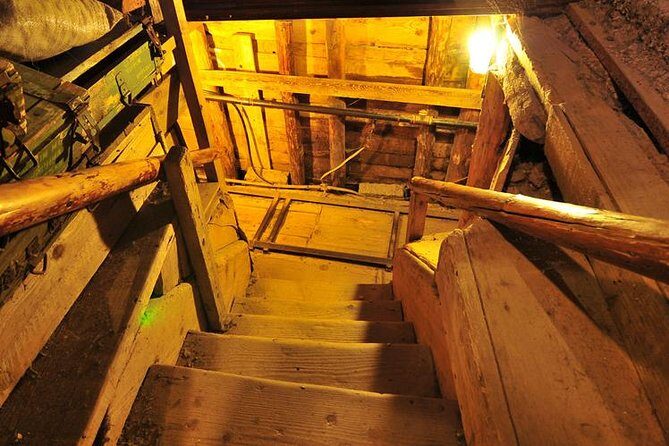
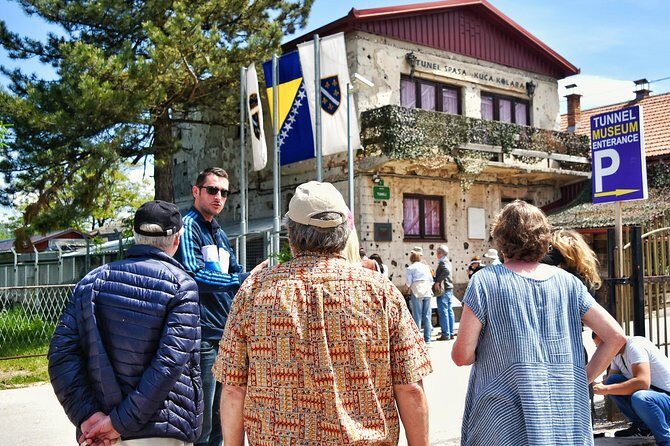
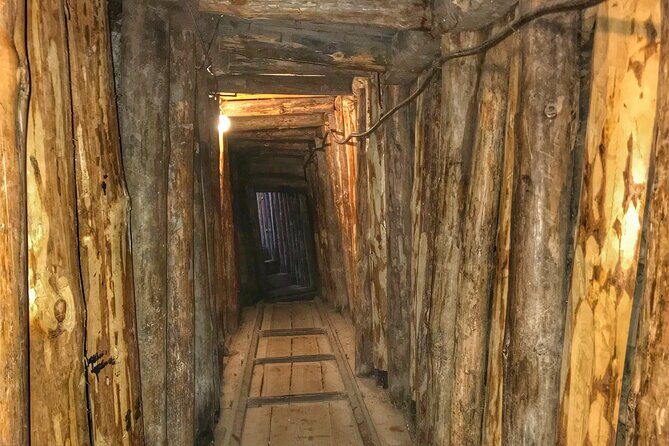
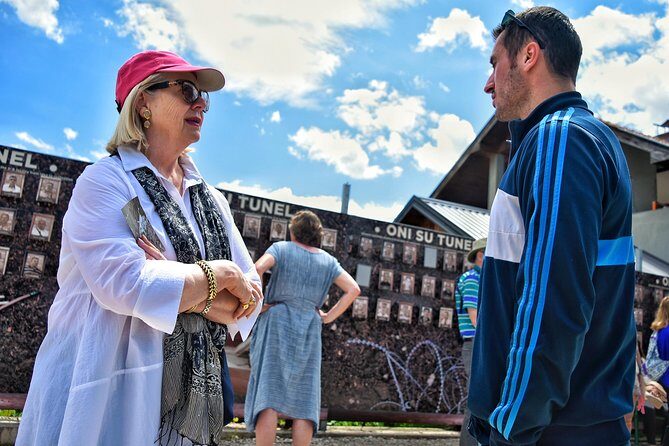
The core of the tour is the Sarajevo War Tunnel. It served as the only entrance to the city during the four-year siege, and it ran about 800 meters. Today it operates as a museum, which means you’ll get more than a photo stop. You’ll walk through the story in a way that sticks.
You’ll spend about 1 hour here, and admission is not included. Adult entry is 15 BAM, and students with ID are 5 BAM. This extra cost is worth planning for because the tunnel is the one stop that turns the siege from a headline into a physical route you can picture and measure.
Here’s what you should watch for while you’re inside. Focus on how a “connection” can become survival infrastructure. A tunnel sounds like a technical feature, but the emotional weight comes from the purpose: it was the only connection Sarajevo had with the outside world for years.
Also, since the museum time is timed into a 4-hour day, you’ll feel better if you don’t overpack the tunnel with extra questions that could eat the whole slot. Save your best questions for after the museum, when your guide can connect it to the other street-level sites.
Passing Sniper Alley and Gavrilo Princip: war geography in plain sight
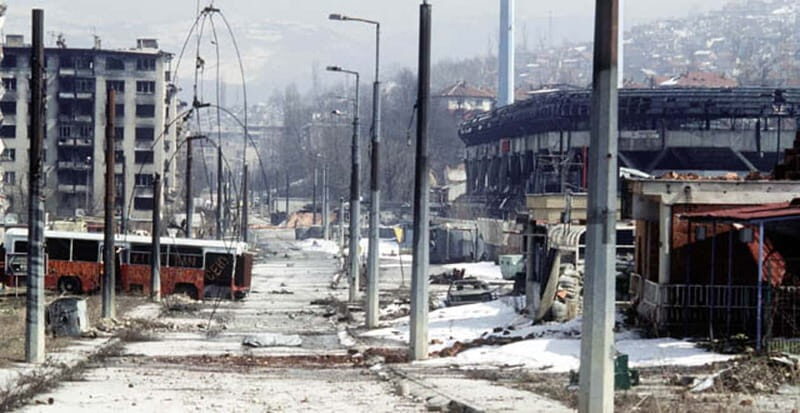
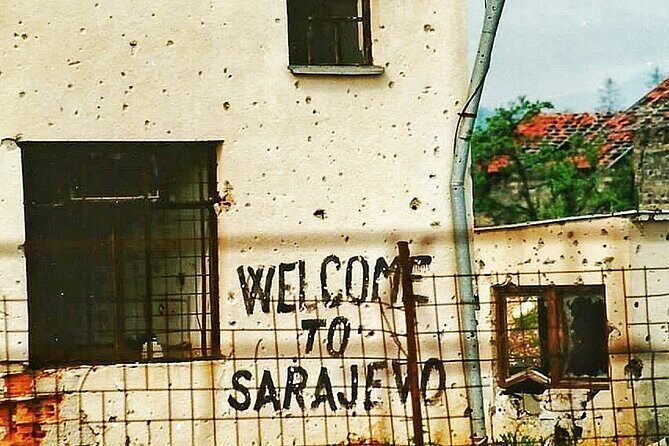
After the tunnel, the tour moves into the kind of place where “danger” stops being a concept and becomes a street-level reality. You’ll pass through Sniper Alley, a street known for being targeted by snipers every day. The drive-by route also shows how buildings from the Yugoslav period were affected by the war.
This part matters because it explains how siege logic works across distance. Snipers weren’t just random violence. They were part of how the conflict controlled movement, visibility, and daily routines. Seeing the street layout helps you understand why certain directions felt unsafe for civilians.
You’ll also pass the chapel connected to Gavrilo Princip, the person who assassinated Archduke Franz Ferdinand. That’s not just a history detour. It’s a reminder that Sarajevo has been a hinge-point in European events for generations, and the 1990s story has deeper roots in the region’s political fault lines.
A small practical note: because this section is mostly about passing key points, it rewards paying attention while you’re seated. Listen for how your guide points out the relationship between where you are now and what forces could see then.

Trebević Vidikovac: the viewpoint that reorders everything
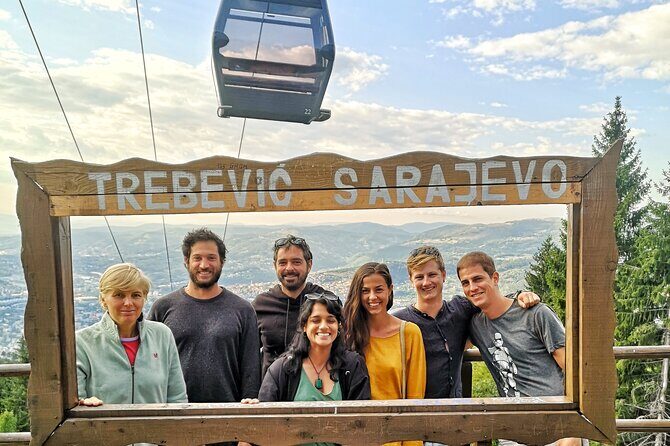
Next comes Trebević Vidikovac, where you get one of the most valuable resets of the day. You’ll get about 15 minutes at a panoramic point on Trebević Mountain with a view of Sarajevo that helps the earlier stops click into place.
After the tunnel and Sniper Alley, you may feel like you’ve been living inside the siege. The viewpoint changes that. It gives you distance and scale, so you can understand why certain targets were reachable or why certain parts of the city had different levels of exposure.
If you only take one thing from the whole experience, make it this: the city makes more sense from above. Even if you never visit these places on your own later, you’ll remember the shape of Sarajevo when you read the rest of your trip’s history.
Bobsleigh and luge track stop: Olympic-era space during wartime memory
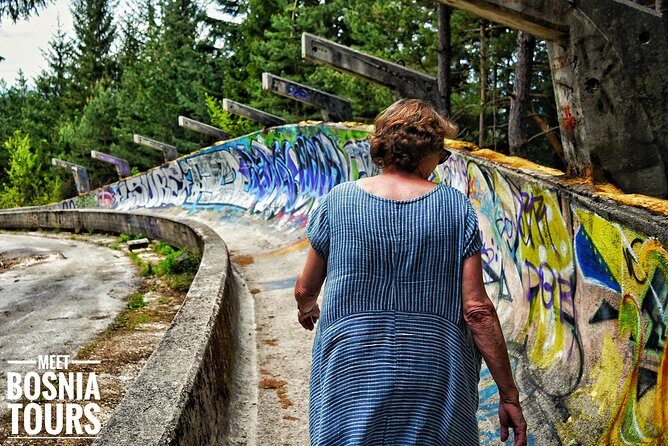
The tour finishes on Trebević’s Olympic Bobsleigh and Luge Track. You’ll have about 20 minutes here, and it’s listed as free for the tour. This is a major attraction from the 1984 Winter Olympics, and it’s a perfect example of how Sarajevo reused venues across decades.
What makes this stop more than a quick look is the wartime context your guide ties to the area. You may hear again about the Hotel Holiday Inn as a center for journalists and UN peacekeepers during the siege, reinforcing how international attention intersected with the frontlines.
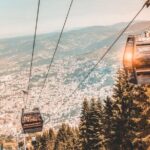
Some people like to pair this with the ride back down by cable car if time and conditions allow. The key idea is simple: after learning siege geography, you get a fun, scenic transport moment that balances the day without erasing what you saw.
Just give yourself a realistic mindset for this ending. It’s not a party stop. It’s a viewpoint-and-venue moment that helps you feel the city’s scale, then get back down with fresh legs.
Guides and small-group energy: why the storytelling lands

A big part of why this tour earns strong ratings is the human delivery. The guides are often praised for pacing and for making room for questions, which is crucial with a subject as sensitive and complex as the fall of Yugoslavia and the siege of Sarajevo.
You’ll hear guide names like Ayoub, Tarik, Ago, Emin, Ejub, Kristian, Zahmet, and Almir tied to memorable storytelling. One reason these guides get singled out is how they bring the past into focus without rushing you. Ayoub is noted for a pitch-perfect pace and for creating space to digest difficult material. Tarik is mentioned for personal, family-linked war context. Ago and others are praised for clear explanations and a comfortable flow between stops.
Another detail I like from this kind of tour setup is that it tends to avoid the squeeze feel. Even with a max group size of up to 50 travelers, the structure is designed around car time plus short, focused walking moments where the guide can keep everyone oriented.
If you’re the type who asks questions mid-sentence, you’ll probably enjoy this format. The best moments come when your guide connects a physical location to a cause, a consequence, and what changed afterward.
What you’ll learn about the fall of Yugoslavia and the siege
This tour is not just about what happened in 1992–1995. It helps you understand why it happened in the first place. That matters, because Sarajevo’s siege is often treated as a standalone event, when in reality it’s part of a wider breakup process and a chain of political decisions.
You’ll come away with a clearer sense of:
- Why Sarajevo became isolated, and how the tunnel functioned as the only connection.
- How the conflict controlled movement, illustrated by Sniper Alley and targeted streets.
- How international attention showed up, with the Holiday Inn era remembered by journalists and peacekeepers.
- How the city remembers, through cemeteries and memorials that sit near major landmarks.
Even if you’re already reading up on the Balkans, the value here is the order of presentation. You learn the siege logic from above, then from the tunnel, then from the streets, then back from the mountaintop. That gives your brain multiple angles.
Price and value: what $36.28 covers, and what you should budget
At $36.28 per person for about 4 hours, you’re paying for much more than a driver with a microphone. The tour includes a professional local guide, hotel pick-up, car transport, fuel surcharge, bottled water, and an air-conditioned vehicle. That’s solid value in a city where moving between key points efficiently matters.
The main item not included is the Tunnel of Hope museum entrance fee. For adults, that’s 15 BAM, and students with ID pay 5 BAM. Since the tunnel is the tour’s centerpiece, you’ll want to treat that as part of the true cost, not an optional add-on.
Food and beverages aren’t included beyond bottled water, and the tour ends back at the meeting point rather than hotel drop-off. So plan to eat after, or bring a snack if your day outside the tour needs it.
Overall, if you care about the Siege of Sarajevo and you want a guided, well-structured route that doesn’t waste time, this price is in the right range.
Who this tour suits best (and who should be careful)
This is a strong pick if you:
- Want the siege explained with clear context in English.
- Like history tied to real places you can point to.
- Prefer a half-day format that still includes the tunnel, the streets, and Trebević viewpoints.
It may feel intense if you’re sensitive to war stories or the emotional weight of memorial sites. Even with a good guide, these stops deal with targeted violence and tragedy. You should go anyway if you’re ready for reality, but you don’t need to force it if your mental bandwidth is low.
Also, because you’ll be on foot at multiple stops (fortress, tunnel museum, viewpoints, and the bobsleigh area), wear comfortable shoes and plan for outdoor time, especially on Trebević.
Should you book this Sarajevo War Tunnel and frontlines tour?
Yes, I’d book it if you want a structured introduction to Sarajevo’s siege that actually helps you understand the city. The combination of Tunnel of Hope, Sniper Alley, Olympic-era landmarks, and Trebević views makes it more than a list of sights. It’s a path that teaches siege geography in a way you can remember.
Book it especially early in your stay if you want the rest of your Sarajevo time to make sense. And when you do book, remember to budget for the Tunnel of Hope ticket on the day.
If you’re the type who values a guide’s storytelling, you’re likely to get real value here. Names like Ayoub, Tarik, and Ago come up for a reason: their pace and question-friendly approach help you process difficult history without losing your bearings.
FAQ
How long is the Sarajevo War Tour with Tunnel of Hope and frontlines?
It runs for approximately 4 hours.
What’s included in the tour price?
A professional local guide, hotel pick-up, car carriage, fuel surcharge, bottled water, and an air-conditioned vehicle are included.
Is the Tunnel of Hope museum ticket included?
No. The Tunnel of Hope museum entrance fee is not included. Adults pay 15 BAM, and students with ID pay 5 BAM.
Where does the tour start and where does it end?
It starts at Meet Bosnia Tours – Sarajevo Tours, Days Out, Excursions and Activities at Gazi Husrev begova 75 (near the crossroad of Mula Mustafe Bašeskije). The tour ends back at the meeting point.
Is the tour offered in English?
Yes, it’s offered in English.
How big are the groups?
The maximum group size is 50 travelers.
Is free cancellation available?
Yes. You can cancel up to 24 hours in advance for a full refund.