REVIEW · SARAJEVO
Sarajevo City SIghtseeing / War Bike Tour
Book on Viator →Operated by Torus Tours · Bookable on Viator
A bike tour turns Sarajevo into one connected story. You’ll hit the postcard stops like Sebilj and Latin Bridge, then swap gears for the emotional Tunnel of Hope and a calmer break at Vrelo Bosne. I love that it blends big landmarks with real context, so the day feels more than just photo stops.
Two things I really liked: the tour stays small (max 10), so your guide can actually answer questions, and the setup is simple because bikes, helmets, and key admissions are included. One thing to consider is pacing and weather. It runs about 6 to 7 hours, and the experience requires good weather, so plan for a full day outdoors and a serious topic when you reach the war tunnel.
In This Review
- Key moments you’ll remember
- Why bike-based Sarajevo beats a long walking day
- Meeting point, start time, and the group vibe (9:00am)
- Baščaršija classics: Sebilj, Kazandžiluk, and the Vijećnica comeback
- Inat Kuća to Latin Bridge: a quick sprint through turning points
- Gazi Husrev-beg Mosque and Bezistan: Ottoman Sarajevo in full view
- Sacred Heart Cathedral and the Parliament building: faith and postwar rebuilding
- Vrelo Bosne and the Tunnel of Hope: the day’s emotional spine
- Price and value: what $138.34 really buys
- Who this tour fits best (and who should think twice)
- Should you book? My practical take
Key moments you’ll remember
- Small group of 10 keeps the ride personal and questions easy
- Tunnel of Hope included makes the war history part of the tour, not an add-on
- Baščaršija walking streets on bike scale: Sebilj, Kazandžiluk, Bezistan
- Ottoman landmarks and everyday religious architecture in the same route
- Vrelo Bosne hour of breathing space before the tunnel visit
Why bike-based Sarajevo beats a long walking day
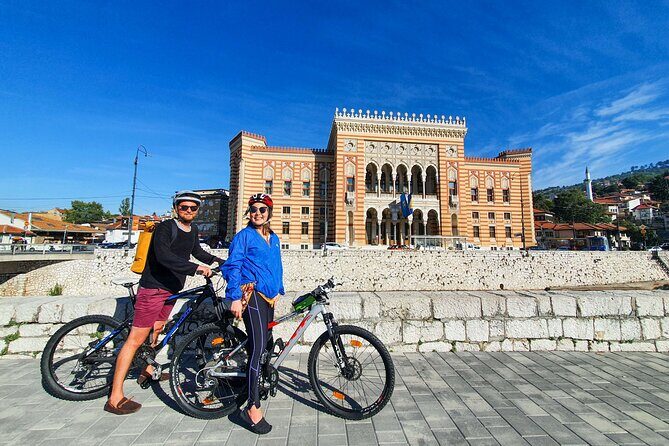
Sarajevo is packed. If you try to do the highlights on foot, you end up bouncing between areas and wasting time on transfers. On a bike, the city starts to feel like one loop: old core to Ottoman-era landmarks to the modern skyline, then out toward the river spring and the war tunnel.
I also like that the ride keeps you moving without rushing. You’re not stuck staring at a screen or spending most of the day in a vehicle. Instead, you get that steady rhythm: brief stops for stories, quick sights you can actually frame with your own eyes, then back on the bike to connect it all.
There’s also a practical bonus: you can cover a lot more ground than a walking tour, but still stop enough times to understand what you’re seeing. That matters in Sarajevo, where one street corner can point to Ottoman craftsmanship, Austro-Hungarian design, and 20th-century tragedy all at once.
You can also read our reviews of more cycling tours in Sarajevo
Meeting point, start time, and the group vibe (9:00am)
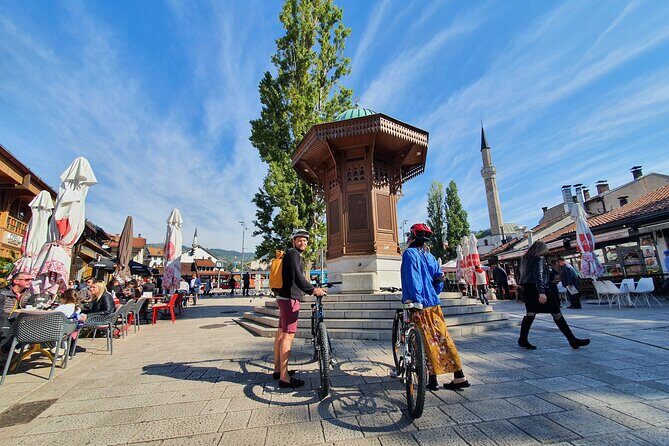
You’ll meet at Obala Isa-bega Ishakovića 3 in Sarajevo, and the tour starts at 9:00 am. You’ll ride, stop, and then return back to the same meeting point by the end.
This is not a massive bus tour. The group size tops out at 10 people, which is huge for a city day like this. In a small group, you’re more likely to get the kind of back-and-forth that turns facts into understanding. That shows up in the guides people got on this tour, including Mustafa and Mirza, who are praised for taking their time and keeping the ride engaging.
A bike tour also means you should dress like you’ll be outside for hours. You’ll be given a helmet and you’ll use the bicycle, so you don’t have to stress about gear. Still, plan for a full day: comfortable clothes, water, and shoes you can stand in during museum and landmark stops.
Baščaršija classics: Sebilj, Kazandžiluk, and the Vijećnica comeback
Your day begins in the heart of Sarajevo’s old town area around Baščaršija, where the streets feel built for slow wandering even if you’re on a bike.
First up is Sebilj Brunnen (Sebilj Fountain), the famous wooden fountain at the center of the old bazaar quarter. It’s the kind of landmark you’ll see in postcards, but up close it’s also a natural meeting point. If you like to orient yourself quickly in a new city, Sebilj does that job fast: you get a reference point and a sense of where the action flows.
Next comes Kazandžiluk, one of the oldest pedestrian streets in Baščaršija. It’s known for coppersmiths who have crafted and sold copperware for centuries. The street is cobbled and pedestrian-focused, so you’ll get a close look at handmade items like coffee pots, trays, and jewelry, often with intricate filigree designs. This is where souvenir shopping feels less random. You’re not just buying something shiny; you’re seeing a craft tradition in motion.
Then you’ll reach Vijećnica (Sarajevo City Hall), a standout Moorish Revival building built in 1894. What makes it especially meaningful is its history: it was heavily damaged during the Siege of Sarajevo, then restored, reopening in 2014 as a national monument and cultural venue. Even if you don’t go inside, the building works as a visual lesson. Sarajevo’s story isn’t only about monuments; it’s about how the city rebuilds.
Heads-up: Stops here are short, so don’t expect a long museum-style walk at every location. Bring the mindset of a highlight tour with context, then plan longer returns to the places that pull you in.
Inat Kuća to Latin Bridge: a quick sprint through turning points
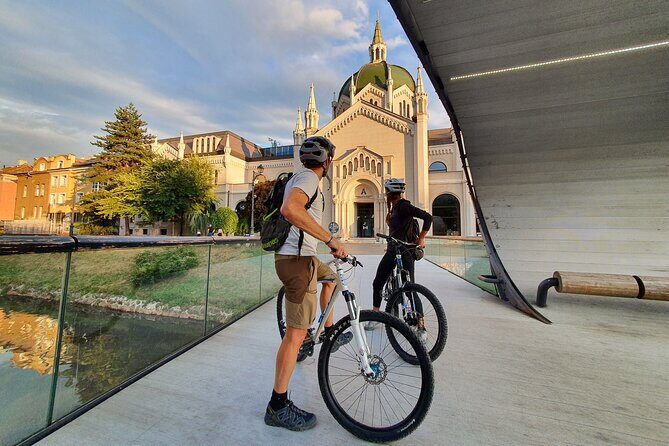
After Baščaršija’s Ottoman-era scenes, the tour moves through places where history changed the world—or at least helped set off the chain reaction.
Inat Kuća (House of Spite) is a small stop with a big story. In the late 19th century, the owner refused to sell his house for the construction of the City Hall. Authorities moved the building brick by brick across the river. Today it operates as a restaurant, which is a clever way to keep the story alive: you experience the building as part of daily life, not only as a historical artifact.
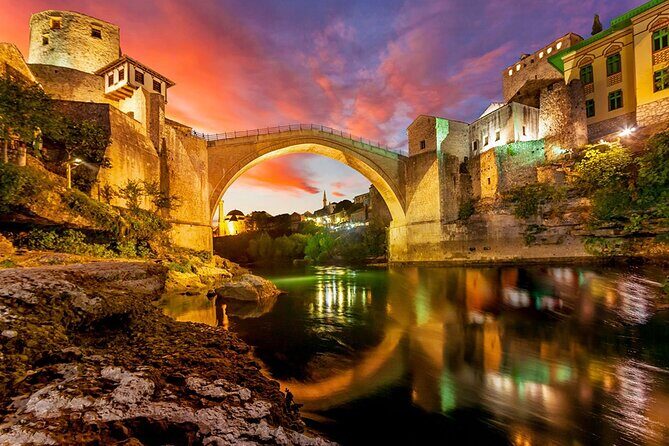
Then you’ll reach Latin Bridge, an Ottoman bridge famous for the 1914 assassination of Archduke Franz Ferdinand, an event that triggered World War I. This isn’t a “science of war” stop—it’s a reminder that Sarajevo has repeatedly been a stage where major European events intersect with local streets.
If you’re the type who likes to connect the dots, these two stops help. Inat Kuća shows stubborn local identity against official plans. Latin Bridge shows how local reality can ripple into global history.
Gazi Husrev-beg Mosque and Bezistan: Ottoman Sarajevo in full view
Next, the tour shifts to one of the most visually rewarding sections of Sarajevo’s Ottoman legacy: Gazi Husrev-beg Mosque and Bezistan.
Gazi Husrev Bey’s Mosque is the largest mosque in Sarajevo, built in 1530. Even without going deep into architecture details, it works as a landmark that signals time and influence. The mosque isn’t just a building; it’s a symbol of Ottoman history in the city and part of Sarajevo’s ongoing cultural fabric.
Not far from there is Gazi-Husrev Beg’s Bezistan, a covered market dating to the 16th century with shops under arched arcades. This is the kind of place that makes sense in a bike tour because it’s close to other key stops, but it also rewards a slower look at the structure and the sense of sheltered trade.
This portion of the day is ideal if you want contrasts. You’ll see grand religious architecture, then a practical market space where daily life happens. Together, they help you understand how historical influence wasn’t only about rulers and monuments. It was also about work, trade, and community space.
You can also read our reviews of more city tours in Sarajevo


Sacred Heart Cathedral and the Parliament building: faith and postwar rebuilding
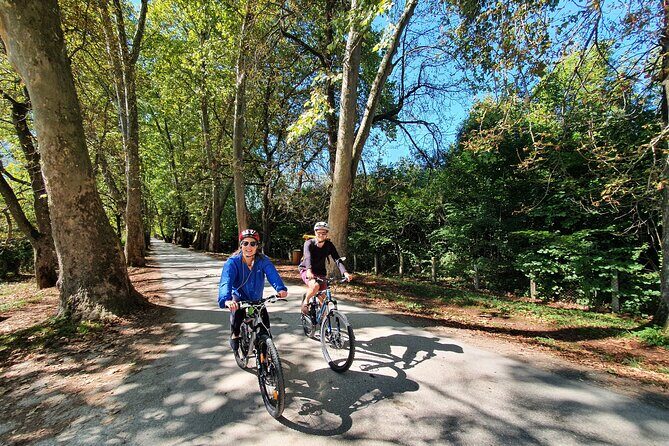
From Ottoman landmarks, you’ll transition to two very different symbols of Sarajevo’s identity: a cathedral and a modern parliament.
Sacred Heart Cathedral is the largest cathedral in Bosnia and Herzegovina. It was built in the late 19th century and is known for its Neo-Gothic style. The stop gives you a clear view of how Sarajevo’s architectural story extends beyond one empire or one era.
Then there’s the Parliamentary Assembly of Bosnia and Herzegovina building, constructed in 1982. It’s a modernist design by architect Juraj Neidhardt and carries its own war scars. During the Siege of Sarajevo in the 1990s, it was severely damaged, then restored. This makes the building more than a civic site. It becomes a symbol of return—of normal life coming back after severe disruption.
I like pairing these stops in one loop. You don’t only get “old world” Sarajevo. You also see how newer structures still carry the marks of conflict and the effort to recover.
Vrelo Bosne and the Tunnel of Hope: the day’s emotional spine
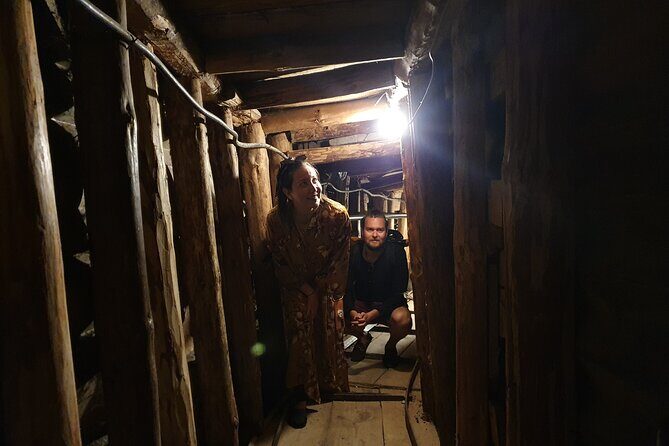
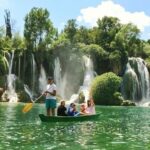
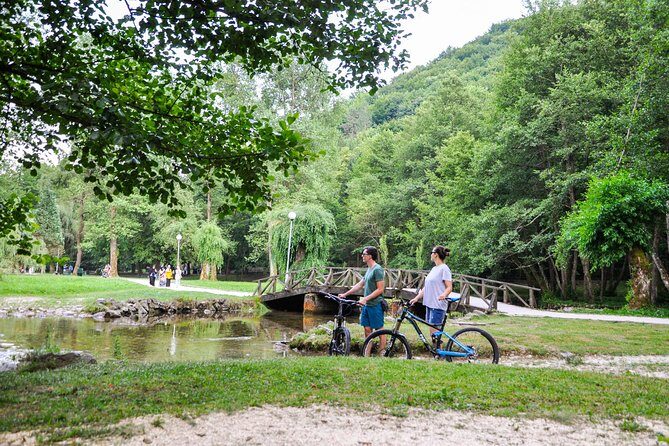
After the city-core landmarks, you get a breather at Vrelo Bosne, a public park featuring the spring of the Bosna River at the foothills of Mount Igman. The tour includes about an hour here, and it’s a welcome reset. It’s not just scenic time. It’s also a reminder that Sarajevo isn’t only history and architecture. It’s a living city with water, parks, and everyday outdoor space.
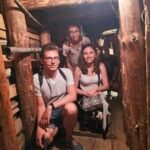
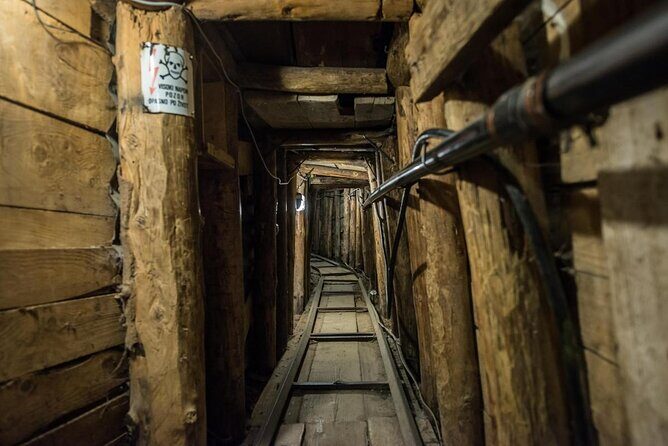
Then comes the main event: Sarajevo War Tunnel and the Tunnel of Hope. The tunnel was built during the Bosnian War as a link between Bosnian-held territories that had been cut off. The tour includes around one hour at the tunnel museum.
This section is understandably serious. The good part of visiting it on this tour is that it’s not dropped on you out of nowhere. Earlier stops gave you the sense of Sarajevo’s streets, institutions, and monuments. The tunnel puts the same city into a survival context, and it helps you understand why rebuilding mattered so much at places like Vijećnica and the parliament building.
A practical note: This is the type of attraction where your attention matters. If you tend to skim through museums, try not to do that here. Even at a fixed time limit, you’ll get more from the visit if you slow down.
Price and value: what $138.34 really buys
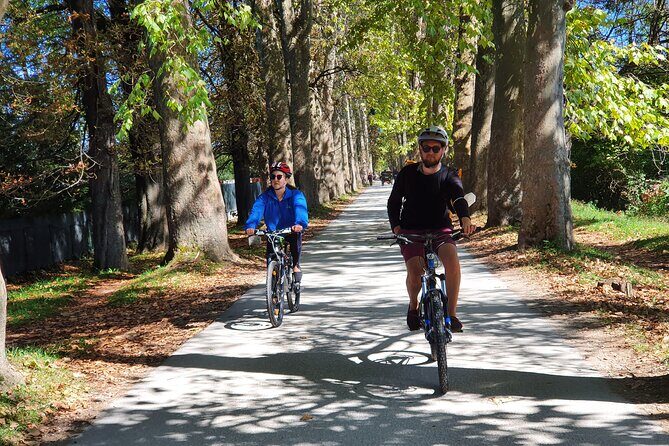
At $138.34 per person, this tour isn’t the cheapest way to see Sarajevo. But you’re also not paying for a bike rental plus entry tickets plus guide time separately.
Here’s what’s effectively covered:
- Bicycle and helmet
- War tunnel museum admission
- Vrelo Bosne admission
- Guide-led sightseeing in English
- A format capped at 10 people
- Mobile ticket (so you’re not juggling paper)
When you compare it to doing the same day piecemeal, the tunnel admission alone can make a difference, and bike rental costs add up quickly in many cities. On top of that, the guide time is the thing that makes it coherent. The route is built so you’re not just checking boxes.
So the value equation is strongest if you:
- Want an efficient highlight route
- Care about the meaning behind the sights
- Don’t want to hunt down tickets and directions while you’re tired
If you’d rather wander on your own at your own speed, then this can feel too structured. But if you like guided pacing, it’s a solid deal for the amount of ground you cover.
Who this tour fits best (and who should think twice)
This tour is ideal if you want a first real look at Sarajevo without getting lost in logistics. It’s also great if you want both the “beautiful city” side and the war-era context side in one day.
It’s a smart fit for:
- People who like history but also want city landmarks, not only museums
- Anyone who prefers moving between stops rather than walking for hours
- Visitors who appreciate small groups and personal explanations
Think twice if:
- You’re not comfortable riding a bike for much of the day
- You know you don’t do well with war-related topics and memorial sites
- Weather is a dealbreaker for you, since the experience requires good weather
From the guide feedback, the guides often bring the city to life. Names that came up include Mustafa, Mirza, Arna, and guides like Said/Saïd and Kamer. The common thread is that they keep things organized and engaging, and some guides even help with practical local suggestions like where to eat or shop after the tour.
Should you book? My practical take
Book this tour if you want a smooth, high-value overview of Sarajevo that includes the Tunnel of Hope without turning it into a separate chore. The small group size, the included tunnel admission, and the built-in Vrelo Bosne break make the day feel balanced rather than nonstop sightseeing.
Skip it only if you want total freedom to roam, or if cycling for several hours sounds like a bad trade-off. For most people doing a first trip, this is one of the easiest ways to understand Sarajevo fast, then know what you might want to return to later.
You Might Also Enjoy
More Cycling Tours in Sarajevo
More Tours in Sarajevo
- Fall of Yugoslavia, Sarajevo War Tour with Tunnel of Hope Museum and Frontlines
★ 5.0 · 1,314 reviews

More Tour Reviews in Sarajevo
- Fall of Yugoslavia, Sarajevo War Tour with Tunnel of Hope Museum and Frontlines
★ 5.0 · 1,314 reviews