REVIEW · SARAJEVO
Sarajevo: 2 Hours Old Town Walking Tour With Local Guide
Book on Viator →Operated by Meet Bosnia Travel · Bookable on Viator
Sarajevo changes fast, if you know where to look. This 2-hour Old Town walking tour is built for quick orientation and for seeing how different cultures share the same streets. You start with history basics, then you move through the city’s key symbols—fountain, mosques, churches, caravan stop, and the Latin Bridge story.
I especially like how compact the route feels. You cover a lot without it turning into a race, and the small group size (max 10 people) makes it easier to ask questions along the way. I also love the tour’s point of view: it keeps the focus on where cultures meet—Orthodox, Ottoman, Austro-Hungarian, Jewish, and Catholic landmarks—so you leave with a clearer mental map of Sarajevo.
One thing to consider: a few stops may have separate entry costs depending on what you choose to go into. Since it’s mainly a walk-and-see experience, plan for optional museum/church/city building entries and stick to the exterior views if you’re trying to keep costs simple.
In This Review
- Key highlights you’ll feel right away
- Why this Old Town walk works so well in 2 hours
- The walk starts at Meet Bosnia Tours, right where the action begins
- Stop-by-stop: the Ottoman core and the street-level craft of Baščaršija
- Holy Archangels Michael and Gabriel (view from the street)
- Bascarsija Square, Sebilj, and Kazandžiluk: the postcard trio
- Possible drawback here
- Austro-Hungarian Sarajevo: City Hall’s story and why it used to be different
- Morica Han: the caravan-saray stop that makes trade feel real
- Religious Sarajevo in one loop: mosque, church, and synagogue stories side-by-side
- Gazi Husrev-beg Mosque and the nearby clock tower idea
- Old Sarajevo Clock Tower: the city’s time as a landmark
- Jewish Museum of Bosnia and Herzegovina: Sephardic synagogue story (optional entry)
- Katedrala Srca Isusova: Catholic presence and local story
- Sarajevo Meeting of Cultures: where you pause and actually look
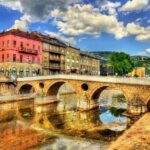
- Latin Bridge: the WWI spark explained where it happened
- Guides make the difference, and the pattern is clear
- Value check: is $14.51 for 2 hours actually worth it?
- Who should book this tour
- Should you book this Sarajevo Old Town walk?
- FAQ
- How long is the Sarajevo Old Town walking tour?
- What is the price per person?
- Is the tour offered in English?
- What is included in the tour price?
- Is food and drink included?
- Are museum entries included?
- Where does the tour meet and where does it end?
Key highlights you’ll feel right away
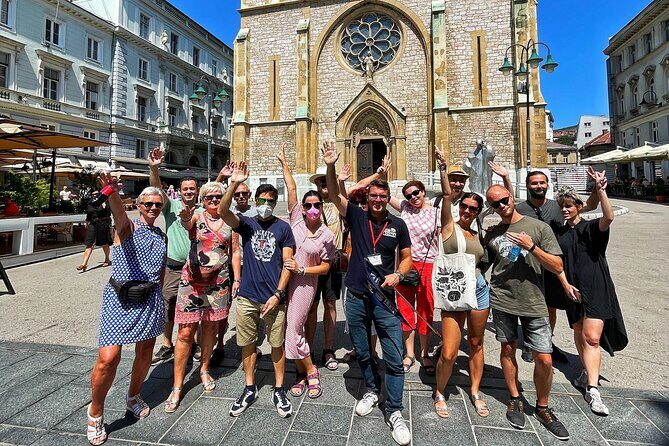
- Small-group pacing: designed for a slower, question-friendly walk (max 10 people).
- A cultures-meet route: you’ll connect Ottoman-era Sarajevo with Austro-Hungarian architecture and major religious sites.
- Sebilj + Kazandžiluk: you get the fountain symbol and the craft street idea in the same stretch.
- Morica Han caravan-saray stop: a quick look at merchant travel culture in the middle of the Old Town.
- Latin Bridge context: the assassination story is explained as the spark for WWI’s start.
- Optional Jewish Museum entry: you can match the stop to your interests and time.
Why this Old Town walk works so well in 2 hours
Sarajevo’s Old Town is walkable, but it can also feel like a maze of streets, faiths, and eras. This tour is a practical fix. In about 2 hours, you’re led along a route where each stop adds a piece to the bigger picture: trade and empire, religion and daily life, and the historical events that turned Sarajevo into a world reference point.
The other reason it works: the guide does more than point. You get story context—why the place exists, what it means, and how it connects to the next site. Guides across the group can vary (for example, history and art majors show up in this lineup), but the format stays consistent: short stops, clear explanations, and enough time to look closely at what’s in front of you.
This is also a strong choice for your first day. One of the best outcomes from this kind of tour is mental orientation: where Baščaršija is, where the famous fountain is, what the Latin Bridge area represents, and how the Old Town “flows.” After that, you can wander on your own with less guessing.
You can also read our reviews of more walking tours in Sarajevo
The walk starts at Meet Bosnia Tours, right where the action begins
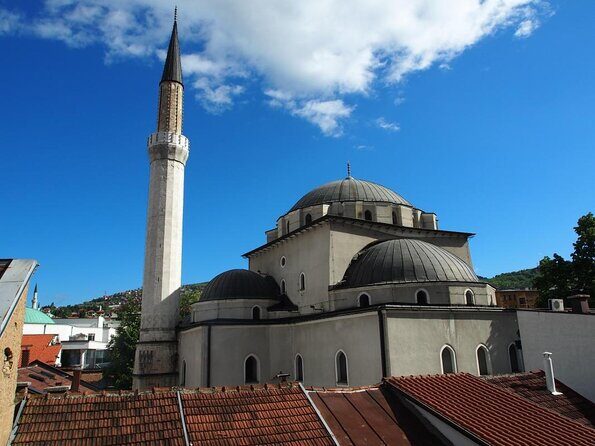
The meeting point is Meet Bosnia Tours in the Old Town area, at Gazi Husrev begova 75, at the crossroads of Mula Mustafe Bašeskije (Sarajevo 71000). You’ll meet at their office, then the tour begins with a quick introduction to Bosnia’s and Sarajevo’s history.
That intro matters more than you might think. Sarajevo’s layers can be confusing if you show up with only one lens (Ottoman, or Austro-Hungarian, or the 1990s conflict). This tour gives you multiple lenses at once, so the later sites land with meaning instead of just looking “pretty and old.”
It runs in English, and the tour is described as having a maximum of 10 people. Based on recent experiences shared by past guests, that small size can turn into a near-private feel on low-volume days, which makes questions easier and the pace more comfortable—especially in rain.
Stop-by-stop: the Ottoman core and the street-level craft of Baščaršija
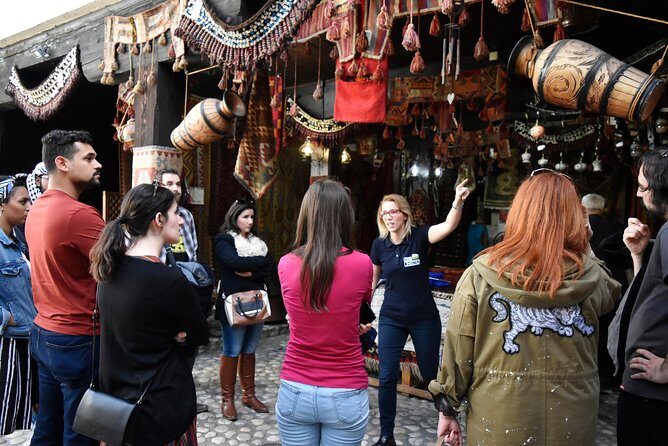
After the intro, the tour pushes you toward Baščaršija, the heart of the Old Town’s older commercial life. Even if you only have a short visit, this section gives you the classic Sarajevo symbols and the “how life used to work” street vibe.
Holy Archangels Michael and Gabriel (view from the street)
The tour starts with the Church of the Holy Archangels Michael and Gabriel. You hear the story of it as the oldest Orthodox church in Sarajevo, along with secrets and legends tied to the building. The approach is street-level—your guide talks in front of the church—so you’re not stuck in a slow entry process.
Practical note: the stop is marked with admission not included. If you plan to go inside, expect you may need separate payment, and if you mainly want the explanation, the outside viewing still gives you the core story.
Bascarsija Square, Sebilj, and Kazandžiluk: the postcard trio
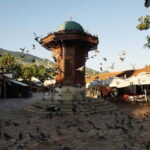
Next comes Bascarsija Square, where you’ll see the famous Sebilj fountain, made in the 18th century. This isn’t random decoration. It’s one of the best “instant context” objects in Sarajevo because it screams Ottoman-era public life: a meeting point, a symbol, and a piece of design that’s still central in the square today.
You then walk through Kazandžiluk, described as the oldest street in Sarajevo, known for hand-made copper craft arts. This is the moment you’ll start noticing the details: the shopfront feel, the craft focus, and the way the Old Town still organizes itself around trade.
And yes, the Sebilj stop gets its own moment too (the tour highlights it again as a key symbol). That helps you slow down for photos and for just looking. If you’ve ever done a “see it once and keep moving” itinerary, this one is better about repetition where it counts.
You can also read our reviews of more guided tours in Sarajevo
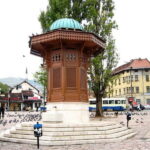

Possible drawback here
This part of the tour is where crowds can happen, since it’s central. If you’re sensitive to busy squares or want solitude for photos, try to time your own walking around these areas after the tour with your guide’s orientation in mind.
Austro-Hungarian Sarajevo: City Hall’s story and why it used to be different
From Baščaršija, the tour shifts into the Austro-Hungarian layer with Sarajevo City Hall. This building is described as one of Sarajevo’s most beautiful, constructed in the Austro-Hungarians’ period. Your guide also shares stories about its past use as a national library.
This stop is valuable because it changes the mental image. People often think of Sarajevo as only one era at a time. City Hall is a reminder that the city’s identity was reshaped by outside administration too—and that architectural style can carry history in its own way.
Admission is marked as not included. If you’re only watching from the outside, you still get the key stories and the visual impact. If you want to go inside, plan for possible entry cost.
Morica Han: the caravan-saray stop that makes trade feel real
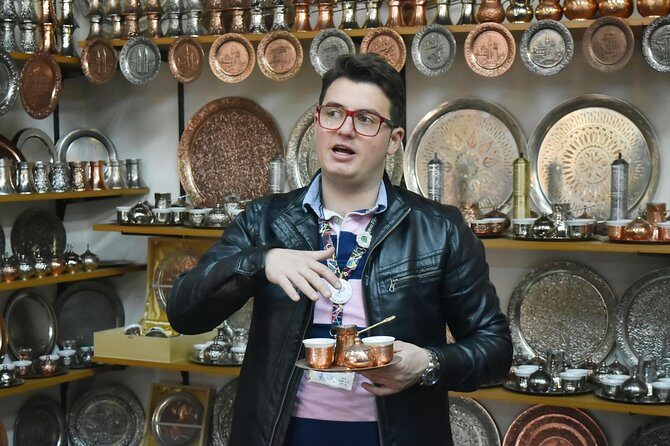
The tour then makes a smart pivot to Morica Han, described as the most authentic caravan saray in the Balkans region. A caravan saray is not a random tourist building; it was a key place where merchants and travelers rested, arranged business, and moved goods through the city.
Here’s what you’ll likely remember after the walk: the explanation of how Morica Han used to function as a merchant hotel and how it has a different purpose today. Even if you don’t go inside (admission is marked as included for this stop), the idea sticks. Sarajevo wasn’t only a battlefield or a political stage. It was also a working city with routes, storage, meals, and conversations.
Religious Sarajevo in one loop: mosque, church, and synagogue stories side-by-side
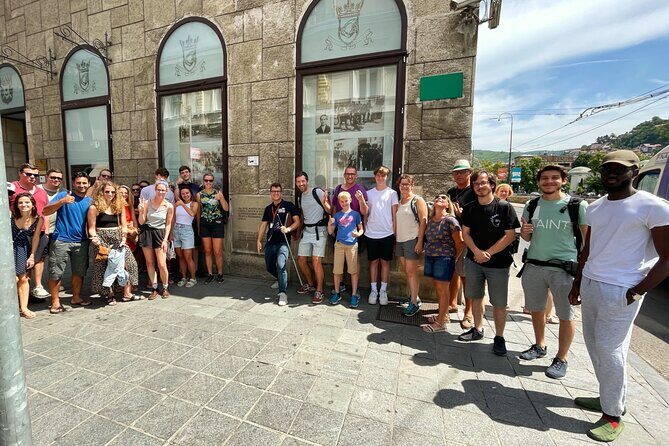
One reason this tour feels different from many Old Town walks is that it doesn’t keep faith separate. It shows how different religious communities sit within the same city geography.
Gazi Husrev-beg Mosque and the nearby clock tower idea
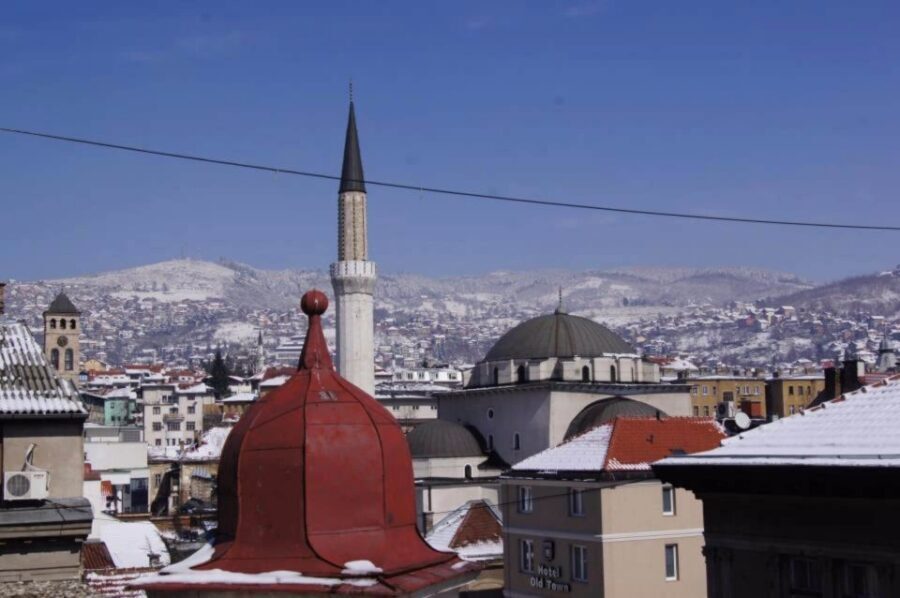
You’ll visit Gazi Husrev-beg Mosque, described as the biggest and one of the most beautiful mosques in Sarajevo. The guide points out unique ornamentations, and the stop is designed to help you “feel” the city’s time layers through the details.
This is also where the tour connects to timekeeping and landmark identity. You’ll hear about the clock tower nearby as part of the same visual system of old Sarajevo.
Admission is marked as not included for this stop. If you want to enter the mosque interior, you’ll likely need to plan for separate access.
Old Sarajevo Clock Tower: the city’s time as a landmark
The next stop is the Old Sarajevo Clock Tower, called one of Sarajevo’s landmarks. You’ll hear that it shows authentic time and is unique in the whole world (as described on the tour). Even if you’re not a “clock person,” the way the guide frames it helps you understand why this city loves its markers—fountains, towers, and named streets.
This is a short stop (just minutes), but it’s a good example of why the tour works: it keeps scanning your eyes across the city’s identity points without draining your time.
Jewish Museum of Bosnia and Herzegovina: Sephardic synagogue story (optional entry)
You’ll stop at the Jewish Museum of Bosnia and Herzegovina, which used to be a Sefardic Jewish synagogue. The guide shares the long story of Jews in Bosnia and Herzegovina.
Here’s the practical benefit: the tour marks museum entrance as optional. You can choose based on time and interest level. If you like museum depth, take it. If you’d rather keep the walk moving and focus on outdoor landmarks, you can skip entry and still get the main historical context from the guide.
Katedrala Srca Isusova: Catholic presence and local story
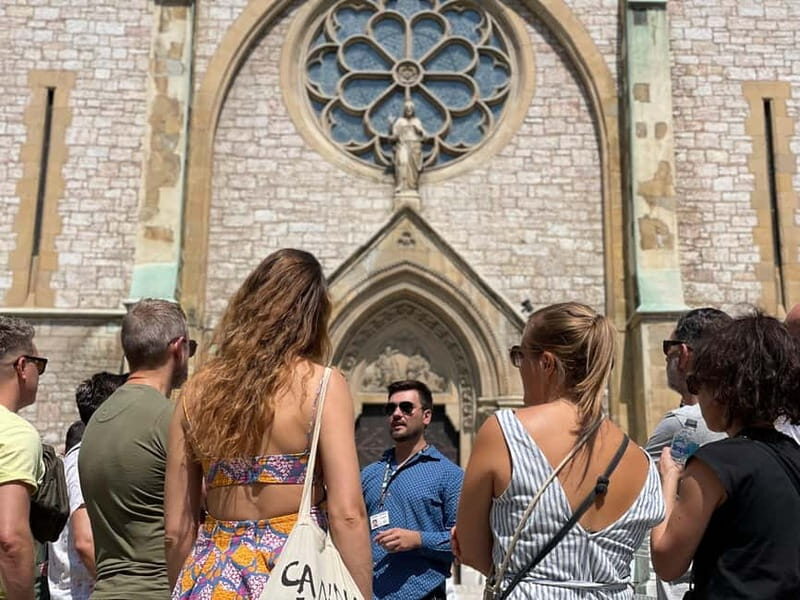
Next is the Cathedral of the Sacred Heart of Jesus (Katedrala Srca Isusova). The tour calls it the most beautiful Catholic church in Sarajevo, and you’ll hear the story about Catholics in Bosnia and Herzegovina.
Admission is marked as free for this stop, which makes it easier to choose what to do without surprise cost worries. Even without entering, the stop works because you get context—what the church represents in the broader Sarajevo mix.
Sarajevo Meeting of Cultures: where you pause and actually look
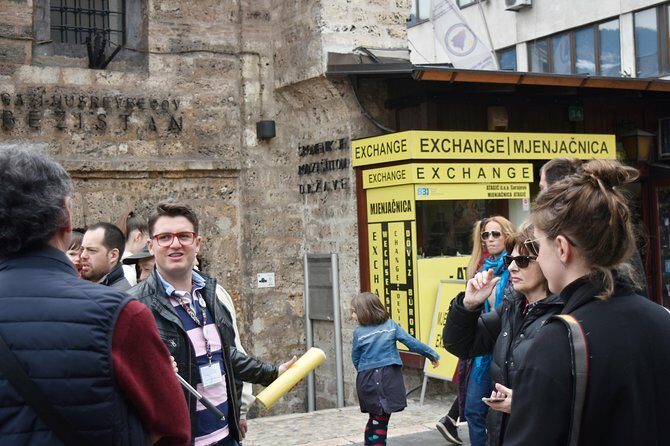
There’s a dedicated stop at Sarajevo Meeting of Cultures, described as the place where East and West meet in a striking way. The point here isn’t just the name. It’s your cue to stop, look, and connect what you just learned from the previous religious and imperial landmarks.
This is where you’ll start understanding the tour’s philosophy: Sarajevo is not one story. It’s several stories overlapping in the same small area.
Latin Bridge: the WWI spark explained where it happened
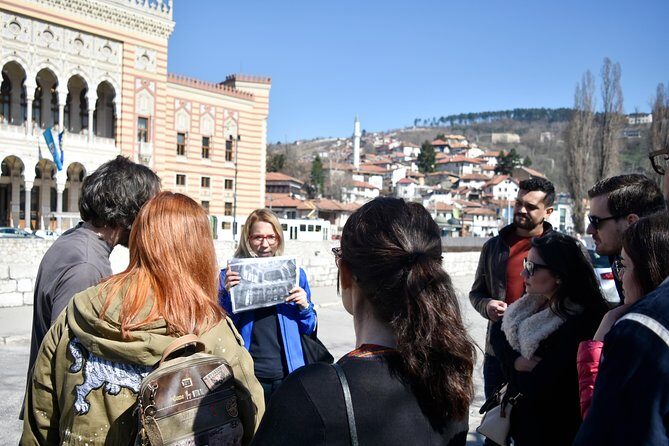
The tour ends with the Latin Bridge, where you’ll hear the story of the assassination of Archduke Franz Ferdinand—described as the trigger for World War I to begin.
This is one of those stops where a good guide makes a huge difference. Standing at a world-history landmark can feel abstract until someone explains the chain of events and why the moment mattered globally. Here, the guide’s job is to connect the bridge to the bigger timeline, so you walk away with more than a photo.
The Latin Bridge stop is marked as free for the experience, and the time at the location is long enough (around 20 minutes) to let the explanation land.
Guides make the difference, and the pattern is clear
A lot of walking tours depend on the sights. This one depends on the storytelling too—and the guide team shows consistent strengths in real-world conditions.
From the experiences shared, guides like Ahmed (history major), Ilma, Benjamin, Hanan, Azra, Sara, Mesud, Arna, and Alen are all mentioned for being professional, friendly, and able to answer questions. One key theme: guides adjust the pace and keep things understandable, even when questions pile up.
Weather handling also shows up. Rain can be a deal-breaker for some tours, but multiple people described the guides managing timing and even working around comfort needs during rainy or cold conditions. In Sarajevo, that matters because you’ll be out in the open for parts of the route.
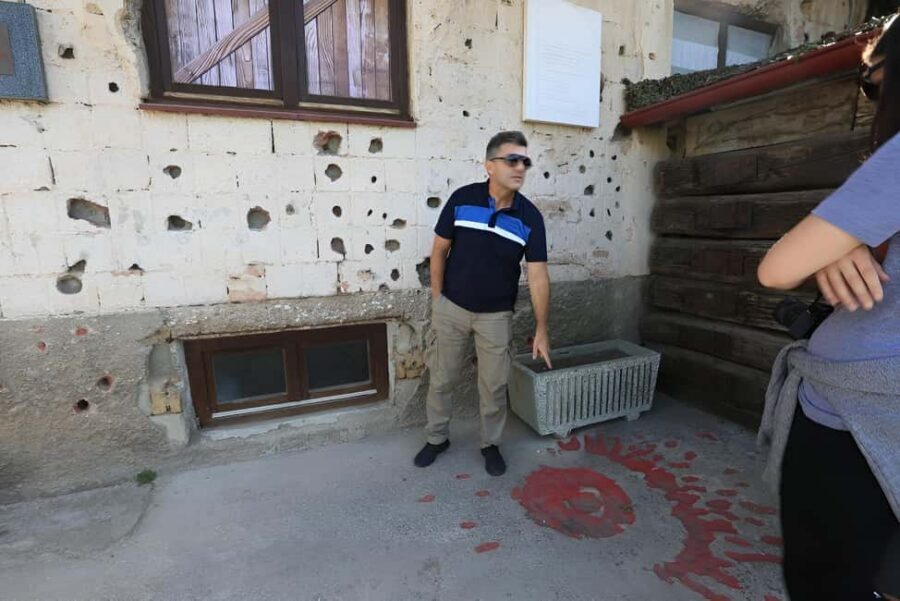
And one important clarification that helps you choose: this walk is not framed as a 1990s war-sites tour. It leans into Ottoman and Austro-Hungarian eras, plus broader historical context, with the Sarajevo story told through architecture, streets, and religious landmarks.
Value check: is $14.51 for 2 hours actually worth it?
At $14.51 per person for about 2 hours, the value is strong if you want a guided “orientation plus context” combo. Here’s why I think it makes sense:
- Most stops are free to experience at the guide level, including the big outdoor symbols like Sebilj, Kazandžiluk, the clock tower, and Latin Bridge.
- You get a local guide focused on how Sarajevo’s cultures met and overlapped.
- The route is compact, so you aren’t spending extra time and money just getting from one random point to another.
- The small-group maximum (10 people) helps keep the experience interactive instead of performative.
Where value can drop slightly is if you decide to add multiple interior entries. The tour marks some stops as admission not included (for example, City Hall and the mosque area, plus the Orthodox church and Jewish museum entry choices). If you add a lot of indoor tickets, your total day cost grows. Still, the walk itself remains strong even if you stick mostly to exterior storytelling.
Who should book this tour
You’ll like this tour if:
- You want an efficient first visit to Old Town and need structure.
- You care about how different communities shared space in Sarajevo’s past.
- You’d rather learn through architecture, streets, and landmark stories than through a single-event focus.
- You enjoy history that’s explained clearly, without needing you to already know the city.
You might choose a different tour if your main goal is strictly the 1990s conflict sites. This one is built to explain longer cultural layers—Ottoman, Austro-Hungarian, and broader world history anchors like Latin Bridge.
Should you book this Sarajevo Old Town walk?
Yes, if you want a smart, cost-effective way to get your bearings and understand why Sarajevo looks the way it does. The route hits the iconic points—Sebilj, Kazandžiluk, Morica Han, Gazi Husrev-beg Mosque, the clock tower, and Latin Bridge—and it links them with a cultures-meet story, not a single-era lecture.
Book it early in your stay. You’ll use it like a map: once you’ve walked it with a guide, wandering on your own gets easier and more meaningful.
FAQ
How long is the Sarajevo Old Town walking tour?
It runs for about 2 hours.
What is the price per person?
The price is $14.51 per person.
Is the tour offered in English?
Yes, it is offered in English.
What is included in the tour price?
A local guide and a professional guide are included.
Is food and drink included?
No. Food and drinks are not included.
Are museum entries included?
Some admissions are not included, and the Jewish Museum entry is described as optional.
Where does the tour meet and where does it end?
It meets at Meet Bosnia Tours (Gazi Husrev begova 75 area) and ends back at the meeting point.
You Might Also Enjoy
More Walking Tours in Sarajevo
More Tours in Sarajevo
- Fall of Yugoslavia, Sarajevo War Tour with Tunnel of Hope Museum and Frontlines
★ 5.0 · 1,314 reviews


More Tour Reviews in Sarajevo
- Fall of Yugoslavia, Sarajevo War Tour with Tunnel of Hope Museum and Frontlines
★ 5.0 · 1,314 reviews