REVIEW · SARAJEVO
REMEMBERING SREBRENICA (Genocide study tour 11/07/95)
Book on Viator →Operated by Art and Tours Sarajevo · Bookable on Viator
This Srebrenica study tour is heavy, but it is organized and clear, with a competent guide and a Srebrenica documentary early on. What I value most is how the day moves from learning the facts to seeing what those facts mean in real places. You’re not just watching history from a distance.
I also appreciate the way the schedule gives you enough time to take in the memorial-cemetery setting, rather than rushing past it. The only real drawback is the subject matter is emotionally demanding, so if you prefer light sightseeing, this is not that kind of day.
You’ll leave Sarajevo in the morning with a small group, watch a documentary and visit the museum, and then visit sites linked to the events around 1992–95. The day ends back at the start point, so you don’t have to manage anything on your own.
In This Review
- Key highlights you’ll remember
- From Sarajevo to Srebrenica: a practical start you can plan around
- Documentary and museum time: learning the frame before the sites
- UN base, Battery factory, and witness accounts: where learning turns real
- Srebrenica–Potočari Memorial and Cemetery: time set aside for remembrance
- A quick look at today’s Srebrenica: change and continuity
- Price and value for a 9-hour, small-group study day
- What to expect from the timing and pacing
- Who this tour is best for
- Should you book Remembering Srebrenica?
- FAQ
- FAQ
- Where does this tour start?
- What time does the tour begin?
- How long does the experience last?
- How much does it cost?
- Is there a mobile ticket?
- What is the maximum group size?
- What major stops are included?
- Is admission included for the memorial cemetery?
- What is the cancellation policy?
- Is the tour suitable for most people?
Key highlights you’ll remember
- Small group size (up to 5) keeps the pacing calm and questions practical
- Documentary + museum first gives you context before you reach the memorial spaces
- UN base and Battery factory visit ties learning to specific, named locations
- Witness conversations are part of the day’s learning approach
- Srebrenica–Potočari Memorial and Cemetery includes an on-site admission and dedicated time
From Sarajevo to Srebrenica: a practical start you can plan around
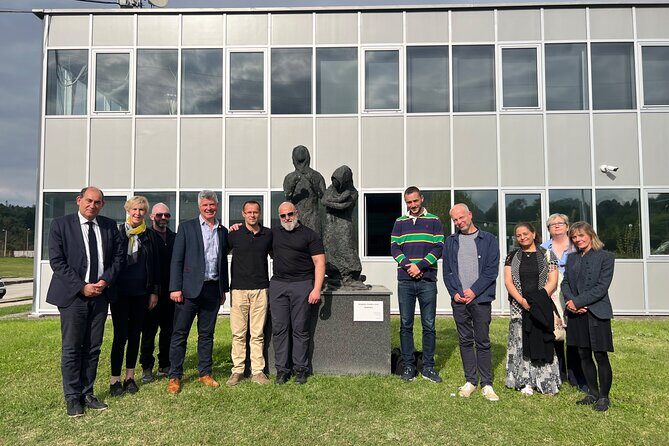
The day runs about 9 hours, and it starts early. You meet at Đulagina 2, Sarajevo 71000, at 8:30 am, then you drive to Srebrenica with the group. That morning travel time matters because it puts you in “study mode” before you begin visiting sensitive sites.
The group is capped at 5 travelers, which usually means fewer people to manage and more room for the guide to explain clearly. For a topic this complex, that small size is a genuine quality-of-day improvement, not a marketing detail.
The tour ends back at the same meeting point. That sounds simple, but it’s a big help in Sarajevo, where it’s easy to lose time figuring out last-minute transport. You can plan your evening without stress.
You can also read our reviews of more tours and experiences in Sarajevo.
- Fall of Yugoslavia, Sarajevo War Tour with Tunnel of Hope Museum and Frontlines
★ 5.0 · 1,314 reviews

Documentary and museum time: learning the frame before the sites
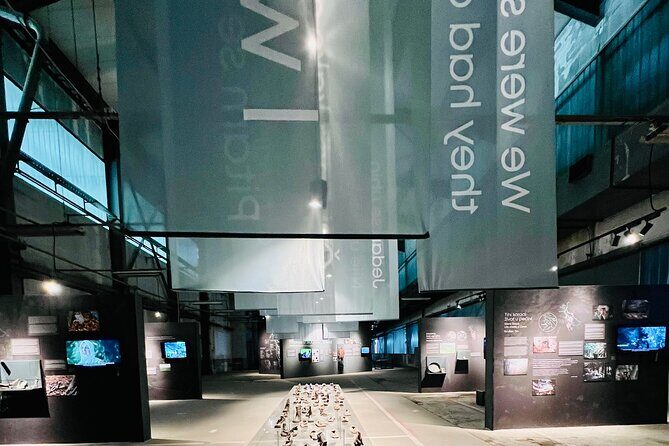
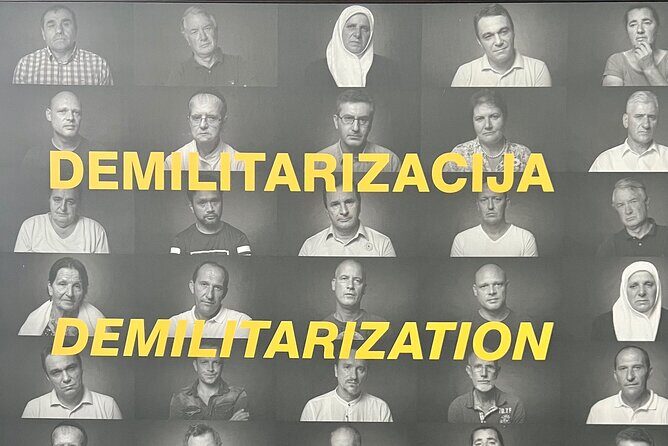
A big part of why this tour works is the order. Before you’re at the memorial cemetery, you spend time with a documentary and then visit the Srebrenica Museum. The documentary and museum segment is scheduled for 11:00 am to 12:30 pm, which is a decent chunk of time to absorb information without feeling like you blink and it’s over.
Why I like this approach: it prevents the common trap of visiting memorial sites without a clear framework. Even if you already know the basics, the documentary and museum help you understand how the genocide is explained through education systems and how the story connects to the broader conflict period of Bosnian ’92–95.
A practical note: museum visits tend to work best when you move slowly. Bring your questions and your patience. If you rush, the learning part gets lost, and then the memorial part feels even harder than it needs to.
UN base, Battery factory, and witness accounts: where learning turns real

After the museum, the schedule continues to 13:00 to 14:30 with some of the most important stops. You visit the UN base in Srebrenica, then the Battery factory, and you also have time for conversations with witnesses of the Srebrenica massacre.
This section is powerful because it is not only about dates and documents. You’re being directed to the kinds of places where people tried to survive, respond, or explain what happened afterward. The guide’s job here is crucial: they help connect what you’re seeing to what you’re learning, without turning the day into a blur of landmarks.
One thing to keep in mind is that witness conversations can feel personal and direct, even when they’re delivered as part of a group study format. Expect emotions in the room. If you’re the type who gets uncomfortable with real human testimony, you may find this portion difficult. But it is also one of the main reasons this tour is educational in a meaningful way.
The tour also includes time for documentary viewing and museum learning right before these sites. That sequencing is intentional. It helps you listen better when the day shifts from explanation to testimony.
Srebrenica–Potočari Memorial and Cemetery: time set aside for remembrance
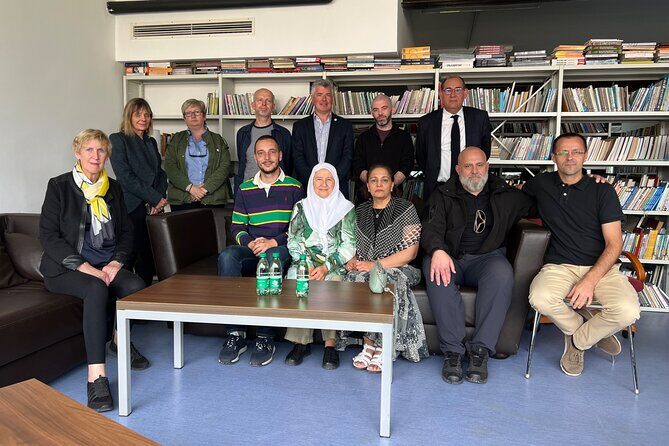
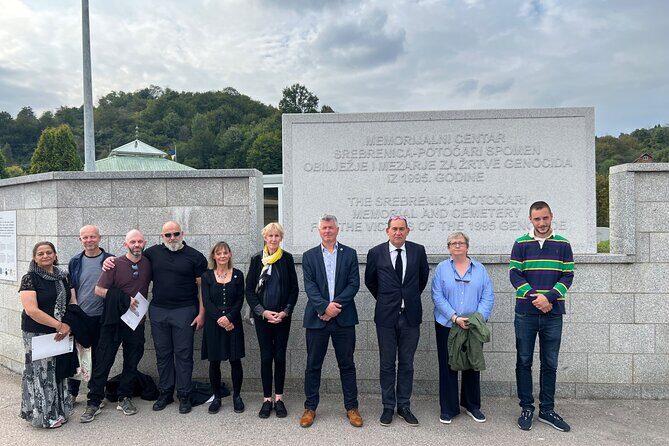
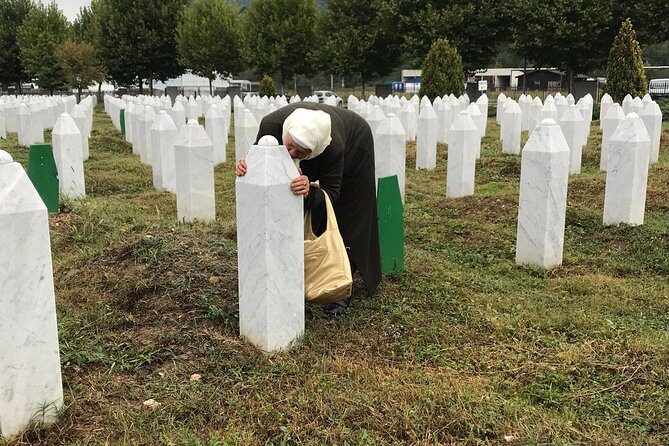
The heart of the day is the Srebrenica–Potočari Memorial and Cemetery for the Victims of the 1995 Genocide. This is not a casual stop. It’s a memorial-cemetery complex created to honor the victims of the 1995 Srebrenica genocide, where the victims are described as at least 8,372, mainly males, mostly Bosniaks.
You’ll spend about 3 hours here (this stop is marked with admission ticket included). The schedule lists “visiting the memorial cemetery” as a dedicated segment in the afternoon, and that time is important. Cemeteries and memorials like this don’t reward rushing. They reward stillness, reading, and letting the scale land.
If you want to get the most out of the visit, give yourself permission to slow down. Stand where the guide suggests. Spend time with the information available on site. If you feel yourself wanting to turn away, that’s a normal reaction. Just don’t let it turn into numbness. Remembrance works best when you stay present, even if it hurts.
Also, since the day includes both learning components (documentary, museum) and witness-based components (UN base, Battery factory conversations), the memorial cemetery visit can feel like a final “anchor.” It brings everything together into place. That is often when people realize they’ve been holding information in their heads, and now they have to hold it differently.
A quick look at today’s Srebrenica: change and continuity
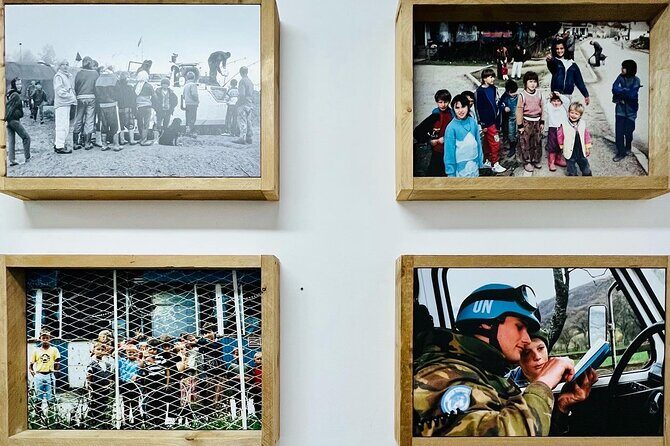
After the memorial cemetery, there is a shorter stop called Srebrenica. Here, you drive through the city to be introduced to the current situation of its citizens, with about 30 minutes allocated for this segment. It’s not the focus of the day, but it adds a vital human layer.
This brief drive helps you connect the past to the present. Even in a short time, you can see that history isn’t stuck in a museum case. People live in the aftermath, and cities continue to change.
That said, the time is short on purpose. The tour’s main learning center remains the memorial and the witness-based sites. Think of the drive as a “bridge” back to reality.


Price and value for a 9-hour, small-group study day
At $90.38 per person for about 9 hours, this sits in the category of tours you choose because the experience matters more than the shopping. The value comes from several concrete items in the schedule: time with a guide, documentary viewing, museum time, visits to major sites including the UN base area and Battery factory, and the memorial cemetery visit with admission included.
Group size also affects value. Maximum of 5 travelers is not just comfort; it helps the guide keep control of the pacing on a day with sensitive content. If you were in a larger group, it’s easier for explanations to feel rushed and for questions to get swallowed.
There’s also a small but helpful detail: you receive a mobile ticket and you return to the same meeting point. Those are practical, not glamorous, but they reduce friction. For a day with a long emotional arc, fewer hassles are a real bonus.
What to expect from the timing and pacing
Your day is structured, with clear blocks:
- Morning departure from Sarajevo around 8:30 am
- Documentary and museum time from 11:00 am to 12:30 pm
- UN base and Battery factory plus witness conversations scheduled for 12:30 pm to 13:00 pm and continuing onward (the overall segment is mapped around the early afternoon)
- A dedicated stretch at the memorial cemetery
- A short drive segment through Srebrenica for about 30 minutes
- Return to the meeting point by the end of the approximately 9-hour experience
That rhythm matters. It keeps the day from feeling like one endless visit. It also lets you process each part. You learn something, you see something, you hear something, then you move to the next space with slightly better understanding.
The big reality check: this is not a “grab photos and go” outing. It’s a study tour, and it asks you to slow down and listen.
Who this tour is best for
This is best for people who want historical education grounded in place. If you want a gentle, entertainment-style itinerary, you’ll likely feel like the tone is too serious. But if you want to understand the genocide of Srebrenica through documentary material, museum context, and witness accounts, this tour’s format is a strong match.
It’s also a good fit if you appreciate small-group learning. With a maximum of 5 travelers, you’re more likely to get real explanations instead of being carried along by the crowd.
The tour notes say most travelers can participate. In practice, what that usually means is you should be ready for a long day and a topic that will affect your mood. Dress for comfort, keep water handy, and don’t plan anything heavy right after.
Should you book Remembering Srebrenica?
If you’re in Sarajevo and you want to spend your time on something that is direct, structured, and genuinely educational, this is a solid choice. The combination of documentary + museum learning, then UN base and Battery factory visits with witness conversations, then the Srebrenica–Potočari Memorial and Cemetery visit gives you more than a checklist. It gives you a guided path through difficult understanding.
I’d only hesitate if you know you struggle with emotional testimony or you’re looking for light sightseeing. The day is built for attention, not escape.
FAQ
FAQ
Where does this tour start?
It starts at Đulagina 2, Sarajevo 71000, Bosnia and Herzegovina.
What time does the tour begin?
The start time is 8:30 am.
How long does the experience last?
The duration is approximately 9 hours.
How much does it cost?
The price is $90.38 per person.
Is there a mobile ticket?
Yes, the tour includes a mobile ticket.
What is the maximum group size?
The tour has a maximum of 5 travelers.
What major stops are included?
The day includes Srebrenica Genocide Memorial (Srebrenica–Potočari Memorial and Cemetery), documentary and museum time, a visit to the UN base, the Battery factory, witness conversations, and a short drive through Srebrenica.
Is admission included for the memorial cemetery?
Yes. The Srebrenica Genocide Memorial stop includes an admission ticket.
What is the cancellation policy?
You can cancel for a full refund if you cancel at least 24 hours before the experience’s start time. If you cancel less than 24 hours before, the amount is not refunded. Cut-off times are based on local time.
Is the tour suitable for most people?
The information says most travelers can participate.
You Might Also Enjoy

More Tours in Sarajevo
- Fall of Yugoslavia, Sarajevo War Tour with Tunnel of Hope Museum and Frontlines
★ 5.0 · 1,314 reviews

More Tour Reviews in Sarajevo
- Fall of Yugoslavia, Sarajevo War Tour with Tunnel of Hope Museum and Frontlines
★ 5.0 · 1,314 reviews