REVIEW · SARAJEVO
Sarajevo: Start of The First World War Tour
Book on GetYourGuide →Operated by Meet Bosnia Tours · Bookable on GetYourGuide
Sarajevo turns history into street-level urgency. This 3-hour WWI turning-point tour strings together the political rules of the Austro-Hungarian Empire, the assassination plot, and the exact places where it all happened. With guides such as Ajmed or Ahmed Huseinoviċ, the story comes through in clear English and with real patience for questions.
I love how it gives you the political context behind June 1914, not just the headline moment. I also love the way the walk connects key stops like the Latin Bridge to everyday life under imperial rule, so you can feel how tensions built before the shots.
One consideration: it’s a walking tour with lots of time on your feet and in busy streets, so it may not suit people with mobility impairments or heart problems.
In This Review
- Key takeaways
- Where WWI starts, and why Sarajevo still matters
- How the 3-hour format keeps the story tight
- City Hall: where an imperial visit was supposed to land
- Kapela Vidovdanskih heroja and Ilidža: getting your bearings first
- Hotel Austria & Bosna and Appel Quay: the empire in everyday places
- From bridges and boulevards to the exact assassination moment
- Sarajevo Museum 1878–1918: the years around the shots
- Gavrilo Princip’s chapel and the monument: the politics of memory
- Price and value: is $58 worth three hours of history?
- Who should book this Sarajevo WWI tour
- The best way to enjoy it (without feeling rushed)
- Should you book the Shot that Changed the World Tour?
- FAQ
- How long is the Sarajevo Start of The First World War Tour?
- How much does the tour cost?
- Is the tour guided and in English?
- How big is the group?
- Where does the tour start?
- Can I cancel for a full refund?
Key takeaways
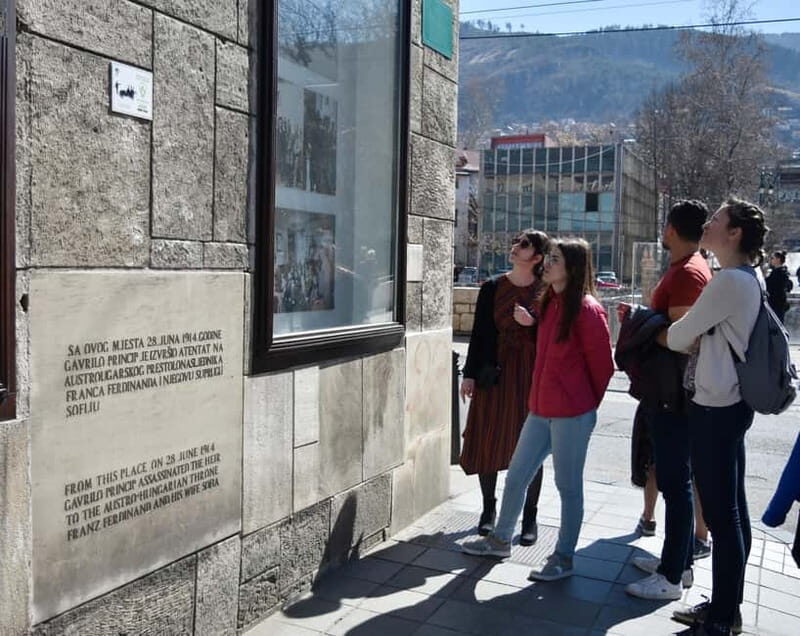
- June 28 gets explained: you learn why that date mattered, including links to the First Battle of Kosovo and Franz Ferdinand’s wedding anniversary.
- Austro-Hungarian Sarajevo, up close: City Hall, Appel Quay, Hotel Austria & Bosna, and major bridges anchor the era in real buildings.
- The plot isn’t a blur: you hear about the Black Hand and Young Bosnia, plus the failed first attempt before Gavrilo Princip’s attack.
- Where memory gets political: the tour includes both the Gavrilo Princip sites and a look at how people in the region interpret him differently.
- Small group energy: limited to 8 people, so it often feels personal even when you share the tour with just a few others.
- Breaks and photos are built in: you get time to reset, take pictures at key viewpoints, and still make it to the museum.
Where WWI starts, and why Sarajevo still matters
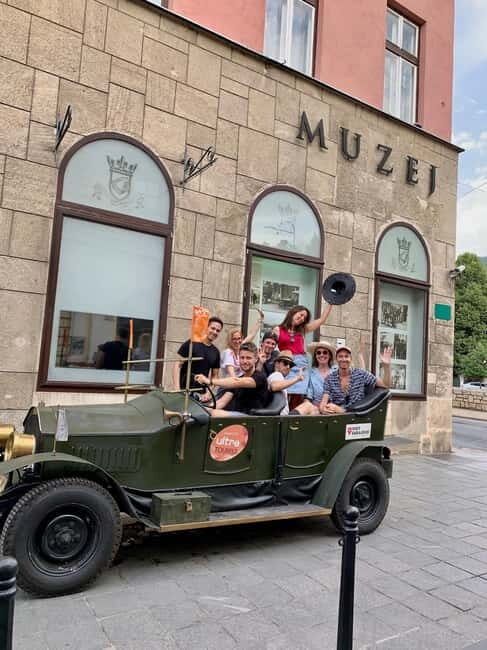
Sarajevo is one of those places where history doesn’t sit behind glass. The streets feel like they’re still doing their old job: forcing you to connect people, power, and consequences.
This tour’s main strength is that it frames the assassination as a result of pressure—political, social, and ideological—rather than a random act. You’ll get the Europe-in-1914 setting, then watch it tighten around the specific Sarajevo moment: Archduke Franz Ferdinand and Sophie on June 28, and the chain reaction that followed.
And yes, you’ll walk past the famous points everyone remembers. But what makes it click is the explanation of why those points mattered to the Austro-Hungarian project in Bosnia and what that rule meant for Bosnian society at the time.
You can also read our reviews of more tours and experiences in Sarajevo.
- Fall of Yugoslavia, Sarajevo War Tour with Tunnel of Hope Museum and Frontlines
★ 5.0 · 1,314 reviews
How the 3-hour format keeps the story tight
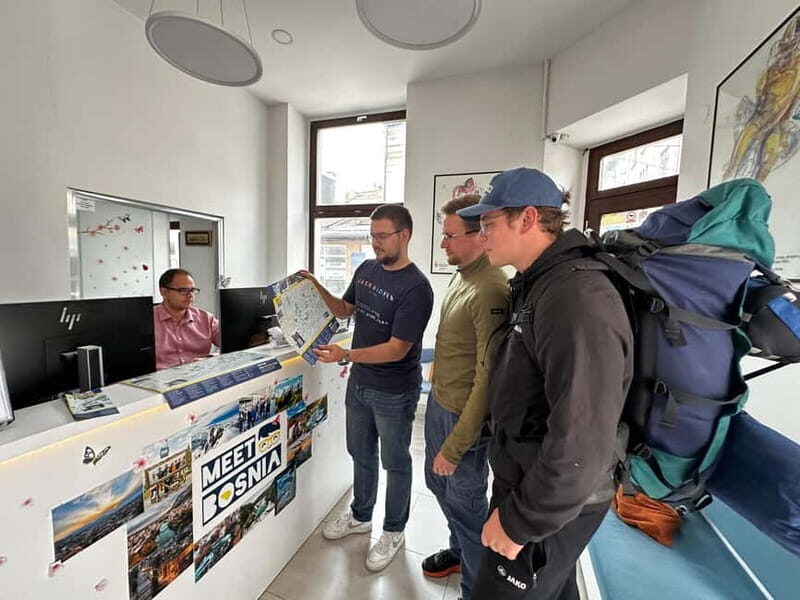
The tour is set to last 3 hours, which is the sweet spot for this theme. You don’t get stuck in a long lecture. Instead, you move between stops, with photo stops, short walks, and built-in break time so you can recharge between emotionally heavy moments.
You start in Sarajevo (pickup is in the city), and the pace stays practical. Reviews describe the experience as comfortable and well-paced with a driver for getting between areas, while still doing the walking portions on foot when the story calls for it.
If you like “focused history” over “see everything,” this format works. If you want a slow museum day with deep reading time, you might feel the schedule is a bit quick—but that’s usually the trade you make for a route this tightly connected to the events.
City Hall: where an imperial visit was supposed to land
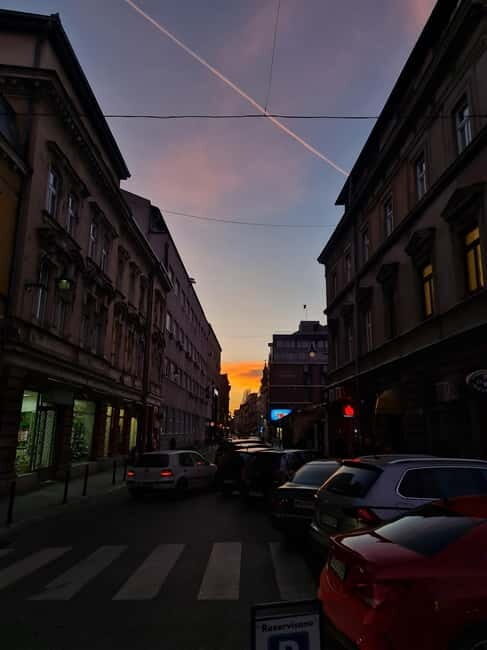
The tour begins with Sarajevo City Hall, an iconic Austro-Hungarian-era building. The key detail here is what the building was expected to do: it was meant to host Archduke Franz Ferdinand and Sophie during their Sarajevo visit.
That matters, because the assassination doesn’t just happen at a street corner. It happens against an official backdrop—an empire arriving to inspect, to signal control, and to represent power.
As you walk and look around the area, you also get the sense of how much effort went into formal appearances. The city isn’t just scenery; it’s stagecraft. And once you understand that, the later stops hit harder.
Kapela Vidovdanskih heroja and Ilidža: getting your bearings first
Before you jump fully into 1914’s drama, the tour includes a photo stop at Kapela Vidovdanskih heroja and a pass-by of Ilidža.
These early stops are useful in a “get oriented” way. They give you a few anchors in the wider Sarajevo area, so later when you’re moving between central sites and East Sarajevo, you’re not mentally lost. You’re following the story in space, not just in time.
Don’t expect these to feel like WWI set pieces. They work more like the preface: you see how the city is arranged and how different parts connect.
Hotel Austria & Bosna and Appel Quay: the empire in everyday places
A big part of this tour is explaining how Austro-Hungarian rule shaped Bosnian society, not only how it looked on official documents.
You’ll spend time around Hotel Austria & Bosna, and you’ll also stop at Appel Quay. These places matter because they sit in the everyday flow of the city—where politics shows up in how people move, gather, and live.
This is also where the guide’s role matters. In English, and with guides like Alan, Arna, Ajmed, or Ahmed Huseinoviċ, the narration tends to connect buildings to social reality. The empire’s presence becomes less abstract. It’s something people had to navigate.
If you’re the type who asks why this era felt tense, you’ll probably enjoy this chunk.

From bridges and boulevards to the exact assassination moment
The tour then moves into the “this is where it happened” zone with major photo and walking moments at Ćumurija Bridge and the Latin Bridge.
You’ll stand where the event took place and get the timeline behind it. The guide explains that there was a first attempt that failed, followed by the successful attack by Gavrilo Princip. That sequence isn’t just trivia; it helps you understand how quickly things can pivot—how one shift can trigger outcomes no one can put back.
The Latin Bridge stop is the headline stop, but it lands best after the political and social setup. Without that context, the assassination can feel like a lone act. With the context, it feels like a flashpoint from a long fuse.
Also, this is a practical note: you’ll be walking and standing in public areas. Bring a watch for where you’re meant to regroup, and plan on taking photos efficiently so you don’t hold the group up.
Sarajevo Museum 1878–1918: the years around the shots
After the core street-level moments, you get time at the Sarajevo Museum 1878–1918. It’s a relief to have a museum stop after outdoor standing, and it gives you the “what came before and after” context that makes the assassination make sense.
The time built in includes break time and then free time inside the museum. That’s important: it lets you pace yourself. You can focus on what grabs you, rather than trying to consume everything at once.
What I like about adding this museum to the route is that it stops the story from feeling like a single day that swallowed an entire century. You see the broader time range leading into the assassination and the aftermath in a way that stays grounded.
Gavrilo Princip’s chapel and the monument: the politics of memory
Near the end of the tour, you’ll connect with sites tied to Gavrilo Princip, including Gavrilo Princip’s Chapel and the Gavrilo Princip Monument.
This is where the tour shifts from “what happened” to “how people remember what happened.” The format includes a look at varying perceptions of Princip in Bosnia and the Balkan region, especially with the stop in East Sarajevo.
If you’ve ever noticed that history is never only about the past—if you’ve felt how different communities tell different versions of the same figure—this part will resonate. Princip isn’t treated as one simple symbol. The guide explains how his actions have been framed, praised, criticized, or used depending on perspective.
It’s one of the most thought-provoking parts of the route because it forces you to notice that memorials are also arguments.
Price and value: is $58 worth three hours of history?
At $58 per person for 3 hours, you’re paying for something more than walking to a famous spot. You’re paying for a guide who ties together the reasons for WWI, the local Austro-Hungarian context, and the assassination sequence in a single route.
The value becomes clearer when you consider the scope. In a short time, you’re seeing a chain of connected sites—from City Hall to Latin Bridge to the museum—without needing to figure out the logic yourself.
You also get a small group experience (limited to 8 participants). That keeps the questions possible and the pace flexible enough to make explanations land. Reviews strongly emphasize that guides take time to explain clearly and answer questions, which is exactly what you want at this topic-heavy level.
If you’re on a budget, a museum ticket alone won’t do the job. This tour is the “story glue” that makes the sites meaningful.
Who should book this Sarajevo WWI tour
This tour is a great fit if you want:
- a focused introduction to why the Sarajevo Assassination changed the course of the world
- the Austro-Hungarian side of Sarajevo in a practical, site-by-site way
- a guide who can handle both academic and everyday questions in English
It’s less ideal if:
- you need step-free access or have mobility constraints (it’s not suitable for people with mobility impairments)
- you have heart problems and can’t manage sustained walking and standing
- you’re traveling with very young children (it’s not suitable for children under 2)
The best way to enjoy it (without feeling rushed)
Come with one simple goal: understand how June 1914 turned into WWI. If you do that, every stop starts to feel connected rather than random.
Wear comfortable shoes, because this route includes walks and time standing near major points. Keep your phone charged for the photo stops, but also give the guide your full attention at the Latin Bridge and museum moments. That’s where the explanation does the most work.
If you like asking questions, this format rewards you. Multiple guides from recent experiences were praised for clarity and patience with questions, even when language choices got tricky.
Should you book the Shot that Changed the World Tour?
I’d book it if you want a high-impact Sarajevo morning that turns famous locations into a clear story about 1914 and the empire’s role in Bosnia. The small group size, English guiding, and the mix of street sites plus the Sarajevo Museum 1878–1918 make it a smart use of limited time.
Skip it only if you’re looking for a slow, purely museum-based day, or if you can’t handle a walking tour.
FAQ
How long is the Sarajevo Start of The First World War Tour?
The tour lasts 3 hours.
How much does the tour cost?
The price is $58 per person.
Is the tour guided and in English?
Yes. It includes a live guide and the tour is offered in English.
How big is the group?
The group is small, limited to 8 participants.
Where does the tour start?
Pickup is in Sarajevo.
Can I cancel for a full refund?
Yes. You can cancel up to 24 hours in advance for a full refund.
You Might Also Enjoy
More Tours in Sarajevo
- Fall of Yugoslavia, Sarajevo War Tour with Tunnel of Hope Museum and Frontlines
★ 5.0 · 1,314 reviews
More Tour Reviews in Sarajevo
- Fall of Yugoslavia, Sarajevo War Tour with Tunnel of Hope Museum and Frontlines
★ 5.0 · 1,314 reviews