REVIEW · SARAJEVO
Old Town Sarajevo Walking Tour
Book on GetYourGuide →Operated by Tour Mage · Bookable on GetYourGuide
Old Town Sarajevo hits you with history in every direction, from bazaars to wartime memory in just 150 minutes. You start at Vijecnica and move through the Ottoman quarter’s narrow lanes and market craft, then cross into the Austro-Hungarian story tied to Latin Bridge. The route is built to help you understand how the city works, not just what you’re looking at.
I especially like the stops that let you see daily life and belief side by side: Kazandžiluk and the craft streets feel alive, and Morića Han gives you a proper pause with a coffee tasting. I also like that the guide connects the city’s major eras—Ottoman Sarajevo, Austro-Hungarian Sarajevo, and the 20th-century shock of war—so the sights start making sense as one continuous story. One thing to consider: it’s a lot of walking with multiple guided visits, so wear comfortable shoes and expect a steady pace.
In This Review
- Key things you’ll appreciate on this walk
- Meeting Vijecnica: where the tour starts and why it matters
- Ottoman Sarajevo in motion: Baščaršija, Kazandžiluk, and the bazaar rhythm
- Morića Han coffee tasting: a short rest that fits the story
- Gazi Husrev-beg Mosque and Bezistan: commerce and faith in the same frame
- Clock Tower and the shift toward the Austro-Hungarian promenade
- Latin Bridge: the WWI trigger site and why guides put it in context
- Sarajevo Meeting of Cultures: a tour stop that explains coexistence with real locations
- City Market Hall and two cathedrals: civic life plus religious space
- Bosnian War and the Siege of Sarajevo: history that changes the tone of everything
- Winter Olympics ’84: a modern waypoint inside the same walking story
- Duration, pace, and comfort: the reality of 150 minutes on foot
- English guides, strong storytelling, and what you get for $17
- Who should book this Old Town Sarajevo walking tour
- Should you book it?
- FAQ
- Where does the tour meet?
- How long is the walking tour?
- What language is the tour guide?
- How much does it cost?
- Is hotel pickup included?
- Is food included?
- What are some of the main stops?
- Is the tour wheelchair accessible?
- What is the cancellation policy?
Key things you’ll appreciate on this walk
- Starting at Vijecnica’s square: a clear starting point right by the main city landmark
- Baščaršija and craft streets: the Ottoman-era feel comes through fast, especially around market lanes
- Morića Han coffee tasting pause: a short break that keeps the tour enjoyable
- Latin Bridge and the WWI trigger story: one location, big consequences
- A walk across cultures: mosque, cathedral, synagogue, and Orthodox spaces in one route
- War and Siege of Sarajevo context: the tour doesn’t stop at monuments
Meeting Vijecnica: where the tour starts and why it matters
The tour begins at the square across the river from Sarajevo City Hall (Vijecnica), at the meeting point labeled near Veliki Alifakovac 1. If you’ve ever felt lost in a new city, this is a smart setup. You start from a place that functions like a reference point, and from there the route naturally pulls you into older streets.
Vijecnica matters to the route because it sits at the city’s “hinge.” From the beginning, you’re going to feel that Sarajevo isn’t one single style. You’ll be walking from Ottoman-built parts of the city into the Austro-Hungarian-era promenade zone later on. That shift is one of the tour’s main strengths: you’re not just collecting landmarks, you’re watching the city change form.
You can also read our reviews of more walking tours in Sarajevo
Ottoman Sarajevo in motion: Baščaršija, Kazandžiluk, and the bazaar rhythm
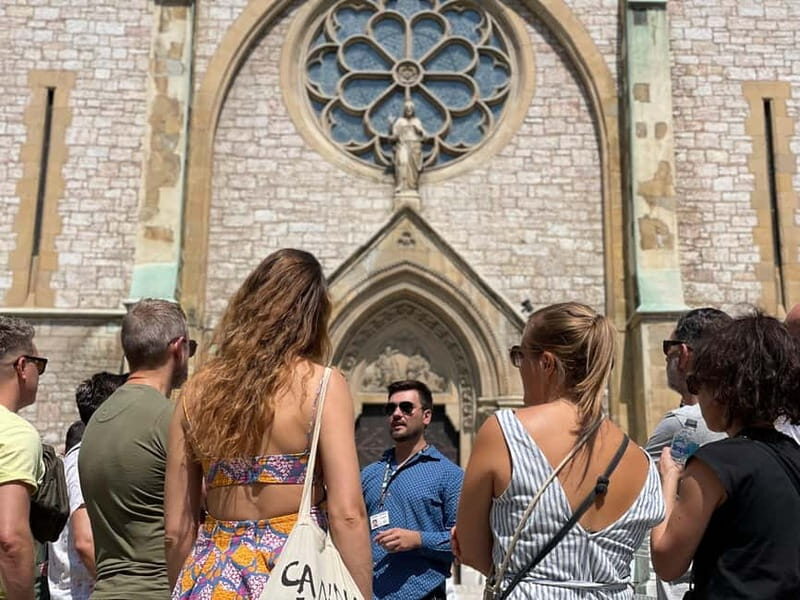
Your first main area is Ottoman Sarajevo, and you can feel it immediately in the street pattern. Expect narrow lanes, market energy, and craft-focused streets. This is where the city’s trading logic shows up in real space, not as trivia.
One early stop is Kazandžiluk, the craft lane associated with coppersmithing. The tour includes a look at artisans and their craft, which is more useful than just seeing a building and moving on. You learn how goods were made and sold here for centuries, and you also get a better sense of what visitors would have watched on a normal day.
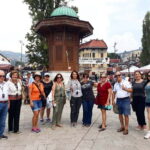
Then you head into Baščaršija, the heart of the bazaar area. This is where the tour keeps things human-scale: guided orientation, time to look around, and enough structure to help you notice details you might otherwise miss. You may even hear about old market customs around Sebilj fountain water on Baščaršija Square, which is the kind of small tradition that makes the place feel lived-in.
If you like travel that goes beyond postcards, this is your favorite part. The Ottoman section isn’t only about architecture. It’s about the city’s working system—where people gathered, bought, prayed, and talked.
Morića Han coffee tasting: a short rest that fits the story
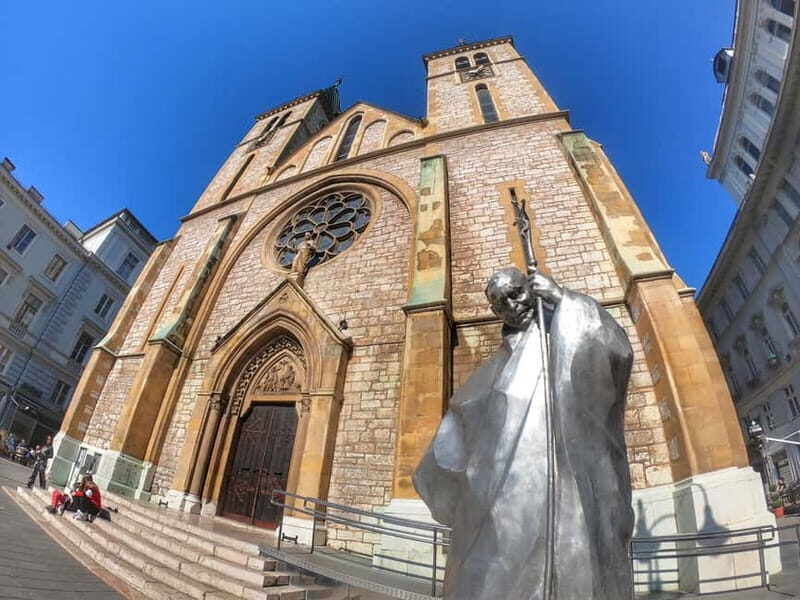
After the bazaar lanes, the tour pauses at Morića Han, including a guided visit and time for a coffee tasting. Even though it’s only part of a walking tour, this stop works for two reasons.
First, it gives you a breather. Old Town streets can be slower than you expect because you’re constantly turning corners and stopping to look. Second, it helps you reset your attention. After crafts and market textures, a calm moment inside a historic space makes the rest of the walk feel clearer.
A practical note: the tour doesn’t position itself as a full food experience, so don’t plan meals here. But the coffee tasting is a nice “taste of the place,” and it helps break up the schedule without killing momentum.
Gazi Husrev-beg Mosque and Bezistan: commerce and faith in the same frame
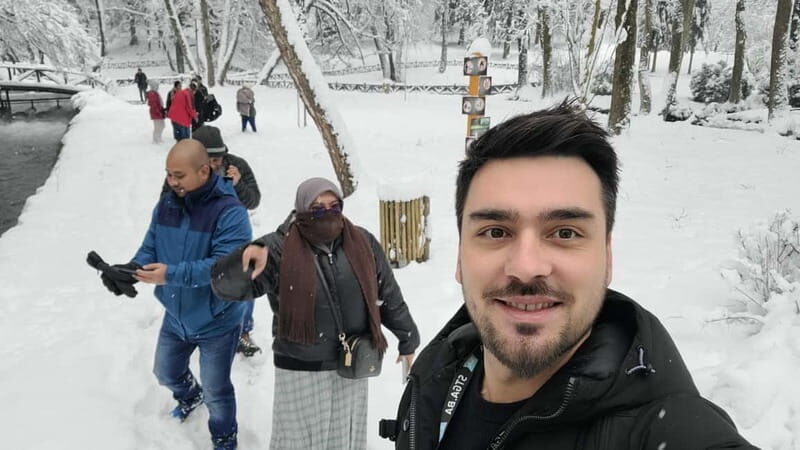
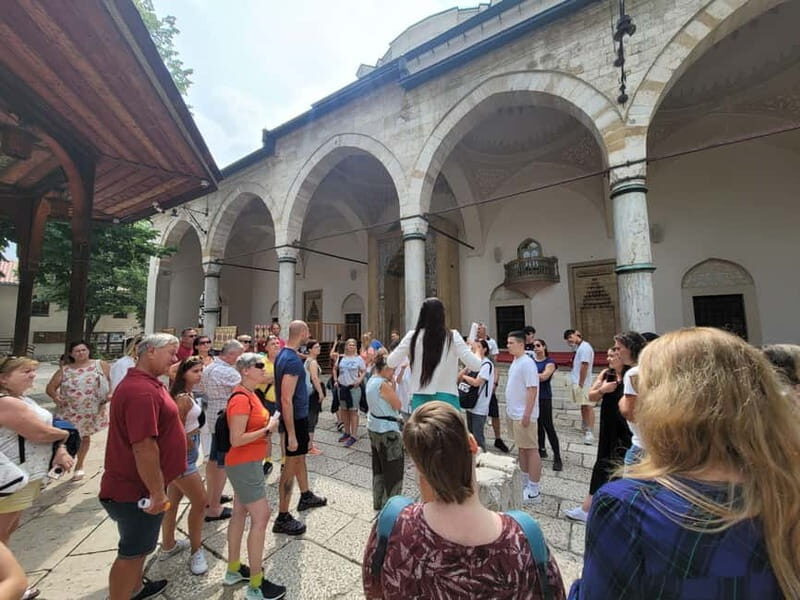
Next up is Gazi Husrev-beg Mosque, with a visit, guided tour, and sightseeing time. This is one of the stops where the tour’s structure really pays off. You’re not simply passing a famous mosque—you’re given context, and you’re given time to look without rushing.
Right after, you’ll also visit Gazi Husrev-beg’s Bezistan. That pairing is smart. A mosque tells one part of Sarajevo’s identity; the Bezistan shows another part—how religious life and everyday commerce sat close together. Even if you’re not a history nerd, you’ll likely find this connection satisfying because it explains how the city ran.
Many walks give you big monuments. This one gives you how people lived: faith as part of the center, trade as part of the center, and both shaping the streets around them.
Clock Tower and the shift toward the Austro-Hungarian promenade
There’s a quick pass by the Clock Tower in Sarajevo. This kind of stop is small on the schedule but useful. It helps you mark a transition as the walk shifts toward more European, Austro-Hungarian parts of the city.
That transition matters because the tour’s goal is contrast. Ottoman Sarajevo is narrow and market-focused. The next section feels more like a formal public promenade, where major European-era stories and civic landmarks come forward.
Think of it like changing camera lenses. The route keeps you oriented instead of letting the city blur into one long walk.

Latin Bridge: the WWI trigger site and why guides put it in context
The highlight segment for many visitors is Latin Bridge, tied to the assassination of Archduke Franz Ferdinand that triggered World War I. The tour includes a guided visit and walk around the area.
What I find most valuable here is not just the event name—it’s the context that helps you understand why this location matters globally. Sarajevo was local, regional, and connected all at once. That’s the lesson the guide brings to the route: one city moment can ripple into world history.
Also, Latin Bridge is a place you naturally slow down. The guide’s job is to keep that slowing down productive—so you come away knowing what to look for and how to connect it to the rest of the city story you’ve already been hearing.
Sarajevo Meeting of Cultures: a tour stop that explains coexistence with real locations
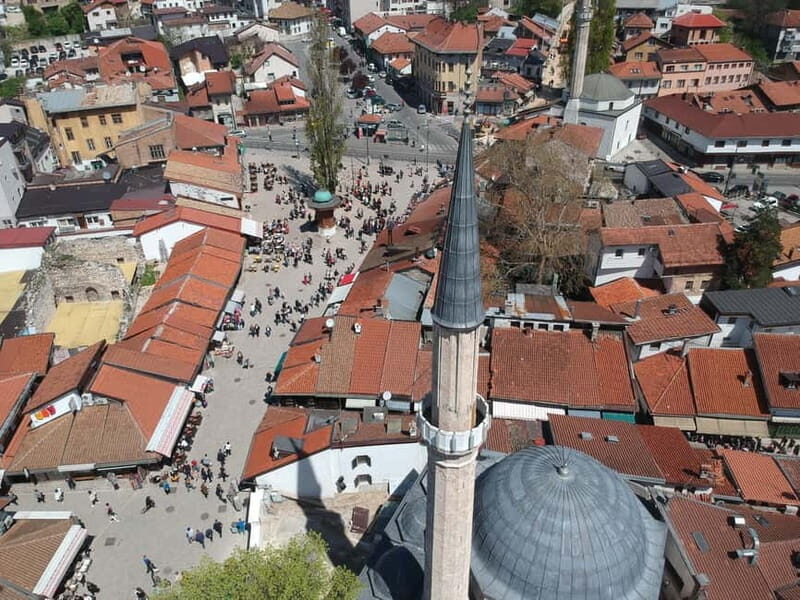
After Latin Bridge, you’ll reach Sarajevo Meeting of Cultures. The tour treats this as a guided visit, not a casual photo stop. That’s helpful because this theme can turn abstract fast. Here, it stays grounded through nearby religious sites and the way different communities shaped the city’s physical layout.
This section also includes visits to a Museum of the Jews of Bosnia and Herzegovina and sightseeing at Sacred Heart Cathedral. Seeing these in sequence gives you a clearer sense of Sarajevo’s layered identity. You’re not forced to choose one storyline. You’re shown how multiple faith and cultural traditions lived side by side, even while the city’s later 20th-century experience brought severe strain.
If you like travel that connects people across time, this is one of the tour’s most rewarding parts.
City Market Hall and two cathedrals: civic life plus religious space
The tour continues with City Market Hall, another guided stop. A market building might sound like a filler between major landmarks, but it’s actually part of the same big picture. Markets show how people organize their daily needs. They also show what a city decided to build as a public space.
Then you’ll end with Cathedral Church of the Nativity of the Theotokos. With the mosque and cathedral earlier in the route, this final Orthodox stop rounds out the religious geography of the walk.
By the time you reach the last religious site, the whole route feels more like a system than a checklist. You start to see how Sarajevo expresses itself in places of worship and places of trade—often close enough that daily life would have crossed paths.
Bosnian War and the Siege of Sarajevo: history that changes the tone of everything
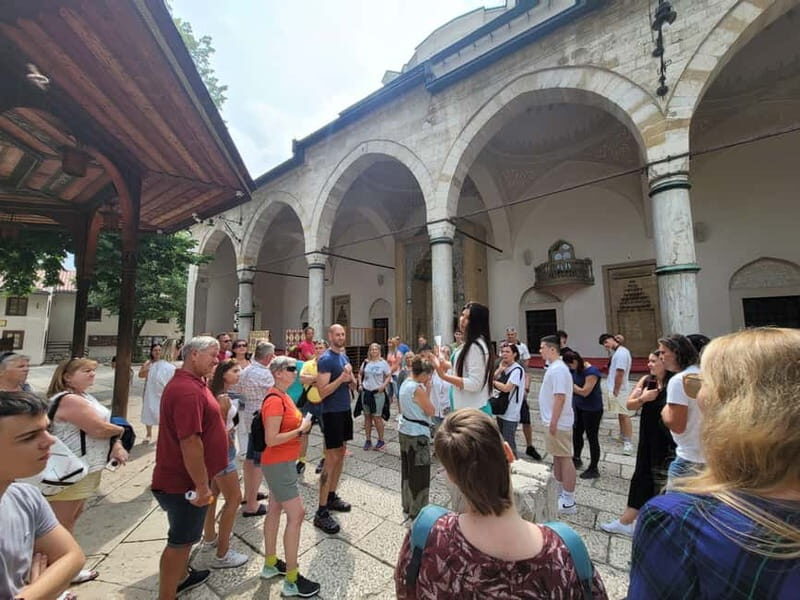
One of the tour’s scheduled theme threads is the Bosnian War and Siege of Sarajevo. You’ll hear this as you move between Ottoman and Austro-Hungarian-era sites, not as a separate lecture that drops in at the end.
That placement matters. When you learn about the siege while you’re still looking at the city’s historic core, you understand that these streets and buildings weren’t just scenery. They were part of a lived environment during a brutal period.
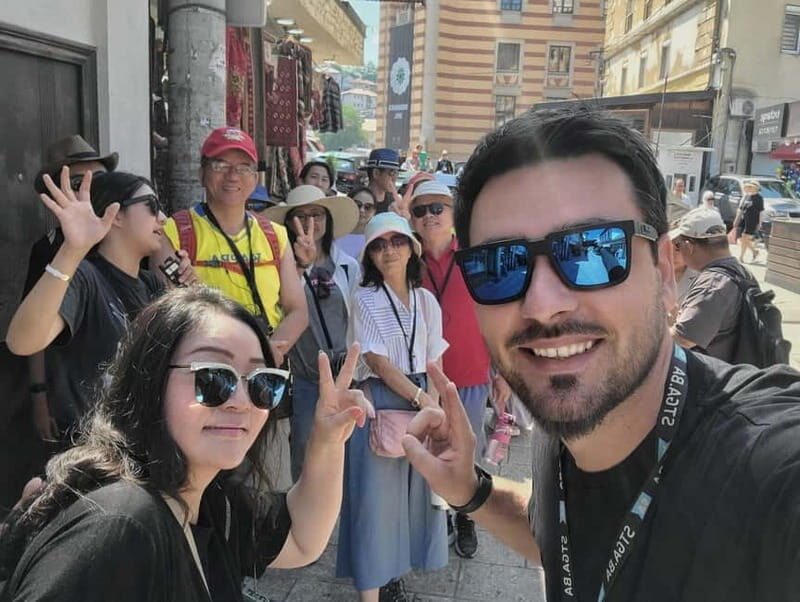
This is also where good guiding makes a difference. The reviews for this tour highlight guides like Kiki and Elvis for explaining cultural context clearly and with real care for how the stories fit together. That kind of narration can keep heavy topics from feeling random.
If you want a walk that respects the city’s complexity and doesn’t skip the difficult parts, this is where you’ll feel that.
Winter Olympics ’84: a modern waypoint inside the same walking story
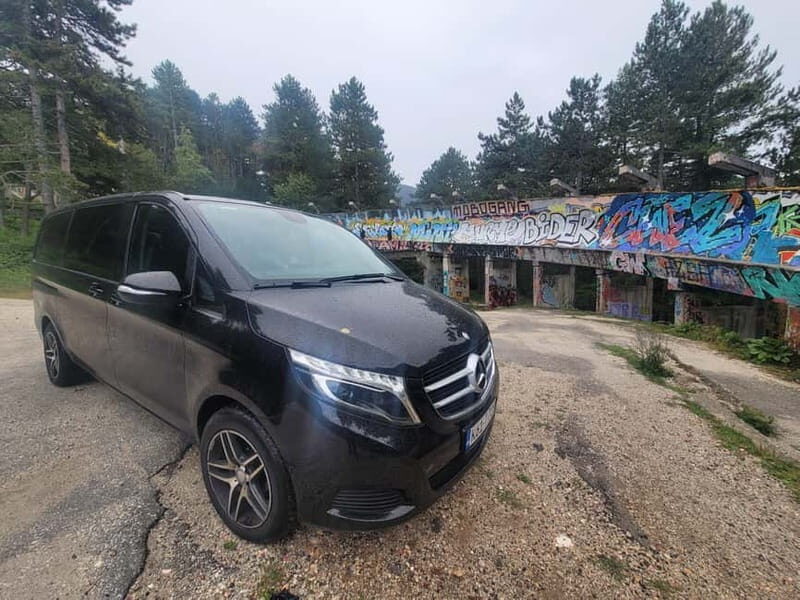
The tour also mentions Winter Olympics ’84 as part of the Sarajevo storyline. That detail helps stretch the timeline beyond the Ottoman-to-World-War arc. It reminds you Sarajevo has lived through multiple eras, including a period of international attention that had nothing to do with conflict.
It’s not a full “Olympics tour,” but it gives you a useful mental marker. You’ll likely leave with an easier time placing the city’s later decades in a broader timeline.
Duration, pace, and comfort: the reality of 150 minutes on foot
The walk runs about 150 minutes. That means you’ll be moving often, stopping often, and switching between guided explanation and your own sightseeing.
A few practical tips that will help:
- Wear shoes with grip. Old Town streets can be uneven.
- Bring a layer. Indoor/outdoor transitions can happen quickly with mosque and cathedral visits.
- If you’re sensitive to crowds or noise, plan for market areas to feel busy.
The tour is wheelchair accessible, which is great to know. Still, “accessible” can mean route choices that vary by street conditions, so if you need a smooth surface, ask the operator about the exact path on your date.
English guides, strong storytelling, and what you get for $17
For $17 per person, this is strong value if you care about interpretation. You get an English-speaking live guide and a structured route that links major eras: Ottoman bazaars, Austro-Hungarian public space, WWI-trigger context at Latin Bridge, and the Siege of Sarajevo theme.
It’s also a smart price point because you’re not paying for a private car or a long day. Instead, you’re paying for someone to steer you through complex context quickly.
What’s not included is what you’d expect from a walking tour: hotel pickup and food as a full meal. The coffee tasting at Morića Han is part of the experience, but don’t treat the tour like a meal plan. And gratuities aren’t included, so budget a tip if you feel the guide earned it.
If you’re short on time but want to understand Sarajevo’s layers, this $17 walk is exactly the kind of focused, guided value that pays off.
Who should book this Old Town Sarajevo walking tour
This tour is a great fit if you:
- Want Ottoman and Austro-Hungarian Sarajevo in one morning/afternoon
- Like guided context for big-world events like the Franz Ferdinand assassination
- Prefer a route that includes multiple faith sites and not just one “top attraction”
- Appreciate storytelling that touches the Siege of Sarajevo without turning it into a separate history lecture
It’s less ideal if you want a slow, free-form stroll with lots of independent time. This is guided and structured, so it keeps moving.
Should you book it?
I’d book it if your goal is understanding Sarajevo instead of only photographing it. The route is tightly selected and built to show how the city functions across eras, with stops that connect daily life (markets and craft) to major events (Latin Bridge) and to the heavy 20th-century layer (war and siege). With English guidance and a price of $17 for about 150 minutes, it’s one of the more sensible ways to spend a limited window in Sarajevo.
If you’re okay with steady walking and you want the city explained in plain, human terms, this tour matches that.
FAQ
Where does the tour meet?
The meeting point is at the square across the river from Sarajevo City Hall (Vijecnica).
How long is the walking tour?
It lasts about 150 minutes.
What language is the tour guide?
The tour provides an English-speaking live guide.
How much does it cost?
The price is $17 per person.
Is hotel pickup included?
No, hotel pickup is not included.
Is food included?
Food is not listed as included, but the itinerary does include a coffee tasting at Morića Han.
What are some of the main stops?
Baščaršija Bazaar, Gazi Husrev Bey’s Mosque, Latin Bridge, Sacred Heart Cathedral, and the Bosnian War and Siege of Sarajevo context.
Is the tour wheelchair accessible?
Yes, it is listed as wheelchair accessible.
What is the cancellation policy?
Free cancellation is available up to 24 hours in advance for a full refund.
You Might Also Enjoy

More Walking Tours in Sarajevo
More Tours in Sarajevo
- Fall of Yugoslavia, Sarajevo War Tour with Tunnel of Hope Museum and Frontlines
★ 5.0 · 1,314 reviews
More Tour Reviews in Sarajevo
- Fall of Yugoslavia, Sarajevo War Tour with Tunnel of Hope Museum and Frontlines
★ 5.0 · 1,314 reviews