REVIEW · SARAJEVO
Sarajevo Grand Walking Tour
Book on Viator →Operated by Insider Ltd · Bookable on Viator
Sarajevo walks you through a century of change. This is a history-heavy walking tour where the guide puts places in context, from the day Franz Ferdinand was assassinated to the city’s Ottoman-era streets. I love the full narration approach, because you don’t just stop for photos—you understand why each site matters.
I also love how the route stacks big landmarks and smaller side streets into one smooth orientation. In reviews, guides with names like Ilma, Hana, Haris, Suad, and Kenan get singled out for making complex events feel clear and human. One possible drawback: it’s still a steady 3-hour walk with many stops, so plan comfy shoes and bring layers for weather.
In This Review
- Key Things to Know Before You Go
- Where You Start at Sarajevo Insider (and How to Set Yourself Up)
- Latin Bridge to Baščaršija: The City’s Big Turning Point, Then Its Old-Town Heart
- Mosques and Churches: How Sarajevo Shows Multiple Faiths Side by Side
- Spite House, City Hall, and Kovači Cemetery: The Parts of Sarajevo That Don’t Pretend
- Old-World Streets and Local Life: Brewery, Markets, and Ottoman Hospitality
- The Sarajevo Crossroads: Jewish Heritage and the Meeting of Cultures
- Should You Book the Sarajevo Grand Walking Tour?
- FAQ
- How long is the Sarajevo Grand Walking Tour?
- What is the price per person?
- Is the tour in English?
- Where does the tour meet, and where does it end?
- Is there a mobile ticket?
- What happens if the weather is bad?
Key Things to Know Before You Go
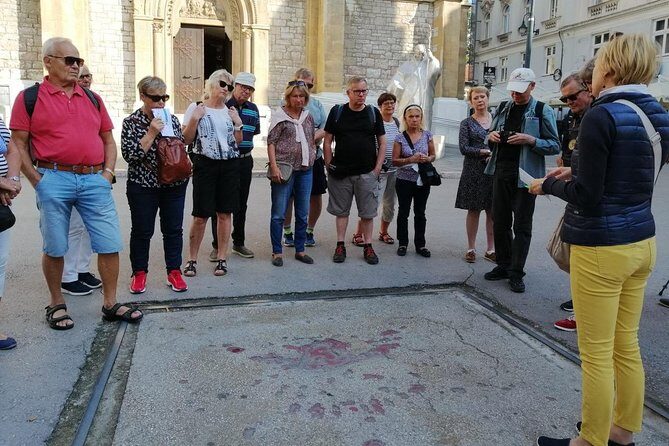
- A lot of Sarajevo in 3 hours: the pace moves, but the story connects the dots between eras.
- English narration with a real guide: you’re not just following signs; you’re hearing explanations and answering questions.
- Major faiths in one loop: mosques, a Catholic church, and Orthodox cathedral are all on the same circuit.
- Memory is part of the route: you’ll visit national memorial sites and war-related landmarks.
- Local flavor stops are built in: markets and traditional streets appear alongside monuments.
- Group size stays small-ish: maximum 30 people, so it’s easier to keep up.
Where You Start at Sarajevo Insider (and How to Set Yourself Up)
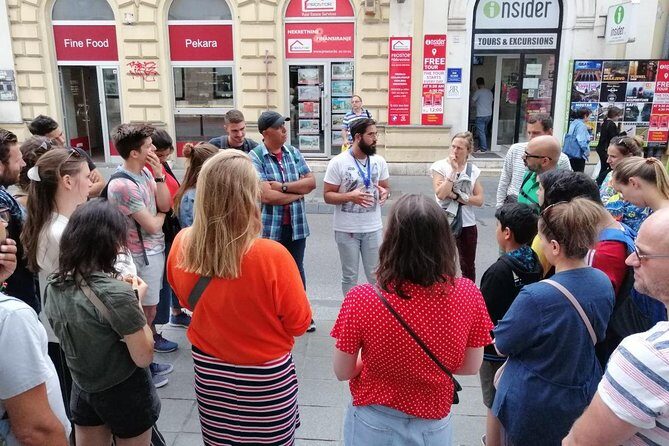
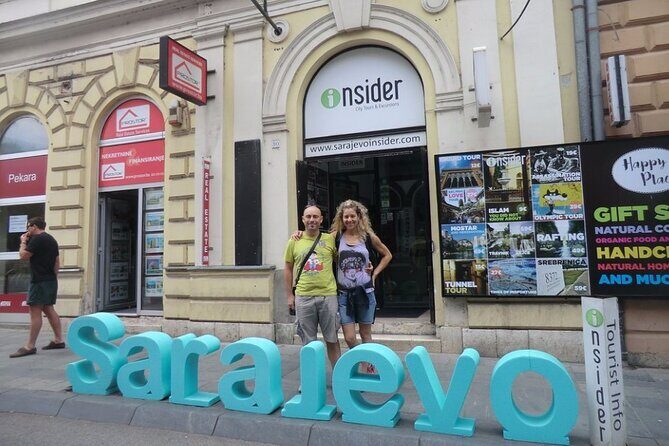
The tour meets at Sarajevo Insider – City Tours and Excursions, Zelenih beretki 30, Sarajevo 71000. You get a mobile ticket, and it’s offered in English, with a guide leading the walk for about 3 hours. The ending point goes back to the meeting area, so you’re not left stranded across town.
Because this is an organized walking circuit, I recommend arriving a few minutes early, not to be polite to strangers, but so you can settle in before the guide starts the main thread of Sarajevo’s story. Reviews also suggest a smart move: if you can, schedule this for your first day, so the rest of your trip makes more sense.
Practical tip: the route is mostly made of city blocks and streets, so bring comfortable walking shoes. One review mentions rain near the end, so pack something light for wet weather too. And since the experience requires good weather, have a backup plan for rescheduling if conditions are poor.
You can also read our reviews of more walking tours in Sarajevo
Latin Bridge to Baščaršija: The City’s Big Turning Point, Then Its Old-Town Heart
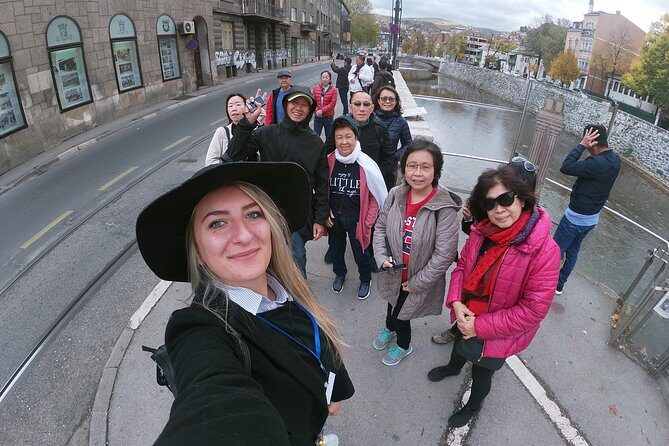
Your first major anchor is the Latin Bridge, tied to the Franz Ferdinand assassination site. This stop is more than a landmark—it’s the moment Sarajevo becomes linked to global history. Expect the guide to connect the dots between that event and the conflicts that followed, so you understand why people worldwide think of this bridge.
From there, the walk loosens into calmer corners. You’ll pass Mejdan Park by the Miljacka River, a short break in green space before the route pulls you back toward history and streets. Then comes a strong shift back to architectural and religious landmarks, which is one reason this tour works so well: it keeps changing the setting so the story never feels like a straight lecture.
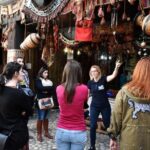
A key Old Town payoff arrives at Baščaršija (Bascarsija), the marketplace area where you can feel Sarajevo’s everyday rhythm. When you’re walking there as part of the tour, you’ll understand what you’re seeing—rather than wandering in random circles. The same goes for the nearby artisan streets: Bravadžiluk and Kazandžiluk are where traditional metalwork and local food culture show up, so you’ll know which streets to prioritize if you want to snack or shop after the tour ends.
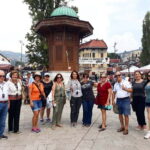
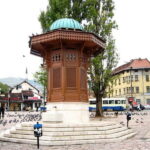
You also hit two classic landmarks that make orientation easy: Sebilj Brunnen (Sebilj Fountain) and then Morica Han. Sebilj is a photo magnet, sure, but the guide also explains the legend tied to returning to Sarajevo—useful context that makes the fountain feel more like a story node than a tourist stop. Morica Han is described as Sarajevo’s last Ottoman inn, so it’s a quick way to sense what the city’s hospitality looked like before modern hotels.
Mosques and Churches: How Sarajevo Shows Multiple Faiths Side by Side

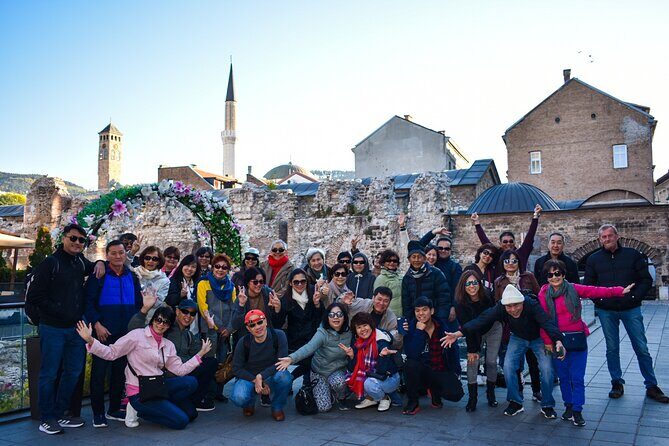
One of the most striking things about Sarajevo is how many faiths share the same urban space. This tour leans into that reality rather than skipping it. You start with Emperor’s Mosque, presented as Sarajevo’s oldest mosque and a reminder of the city’s long Islamic presence.
Then you’ll see the city’s Christian heritage in a couple different forms. Franciscan Church of Saint Anthony is a neo-Gothic stop, a clear contrast in style that helps you read Sarajevo’s architecture like a timeline. Later, you’ll also reach two bigger, more interior-facing spiritual stops: the Cathedral of Sacred Jesus Heart (often compared to the city’s Notre Dame) and the Serbian Orthodox Cathedral, known for striking murals and domes.
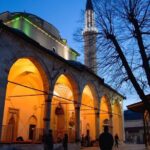
The tour doesn’t stop at one mosque either. You’ll visit Gazi Husrev-beg Mosque, a 16th-century masterpiece and a major spiritual landmark. If you care about how cities hold on to identity through architecture, this is one of the strongest parts of the route. Even if you’re not religious, you’ll come away with a clearer sense of why these buildings are emotional landmarks for locals, not just backdrops for pictures.
Spite House, City Hall, and Kovači Cemetery: The Parts of Sarajevo That Don’t Pretend
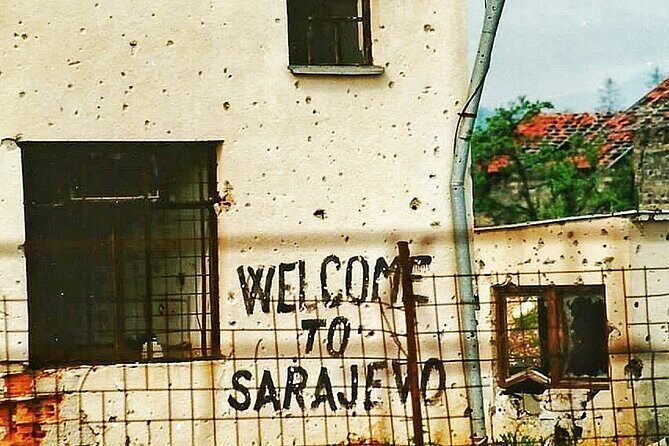
Sarajevo has layers of suffering, pride, and stubborn hope. This tour includes that honesty, and you’ll feel it in the stops that deal with conflict and defiance.
The House of Spite is a standout for its simple message: Sarajevo has stories of people refusing to surrender to power. It’s a short stop, but the guide context turns it into something memorable. Nearby, Sarajevo City Hall is described as a neo-Moorish masterpiece blending East and West, which is another way the city communicates identity—through civic buildings as much as through churches and mosques.
The route then shifts from past stories to national remembrance at Kovači Cemetery, a memorial honoring Bosnia’s defenders from the 1992 to 1995 war. After that, you’ll walk through Kovači Street, which brings you back to the Ottoman-era street feel and local shops. That pairing matters: it stops the tour from feeling like history only happens in monuments. It shows how memory sits inside the living city.
You’ll also pay respect at the Eternal Flame, a World War II monument. This is the kind of stop that can feel heavy, but it’s also one of the reasons the tour delivers more than a surface overview. You leave with a sense of what Sarajevo is protecting, and what it’s determined not to forget.
Old-World Streets and Local Life: Brewery, Markets, and Ottoman Hospitality
Not everything on this route is about monuments. You’ll also get small “real life” stops that help you picture how Sarajevo functions.
One quick detour is Sarajevska Pivara (Sarajevo Brewery), described as Bosnia’s oldest industrial complex and tied to traditional beer production. It’s only a couple minutes, but it adds industrial-era texture to the mostly historical and religious visuals around it.
Then comes Markale City Market (Pijaca Markale). Markets are a useful travel tool: they show you what people eat, what they buy, and what feels normal day to day. Since the tour is timed as an orientation walk, the market stop works best if you treat it as a sensory preview. If you want to return later, you’ll know where to go, and you’ll already have a mental map of how the area connects.
Morica Han (the Ottoman inn) returns as another local-life anchor. You get a glimpse of how hospitality and street life intersected historically, and it helps balance out the war and ceremony stops. Together, brewery, market, and inn make the tour feel like Sarajevo as a living place, not only a museum of conflict.



The Sarajevo Crossroads: Jewish Heritage and the Meeting of Cultures
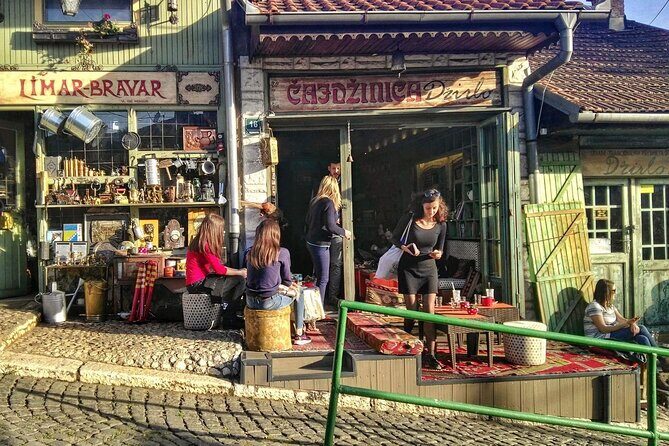
Two stops in particular give you the “crossroads” idea in a concrete way.
First is the Museum of the Jews of Bosnia and Herzegovina, including the old Jewish temple and the Sarajevo Haggadah. This is one of those moments where the guide’s explanation changes what the site means. Instead of treating it as a historical checkbox, you’ll understand it as a marker of Sarajevo’s long cultural presence.
Second is Sarajevo Meeting of Cultures, described as a symbolic crossroads of East and West. It’s a short stop, but it’s placed where it lands well—after you’ve seen multiple faith sites and before you head into the final stretch of the route. That order helps the theme stick: Sarajevo isn’t one story. It’s a stack of them.
And don’t miss the Bosnian House Bicakcic-Hadzisabanovic, described as a modernist architectural gem rich in Sarajevo’s history. It’s an easy stop to overlook because it’s not as famous as the bridge or fountain. Still, it’s valuable because it reminds you that modern design and modern identity also have a place here.
Should You Book the Sarajevo Grand Walking Tour?
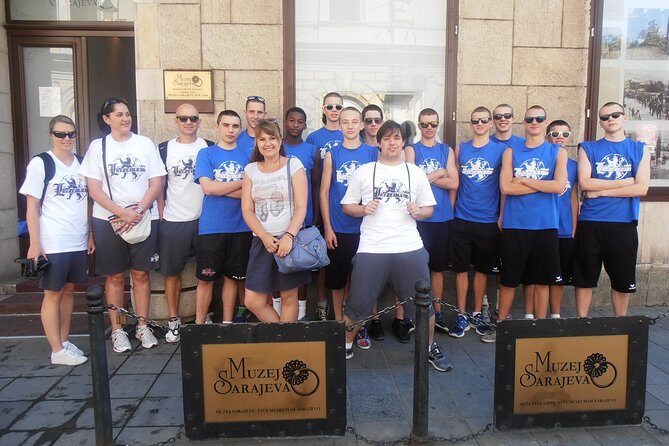
Book it if you want a structured, story-driven way to understand Sarajevo in a short time. At $20.57 per person for about 3 hours, with a guide and a long list of major landmarks, it’s strong value—especially because many of the stops are presented with free admission tickets. This is the kind of tour that gives you bearings fast, so your self-guided exploring afterward feels less random.
Skip it (or at least adjust expectations) if you don’t want a history-forward route with heavy themes. Some sites involve war memory and political conflict, and that tone is part of what makes Sarajevo Sarajevo.
If you do book, here’s my practical advice: wear good shoes, bring a light layer for changing weather, and consider doing it early in your trip. Guides named in reviews like Ilma, Hana, Haris, Suad, Kenan, Emina, and Masha are praised for making complicated history easier to follow, and that makes the walking more than just a checklist.
FAQ
How long is the Sarajevo Grand Walking Tour?
It’s about 3 hours.
What is the price per person?
The price is $20.57 per person.
Is the tour in English?
Yes. The tour is offered in English.
Where does the tour meet, and where does it end?
It starts at Sarajevo Insider – City Tours and Excursions, Zelenih beretki 30, Sarajevo 71000, and it ends back at the same meeting point.
Is there a mobile ticket?
Yes. The tour includes a mobile ticket.
What happens if the weather is bad?
The experience requires good weather. If it’s canceled due to poor weather, you’ll be offered a different date or a full refund.
You Might Also Enjoy
More Walking Tours in Sarajevo

More Tours in Sarajevo
- Fall of Yugoslavia, Sarajevo War Tour with Tunnel of Hope Museum and Frontlines
★ 5.0 · 1,314 reviews


More Tour Reviews in Sarajevo
- Fall of Yugoslavia, Sarajevo War Tour with Tunnel of Hope Museum and Frontlines
★ 5.0 · 1,314 reviews