REVIEW · SARAJEVO
ROSES OF SARAJEVO (Official WAR + CITY tour)- Story of a Survivor
Book on Viator →Operated by Art and Tours Sarajevo · Bookable on Viator
Sarajevo can feel impossible to picture until someone shows you the places. This survivor-led war-and-city tour connects the Siege of Sarajevo to real streets, monuments, and viewpoints—starting with the Tunnel of Hope.
I especially like how the day mixes big, well-known landmarks (like the Sarajevo Olympic sites and Yellow Fortress) with hard-to-grasp details such as minefields, the war museum rooms, and the frontline neighborhoods. One possible drawback: the subject matter is heavy, and one main stop (Tunnel of Hope) costs extra.
In This Review
- Key highlights you should care about
- How the Roses of Sarajevo tour makes the Siege feel real
- Price and what’s included: what $53.21 covers (and what doesn’t)
- Getting started at Đulagina 2 and how the day is paced
- Sacred Heart of Jesus Cathedral and the “Little Yugoslavia” idea
- Sarajevo War Tunnel: war-house, minefields, museum rooms, then the tunnel walk
- What “Walking the Tunnel of Hope” adds that photos can’t
- Roses of Sarajevo and the years 1994 and 1995
- Yugoslavia, WWII liberation, and why modern Bosnia is hard to explain
- Sniper Alley, Holiday Inn, and the war-journalist story
- Austro-Hungarian monuments, Sarajevo Haggada, and the siege museums on the street
- Satellite Hill and the battlefield mechanics of the siege
- Olympic village, the 1984 bobsleigh track, and how architecture survives war
- Frontline memory: Butmirska cesta and Dobrinja
- East Sarajevo (RS entity), war murals, and the “two worlds” feel
- Trebević Vidikovac: sniper zones, SunnyLand, and big sky viewpoints
- Olympic bobsleigh track and Sarajevo mahala lifestyle
- Urijan Dedina: best sniper alley viewpoint
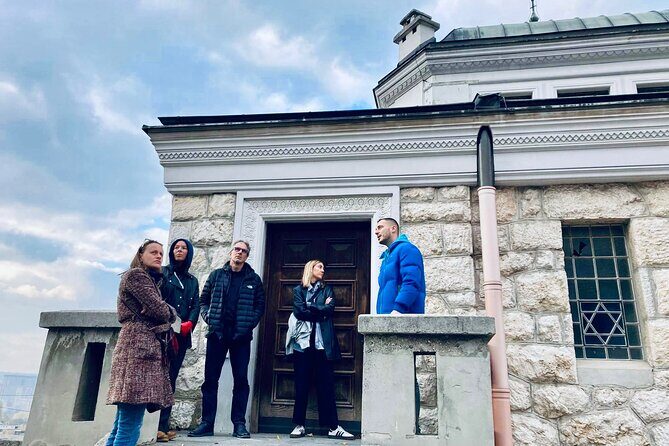
- Jewish Cemetery and synagogue time: Sarajevo as a crossroads
- Suada and Olga Bridge: first shot, love story, and immediate memory
- Yellow Fortress and the Ottoman panorama finish
- Who should book this tour, and who should pace it
- Should you book Roses of Sarajevo (Official War + City tour)?
- FAQ
- How long is the Roses of Sarajevo tour?
- What does the tour cost, and what extra ticket should I expect?
- Is the tour in English, and do I get a ticket?
- What’s included in the price?
- How big are the groups?
- Is this tour suitable for kids?
Key highlights you should care about
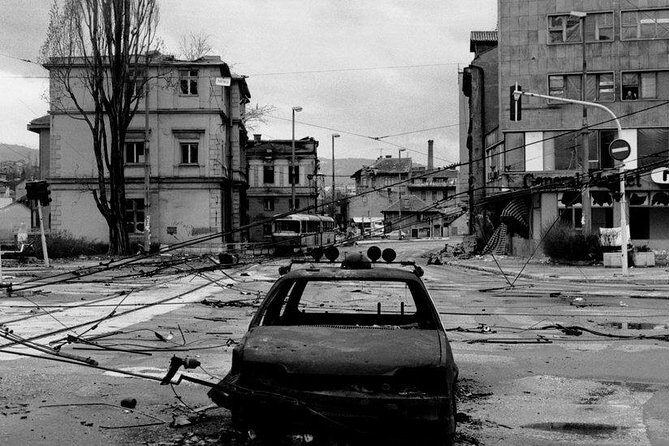
- Tunnel of Hope, inside and explained: war-house, museum rooms, minefields, then a walk through the tunnel itself
- Sniper Alley views plus historical markers: bullet holes, grenade leftovers, and the Trebević mountain statistics
- Two worlds in one city: west Sarajevo landmarks and an East Sarajevo segment in the RS entity
- Old Sarajevo meets newer trauma: Ottoman, Austro-Hungarian, communist-era architecture, and siege traces
- Jewish Sarajevo stops: Jewish cemetery and synagogue visits, plus Sarajevo as a historic crossroads
- Guides with lived memory: you may meet Mak or Alen (or other guides in this style) who keep the story human
How the Roses of Sarajevo tour makes the Siege feel real
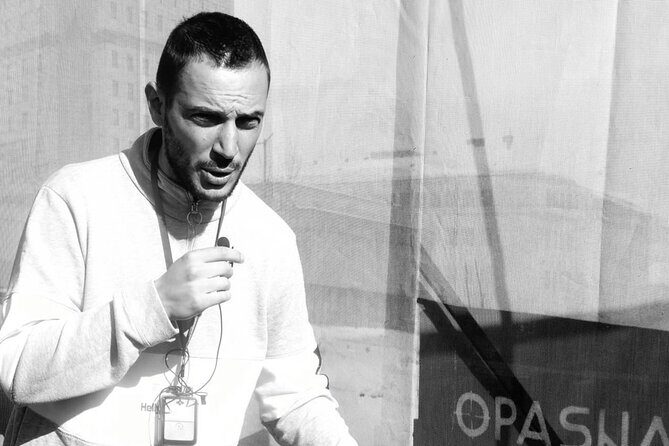
This is not the kind of tour where you get a timeline and move on. You’re guided through Sarajevo in a way that keeps the Siege of ’92–’95 from becoming just an abstract chapter. The core idea is simple: you see the physical remains—bridges, neighborhoods, bullet holes, fortress viewpoints—then you hear what that meant for daily life.
What I like is the balance between understanding and overwhelm. You do get guided context: why Sarajevo mattered, how the city changed, and how politics after the war still shapes what you see. At the same time, the pace includes short breaks and quick viewpoint stops, so the day doesn’t turn into one long, unbroken lecture.
Also, this tour moves across the city with purpose. It’s built to take you from western Sarajevo into East Sarajevo, so you get a more complete sense of the country’s internal divisions. You’ll come away seeing Sarajevo not as one “set of sights,” but as layers of eras—Ottoman, Austro-Hungarian, Yugoslav, siege-era, and post-war.
You can also read our reviews of more city tours in Sarajevo


Price and what’s included: what $53.21 covers (and what doesn’t)
The tour runs about 4 hours 15 minutes for $53.21 per person. That price is mainly for a driver/guide and air-conditioned minivan transport, plus the guided stops around the city.
The big thing to know is the Tunnel of Hope Museum entrance fee is not included. The cost is €10.00 per person. If you’re comparing tours, treat that as part of the real budget: you’re paying for a guided, city-wide war story, and the tunnel visit is the paid anchor stop.
Value-wise, you’re also getting a small-group setup. The experience caps at 15 travelers, and the note that one guide has a maximum of 8 people matters because it’s easier to ask questions when the guide isn’t juggling a big crowd. If you care about questions, this structure helps.
Getting started at Đulagina 2 and how the day is paced
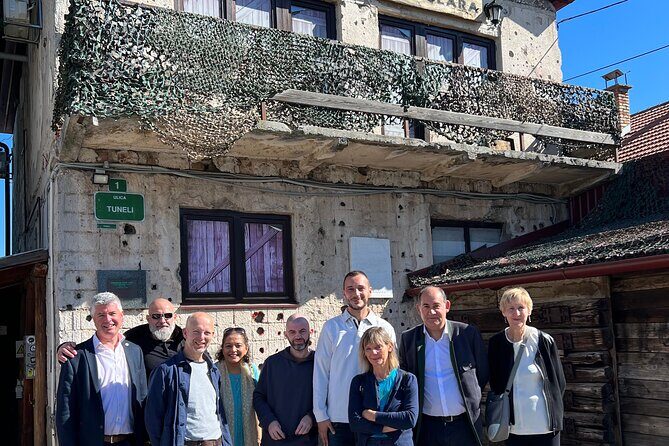
You start and end back at Đulagina 2, Sarajevo (71000). The format is mostly vehicle travel between stops, with shorter walking segments at key points. That’s a practical choice for this particular subject matter: the day covers a lot of geography—west Sarajevo, then into East Sarajevo, then viewpoints and museum-related sites—without asking you to spend the entire day on your feet.
The day is short enough that it stays focused, but long enough to include real content: a tunnel walk, museum rooms, multiple panoramic stops, and two synagogue/cemetery visits. You also get a small amount of free time (about 10–15 minutes) around the tunnel portion, which gives you a chance to reset.
One timing note that’s easy to miss: there’s an on-going movie during the tunnel segment that runs 17 minutes 44 seconds. If you’re the type who likes to know when you’ll be sitting, plan around that.
Sacred Heart of Jesus Cathedral and the “Little Yugoslavia” idea
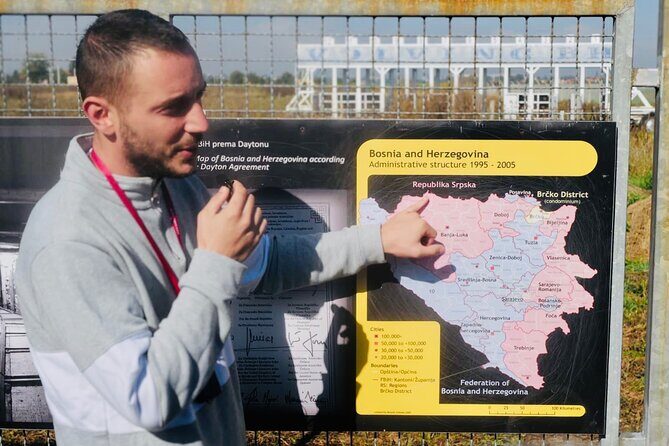
Before you head into the siege-specific sites, the tour sets the stage. You’ll get a brief explanation of Sarajevo’s Sacred Heart of Jesus Cathedral, then a look at why Sarajevo earned the nickname Little Yugoslavia.
This part matters because it helps you understand the city’s identity before the war. Sarajevo wasn’t just a target—it was a place shaped by different empires, religions, and political periods. When the guide later points out architecture styles and changing political systems, you’ll have a mental map for why those differences exist.
If you like your history grounded in places (not just dates), this early orientation is useful.
Sarajevo War Tunnel: war-house, minefields, museum rooms, then the tunnel walk
The heart of the tour begins with a long, guided transfer to the Tunnel of Hope Museum area, with a lot happening along the route.
Here’s what you’ll experience during the tunnel segment:
- You’ll drive past and learn about 20+ monuments, including Ottoman, Austro-Hungarian, and Yugoslav monuments.
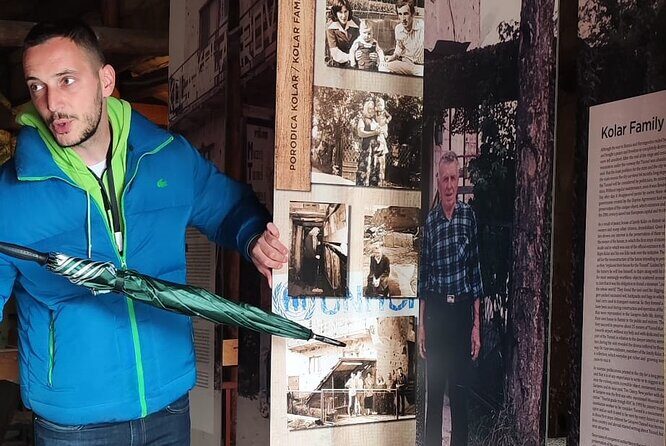
- You’ll visit the war house (Kolar family).
- There’s the movie segment (17 minutes 44 seconds).
- You’ll be shown minefields and hear how they connect to the siege reality.
- You’ll pass through the ’92–’95 Sarajevo War Museum.
- You’ll see the war room and war journal spot.
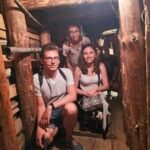
- Then you’ll walk through the Tunnel of Hope.
- Afterward, you get 10–15 minutes of free time.
One practical consideration: the tunnel and museum portion will likely feel emotionally intense. The tour uses physical features—rooms, exhibits, and the tunnel itself—to make the siege tangible. If you’re sensitive to war stories, it helps to pace yourself mentally before you arrive.
Also, even though the tunnel entrance is extra, I think it’s worth budgeting for. The paid ticket is tied to the walk-through portion that anchors the whole day.
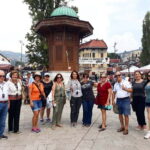


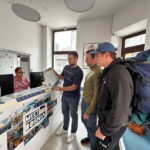
What “Walking the Tunnel of Hope” adds that photos can’t
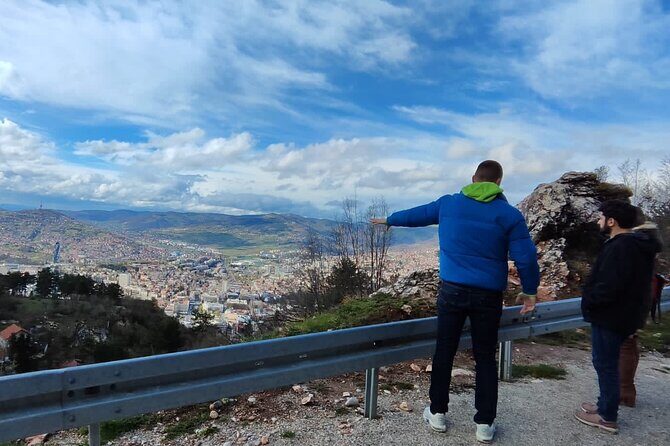
The Tunnel of Hope is special because you’re not just hearing about survival—you’re experiencing the shape of it. You’ll walk through the tunnel after the museum segment, with the guide connecting what you see to what the city endured.
This part works best if you slow down and pay attention to details your brain might normally ignore: how confined spaces change your sense of time, how walls and layout communicate danger, and how the story becomes more than a background fact.
The value of this paid stop is that it turns the Siege into something you can physically locate. Later in the day, when you hear about sniper zones, frontline neighborhoods, and bridges tied to specific people or moments, the tunnel makes those later stops click faster.
Roses of Sarajevo and the years 1994 and 1995
After the tunnel, the tour pivots from the literal survival structure to the broader Siege memory system in Sarajevo.
You’ll learn about the largest Rose of Sarajevo in the city, then hear the Siege’s victim numbers for 1994 and 1995 (given as part of the guided story at that stop). Even if you already know Sarajevo’s symbolism, this is where the concept becomes specific and time-bound rather than general.
If you want to understand why memorials in Sarajevo feel like they’re everywhere, don’t skip this segment. The guide uses it to connect numbers, time, and the meaning of surviving as a shared experience rather than an individual anecdote.
Yugoslavia, WWII liberation, and why modern Bosnia is hard to explain
Next comes a historical-to-political bridge.
You’ll get:
- an introduction of Yugoslavia
- the monument of the liberation of Sarajevo in WWII
- a look at the Presidency of Bosnia and Herzegovina, described during the tour as the European’s most complicated institution
- a brief presentation of the current political system in Bosnia and Herzegovina
This is the part that helps you interpret what you’ll see in later stops. Bosnia and Herzegovina’s post-war structure isn’t just bureaucracy; it’s part of the reason different areas experience identity differently. When the tour later enters East Sarajevo and discusses differences between entities, you’ll already understand why the guide is framing it politically, not just ethnically.
Sniper Alley, Holiday Inn, and the war-journalist story
One of the most dramatic drive-by moments is Sniper Alley. You’ll pass through the area that the tour frames as the main, deadliest stretch of the siege’s sniper activity.
The guide also ties in a specific narrative: the story of the war-journalist hotel, including the Holiday Inn hotel in Sarajevo, described as a place used for the exchange of soldiers during the siege.
That hotel detail matters because it shows how the Siege wasn’t only about bullets. It was also about communication, documentation, and negotiations—at least when they were possible.
Austro-Hungarian monuments, Sarajevo Haggada, and the siege museums on the street
The day keeps layering cultural heritage over siege reality.
You’ll pass the National Museum on the Austro-Hungarian side of Sarajevo, then hear a brief explanation of the Sarajevo Haggada book. From there, you’ll stop at a sniper-alley location tied to the Historical Museum of Bosnia and Herzegovina.
If you’re the kind of traveler who likes continuity, this is a satisfying segment. The guide uses Sarajevo’s older artifacts—books, monuments, museum buildings—as proof that the city’s identity didn’t start in 1992. It only got interrupted.
Satellite Hill and the battlefield mechanics of the siege
At Satellite Hill, you’ll learn about:
- the core defensive zone and strategy of the Bosnian army
- the broader city defense picture as it relates to what you’ll see further down the line
From there, you’ll move toward the middle-part areas that the tour describes as mostly affected during the siege, where you’ll see sniper bullet holes on buildings and three yellow towers with grenade leftovers.
You’ll also get UN official statistics about grenade shots from Trebević mountain over nearly four years. That data point can feel stark, but it’s also helpful. It stops the story from becoming purely emotional by adding scale.
Olympic village, the 1984 bobsleigh track, and how architecture survives war
This tour doesn’t ignore the parts that make Sarajevo easy to love.
You’ll see the 1984 Olympic village and learn about the communist-Yugoslavian architecture. Later, you’ll hit a major sports relic: the Sarajevo Olympic Bobsleigh and Luge Track, including the track’s best photo spot.
And there’s an excellent contrast in the way the guide handles it. Olympic history isn’t treated like a separate brochure topic. It becomes a backdrop—something people lived near even while the siege raged.
If you’re wondering why that matters, it’s because it changes your mental picture from siege-only to city-always.
Frontline memory: Butmirska cesta and Dobrinja
Two short segments feel especially human because they connect the war to early life.
At Butmirska cesta, you visit the survival path and Free Bosnian territory for about 10 minutes (with admission indicated as free on that stop).
Then at Dobrinja, the Survivor on the tour shares details about being born on one of the main frontline zones and describes what it was like growing up before, during, and after the war. This segment is also about 10 minutes.
Even though the time at each stop is brief, the tour makes them count. You’re not just watching the scenery; you’re getting a childhood lens on places that appear, from the outside, to be ordinary streets.
East Sarajevo (RS entity), war murals, and the “two worlds” feel
One of the most useful parts of this tour is that it doesn’t stop at the western side.
You’ll guide through East Sarajevo, located in the second entity, the Republika Srpska (RS) entity. You’ll also understand core differences between the two entities and learn about ethnic diversity in the country.
There’s also a stop for current war murals in East Sarajevo. That matters because it shows how the conflict stays present in public art and street memory—not only in museums.
If you want context that helps you interpret later conversations in Bosnia, this East Sarajevo segment is one of the most practical pieces of the day.
Trebević Vidikovac: sniper zones, SunnyLand, and big sky viewpoints
At Trebević Vidikovac, you get panoramic views and a deeper siege angle.
The tour includes:
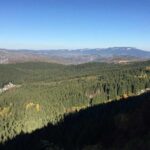
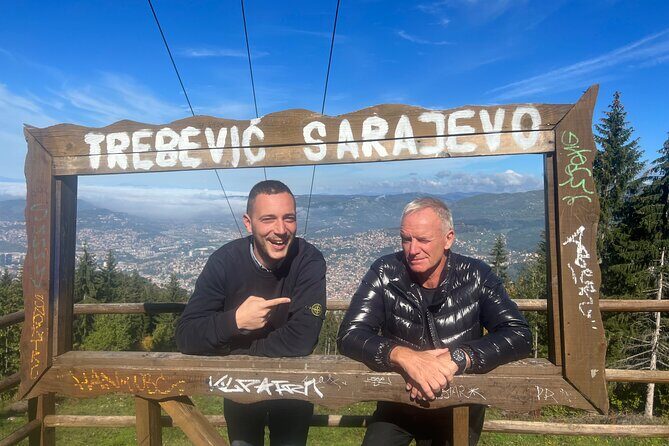
- Trebević Mountain (Panorama)
- I and II sniper zones (about 20 minutes)
- a stop on the way where you’re introduced to SunnyLand, described as a Bosnian Disneyland facility and linked to a previous 1992/1995 sniper zone
This is one of those places where the landscape forces humility. You can look across the city and understand why specific lines of sight mattered so much.
And you’ll also see how Sarajevo’s culture turns survival into humor and naming—SunnyLand is presented in a way that makes the contrast uncomfortable but memorable.
Olympic bobsleigh track and Sarajevo mahala lifestyle
The Sarajevo Olympic Bobsleigh and Luge Track stop includes about 30 minutes, with a focus on a great photo spot.
After that, the tour encourages you to explore a hilly neighborhood (mahala) and experience the local lifestyle. The time here is part of the day’s rhythm: after museums and conflict sites, you get a glimpse of how daily life holds its shape in a steep city.
Urijan Dedina: best sniper alley viewpoint
At Urijan Dedina, the tour calls out a best viewpoint of the Sarajevo Sniper alley.
It’s only around 10 minutes, but the point is clear. The guide wants you to see the “why” behind the story: what a sniper line of sight looked like from a distance, and how that affects whole neighborhoods.
This is also a good moment to take a careful look before the tour keeps moving. It’s easy to rush panoramas, but this one is meant to build understanding.
Jewish Cemetery and synagogue time: Sarajevo as a crossroads
The tour visits the Jewish Cemetery with about 25 minutes allocated to it. You’ll see:
- 16th-century monuments
- a presentation about Sarajevo as European Jerusalem
- a monument for WWII Jewish victims
- the Jewish Synagogue
This is one of the most quietly powerful parts of the day because it broadens the Siege story. The guide is connecting Sarajevo’s layers of identity—religion, community, preservation—with the modern trauma that struck in the 1990s.
Later, you’ll also learn about and see Ashkenazi Jewish society stops, including the Ashkenazi Synagogue as part of the Austro-Hungarian neo-gothic area segment.
If you care about how pluralistic cities remember themselves, don’t skip these stops.
Suada and Olga Bridge: first shot, love story, and immediate memory
At Suada and Olga bridge, you’ll visit two sides, each with its own Siege meaning.
The left-side area is framed as the Sarajevo Siege First Victim Bridge side, tied to the first shot building from the start of the war. The right side is described as the Sarajevo Romeo and Juliet bridge side, a love story setting.
And this is one reason I like this tour: it doesn’t only show big history. It shows personal, named memory points. You’re walking between stories people still reference.
Yellow Fortress and the Ottoman panorama finish
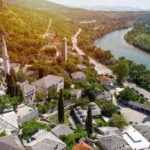
The tour ends with Yellow Fortress, with about 20 minutes allocated for presentation and views. It’s described as a best panorama and sunset spot and includes Ottoman history.
This ending works because the fortress ties together what the guide has been doing all day: showing Sarajevo in layers. Ottoman past, Austro-Hungarian architecture, Yugoslav identity, siege traces, and contemporary political reality all get held together in one final viewpoint.
If you’re lucky with weather, sunset here can feel like a release valve after the heavy stops earlier.
Who should book this tour, and who should pace it
This is a strong fit if you:
- want a story-of-survival perspective rather than only museum facts
- like city history tied to specific places
- want context on Bosnia’s political setup and how it affects different parts of Sarajevo
- appreciate a tour that includes both painful and beautiful Sarajevo
You might think twice if you:
- don’t handle war-related material well
- need a purely casual sightseeing day (this is not that)
- mind paying an extra €10 for the Tunnel of Hope museum entrance
One practical tip: if you can, plan this as one of your earlier Sarajevo experiences. The day provides a foundation that makes later reading, street art, architecture details, and conversations make more sense.
Should you book Roses of Sarajevo (Official War + City tour)?
Yes—if you’re ready for a serious, meaningful day. The tour’s biggest strength is that it doesn’t treat the Siege like a distant event. You’ll see the physical evidence—Tunnel of Hope, Sniper Alley zones, frontline neighborhoods, memorials and bridges—and you’ll get a survivor story that makes the city’s complexity easier to understand.
What makes it worth your time and money:
- small-group feel (max 15 overall; guide with max 8)
- a tight route that covers west + East Sarajevo
- a guided mix of war reality and cultural identity
- multiple viewpoint stops that help you build a mental map fast
If you want a Sarajevo day tour that actually explains how the city works—past and present—this is one of the best choices you can make.
FAQ
How long is the Roses of Sarajevo tour?
It runs about 4 hours 15 minutes.
What does the tour cost, and what extra ticket should I expect?
The price is $53.21 per person. The Tunnel of Hope Museum entrance fee is not included and costs €10.00 per person.
Is the tour in English, and do I get a ticket?
Yes, it is offered in English, and you receive a mobile ticket.
What’s included in the price?
The included items are the driver/guide and transport by air-conditioned minivan.
How big are the groups?
The experience has a maximum of 15 travelers, and it notes that one guide has a maximum of 8 people.
Is this tour suitable for kids?
Children must be accompanied by an adult, and the tour notes that most travelers can participate.
You Might Also Enjoy
More City Tours in Sarajevo
More Tours in Sarajevo
- Fall of Yugoslavia, Sarajevo War Tour with Tunnel of Hope Museum and Frontlines
★ 5.0 · 1,314 reviews

More Tour Reviews in Sarajevo
- Fall of Yugoslavia, Sarajevo War Tour with Tunnel of Hope Museum and Frontlines
★ 5.0 · 1,314 reviews