REVIEW · SARAJEVO
Sarajevo Essential Full Walking Tour
Book on Viator →Operated by Spirit Tours Sarajevo · Bookable on Viator
This small-group walking tour is the quickest way I know to line up Sarajevo’s big landmarks in a simple route, while still explaining how the city’s faiths and cultures shaped each other. I especially like the tight pacing: you hit key sights in 5–10 minute chunks, so you can still do other things later the same day. The only real drawback is that it is not built for lingering, so if you want long museum time or deep interior visits, you’ll need to plan extra stops on your own.
I also like the way the tour treats explanations like something you can actually use on the street. One guide name that comes up often is Adnan (Ado), and the style is straightforward and easy to follow, with room for questions in the moment, in English.
One more consideration: not everything is free once you arrive. The Museum of the Jews of Bosnia and Herzegovina and Sarajevo City Hall (Vijećnica) have entries that are not included in the tour price, so you should budget a little extra if you want to go inside those.
In This Review
- Key takeaways before you walk
- Why this Sarajevo Essential walking tour works for first-timers
- Step-by-step route: Sacred Heart to Latin Bridge
- Tickets, timing, and why the pace matters
- The Sarajevo story you actually remember
- Practical details: meeting point, pickup, and small-group feel
- Price and value: $18.15 for the heart of Sarajevo
- Who this tour suits best
- Should you book? My take
- FAQ
- How much does the Sarajevo Essential Full Walking Tour cost?
- How long is the walking tour?
- Is the tour offered in English?
- Where do I meet the tour?
- Is pickup available?
- What’s included in the tour price?
- Are any entry tickets included?
- Is food or drinks included?
- What’s the maximum group size?
- Can I cancel for a full refund?
- What does the cancellation notice depend on?
Key takeaways before you walk

- A 1–2 hour circuit covering Sarajevo’s top sights, from Cathedral rooftops to Latin Bridge.
- Multifaith Sarajevo in real space, not just theory, with the City’s meeting-of-cultures idea built into the route.
- Adnan (Ado)-style guidance: clear, question-friendly, and easy to listen to.
- Most stops are quick and free, but two key interiors cost extra.
- Craft stops matter, especially the coppersmith street (Kazandziluk) where you can still see the trade alive.
Why this Sarajevo Essential walking tour works for first-timers
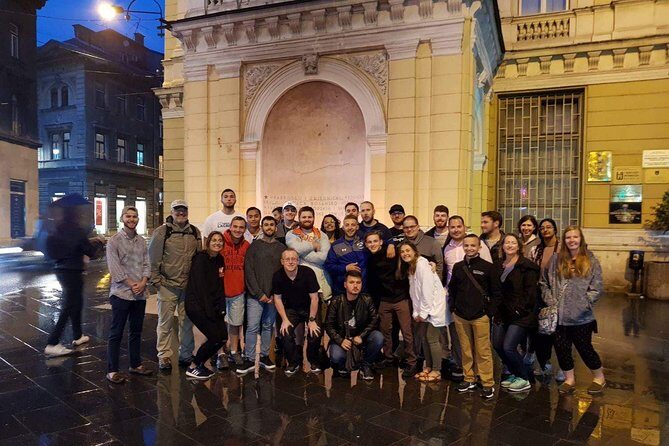
Sarajevo can feel like a puzzle at first. You see stunning Ottoman architecture, then suddenly an Austro-Hungarian civic building, then churches and mosques that sit close enough to feel like neighbors. This tour gives you a map for the puzzle: you walk the city center and learn what each place meant to the people who lived here.
At a price of $18.15 per person for about 1–2 hours, this is more than a “see the sights” stroll. It’s structured to help you recognize patterns. You notice how trade streets like the covered bazaar connect to everyday life, how monumental buildings reflect political eras, and how shared public space became a kind of stage for coexistence.
And it’s designed for real schedules. The tour is usually booked about 8 days in advance, which tells me it’s popular with people who don’t want to gamble on finding a guide at the last minute. It ends back at the meeting point, so you’re not left stranded across town.
You can also read our reviews of more walking tours in Sarajevo
Step-by-step route: Sacred Heart to Latin Bridge
Here’s what you can expect on the walk, in the order you’ll encounter it, and what each stop adds beyond a quick photo.
1) Cathedral of Jesus’ Sacred Heart
You start at Sarajevo’s biggest Catholic church, built in 1889 in a Neo-Gothic style. It is the seat of the Archdiocese of Vrhbosna, so it’s not just pretty architecture—it signals how Catholic life established visible presence in the city. Admission is free for this stop, and the time on site is about 10 minutes, which is enough to get oriented and take in the building’s shape without rushing.
Practical note: plan a quick look inside if you can; this is a good warm-up for the rest of the route’s faith-and-era comparisons.
2) Museum of the Jews of Bosnia and Herzegovina
Next comes a short stop inside Sarajevo’s City Museum area, focused on the Museum of Jews of Bosnia and Herzegovina. It sits in the oldest synagogue in Bosnia and Herzegovina. The stop is only about 5 minutes, and the admission ticket is not included—so you’ll need to decide quickly if you want to spend extra time here or just absorb the context from outside/entry areas.
This is a powerful stop because it gives historical depth to Sarajevo’s pluralism. You’re not just looking at buildings; you’re learning how different communities anchored themselves in the city.
3) Sarajevo Meeting of Culture on Ferhadija St.
On Ferhadija Street, near Gazi Husrev Bey’s Bezistan, you’ll see the message celebrating Sarajevo’s meeting of cultures. It’s a reminder that the city’s identity is not one story. The stop is brief (around 5 minutes) but it sets up what you’ll see right after: Ottoman urban design, then later a mix of civic monuments and other religious symbols.
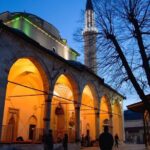
4) Gazi Husrev-beg Mosque
Now you reach one of the biggest Ottoman landmarks in the city: the Gazi Husrev-beg Mosque. Built in the 16th century, it is the largest historical mosque in Bosnia and Herzegovina and one of the most representative Ottoman structures in the Balkans. This stop is free for entry and about 10 minutes.
What I like here is that you get an architectural anchor early on. Once you see this scale and presence, later Ottoman features like the bezistan and hans (inn/trade buildings) make more sense.
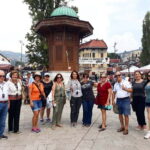
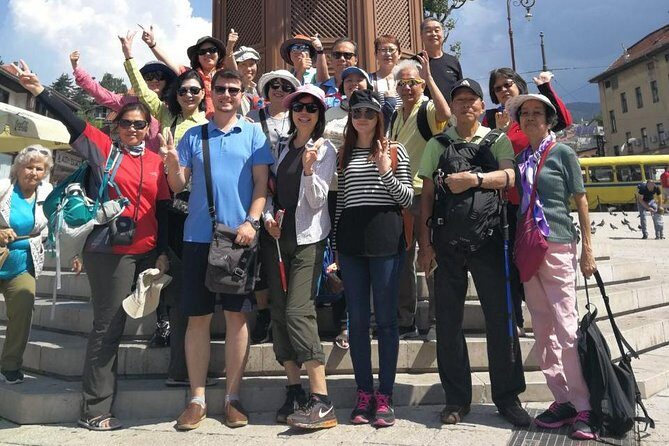
5) Sebilj Brunnen (Fountain)
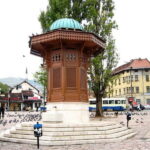
A few minutes later you’re at Baščaršija Square, where the Sebilj wooden fountain sits. This Ottoman-style fountain was built by Mehmed Pasha Kukavica in 1753. It’s free to see and only about 5 minutes, but it’s one of those places where Sarajevo feels like itself. This is a common gathering point, and the fountain’s survival helps you picture the old city as a lived-in public space, not just an outdoor museum.
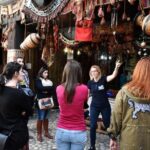
6) Kazandziluk (Coppersmith street)
Then comes a trade street: Kazandziluk, the coppersmith street. This is where you see craft culture in action. Coppersmithing still lives here, and the shop-front look has been retained for centuries. Time is about 10 minutes and entry is free.
This is one of the stops I’d treat as a highlight because it turns the whole walking tour from architecture to daily life. If you want one place to ask questions, ask here.
7) Sarajevo City Hall (Vijećnica)
Next is Sarajevo City Hall, also known as Vijećnica. This is the Austro-Hungarian era building that feels extravagant compared to the narrower Ottoman street pattern around it. It’s presented as a symbol of the meeting of world civilizations. Time on this stop is about 10 minutes, but entry tickets are not included.
Vijećnica is worth a quick exterior look even if you don’t go inside. Still, if you want the full experience, you’ll likely need to pay for entry separately.
8) Cumurija Bridge and the Spite House
You then cross over near Cumurija Bridge, with the Spite House nearby. The “spite” name comes from the story of the owner’s stubbornness, and today the building is a popular national restaurant and protected cultural heritage site. The stop is short (about 5 minutes) and free to see.
This is a good reminder that local history can be human-scale. Even when you’re looking at heritage protection, it’s grounded in real decisions by real people.
9) Emperor’s Mosque
After that, you reach the Emperor’s Mosque, Sarajevo’s oldest mosque. It’s thought the founder of Sarajevo, Isa Bey Ishaković, built it soon after the city’s founding in 1462 in honor of Sultan Mehmed II. This stop is free and takes about 5 minutes.
It’s brief, but it matters. If Gazi Husrev-beg shows Ottoman grandeur, Emperor’s Mosque helps you remember the earlier roots.
10) Latin Bridge (Principov Most)
Then you arrive at Latin Bridge, also called Principov Most. This is where Gavrilo Princip assassinated Archduke Franz Ferdinand and his wife, Sofie, and that event is described as the beginning of the First World War. The stop is about 10 minutes and free to see.
If you’re the type who wants context without turning the walk into a lecture, this part hits the right note. You see a real location tied to a world-shaping event, and you get just enough explanation to place it in your mental timeline.
11) Gazi-Husrev Beg’s Bezistan (covered bazaar)
Now the route shifts back to everyday economic life. The Gazi-Husrev Beg’s Bezistan is a preserved Ottoman covered bazaar built in 1555. It still serves its purpose for trade. Time here is about 5 minutes and free to enter.
Even in a short stop, you can feel the logic of covered markets: weather protection, controlled spaces for sellers and buyers, and a design that kept the city’s commerce moving.
12) Taslihan
A few minutes later comes Taslihan, built in 1543 as a waqf of Ghazi Husrev-Bey. It originally included a fountain, a mosque, yard, shops, and storage rooms. It was damaged by fires over time, which helps you understand why Sarajevo’s built environment shows layers rather than a single perfect moment. This stop is about 5 minutes and free.
This is a good place to notice how “infrastructure” buildings shaped social life. Inns and trade complexes weren’t just utilities; they helped keep people connected.
13) Europe (Hotel exterior)
Then you pass by the Europe Hotel, an Austro-Hungarian building in the heart of the city near the Old Town core. The focus here is external splendor, and the stop is about 5 minutes and free.
It’s a quick breather in the route, and it helps you clock the shift between Ottoman street forms and later European civic style.
14) Centar (Serbian Orthodox Cathedral Church of the Nativity of the Theotokos)
Next is Centar, the Cathedral Church of the Nativity of the Theotokos. It’s described as the largest Serbian Orthodox church in Sarajevo and one of the largest in the Balkans. Time is about 5 minutes and the stop is free.
This is where the tour’s multifaith story becomes very real. You’ll notice how the route isn’t treating religious buildings as isolated monuments; they’re part of the same city fabric.
15) Monument All Man Multicultural
In the center between major religious symbols, you’ll see the Monument All Man Multicultural, celebrating multiethnicity. The carving references the multicultural man building the world in Italian and Bosnian. This stop is about 10 minutes and free.
I like this stop because it forces you to look at the city’s message to itself. It’s not only about what happened. It’s also about what the city wants to remember.
16) Sarajevo Rose memorial
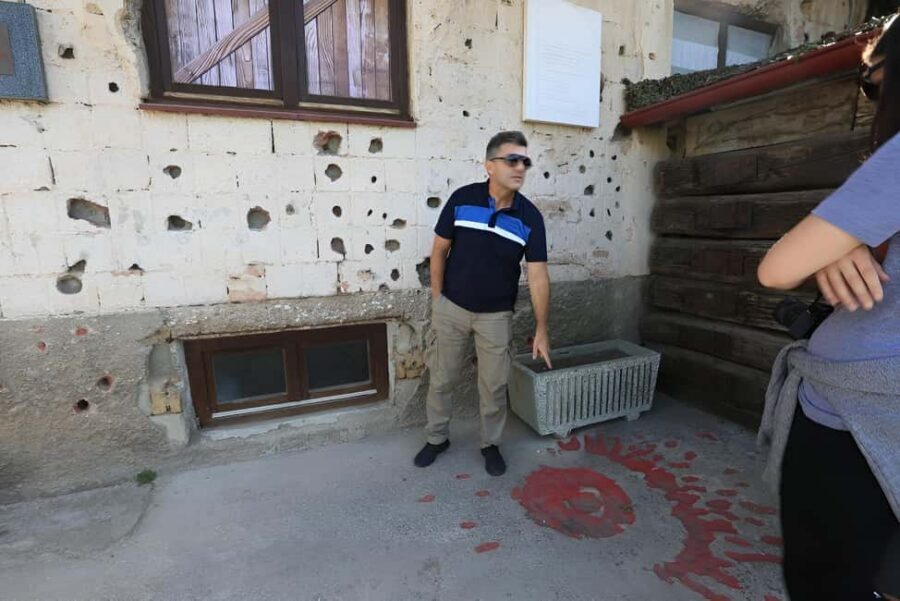
Finally, you reach the Sarajevo Rose, a memorial made from concrete scar caused by mortar shell explosion, later filled with red resin. Time is about 10 minutes and free.
This last stop puts emotion back into the story without turning it into a long detour. It’s a quiet endpoint after all the monuments and architecture, and it changes how you read the rest of the city.
Tickets, timing, and why the pace matters
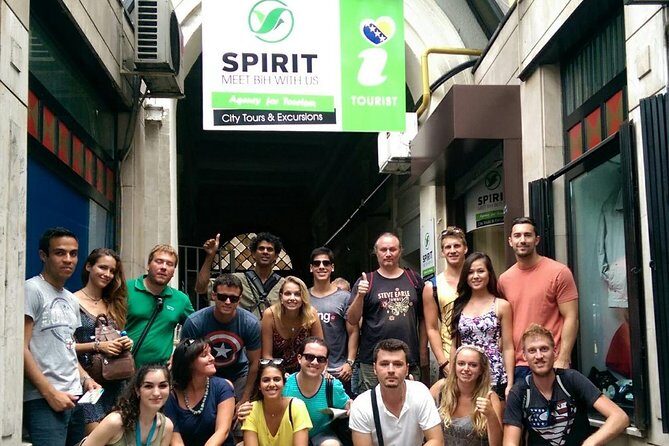
The tour is listed at about 1 to 2 hours, and the schedule on each stop is typically 5 to 10 minutes. That’s a feature, not a flaw, if you’re trying to get your bearings fast.
Here’s the practical breakdown that affects your planning:
- Most stops are free to visit (cathedral entry is marked as free; mosque entries are free; several monuments and external sights are free).
- Two stops are not included for admission: the Museum of the Jews of Bosnia and Herzegovina and Sarajevo City Hall (Vijećnica).
- You’re also not told that lunch or drinks are part of the experience, so you should treat this as a moving tour.
If you’re the kind of traveler who wants to spend 30–60 minutes inside key sites, you may feel slightly rushed. If you’re the kind who wants the story and then chooses what to return to later, this pacing is ideal.
The Sarajevo story you actually remember
What makes this walking tour stick is how it connects symbols to street life. Instead of separating Sarajevo into “Ottoman part” and “Austro-Hungarian part,” the route keeps crossing those threads.
A few moments to watch for:
- Meeting of Cultures signage on Ferhadija Street gives you the theme early, before the Ottoman landmarks.
- Bezistan and Taslihan show that Ottoman Sarajevo wasn’t only about mosques. It was trade, storage, movement, and public routine.
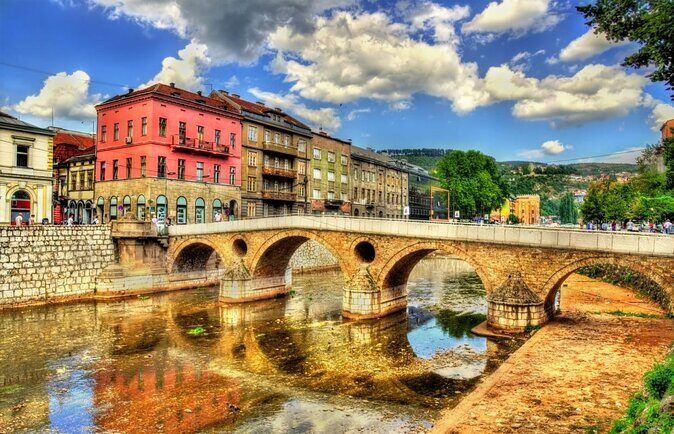
- Latin Bridge turns global events into a grounded location. You can see exactly where history happened, not just where it was described.
- Monument All Man Multicultural and the Sarajevo Rose help you connect past conflict and coexistence to visible public memory.
If you’re traveling with friends who love different styles of sightseeing—churches, mosques, street markets, or war-history context—this route gives each person something to anchor on.
Practical details: meeting point, pickup, and small-group feel
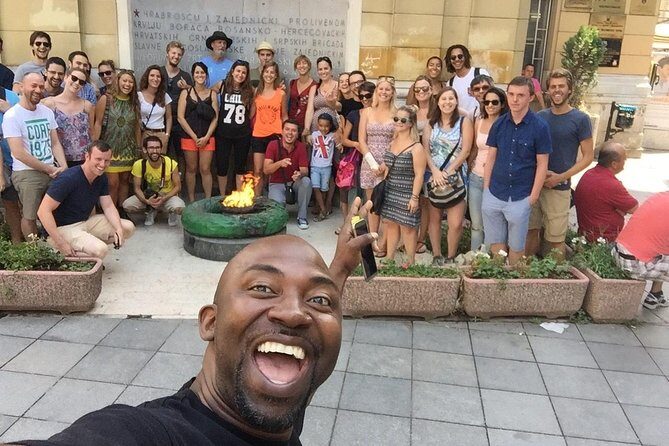
You’ll meet at Spirit Tours, BH Spirit City Tours and Excursions Office at Ferhadija 19, Sarajevo 71000. The tour ends back at the same meeting point, so you don’t have to solve the “how do I get back?” problem.
Pickup is offered if you request it in advance for a hotel, apartment, or hostel. The tour also uses a mobile ticket, which is handy if you don’t want to keep paper confirmations. It’s conducted in English, and the maximum group size is 50, which keeps it from feeling like a giant parade.
It’s near public transportation, which matters because Sarajevo’s center is easiest on foot, but your day might start elsewhere.
One more small note: service animals are allowed, so if that’s part of your travel reality, you can book with more confidence.


Price and value: $18.15 for the heart of Sarajevo
For $18.15 per person, you’re paying for a guide-led experience that hits a lot of high-recognition landmarks in one go. Most of the stops are marked free for admission, so the tour price buys you interpretation more than it buys you ticket access.
The two likely cost add-ons are:
- the Museum of the Jews of Bosnia and Herzegovina
- Sarajevo City Hall (Vijećnica)
So you should think of the total value as: base tour price plus any optional entries you choose to pay for.
In my view, this is good value if:
- you only have a few hours in Sarajevo
- you want context, not just selfies
- you prefer a structured route over wandering and guessing
- you like learning how a city’s different communities lived side by side
Who this tour suits best
This is a strong match for:
- first-timers in Sarajevo who want the essential highlights fast
- travelers who care about multicultural and multifaith context
- people who enjoy walking and short stops with a guide explaining what you’re seeing
- couples or small groups who like asking questions on the spot
If you’re trying to cram Sarajevo into a tight day, this can help you pick where to return later. If you’re the type who wants long quiet time inside places of worship or deep museum sessions, plan one extra independent visit after the tour.
Should you book? My take
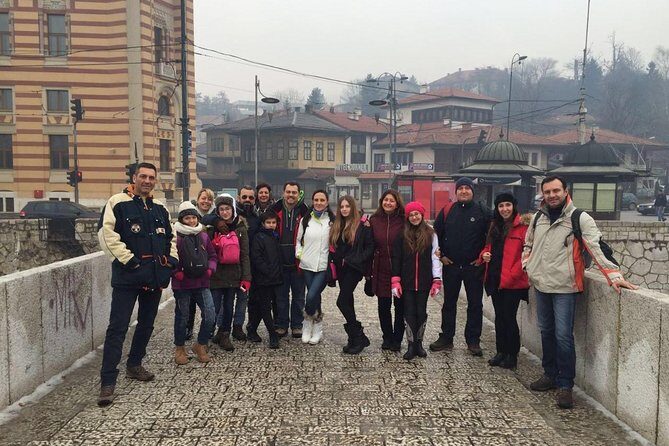
I’d book this Sarajevo Essential Full Walking Tour if you want the city’s big story told in walking-distance chunks. The route covers Catholic, Orthodox, and Ottoman landmarks in a way that helps you connect dots quickly, and the guide-led approach makes it easier to understand why Sarajevo looks the way it does.
I’d consider skipping or treating it as a light sampler if you know you want lots of interior time at museums and city buildings. Two admission stops are not included, and the stop lengths are short by design.
If your goal is to get your bearings fast, with meaningful context and a route that still feels human, this is a smart use of your time.
FAQ
How much does the Sarajevo Essential Full Walking Tour cost?
The price is $18.15 per person.
How long is the walking tour?
It runs about 1 to 2 hours.
Is the tour offered in English?
Yes, it is offered in English.
Where do I meet the tour?
The meeting point is Spirit Tours at BH Spirit City Tours and Excursions Office, Ferhadija 19, Sarajevo 71000.
Is pickup available?
Pickup is offered. If you need it, you can request pickup from your hotel, apartment, or hostel in advance.
What’s included in the tour price?
It includes a local guide and a professional guide.
Are any entry tickets included?
Some stops are marked as free, but not all admissions are included. The Museum of the Jews of Bosnia and Herzegovina and Sarajevo City Hall (Vijećnica) are listed as not included.
Is food or drinks included?
No. Food and drinks are not included.
What’s the maximum group size?
This tour has a maximum of 50 travelers.
Can I cancel for a full refund?
Yes, you can cancel up to 24 hours in advance for a full refund.
What does the cancellation notice depend on?
It can also be canceled if a minimum number of travelers is not met, in which case you’ll be offered another date/experience or a full refund.
You Might Also Enjoy
More Walking Tours in Sarajevo
More Tours in Sarajevo
- Fall of Yugoslavia, Sarajevo War Tour with Tunnel of Hope Museum and Frontlines
★ 5.0 · 1,314 reviews

More Tour Reviews in Sarajevo
- Fall of Yugoslavia, Sarajevo War Tour with Tunnel of Hope Museum and Frontlines
★ 5.0 · 1,314 reviews