REVIEW · SARAJEVO
Private Walking Tour, Food Tasting and Bosnian Coffee in Sarajevo
Book on Viator →Operated by Bella Bosnia Tours · Bookable on Viator
Coffee and history share one tight walking route. This private Sarajevo experience pairs Bosnian coffee ritual with landmark stops that connect Ottoman and Austro-Hungarian Sarajevo to world-changing moments. I especially like the private guide time that turns each square and street into something you can actually picture, not just read about. The one drawback: you cover a lot in about 2.5 hours, so plan for steady walking and a lighter day beforehand if you don’t want a full-stomach finish.
Guides such as Emina and Lamija set the tone with relaxed pacing and real conversational history, including coffee culture and Sarajevo’s religious mosaic. It’s a smart first-day style tour when you want your bearings fast and your taste buds busy.
In This Review
- Key highlights worth your time
- Sarajevo’s Food + Coffee + Landmarks Plan
- Sebilj Fountain and Sarajevo City Hall: Starting in the Center of It All
- Kazandziluk and Morica Han: Copper Craft Meets How Bosnians Drink Coffee
- Bravadžiluk Street and the Clock Tower: Food Recommendations With a Story Hook
- Sacred Heart Cathedral, Sarajevo Roses, and the Pope John Paul II Connection
- Gazi Husrev-beg Mosque and Bezistan: Ottoman Sarajevo in Walking Distance
- Latin Bridge Ending: The Franz Ferdinand Moment That Shifted the World
- Price and Value: What $66.54 Buys You in Sarajevo
- Timing, Walking Comfort, and How to Prepare
- Who This Tour Fits Best (and Who Might Want Something Else)
- Should You Book This Sarajevo Food and Bosnian Coffee Tour?
- FAQ
- How long is the Private Walking Tour, Food Tasting and Bosnian Coffee in Sarajevo?
- What language is the tour offered in?
- Is this a private tour or shared group experience?
- Where does the tour start, and where does it end?
- Are admission tickets included for the sights on the route?
- Can I cancel and get a full refund?
Key highlights worth your time
- Bosnian coffee taught the local way, not just a quick sip
- Old-town streets with craft details, including copper and brass storytelling in Kazandziluk
- Caravanserai-style Morica Han stop, where coffee fits the Ottoman architecture
- Multiple faiths in walking distance, with the Cathedral, mosques, and Orthodox church all in one route
- The Latin Bridge ending, tied to Franz Ferdinand and the spark of World War I
Sarajevo’s Food + Coffee + Landmarks Plan
This tour works because it refuses to treat food like an add-on. You walk through classic old Sarajevo spots, and the guide links them to everyday Bosnian life: how people drink coffee, what people trade, where communities gather, and how empires left physical fingerprints.
You’re moving at a comfortable walking pace for roughly 2 hours 30 minutes, with short stays that keep momentum. The structure is simple: you start in the heart of old Sarajevo, hit major landmark anchors, and end near Latin Bridge. Along the way, you get a real tasting experience with traditional Bosnian food and Bosnian coffee at key moments.
Because it’s private, you’re not stuck in a loud group where you only hear half the story. You can ask questions, and the guide can adjust to your pace. One practical thing to know: this is not a slow museum tour. Wear shoes you’ll enjoy on cobblestones and uneven pavement, and you’ll have a much better time.
You can also read our reviews of more walking tours in Sarajevo
Sebilj Fountain and Sarajevo City Hall: Starting in the Center of It All
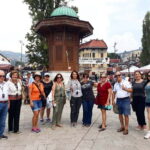
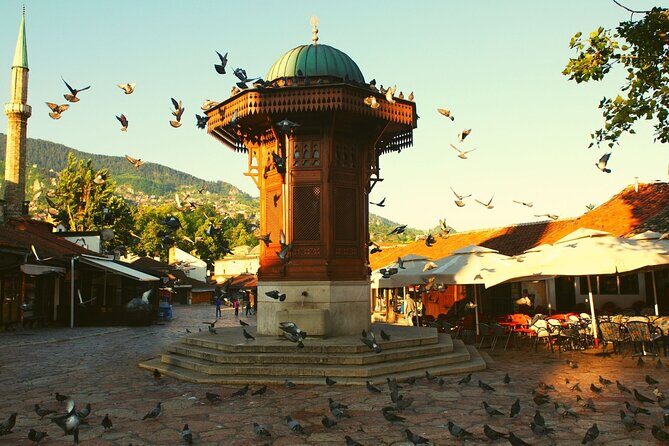
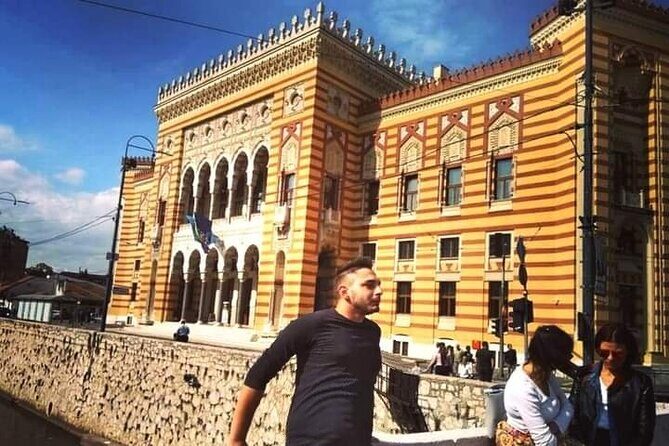
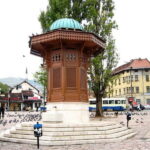
You begin at Sarajevo City Hall, at Brodac 1. From there, you quickly reach Sebilj Brunnen on Bascarsija square—also called Pigeon Square. It’s an 18th-century wooden fountain, and the guide uses it as a launch point to explain how Sarajevo’s social life shaped the city’s identity. This isn’t just a pretty photo stop; you get the story behind why that spot matters.
Then you move to Sarajevo City Hall, an Austro-Hungarian-era landmark that also served as a national and university library. That detail matters because it helps you see the building not just as architecture, but as part of a system that influenced education and public life.
What I like here: the tour starts where your sense of orientation is easiest. If you’re visiting Sarajevo for the first time, this first chunk helps you understand how the city is laid out before you go deeper.
Potential drawback: if you prefer a tour with longer, quiet viewing time at fewer stops, this opening sprint may feel busy. You’ll still get meaningful context, but it’s packaged into quick beats.
Kazandziluk and Morica Han: Copper Craft Meets How Bosnians Drink Coffee
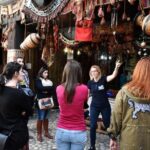
Kazandziluk is the kind of old street that makes you slow down. It’s described as Sarajevo’s oldest street, and it’s famous for coppercraft pieces. Expect to see shops and handcrafted objects that are both decorative and practical in how they represent local trade traditions.
This stop is also where the tour pivots into coffee culture in a clear, hands-on way. You’ll hear about the importance of coffee in Bosnian tradition, then you’ll be shown how a traditional Bosnian coffee is made and enjoyed.
Morica Han is the next major change of mood. It’s a medieval caravanserai—an Ottoman-influenced stopping place tied to travel and trade. Sitting in the atmosphere of that kind of space makes the coffee connection feel logical. You’re not just drinking a beverage; you’re stepping into the setting where coffee and commerce historically fit together.
What makes this section valuable: you learn the coffee logic—how locals understand it and how they order it socially—so when you taste it later on your own, you’re not guessing. The tour’s coffee lesson turns a drink into a small cultural skill.
One thing to consider: if you don’t like coffee at all, plan ahead. The tour is clearly built around Bosnian coffee as a key feature, not just a background detail.
Bravadžiluk Street and the Clock Tower: Food Recommendations With a Story Hook
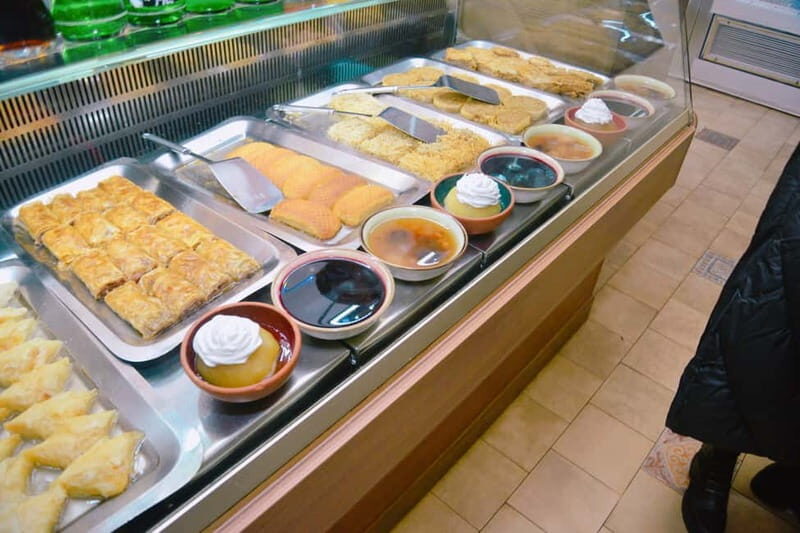
After you’ve built the Ottoman-and-coffee context, the route heads into Bravadžiluk Street, known for restaurants serving traditional Bosnian food. This is where you get practical recommendations for what to eat and what sweets to look for.
Right after, you’ll spot the Old Sarajevo Clock Tower. It’s near a major mosque, and the guide shares the story behind its unusual time display. This is a neat example of how Sarajevo’s public spaces carry local anecdotes—little weird-but-true details that make the city feel human instead of scripted.
How this helps you as a traveler: the tour gives you food direction while you’re still fresh from the coffee lesson. By the time you’re walking those restaurant streets on your own, you’ll know what to prioritize instead of wandering hungry and hoping.
Possible drawback: because the tasting and recommendations come in the middle of a sightseeing-heavy walk, you might feel pressure to pick favorites quickly. If you’re picky about food, tell your guide early so the tasting choices match your preferences.
Sacred Heart Cathedral, Sarajevo Roses, and the Pope John Paul II Connection
Next up is the Sacred Heart Cathedral, a Neo-Renaissance style building built under the Austro-Hungarian Monarchy. The guide also points out the statue of Pope John Paul II, who visited Bosnia twice.
The stop doesn’t live only in the past. Right next to the cathedral, you’ll hear about Sarajevo roses—another layer of local identity tied to place. The guide’s goal here is to connect art, religion, and everyday symbolism into something you can remember.
Why I think this works: a lot of Sarajevo tours treat religion as a checkbox. This one uses it to explain how different communities shaped the city’s visual and cultural rhythm—then ties that back to street-level Sarajevo.
Consideration: if you prefer strictly one type of architecture or one religious perspective, the variety might feel like whiplash. But if you’re the kind of traveler who likes to understand how places actually function, the mix is the point.
You can also read our reviews of more food & drink experiences in Sarajevo

Gazi Husrev-beg Mosque and Bezistan: Ottoman Sarajevo in Walking Distance
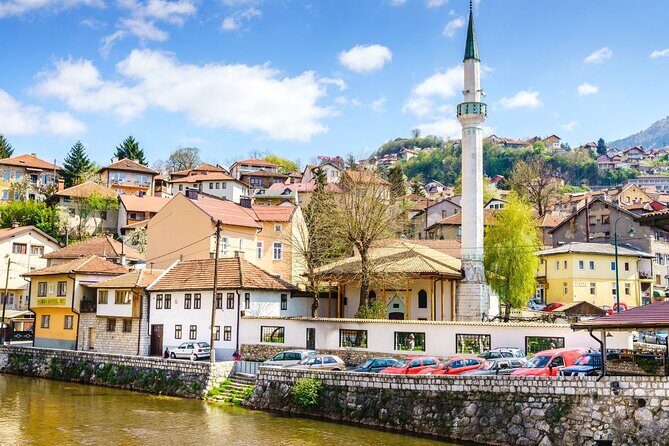
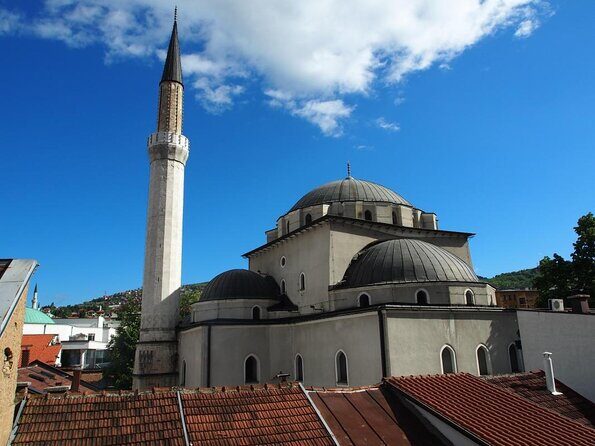
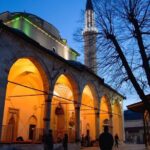
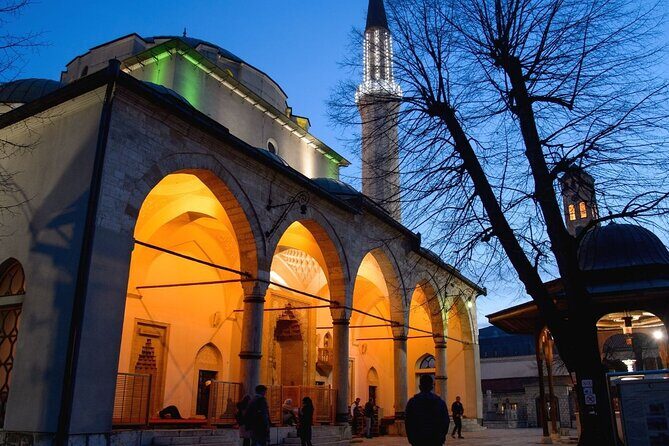
Now you get a true Ottoman anchor: the Gazi Husrev-beg Mosque. It’s described as one of the biggest and most beautiful mosques in Sarajevo, and the guide gives context so you understand what you’re looking at rather than just taking in scale.
Right after that, the route references Gazi Husrev Bey’s Bezistan, an old Ottoman bazaar. Bezistan is where the tour shifts from monuments to marketplace texture. You get the feeling of oriental architectural elements through a commercial, street-level lens.
This section is a strong value add because it teaches you how to read a bazaar area. You’ll likely start noticing arches, rhythms of entrances, and how public space supports everyday life. Later, when you pass similar architecture on your own, you’ll recognize patterns instead of only admiring the surface.
One practical note: this part of the tour may involve sights where you’ll want to dress respectfully. The tour doesn’t call out dress rules, so use your best judgment and carry a light layer if you’re unsure.
Latin Bridge Ending: The Franz Ferdinand Moment That Shifted the World
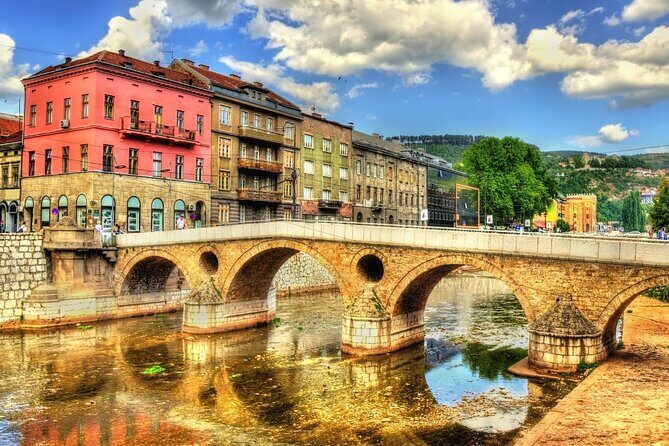
The tour finishes next to Latin Bridge. This is one of the most famous sites in modern European history: the assassination of Franz Ferdinand. The guide ties the story to how the event changed world history and helped set the stage for World War I.
Ending here gives the entire walk extra weight. Earlier stops become more than “pretty old buildings.” They start to feel like parts of a complex city where politics, empires, and everyday life overlapped.
Why this matters for you: if you like understanding history with real geography, ending at Latin Bridge is the right payoff. You can’t separate Sarajevo’s physical layout from its role in world events.
Price and Value: What $66.54 Buys You in Sarajevo
At $66.54 per person for about 2.5 hours, you’re paying for more than a walk with an itinerary card. You’re buying three things that usually cost extra separately: a private guide, a structured set of sightseeing anchors, and a genuine food-and-coffee experience.
Because it’s private, the guide can adapt pacing and explanations to your questions. That can be worth real money in cities where group tours often rush you through photo spots.
You also get a simple tech touch: a mobile ticket, and confirmation at booking time. Listed sights along the route are marked as admission ticket free, which helps you keep costs predictable on the day.
One thing to keep in mind: the tour is popular enough that it’s often booked in advance (on average, about 28 days). If your dates are fixed, reserve early so you don’t end up with a later slot.
Timing, Walking Comfort, and How to Prepare
This is a walking tour built for flow. You’ll have multiple short stops, and at least two of them involve food and coffee. That’s great for energy, but it means you’ll want to avoid very heavy layers of food and keep water nearby.
The good news: service animals are allowed, and the tour runs near public transportation, so it’s easy to fit into your broader day. It’s also designed so most travelers can participate, which suggests a pace that’s manageable for a typical visitor.
From the feel of the experience, guides also show up ready for real weather. One guide even had an extra umbrella when it rained, which tells you they think about comfort rather than just reciting facts.
My practical advice: wear comfortable shoes, keep your hands free for photos, and consider bringing a small snack buffer if you’re sensitive to timing.
Who This Tour Fits Best (and Who Might Want Something Else)
This tour is a strong match if you want:
- A first-day Sarajevo experience that gives you orientation plus food.
- A blend of coffee culture, craft street texture, and major landmark context.
- A private guide who can keep the pace human, not factory-tour fast.
It’s also a good fit for people who like a conversational history approach. Guides like Emina and Lamija are praised for friendly, in-depth storytelling, and that kind of engagement matters most on a walking tour where you’re constantly passing new visual cues.
You might consider a different style tour if you:
- Don’t drink coffee or dislike the idea of food tastings.
- Want fewer stops and more quiet time at each location.
- Are traveling with someone who gets tired quickly from constant walking on old streets.
Should You Book This Sarajevo Food and Bosnian Coffee Tour?
If you’re asking whether this is worth your time, here’s the decision rule I’d use: book it if you want Sarajevo explained through what people actually do—eat, drink coffee, shop craft streets, and live alongside layered architecture.
The tour’s best advantage is the pairing: coffee isn’t separated from the city story, and food isn’t separated from the landscape. You end near Latin Bridge with a history payoff that makes earlier stops feel connected rather than random.
I’d book this on day one if you can. It helps you orient your sense of place fast, and it gives you food and coffee knowledge that you can use all trip long.
FAQ
How long is the Private Walking Tour, Food Tasting and Bosnian Coffee in Sarajevo?
The tour lasts about 2 hours 30 minutes.
What language is the tour offered in?
The tour is offered in English.
Is this a private tour or shared group experience?
This is a private tour/activity. Only your group will participate.
Where does the tour start, and where does it end?
The meeting point is Sarajevo City Hall, Brodac 1, Sarajevo 71000, Bosnia and Herzegovina. The activity ends in a different location near Latin Bridge.
Are admission tickets included for the sights on the route?
The listed stops are marked as admission ticket free.
Can I cancel and get a full refund?
Yes. You can cancel up to 24 hours in advance for a full refund.
You Might Also Enjoy
More Walking Tours in Sarajevo
More Tours in Sarajevo
- Fall of Yugoslavia, Sarajevo War Tour with Tunnel of Hope Museum and Frontlines
★ 5.0 · 1,314 reviews
More Tour Reviews in Sarajevo
- Fall of Yugoslavia, Sarajevo War Tour with Tunnel of Hope Museum and Frontlines
★ 5.0 · 1,314 reviews