REVIEW · SARAJEVO
Sarajevo Under Siege: A War History Tour
Book on Viator →Operated by The Globe Balkans · Bookable on Viator
Fear and hope share one Sarajevo skyline. This 3-hour, private war-history route is built around real places and the Tunnel of Salvation lifeline, with guides like Suvad and Evan sharing personal, place-based stories that connect the skyline view to the daily reality of shelling. I also like the way the drive-by moments and short walks keep the pace human, not museum-robotic, while the vehicle comfort (air-conditioning and WiFi) makes a heavy topic more manageable.
One heads-up: this is emotionally serious history, and you should plan for extra budgeting because entrance fees for the War tour in Sarajevo are not included (adults €10.25, students €5.25). Also, the experience requires good weather, so have a flexible mindset if conditions are poor.
In This Review
- Key highlights you’ll actually care about
- Why this tour feels different than a standard history walk
- Meeting at Vijećnica and getting around without stress
- Bijela Tabija: the White Fortress viewpoint that sets the whole story
- Zetra Olympic Hall area: war told through a family map
- Sniper Alley: what it means to cross a street like it’s a decision
- Tunnel of Salvation: the lifeline you can walk through
- Lukavica, Dayton, and Ratko Mladić graffiti: how the war stays political
- Vijećnica (Sarajevo City Hall): cultural loss, then repair
- Who should book this tour, and who might not love it
- Should you book Sarajevo Under Siege?
- FAQ
- How long is the Sarajevo Under Siege tour?
- What time does the tour start and where do I meet?
- Is pickup available?
- Is this a private tour?
- What language is the tour offered in?
- What’s included in the price?
- Are entrance fees included?
- Do I get a mobile ticket?
- What happens if the weather is bad or I need to cancel?
Key highlights you’ll actually care about
- Bijela Tabija viewpoint: big panoramic orientation, tied to Sarajevo’s role from Ottoman times to the siege.
- A lived-in war neighborhood: stories connected to Zetra Olympic Hall area and the former maternity hospital zone.
- Sniper Alley drive: a gut-check moment as you pass a road tied to daily risk.
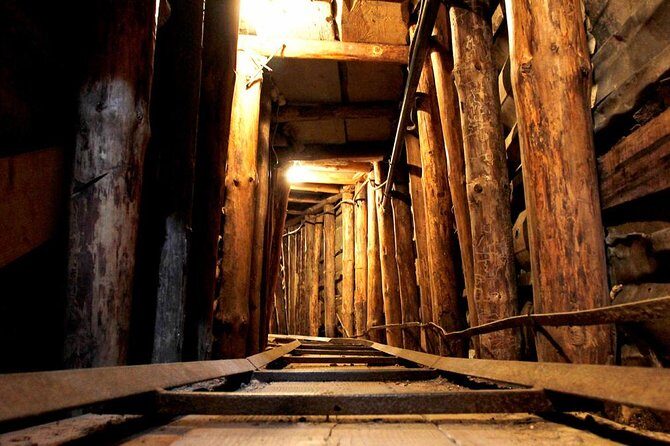
- Tunnel of Salvation visit: walking part of the original tunnel, with artifacts and a short documentary.
- Post-war political geography: Lukavica drive to understand Dayton-era division and how memory shows up in graffiti.
Why this tour feels different than a standard history walk
Sarajevo doesn’t do neat, tidy war history. It does layers. One moment you’re at a high viewpoint taking in the city. The next, you’re in places tied to fear, survival, and the hard logistics of daily life during siege.
What I like most is how the tour keeps pulling you from perspective to personal reality. At Bijela Tabija, you’re given the wide-angle view first, so the city layout makes sense. Then you move into smaller, tighter stories where the war is measured in childhood, streets, and what had to be done just to get by.
This is also a good value at $30.10 per person, mainly because you’re not spending it just on transportation. You get a structured route that hits several major siege-era sites, and you don’t have to stitch together buses, timing, and directions. Add in private transportation with onboard WiFi, and you’re saving energy for the parts of Sarajevo that deserve your full attention.
There’s a drawback, and it’s not about logistics: the subject matter is heavy. This is not the kind of outing that ends with a lighthearted sunset photo. If you’re craving entertainment, this will feel too real. If you want to understand how ordinary life got squeezed, it’s the right kind of serious.
You can also read our reviews of more historical tours in Sarajevo


Meeting at Vijećnica and getting around without stress
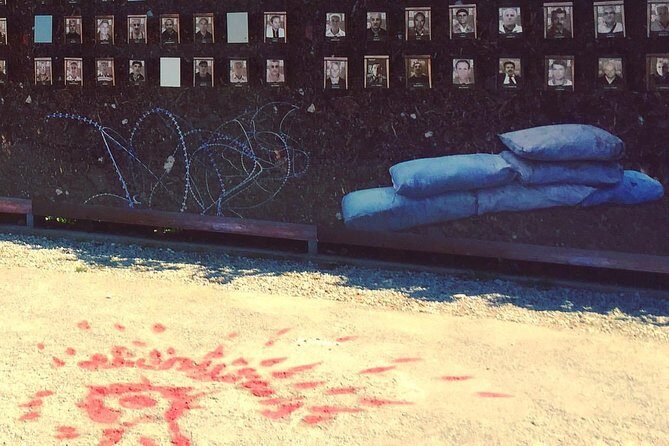
Your tour starts back at Vijećnica (Sarajevo City Hall area), and the meeting point is listed at Vijećnica’s address in Sarajevo. The start time is 1:30 pm, and the experience ends back at the same meeting point.
The practical win: you’re not expected to “figure it out” on your own. Pickup is offered from within Sarajevo city center, and pickup begins 15 minutes before the tour starts. If you’re staying outside the city center, arrangements can be made if you tell the operator in advance.
Once you’re in the vehicle, you’re set. The tour includes an air-conditioned vehicle and WiFi on board, which matters here because you’re likely to spend time driving between sites like the viewpoint, neighborhood areas, and the tunnel complex.
Also, this is a private tour/activity, meaning it’s just your group. That matters for a topic like this, where your questions and the pace of the conversation can make a difference.
One more detail worth noting: the experience is offered in English, and you’ll have a mobile ticket. So you can travel light and keep your focus on the story.
Bijela Tabija: the White Fortress viewpoint that sets the whole story
The tour begins at Bijela Tabija (White Fortress), a scenic viewpoint outside the city center. Bijela Tabija has roots in the 16th century, and the big value here is the order of operations: you’re shown the city from above before you’re asked to understand how it functioned under threat.
From this kind of viewpoint, Sarajevo stops being just a postcard. You start seeing why it mattered strategically. Your guide will connect Sarajevo’s position through time, reaching forward from Ottoman-era context into the siege period.
The stop runs about 30 minutes, and admission is listed as free for this part. The time frame is short enough that it stays focused, but long enough to do one important thing: get your bearings fast. When you later pass through war-linked streets and approach the tunnel area, you’ll have a mental map instead of a vague “I drove around and saw things” feeling.
Possible drawback: a viewpoint is only useful if you’re mentally present. If you come rushing for photos only, you’ll miss the context that helps the rest of the tour click.
Zetra Olympic Hall area: war told through a family map
Next comes the Zetra Olympic Hall neighborhood, and this is where the tour turns from general siege history into human-scale reality.
This stop focuses on the area where your guide lived during the war, near a former maternity hospital that was heavily bombed. The point isn’t to shock you. It’s to show you the geography of daily survival: where a childhood happened, where fear had a routine, and where the community still carried on under shelling.
This part is listed for about 15 minutes, and the admission ticket is listed as free. You’ll also visit two emotionally specific places tied to the guide’s family: the father’s burial place and the street where he grew up and used to play.
I like this format because it stops the war from becoming an abstract timeline. You can’t reduce a siege to dates when you’re standing in the places connected to someone’s everyday life. You also get a sense of how the war’s impact lasted well after the shelling, because memory has addresses.
One consideration: this stop is personal. If you prefer very factual, low-emotion tours, this might feel too intimate. If you want context that’s earned through real testimony, it’s a highlight.
Sniper Alley: what it means to cross a street like it’s a decision
After the neighborhood stop, you’ll drive along Sniper Alley, a main Sarajevo avenue that became infamous for constant sniper fire during the siege.
Even though you’re not spending a full walk here, the experience works because your guide frames the danger as routine. Crossing the road wasn’t just traffic. It was a life-and-death calculation residents had to make repeatedly just to do basics like reaching safety or getting food and water.
Today, you’re surrounded by modern buildings, which makes the effect stronger. The contrast can be jarring in a way that facts alone rarely are. You see a normal street, then hear what it meant when fear was part of the architecture.
This drive also helps the tour’s pacing. You’re getting the weight of the story without adding long stretches of walking. That’s a practical benefit for most people, especially when the key heavy stop ahead is the tunnel.


Tunnel of Salvation: the lifeline you can walk through
If you care about understanding what siege survival actually required, the Tunnel of Salvation is the moment.
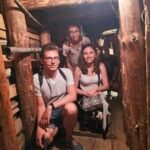
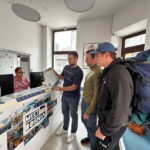
This tunnel was dug secretly beneath the airport runway in 1993. It connected besieged Sarajevo with the outside world, and it functioned as a lifeline for food, medicine, and hope. You’re not just reading about it. You’ll walk through a section of the original tunnel, see authentic wartime artifacts, and watch a short documentary about the siege.
Time matters here. This stop runs about 1 hour 20 minutes, which is a lot for a tour segment. It’s also a clear sign the operator expects you to take it slow. In a topic like this, rushing is the enemy. The longer visit helps you process what a narrow underground passage meant for people moving necessities under constant threat.
The practical value is huge: the tunnel gives you a working mental model of siege logistics. After seeing it, you understand why the war wasn’t only battles and politics. It was transportation routes, hidden infrastructure, and keeping people alive day after day.
If you’re the type who wants one site that justifies the whole trip, this is it. Build your schedule so you’re not distracted, and plan to stay mentally steady during the documentary.
Lukavica, Dayton, and Ratko Mladić graffiti: how the war stays political
After the tunnel, the tour shifts from siege survival to how the siege’s legacy shows up in the present.
You’ll drive through Lukavica, which was part of the front line during the siege but now belongs to Republika Srpska. This portion is about post-war division and how the map changed after the Dayton Peace Agreement. Your guide will explain the city’s division into the Federation of BiH and Republika Srpska.
The tour then points out how memory remains contested in public space. You’ll see graffiti and murals that glorify wartime figures such as Ratko Mladić. That’s not included as shock value. It’s used to explain why reconciliation can be complicated when war narratives compete.
This is also where the tour’s emotional tone makes sense: it’s not only about what happened in the early 1990s. It’s about how different communities remember differently, and how that affects identity today.
A practical note: since this is a drive, you’ll want to sit where you can see clearly, especially when the guide is pointing out locations and visual examples.
Vijećnica (Sarajevo City Hall): cultural loss, then repair
The tour finishes at Sarajevo City Hall (Vijećnica), a landmark built in 1896 during the Austro-Hungarian period.
Vijećnica was destroyed in August 1992 when Serbian forces shelled the building and burned nearly two million books and manuscripts. That kind of cultural loss is harder to grasp than physical damage because it’s about time—knowledge erased in a single wave.
Today, Vijećnica is beautifully restored. Your guide will share what happened and what it means for Sarajevo’s cultural identity now. I like ending here because it gives the story a different angle than survival. It’s not just how people endured siege. It’s also how a city rebuilt what war tried to erase.
If the tunnel gives you the siege mechanism, Vijećnica gives you the aftermath: culture, memory, and what restoration can mean when communities choose to rebuild.
Who should book this tour, and who might not love it
You’ll likely enjoy Sarajevo Under Siege if you:
- want real context tied to places, not just names and dates
- prefer a guided, story-driven approach where questions are welcome
- care about how the siege shaped daily life and how politics still shapes memory
You might reconsider if you:
- want light sightseeing or purely historical overview with minimal emotional weight
- get uncomfortable with personal testimony connected to death and destruction
- hate tours where parts are emotionally intense and take time to process
Also, be ready for a day that depends on the outdoors and weather. The experience is described as requiring good weather, and if it’s canceled due to poor conditions, you’ll be offered a different date or a full refund. If you’re the kind of traveler who likes firm plans, keep that flexibility in mind.
Should you book Sarajevo Under Siege?
Yes, if your trip to Sarajevo includes a desire to understand the siege from the inside out. This tour has a strong structure: views first, then neighborhood testimony, then the Tunnel of Salvation, and finally Vijećnica and today’s political memory. You’re not getting one dramatic stop and then leaving. You’re getting a chain of meaning.
I’d book it especially if you value a private format and appreciate guides who can answer questions thoughtfully. Comfort is built in with air-conditioning and WiFi, which helps you stay present for the hard parts.
If you only want casual history or you’re sensitive to heavy themes, this one might feel like too much. In that case, you’d probably be happier with a more relaxed city tour.
Bottom line: for a first-time visitor who wants the siege story in a way that connects city, people, and aftermath, this is a solid buy at $30.10, with the understanding that you may need to budget for the not-included entrance fee for the War tour in Sarajevo.
FAQ
How long is the Sarajevo Under Siege tour?
The tour lasts about 3 hours (approximately).
What time does the tour start and where do I meet?
The start time is 1:30 pm. The meeting point is listed at Vijećnica (Sarajevo City Hall area), and the tour ends back at the same meeting point.
Is pickup available?
Yes. Pickup is offered from any hotel or location within Sarajevo city center, and pickup starts 15 minutes before the tour begins. If you’re outside the city center, additional arrangements can be made if you contact in advance.
Is this a private tour?
Yes. It’s a private activity, so only your group participates.
What language is the tour offered in?
The tour is offered in English.
What’s included in the price?
The tour includes an air-conditioned vehicle, private transportation, and WiFi on board.
Are entrance fees included?
No. Entrance fees for the War tour in Sarajevo are not included: €10.25 per person for adults and €5.25 per person for students.
Do I get a mobile ticket?
Yes. The experience includes a mobile ticket.
What happens if the weather is bad or I need to cancel?
The experience requires good weather. If it’s canceled due to poor weather, you’ll be offered a different date or a full refund. You can cancel for a full refund up to 24 hours before the experience’s start time. If you cancel less than 24 hours before, the paid amount won’t be refunded.
You Might Also Enjoy
More Historical Tours in Sarajevo

More Tours in Sarajevo
- Fall of Yugoslavia, Sarajevo War Tour with Tunnel of Hope Museum and Frontlines
★ 5.0 · 1,314 reviews


More Tour Reviews in Sarajevo
- Fall of Yugoslavia, Sarajevo War Tour with Tunnel of Hope Museum and Frontlines
★ 5.0 · 1,314 reviews