REVIEW · SARAJEVO
Sarajevo: Jewish Heritage Tour
Book on Viator →Operated by Meet Bosnia Travel · Bookable on Viator
Sarajevo keeps its Jewish story in plain sight. This 2–3 hour walk pulls you from synagogues to a centuries-old cemetery, with Sarajevo Haggadah at the center of it all. I love the tight small-group pace and the way your guide connects what you see on the street to what life was like for Jews here.
I also like that the tour does not just list sites. It explains how Sarajevo’s Jewish community shaped schools, shops, and everyday culture, point by point. One heads-up: a few stops are not included in the price, so you may need extra ticket time and money at the museum and synagogues.
If you want an efficient orientation to Sarajevo’s Jewish heritage without spending your whole day in buildings, this tour fits well. With a maximum of 8 travelers, you get time for questions and real conversation, not just a rush from door to door.
In This Review
- Key things I’d center in this tour
- Sarajevo’s Jewish heritage is written into the streets
- Guides make the difference: Armina, Ahmed, and Edin
- The 2–3 hour loop: how the timing feels on foot
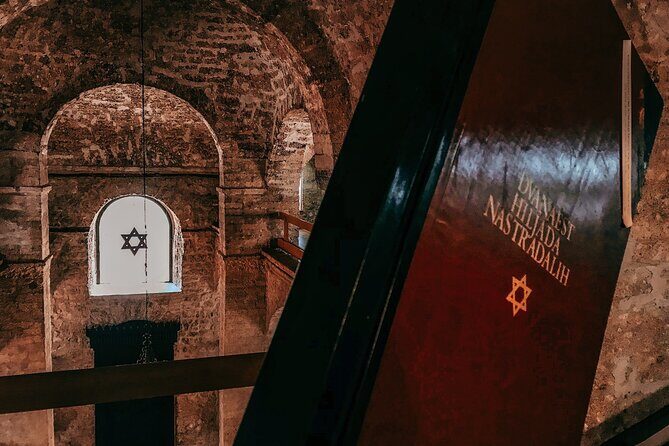
- Stop at the Jewish Museum: an old synagogue built in 1581
- Sarajevo Haggadah: what you’ll hear and how to plan your timing
- Eternal Flame area: Jewish institutions hidden in plain sight
- Bosnian Cultural Center (Sephardic): worship turned into a public space
- Ashkenazi Synagogue: the center of Jewish life today
- Old Jewish Cemetery and the National Museum: the emotional center
- Price and value: is $72.18 fair for what you get?
- Who should book this tour (and who might skip it)
- Should you book the Sarajevo Jewish Heritage Tour?
- FAQ
- How long is the Sarajevo Jewish Heritage Tour?
- What is the meeting point for the tour?
- Is hotel pickup available?
- What language is the tour offered in?
- What does the tour price include?
- Are synagogue and museum tickets included?
- How many people are in the group?
- When does the tour start?
- Is food provided?
- Is there free cancellation?
- Are children allowed on the tour?
Key things I’d center in this tour
- Small group (max 8) means less waiting and more back-and-forth with your guide.
- Old Synagogue built in 1581 anchors the story right from the start.
- Sarajevo Haggadah focus ties Sarajevo’s Jewish heritage to a manuscript that survived wars.
- Sephardic and Ashkenazi sites show the two communities in the same city map.
- Near-total walking loop helps you grasp how the neighborhoods connect.
- A cemetery visit adds the emotional, personal side that museums alone can’t do.
Sarajevo’s Jewish heritage is written into the streets
What I like most about this tour is that it treats the city like a living textbook. You’re not just chasing landmarks. You’re learning how Sarajevo’s Jewish community showed up in public life—through schooling, local commerce, and places of worship—long before modern borders and headlines.
You’ll also get a clean sense of geography. Sarajevo is compact, so walking between sights makes connections feel natural. One moment you’re at a synagogue-turned-museum space; the next you’re at the Eternal Flame area, where your guide points out where earlier Jewish “investments” and community institutions were located.
This is also a tour with emotional range. It moves from manuscripts and museums to the cemetery’s quiet scale. That contrast is part of the value: you understand the story, but you also feel it.
You can also read our reviews of more historical tours in Sarajevo


Guides make the difference: Armina, Ahmed, and Edin
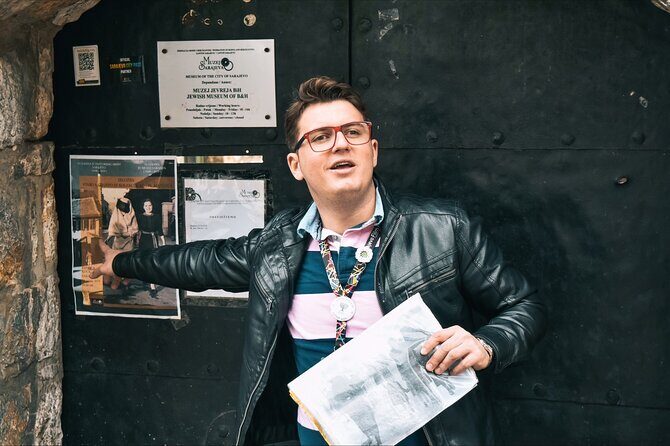
The tour’s reputation is tightly linked to its guides. In the feedback I saw, Armina stood out for personal engagement and real care—one visitor praised her compassionate understanding and her ability to use her contacts with local organizations. Another review highlighted Ahmed’s story-telling and his academic, research-minded approach, plus his willingness to handle practical questions in Sarajevo.
Edin (also associated with Meet Bosnia Travel) got strong mentions for bringing the city’s Jewish story into sharper focus. One guest even described his help as making coexistence feel normal—Jews, Christians, and Muslims living side by side in Sarajevo—rather than something you only read about.
This matters because Jewish heritage in Sarajevo is not always obvious from street level. You need someone to translate the clues you’d otherwise miss. That’s what these guides seem to do best: explain what you’re looking at, then connect it to the larger story.
The 2–3 hour loop: how the timing feels on foot
The experience is designed to run about 2–3 hours, with a group size capped at 8 people. That shorter window is good if you want a focused cultural tour without losing your whole day.
Expect to walk through central Sarajevo and pause for museum time and synagogue time. The schedule includes several blocks of 30–45 minutes at key stops, plus shorter orientation moments between them. In other words: it’s not one long museum crawl. It mixes street context with indoor storytelling.
Pickup is optional. If you request hotel pickup, it can be organized. Otherwise, you meet at Meet Bosnia Tours at Gazi Husrev begova 75 near the crossroad of Mula Mustafe Bašeskije. The tour ends back at the meeting point, which makes planning your next stop easy.
Stop at the Jewish Museum: an old synagogue built in 1581
Your first big “wow” moment is the Jewish Museum of Bosnia and Herzegovina. The setting is historic in its own right: it’s housed in the oldest synagogue in Bosnia and Herzegovina, built in 1581. Even if you’re not a museum person, the building changes how the story lands. It’s not abstract. It feels rooted.
Inside, you’ll spend time getting oriented to Jewish community life in Sarajevo and regional context. There’s also a 20-minute film connected to the Sarajevo Haggadah, the famous book that’s kept in the National Museum of Bosnia and Herzegovina.
Two practical notes here:
- Museum entry is not included, so plan on paying that extra ticket cost at the museum stop.
- The museum segment is about 45 minutes, so it’s long enough to absorb details, but not so long you get museum fatigue.
If you want the tour to make maximum sense, treat this stop as your baseline. Once you learn the setting and the themes here, the later synagogues and cemetery visit click into place.
Sarajevo Haggadah: what you’ll hear and how to plan your timing
The Sarajevo Haggadah is the star, and this tour builds toward it carefully. At the Jewish Museum, you’ll get that short film introduction—so even if you’ve never heard of the manuscript before, you’ll know why it matters.
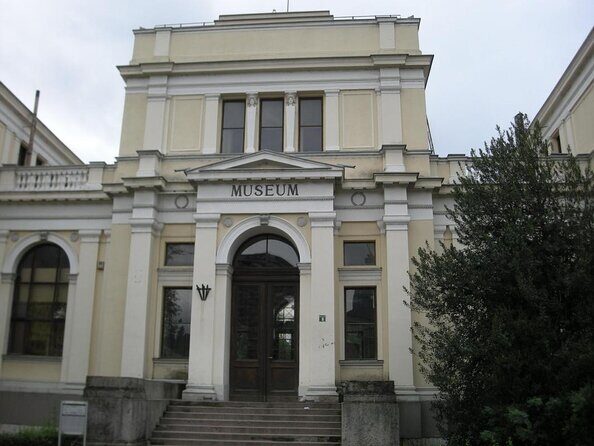
Later, the National Museum is where the story broadens. You’ll hear why the manuscript is so important: it’s a compilation of different stories written in Barcelona in the 14th century, brought to Sarajevo in the 16th century by a Jewish family, and it survived three wars. One standout detail tied to the National Museum portion is that a Muslim librarian helped save it from the Nazis. That angle is part of why Sarajevo’s story feels so distinct here—cooperation and protection weren’t theoretical.
A practical tip: if seeing the Haggadah itself is your top goal, plan around viewing schedules. One review said it was displayed on Tuesdays and Thursdays at the time of that visitor’s trip, and that Meet Bosnia staff could help arrange this if you tell them you’re interested. Because display schedules can change, you should confirm the day you’re going.


Eternal Flame area: Jewish institutions hidden in plain sight
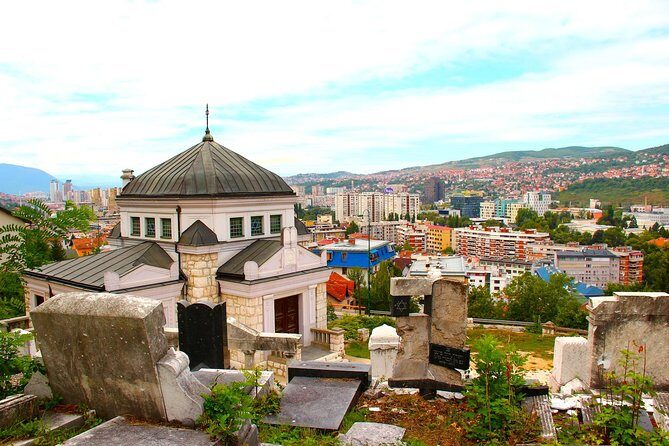
After the museum start, the tour shifts into street-level storytelling at the Eternal Flame area. This is one of the parts that turns “heritage” from a word into specific places. Your guide points out where major Jewish community influences were located—where early shops operated, where the first Jewish school opened, and where the city’s first hotel was started.
You’ll also hear about a synagogue known locally for singing—presented here as a clue to how community worship wasn’t just religious, it was cultural and public-facing. If you’ve ever walked through a city and thought, I know something happened here, but I can’t see the evidence, this stop is built for you.
This segment is shorter (about 30 minutes), and you won’t be stuck paying for entry. It’s more like guided interpretation in open air: listening, looking, and letting the guide do the connecting work.
Bosnian Cultural Center (Sephardic): worship turned into a public space
Next comes the Bosnian Cultural Center, which plays a double role. It’s associated with one of Europe’s major Sephardic synagogue sites, and it also functions today as a cultural space.
That blend is important. It shows how Jewish heritage in Sarajevo doesn’t only sit behind museum glass. It’s part of the city’s ongoing public life, used by more than one community and kept relevant through new functions.
Your time here is brief—about 10 minutes—but it gives you a key piece of the city’s Jewish map. Sarajevo had both Sephardic and Ashkenazi communities, and the tour helps you see that they weren’t just two separate chapters. They existed in the same urban story, shaping different aspects of communal life.
Admission at this stop is listed as free, which helps keep the tour moving without extra ticket delays.
Ashkenazi Synagogue: the center of Jewish life today
Then you’ll visit the Ashkenazi Synagogue. This is described as the center of Jewish life in Sarajevo today, and that phrase matters. It’s not only a historical site; it’s still linked to living community identity.
You’ll spend about 45 minutes here. As with the museum, admission is not included, so expect another ticket cost and some indoor time that may involve rules about visiting hours, photography, and group movement (those details can vary by site day-to-day).
Why I think this stop is worth the time: it anchors you to the present. A lot of heritage tours focus on what’s gone. Here, you learn how the community’s continuity shows up in an actual place you can stand inside.
Old Jewish Cemetery and the National Museum: the emotional center
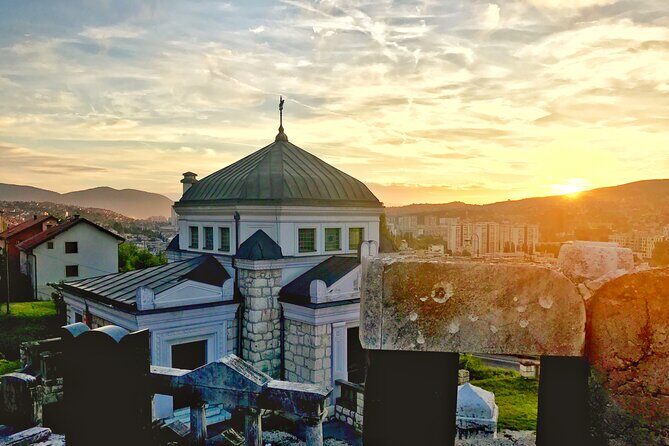
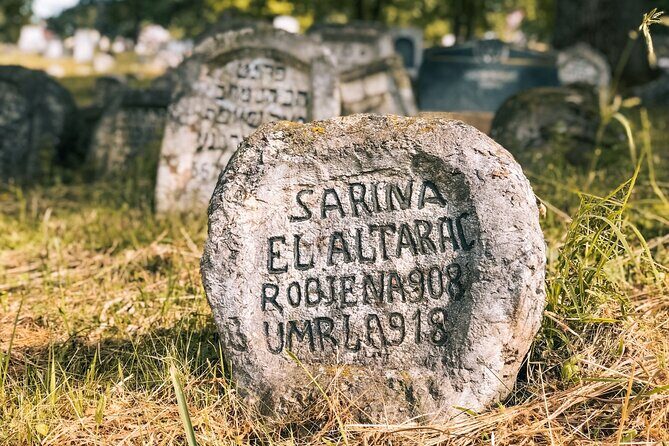
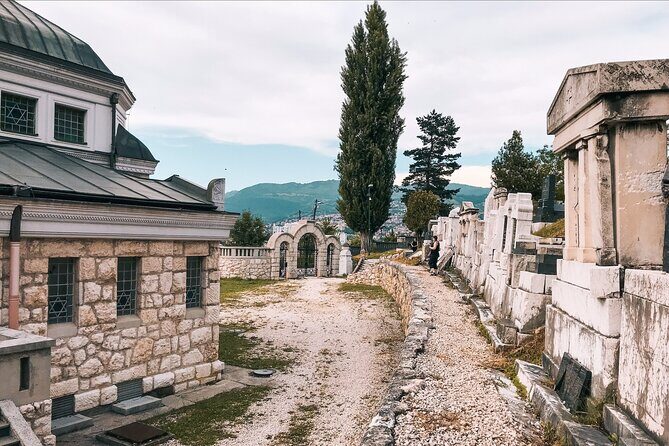
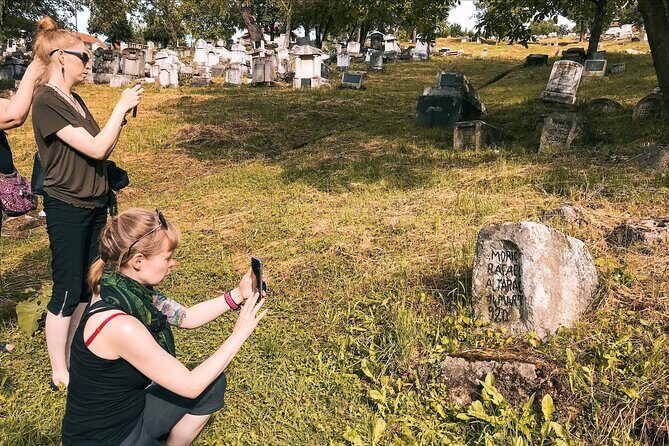
The Jewish Cemetery is a major moment. The OId Jewish Cemetery is described as nearly 500 years old, established by Sephardic Jews during the Ottoman period. Later, it also became the burial ground for Ashkenazi Jews after they arrived in Sarajevo with the Austro-Hungarian Empire in the late 19th century.
This is one of the places where a guide is not optional. Cemeteries can feel overwhelming without context. Your guide helps connect the cemetery’s timeline to the community story you’ve been learning in the synagogues and museums—so it doesn’t feel like a random stop. It feels like the human ending to all the cultural details.
Then, you move into the National Museum of Bosnia and Herzegovina for the Haggadah story. You’ll have about 20 minutes here, and that time is aimed at one key thing: understanding the manuscript and why it survived.
If you’re sensitive to heavier sites, take it slowly here. The tour’s pacing is still manageable, but the cemetery and the artifact-focused museum stop are emotional by nature. Give yourself a minute before you rush to the next location.
Price and value: is $72.18 fair for what you get?
At $72.18 per person, this tour is in the “serious experience” range, not the bargain free-walk zone. But it also includes a few things that add up in practice: a guide, an additional local/professional guided component, and an air-conditioned vehicle.
You also get a small group cap (max 8). For a heritage tour, that matters. Smaller groups mean:
- more time at each stop,
- fewer people competing to ask questions,
- less time stuck waiting outside entrances.
On the other hand, remember that some key admissions are not included: the Jewish Museum, the Ashkenazi Synagogue, and the National Museum. So your total day cost could be higher once you add those entry fees.
My advice is simple: if you want the tour to be cost-efficient, treat the scheduled paid stops as the “must-see” anchors. If you’re only mildly interested in one of them, consider whether a different shorter or self-guided approach would work better.
Who should book this tour (and who might skip it)
I’d recommend this tour if you:
- want a structured way to understand Sarajevo’s Jewish heritage without getting lost,
- like walking tours but also want proper museum/synagogue time,
- care about the Sarajevo Haggadah story and how it ties to wider European Jewish heritage.
You might skip it if you:
- only want outdoor photo stops and hate museums,
- dislike any heritage tours that include a cemetery visit,
- are traveling with very limited mobility (the route is mostly walking, though the data doesn’t specify step-free access).
If your group includes older adults, the strong reviews praising patience and consideration suggest this tour can work well with varying comfort levels—especially because the time blocks are defined and the guide can steer pacing.
Should you book the Sarajevo Jewish Heritage Tour?
Yes, if your goal is depth in a short window. This tour does a lot of things well at once: it connects street context to specific community institutions, shows both Sephardic and Ashkenazi heritage through synagogues, and gives you the Sarajevo Haggadah storyline with an additional manuscript-focused stop at the National Museum.
Book it especially if the Haggadah matters to you. Before you go, tell Meet Bosnia Travel you want to see it and ask about which day it’s on display (one visitor was told Tuesdays and Thursdays). That small step can turn a good tour into the tour you came for.
FAQ
How long is the Sarajevo Jewish Heritage Tour?
It runs about 2 to 3 hours.
What is the meeting point for the tour?
You meet at Meet Bosnia Tours, Sarajevo Tours, Days Out, Excursions and Activities at Gazi Husrev begova 75, near the crossroad of Mula Mustafe Bašeskije.
Is hotel pickup available?
Yes. Hotel pickup can be organized upon request.
What language is the tour offered in?
The tour is offered in English.
What does the tour price include?
The price includes a local guide/professional guide and an air-conditioned vehicle. Some admissions are not included at certain stops.
Are synagogue and museum tickets included?
No. Jewish Museum of Bosnia and Herzegovina, Ashkenazi Synagogue, and the National Museum of Bosnia and Herzegovina list admission tickets as not included. Other stops show admission tickets as free.
How many people are in the group?
The tour has a maximum of 8 travelers.
When does the tour start?
The start time shown is 9:00 am.
Is food provided?
No. Food and drinks are not included.
Is there free cancellation?
Yes. Free cancellation is available up to 24 hours in advance for a full refund.
Are children allowed on the tour?
Children must be accompanied by an adult.
You Might Also Enjoy
More Historical Tours in Sarajevo



More Tours in Sarajevo
- Fall of Yugoslavia, Sarajevo War Tour with Tunnel of Hope Museum and Frontlines
★ 5.0 · 1,314 reviews



More Tour Reviews in Sarajevo
- Fall of Yugoslavia, Sarajevo War Tour with Tunnel of Hope Museum and Frontlines
★ 5.0 · 1,314 reviews