REVIEW · SARAJEVO
SARAJEVO STREET ART TOUR (art, history & mystery) – sARTajevo!
Book on Viator →Operated by Art and Tours Sarajevo · Bookable on Viator
Walls talk after dark. This Sarajevo street art walk turns graffiti into a story of conflict, memory, and daily life, with murals explained in context rather than just spotted on a map. I especially like how the guide ties what you see on the wall to what’s happened in the city—so the art feels readable, not random.
You’ll love the stop-by-stop pacing and the fact that the tour stays tight. I also like the range: it moves from Bentbaša murals to Papagajka’s art legacy, then into street art culture connected to places like the Academy of Fine Arts. The group is capped at 5 travelers, so questions stay easy and you’re not just herded along.
One possible drawback: if you expect a super-deep breakdown of every single artwork you pass, the short 20–30 minute stops can feel a bit brisk. And with a curated route, you might not see every style you were hoping for—still, you’ll come away with a sharper way to look at walls.
In This Review
- Key things that make this street art tour worth your time
- Why Sarajevo street art makes more sense with a guide
- Price and logistics: what $30.04 buys you in real value
- Meeting point on Đulagina 2: a simple start, easy ending
- Stop 1: Bentbaša murals and the language of monuments
- Stop 2: Papagajka (Perrot) and the story behind the first festival
- Stop 3: The Academy of Fine Arts, sticker art, and design with purpose
- Stop 4: Aria, Mr. Chat, Pjevač, and Gallery Boris Smoje
- Stop 5: Ferhadija Pedestrian Street and Srebrenica 1992/1995
- The best part: learning how to see the city as people see it
- What to wear and expect on a 2–3 hour walk
- Who should book this tour (and who might want a different plan)
- Should you book sARTajevo! Sarajevo Street Art Tour?
- FAQ
- How long is the Sarajevo Street Art Tour?
- What time does the tour start?
- Where is the meeting point?
- Is the tour offered in English?
- Is there admission cost at the stops?
- What is the group size?
- Is a mobile ticket provided?
- Is it accessible and easy to reach via transit?
- Can I cancel for a refund?
Key things that make this street art tour worth your time
- Up to 5 people keeps it conversational, not lecture-style.
- English guided (mobile ticket included) makes it easy to follow without extra prep.
- A tight 2–3 hour route that still covers multiple art “worlds” in Sarajevo.
- Five themed stops that connect monuments, festivals, and memory to what’s on the walls.
- Street art explained alongside local art institutions like the Academy of Fine Arts and Gallery Boris Smoje.
- Free admission at each stop helps you get real value for the $30.04 price.
Why Sarajevo street art makes more sense with a guide
Sarajevo’s walls don’t just decorate neighborhoods. They react to events, carry names and dates, and reflect how people process life—then they get painted over and remembered again. That’s the whole point here: you’re not only hunting street art, you’re learning how to read it.
The best part is the way the tour connects art style to city context. When you understand the “why,” the “what” gets more interesting. I like that the experience keeps returning to meaning, not just aesthetics—especially when the route touches heavier themes like the Srebrenica mural.
Also, guides matter. Real bookings include guides like Alan, Ado, and Mak, and the consistent theme is clear: they talk in plain language and connect the works to Sarajevo’s past and present in a way that feels trustworthy.
You can also read our reviews of more historical tours in Sarajevo

Price and logistics: what $30.04 buys you in real value
At $30.04 per person for about 2–3 hours, this tour is priced like a focused walking experience, not a big-production bus tour. The smart value is that the stops are handled in a way where you’re not repeatedly paying extra entry fees—each stop notes free admission.
The other practical win: it starts in the evening, at 6:00 pm, which is a nice match for wall-hunting. You get workable light to spot details without the harsh midday glare, and you’re finishing while the city still feels alive but not hectic.
Finally, the route is compact enough to stay walkable, and it’s offered in English with mobile ticket access. If you want a plan you can actually execute without a lot of logistics brain, this fits.
Meeting point on Đulagina 2: a simple start, easy ending
The tour meets at Đulagina 2, Sarajevo 71000, and ends back at the meeting point. That matters more than it sounds. You don’t have to worry about where you’ll end up, and you can pair it with dinner plans nearby without turning the night into a scavenger hunt.
It’s also listed as near public transportation, so even if you’re not staying right in the center, you can usually get there without drama. And with most travelers able to participate, you’re not signing up for something that assumes extreme fitness.
Small group (max 5) also changes the feel. With fewer people, you can pause longer in front of a mural, ask one more question, and not feel rushed.
Stop 1: Bentbaša murals and the language of monuments
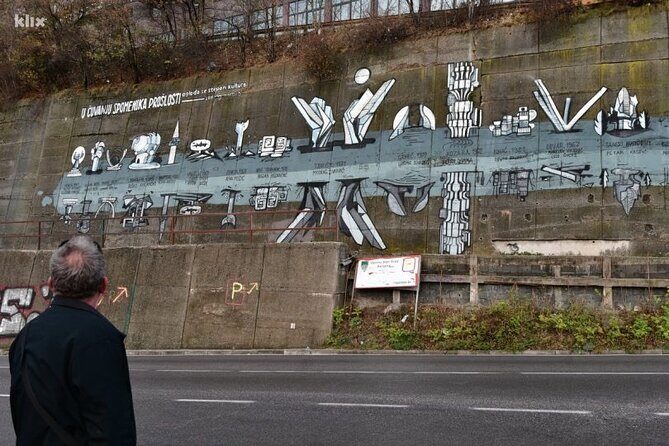
You begin in the Bentbaša area for a mural called In the preservation of monuments of the past. This is one of those starts that sets the tone fast: you’re learning how street art can act like a public memory tool.
The tour spends about 20 minutes here, so it’s not just a quick photo stop. The guide explains the mural in detail, which helps you catch symbols you might otherwise miss when you only glance at a wall.
Why this stop works: it trains your eyes for the rest of the route. You’ll start asking better questions like: What is being preserved? Who is speaking through paint? And what does the mural suggest about how the city thinks about its past?
Possible pace note: because it’s a short stop, go with a curious mindset rather than expecting a slow museum-style explanation.
Stop 2: Papagajka (Perrot) and the story behind the first festival
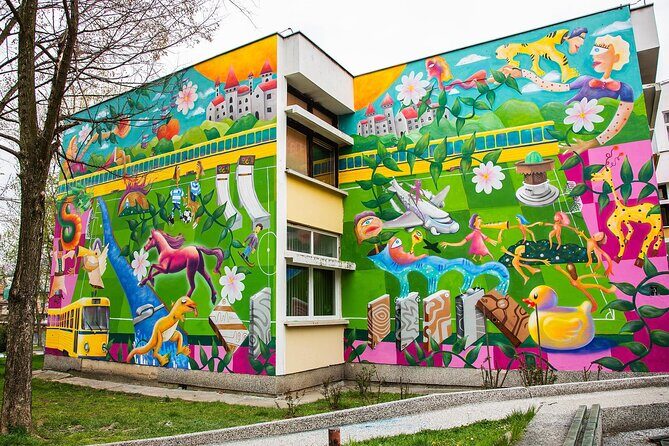
Next up is Papagajka, also connected with Perrot, and this stop links street art to a real cultural milestone. It’s where the first street art festival was held, and you’ll also see additional wall art examples along the way.
You’ll have about 20 minutes here. The tour frames the building and the artwork as part of a larger street art scene rather than isolated murals floating in space.
Why this matters: festivals and gathering places shape what becomes popular—and what becomes repeatable art. You start to see street art not just as individual expression, but as something a community builds over time.
This stop is a good break in tone, too. After monuments and memory, you get a sense of street art as a living culture with momentum.


Stop 3: The Academy of Fine Arts, sticker art, and design with purpose
The tour then heads to the Academy of Fine Arts, with about 30 minutes allotted. This is where the experience connects street art culture to formal art spaces—useful if you’ve been thinking of graffiti only as vandalism or pure rebellion.
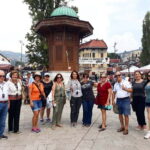
Here, the focus includes Sarajevo’s history through art examples, and you’ll also visit something described as the most beautiful designed object in Sarajevo (you’ll see what that means in the moment). On top of that, sticker art gets demonstrated and explained.
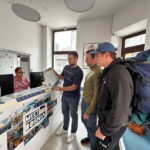
Why this stop is a standout: sticker art is street art that fits in your pocket, literally. It’s mobile, quick to apply, and easy to spread. Watching it explained helps you understand street art as a practice, not only a final image.
If you love hands-on moments, you’ll appreciate this stop more than the mural-only sections. And if you’re new to street art, sticker art is an easier entry point than larger murals.
Stop 4: Aria, Mr. Chat, Pjevač, and Gallery Boris Smoje
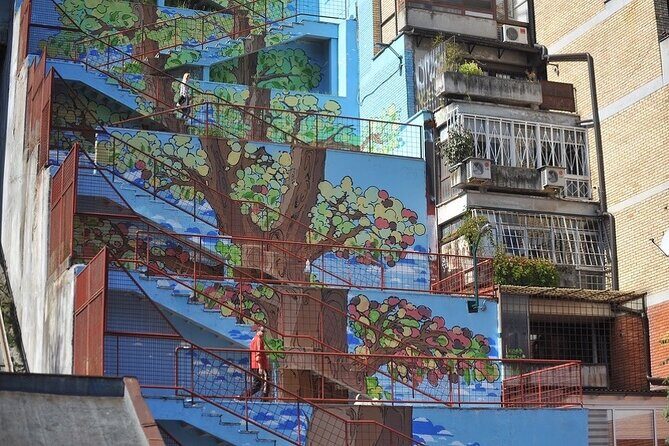
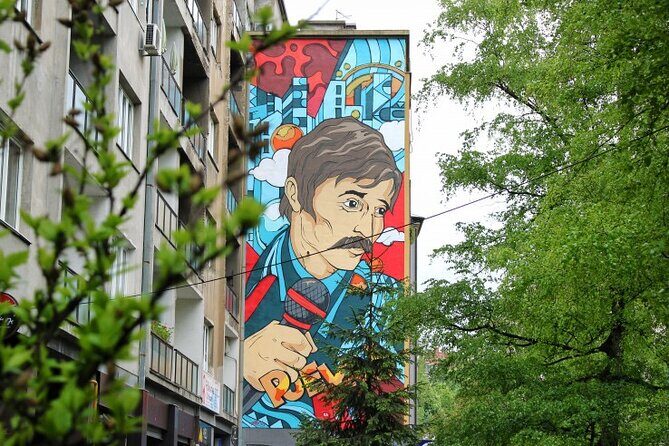
At Aria, the tour shifts into a more recognizable street art “map,” with several specific concepts and names mentioned: Mr. Chat, the mural Singer (Pjevač), and Gallery Boris Smoje.
This stop runs about 20 minutes, so think of it as a targeted walk through connected works. The guide explains the concepts and you visit the areas where these street art ideas show up.
Why you’ll likely enjoy this section: it’s where the tour helps you connect different creators and styles without needing a street art encyclopedia. You’ll leave knowing what those names mean in the local context, which makes future wall spotting easier.
Also, this part keeps the “mystery” part of the title alive. You’re seeing hints and references, not just clear propaganda-style messaging. It encourages you to look for details the next time you pass by a wall.
Stop 5: Ferhadija Pedestrian Street and Srebrenica 1992/1995
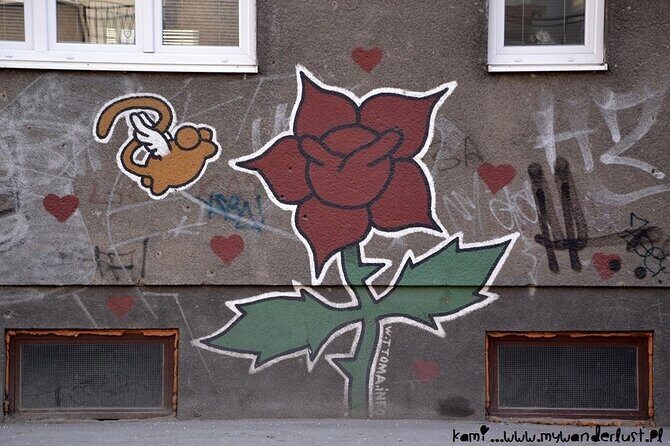
The final stretch centers on Ferhadija Pedestrian Street, and then you go behind it to a mural: Srebrenica 1992/1995. This stop is about 30 minutes, which signals that it’s meant to land with weight.
The guide also introduces the graffiti scene along the street, helping you see the surrounding visual language as part of the same conversation. Even if you don’t know Sarajevo’s political history by heart, the tour is designed to give you enough context to understand why this mural matters.
Why this stop is emotionally important: street art here isn’t decoration. It’s memory work, and the guide’s explanations help you avoid treating it like a random graphic on a wall.
A practical tip for this stop: slow down. With murals tied to real suffering and real dates, rushing turns the experience into a photo sprint. Take a minute, read what’s there, and let the context settle.
The best part: learning how to see the city as people see it
One theme that comes through clearly is that you don’t need to be an art person to enjoy this. The tour is set up for beginners, and the guide’s job is to make street art understandable through story. That matters in Sarajevo, where a lot of what you see is layered—half visual, half historical.
I also like that some of the guidance includes the personal credibility of people who create art. In real bookings, guides have shared their own artistic perspective along the way, which helps explain not just what a mural shows, but how and why an artist might build it that way.
And once you’ve been trained to look for patterns, you’ll start noticing small details in the city on your own. One example from real experience: people start searching for recurring motifs—like blue flowers—because the tour taught them what to look for.
If you’re after the feeling of seeing the other side of Sarajevo—modern street culture plus historical grounding—this tour hits that sweet spot.
What to wear and expect on a 2–3 hour walk
You’re walking between several locations, with 20–30 minute stops. That means comfortable shoes are non-negotiable, and a light layer helps because evening air can change fast.
Bring a charged phone for photos and maps. You’ll get mobile ticket access, and it’s helpful to use your camera in a way that lets you zoom on lettering or small symbols.
Because the group is small, you’ll likely be able to adjust pace a bit. Still, keep in mind the tour follows a set route, so don’t plan to wander off for long stretches.
Who should book this tour (and who might want a different plan)
This is perfect for you if:
- You want street art tied to Sarajevo’s real historical and cultural context.
- You like walking tours where you can ask questions and actually get answers.
- You’re traveling with someone who might not know street art, because the approach works for beginners.
- You want a small group experience rather than a crowded march.
You might skip it or pair it with something else if:
- You want every stop to feel like a full lecture (this is more like guided reading than museum time).
- You’re extremely picky about seeing a very specific set of murals, because this tour follows a focused route.
Should you book sARTajevo! Sarajevo Street Art Tour?
Yes—if you’re in Sarajevo for a few days and want a way to understand the city beyond the usual checklist, book it. The price is reasonable for a guided experience that includes free admission at stops, a tight route, and detailed explanations that make murals feel connected instead of random.
The biggest reason to choose this tour is the lens it gives you. After a few murals, you stop seeing walls as background. You start seeing them as messages from people who live here now, and people who lived here before.
If you like practical, story-driven walking tours, and you want street art with context (including the heavier memory work), sARTajevo! is a strong pick.
FAQ
How long is the Sarajevo Street Art Tour?
It runs about 2 to 3 hours.
What time does the tour start?
The start time is 6:00 pm.
Where is the meeting point?
The tour meets at Đulagina 2, Sarajevo 71000, Bosnia and Herzegovina, and ends back at the same place.
Is the tour offered in English?
Yes, it’s offered in English.
Is there admission cost at the stops?
The stops listed include admission ticket free.
What is the group size?
The tour has a maximum of 5 travelers.
Is a mobile ticket provided?
Yes, the tour uses a mobile ticket.
Is it accessible and easy to reach via transit?
It’s listed as near public transportation, and most travelers can participate. Service animals are allowed.
Can I cancel for a refund?
Yes. Free cancellation is available up to 24 hours in advance for a full refund.
You Might Also Enjoy
More Historical Tours in Sarajevo

More Tours in Sarajevo
- Fall of Yugoslavia, Sarajevo War Tour with Tunnel of Hope Museum and Frontlines
★ 5.0 · 1,314 reviews


More Tour Reviews in Sarajevo
- Fall of Yugoslavia, Sarajevo War Tour with Tunnel of Hope Museum and Frontlines
★ 5.0 · 1,314 reviews