Border-crossing UNESCO meets steam rail. I like that this East Bosnia & West Serbia day tour runs from Sarajevo with hotel pickup and an English-speaking guide, then delivers the big payoff: a ride on the Šargan Eight train through the hills and tunnels. Along the way you’ll hit the UNESCO Mehmed Paša Sokolović Bridge, cruise part of the Drina River, and get serious nature time at Tara National Park.
The main thing to plan for is the very long road time (an 11 to 12 hour day), plus seasonal changes that can affect the train and boat. If you’re tight on time or you travel in winter, check how the schedule is running before you go.
In This Review
- Key highlights worth getting excited about
- Why East Bosnia and West Serbia fits in one day
- Starting in Sarajevo: Funky Tours pickup, timing, and what to expect
- UNESCO on the Drina: Mehmed Paša Sokolović Bridge and the cruise
- Andrićgrad: a literary stop that’s more than a quick photo break
- Šargan Eight railway: Ćira/Chira and why this train ride matters
- Drvengrad – Mećavnik: Kusturica’s movie town and its architecture award
- Tara National Park: short hikes, big views, and Picea omorica
- Banjska Stena: Perućac Lake panoramas on the Drina border
- The real deal on comfort: food, driving hours, and group pace
- Price and ticket value: why $114.65 can work (or not)
- Who should book this East Bosnia and West Serbia UNESCO day tour
- Should you book? My practical call
- FAQ
- How long is the tour?
- What time does the tour start from Sarajevo?
- Where do I meet the group?
- Is hotel pickup offered in Sarajevo?
- What is included in the tour price?
- Is food included?
- Do I need a passport?
- What language is the tour offered in?
- How many people are in the group?
- What happens in winter with the train and boat?
Key highlights worth getting excited about
- Hotel pickup and drop-off in Sarajevo so you don’t waste the morning sorting transport.
- UNESCO-certified bridge stop at Mehmed Paša Sokolović with on-the-spot historical context.
- Šargan Eight railway (Ćira/Chira), a narrow-gauge train originally built in 1925.
- Drvengrad – Mećavnik designed by Emir Kusturica for Life Is a Miracle, with architecture accolades.
- Tara National Park with standout viewpoints, hiking options, and the unique Picea omorica tree.
- Banjska Stena panorama over Perućac Lake on the Drina, a natural border.
Why East Bosnia and West Serbia fits in one day
This tour works because it’s built like a route, not a checklist. You start in Sarajevo and spend the day hopping between landmark towns, heritage sights, and dramatic nature terrain. The order matters: the UNESCO stop comes first, then the day turns into trains, movie-town architecture, and finally national-park viewpoints where you can slow down a bit.
It’s also a real “boundary” day. The Drina River keeps popping up—first with the UNESCO bridge, then with the river cruise, and later from the viewpoints at Perućac Lake. If you like seeing how landscapes and borders shape local life, you’ll understand what that river means long before the bus even reaches Serbia.
Value-wise, I like that most ticket costs are handled for you. You’re paying a single price that covers key admissions like the Šargan Eight train, Drina River boat cruise, and Drvengrad admission—so you’re not doing constant cash math while you’re sightseeing.
You can also read our reviews of more historical tours in Sarajevo
Starting in Sarajevo: Funky Tours pickup, timing, and what to expect
The day starts at 8:00am. You meet at Funky Tours at Besarina čikma 5, or you can be picked up from basically anywhere in Sarajevo—your hotel, hostel, or another agreed address. The tour ends back at the meeting point, so you’re not stuck finding your own way at the end of a long day.
The small group size helps. The max is 15 travelers, and you’ll be traveling in an air-conditioned vehicle. That’s not just comfort; it also keeps the pace manageable when the route includes a border crossing into Serbia. This is where a good guide makes a difference: they’re there to keep people organized and moving, especially when passports and documentation matter.
Bring practical morning habits. Start with a water bottle. Wear comfortable shoes because the stops include short walks and viewpoint access. And if you get car-sick, plan for the fact that you’ll be on winding roads for hours.
UNESCO on the Drina: Mehmed Paša Sokolović Bridge and the cruise
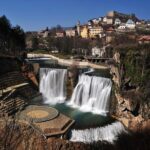
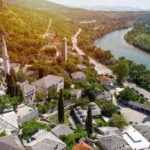
The UNESCO highlight is the Mehmed Paša Sokolović Bridge. You’ll get a visit with historical information from the guide, and it’s timed so you can actually look at the structure, not just pose for a photo and go.
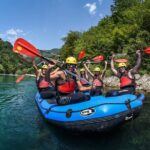
After that, there’s a Drina River boat ride, described as around 20 minutes during the season. That ride is short, but it changes the feel of the day. You’ll see the Drina from a different angle, and you get the sense of the river as a working geographic feature, not just something on a map.
Two practical considerations:
- The boat ride can be shorter than you expect. In some conditions it’s closer to about 10 minutes.
- In winter, the boat may not operate at all. So your “Drina cruise moment” depends on season and local scheduling.
Either way, the bridge-and-river combo is one of the most memorable parts because it ties history to geography immediately.
Andrićgrad: a literary stop that’s more than a quick photo break
Andrićgrad is the town dedicated to Ivo Andrić, the Nobel Prize winner for literature. You’ll have about 45 minutes here, which is enough time to wander at an easy pace, take in the design, and understand why the town exists as a tribute rather than just a souvenir stop.
For me, the point of Andrićgrad in this itinerary is pacing. After the UNESCO bridge and before the train drama, it gives you a chance to reset. It’s also a reminder that this region isn’t only about ruins and scenery—it’s also about how writers, ideas, and identity get turned into physical spaces.
If you’re not the wandering type, you can still get value quickly: focus on the main street vibe, grab a couple photos, and use the rest of the time to browse at a relaxed pace before you get back on the bus.
Šargan Eight railway: Ćira/Chira and why this train ride matters
Then comes the star: the Šargan Eight railway, also famously called Ćira (Chira). The route uses a narrow gauge track (760mm) and was originally built in 1925. The name “eight” comes from the shape of the track—seen from above, it forms a number 8—so you’re not just riding a train, you’re experiencing a design trick in motion.
You’ll have about an hour for this stop, and the train ride is included in the price. Expect a scenic feel with tunnels and hilly country. It’s a genuinely different kind of attraction compared to walking tours, and it breaks up the drive-heavy day.
Season note: in winter, there can be changes to how the train operates, and it may not be the same kind of steam experience you might imagine. One practical takeaway: if you’re traveling outside the main operating season, treat the railway as a bonus rather than the guaranteed perfect “steam-and-tunnels” moment.
If you want one reason to pick this tour even if you’re tired of UNESCO plaques, it’s the train.

Drvengrad – Mećavnik: Kusturica’s movie town and its architecture award
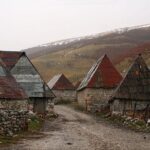
After the railway, you’ll visit Drvengrad – Mećavnik. This is the village-town designed by Emir Kusturica for his movie Life Is a Miracle. The architecture received the Philippe Rotthier European Architecture Award from the Brussels Foundation for Architecture.
You get about one hour here, and that time is just right for this kind of stop. It’s not a museum where you need patience for endless rooms; it’s more like a planned outdoor set where the streets, buildings, and details work together. You can walk, look up at facades, and soak in the atmosphere without feeling rushed.
Also, this stop is the right “tone shift.” After train tracks and national-park nature, Drvengrad adds human-made fantasy. It’s a good change of texture, even if your personal taste runs more toward realism than movie sets.
Tara National Park: short hikes, big views, and Picea omorica
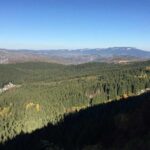
Tara National Park is where the tour starts to feel like a proper nature day. The park was declared in 1981 and is known for biological diversity. You’ll get about one hour here, which usually means a viewpoint stop plus a short mini-hike option depending on the day’s conditions.
This is also one of the few places in the Balkans that gets attention for specific plant life—Picea omorica is mentioned as unique to the region. That matters because it’s not only about scenic overlooks; it’s also about learning what grows here and why the ecosystem is special.
A useful way to think about this stop: it’s not trying to replace a multi-day hike. It’s designed to give you a taste—views, air, and some walking—without turning your day into a training program. If you pack for that mindset (good shoes, a layer, water), you’ll enjoy it more.
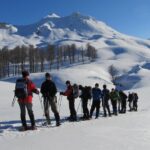
In winter, snow and access can change how easy it is to reach points. If you’re visiting in colder months, plan for the possibility of shorter walks or fewer viewpoint options.
Banjska Stena: Perućac Lake panoramas on the Drina border
Near the end of the day, you’ll stop at Banjska Stena, a viewpoint with a panorama over Perućac Lake on the Drina River. Since the Drina naturally borders Bosnia and Herzegovina and Serbia, the view works like a visual map of what you’ve been learning all day.
You’ll have about one hour. Even if you don’t do a long walk, that time is useful because viewpoints are best when you can actually stand, look, and let the scenery sink in. This is also a photo-friendly stop, but you’ll get more out of it if you treat it like a pause before the ride back.
Practical tip: bring a layer. Viewpoints can feel colder and windier, especially near water. And if you’re sensitive to motion, keep your breaks in your head—your last big lookout is the one time you’ll likely wish you had more time.
The real deal on comfort: food, driving hours, and group pace
This is a long day. You’re leaving at 8:00am and you’ll be back at the meeting point by around 9:00pm (the tour range is 11 to 12 hours). That includes crossing areas on mountain roads and spending time at multiple stops. Some driving is beautiful; some is just driving. Either way, you should plan for it.
Food and drinks are not included. The tour expects you to eat on your own, often during the limited time windows between attractions. So I recommend packing a snack and at least one extra bottle of water—even if you plan to buy food at stops—because your energy will affect how much you enjoy each site.
Also consider this: one or two groups mention concerns about driving comfort on specific days, while others praise cautious, skilled drivers. I can’t promise how every road situation will feel for every group, so if you get anxious in cars or you feel motion sickness, prepare. Even a short medicine plan can make a long tour feel much easier.
Price and ticket value: why $114.65 can work (or not)
At $114.65 per person, the value comes from ticket coverage and a curated route that hits big-ticket experiences. Included items include:
- Šargan Eight train ride (listed as 11 EUR per person)
- Drina River boat cruise (listed as 5.5 EUR per person)
- Drvengrad admission (listed as 2.5 EUR per person)
- Eco tax for Mokra Gora Nature Park (1 to 3 EUR per vehicle)
- Air-conditioned vehicle
- Professional English-speaking guide and driver
- All fees and taxes
That means you’re not paying separately for the major structured attractions. For a day tour, that’s a real convenience. It also reduces decision fatigue: you don’t have to ask what costs extra while everyone’s already hungry and bundled up for photos.
Where the “not great value” risk comes in is simple: time. If you personally need long stops and hate driving, the day may feel heavy. If you love the mix—heritage bridge, train ride, and national-park viewpoints—this price starts to make sense fast because you’re getting multiple major experiences in one pass.
Who should book this East Bosnia and West Serbia UNESCO day tour
Book it if you want:
- One full day that combines UNESCO sights with Serbia nature and a classic railway experience.
- English-speaking guidance that keeps the day understandable, especially around historical context and the border crossing.
- A structured itinerary with key admissions handled for you.
You might skip it if:
- You dislike long road days and prefer slower, fewer-stop trips.
- You’re traveling in winter and you want the train and boat as guaranteed highlights.
- You expect every stop to be a deep, long stay. Some parts are brief by design, and viewpoints and scenic areas take priority over long museum time.
This tour fits well with first-timers to the area who want a strong introduction to how Bosnia and Serbia connect—geographically and culturally—without planning multiple days on your own.
Should you book? My practical call
I’d book this tour if your ideal day is a mix of landmark heritage plus one big “wow” ride. The Šargan Eight railway is the kind of experience that’s hard to recreate independently, and the UNESCO bridge-and-Drina segment gives you a clear story arc. Add Tara National Park and Banjska Stena, and you get the best part of a region without turning it into a multi-day logistics puzzle.
But go into it with open eyes. It’s long. It’s road-heavy. Food isn’t included, and seasonal operations can change the train and boat. If you pack snacks, wear good shoes, and plan for long hours in the vehicle, you’ll likely come away feeling like the day delivered more than it promised.
FAQ
How long is the tour?
It runs about 11 to 12 hours.
What time does the tour start from Sarajevo?
The start time is 8:00am.
Where do I meet the group?
The meeting point is Funky Tours, Besarina čikma 5, Sarajevo 71000, Bosnia and Herzegovina.
Is hotel pickup offered in Sarajevo?
Yes. Pickup is offered from any address in Sarajevo, such as a hotel or hostel, or another agreed meeting point.
What is included in the tour price?
Key included items are the Šargan Eight train ride, Drina River boat cruise, Drvengrad admission, and necessary eco taxes, fees, and taxes. Air-conditioned vehicle and a professional English-speaking guide & driver are included.
Is food included?
No. Food and drinks are not included.
Do I need a passport?
Yes. You need a current valid passport because the tour includes entry into the Republic of Serbia.
What language is the tour offered in?
The tour is offered in English.
How many people are in the group?
There is a maximum of 15 travelers.
What happens in winter with the train and boat?
The provided information indicates that the train and boat ride do not operate in the winter season, so you may see changes depending on dates and conditions.
You Might Also Enjoy
More Historical Tours in Sarajevo

More Tours in Sarajevo
- Fall of Yugoslavia, Sarajevo War Tour with Tunnel of Hope Museum and Frontlines
★ 5.0 · 1,314 reviews
More Tour Reviews in Sarajevo
- Fall of Yugoslavia, Sarajevo War Tour with Tunnel of Hope Museum and Frontlines
★ 5.0 · 1,314 reviews