REVIEW · SARAJEVO
Sarajevo to Belgrade Full Day Tour one-way
Book on Viator →Operated by Bosnian Voyager · Bookable on Viator
That first morning drive feels like the start of a road novel.
This one-way Sarajevo to Belgrade day trip strings together Ottoman sites, Ivo Andrić storytelling, and countryside viewpoints without wasting the hours. You’ll move through east Bosnia and then into Serbia, with built-in stops that make the journey feel like sightseeing, not just transit.
What I like most is the comfortable pace: short museum-style visits paired with a couple longer breaks, so you don’t feel rushed through everything. I also really value that the tour includes the main ticketed moments (like Andrićgrad and the UNESCO bridge area), plus bottled water, so you can budget with less guesswork.
One thing to consider: it’s a long day (about 12 hours) and lunch is not included, so bring your own snack plan or expect to buy something when you get a chance.
In This Review
- Key things I’d tell a friend before you go
- Sarajevo to Belgrade: How the day is paced
- Rogatica quick stop: a local East Bosnia flavor
- Višegrad and the Mehmed Paša Sokolović Bridge: UNESCO you can stand beside
- Andrićgrad: the storytelling town made of stone
- Drvengrad (Mećavnik): a movie-town with a serious idea
- Banjska Stena viewpoint and Lake Perućac: the photo break that pays off
- Mokra Gora and the Šargan Eight: heritage railway time
- Price and what you’re actually paying for ($167.37 for ~12 hours)
- Logistics that matter: timing, language, and your comfort
- Who should book this one-way tour (and who might skip it)
- Should you book Sarajevo to Belgrade with this tour?
- FAQ
- What time does the Sarajevo to Belgrade tour start?
- Does the tour include hotel pickup in Sarajevo?
- Is lunch included?
- What’s included in the price?
- Are tickets included for the main stops?
- What’s the cancellation window?
Key things I’d tell a friend before you go
- Small group size (max 15) keeps the day more personal and easier to manage at viewpoints.
- English-speaking guide/driver with detailed explanations makes the stops much more meaningful.
- Ticketed highlights are included for Andrićgrad and the Višegrad bridge area, so you’re not hunting for admissions.
- Multiple planned stops turn the transfer into part of the experience, not dead time.
- Lake Perućac viewpoint time gives you breathing room for photos and a proper look over the Drina canyon.
- Šargan Eight access window at Mokra Gora lets you experience a heritage railway moment without rushing.
Sarajevo to Belgrade: How the day is paced
You start at 8:00 am from Sarajevo, with pickup available either at the Astra tours agency location or from your hotel/apartment address. It’s designed as a one-way day tour, so you’re in “get moving, then sightsee” mode from the first hour. With a maximum group size of 15, you should feel more like you’re on an organized road trip than stuck on a crowded bus.
The schedule works because it mixes quick stops (around 20 minutes) with two longer segments (about an hour to an hour and a half, plus a two-hour rail-focused window). That matters when you’re traveling across borders and landscapes that feel different block to block. Instead of one big monument and then boredom, you get a chain of smaller “ah, that’s why people come here” moments.
The practical reality is that you won’t have much time to wander independently. You’ll want comfortable shoes and a good camera battery, but don’t plan on chasing extra sites beyond what’s built into the day. If you like structure—this will feel good.
A few more Sarajevo tours and experiences worth a look

Rogatica quick stop: a local East Bosnia flavor
Early on, you’ll stop in Rogatica, a small town in east Bosnia. This is the kind of stop that’s more about breaking up the drive and giving you a sense of place than turning into a long sightseeing detour. It helps the day feel grounded in real local geography, not just “big-ticket” destinations.
If you’re the type who likes maps and regional context, this short pause can be useful. You see how the route threads through smaller towns before the larger, more famous names take over. And since the day already has plenty of walking near viewpoints, a quick stretch break is a nice reset.
Višegrad and the Mehmed Paša Sokolović Bridge: UNESCO you can stand beside
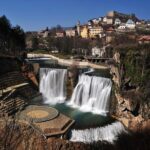
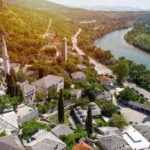
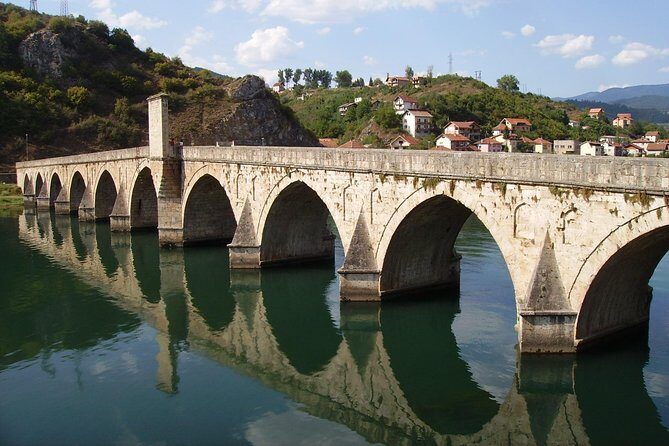
Višegrad is where the day pivots into something iconic. You get a focused stop here, and it’s anchored by the Mehmed Paša Sokolović Bridge over the Drina River. This bridge is completed in 1577 and was built under the Ottoman court architect Mimar Sinan, ordered by Grand Vizier Mehmed Paša Sokolović. It’s also on UNESCO’s World Heritage List, which helps explain why people slow down when they reach it.
What I like about this stop is that it’s not treated like a distant postcard. You’re positioned to actually look at the bridge span and the way it sits at the confluence of the Drina and Rzav rivers. Even if you’re not a medieval-architecture expert, you’ll get the scale and the setting quickly.
There’s also a literary hook: the bridge was popularized through Ivo Andrić’s The Bridge on the Drina. That means the place comes with an emotional frame, not just dates and stones. The day gives you the chance to see the real subject of the story, which tends to stick in your head longer than a plaque does.
Practical note: the stop is about 20 minutes, so show up ready. If you want photos, pick your spots fast and then take a second look—crossing that bridge viewpoint angle is half the fun.
Andrićgrad: the storytelling town made of stone
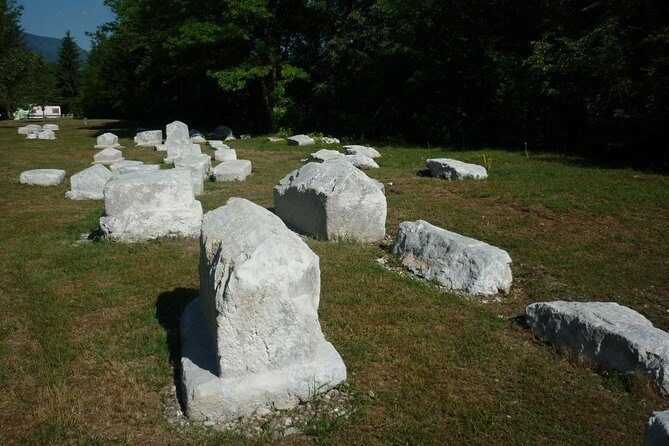
Next comes Andrićgrad, also called Andrić’s Town, in Višegrad. This place was built as a project by film director Emir Kusturica and dedicated to Nobel Prize–winning novelist Ivo Andrić. Construction began in 2011 and the project officially opened in 2014.
You’ll get around 20 minutes here, and the key detail for value is that the admission is included. That matters because it removes friction: you’re not deciding whether it’s worth another ticket at the moment you arrive. With limited time, that’s a win.
Andrićgrad feels like a physical interpretation of ideas—language, memory, and place—turned into buildings you can actually walk near. It’s not “old world” the way the bridge is, but that’s part of the point. You’re seeing how a writer’s legacy becomes visible in modern form.
One caution: in short town visits, it’s easy to rush. I’d treat this like a scan-and-savor stop. Get a quick overview for your bearings, then pick one or two corners that look most interesting to you and spend a few extra minutes there. The time limit is real.
Drvengrad (Mećavnik): a movie-town with a serious idea
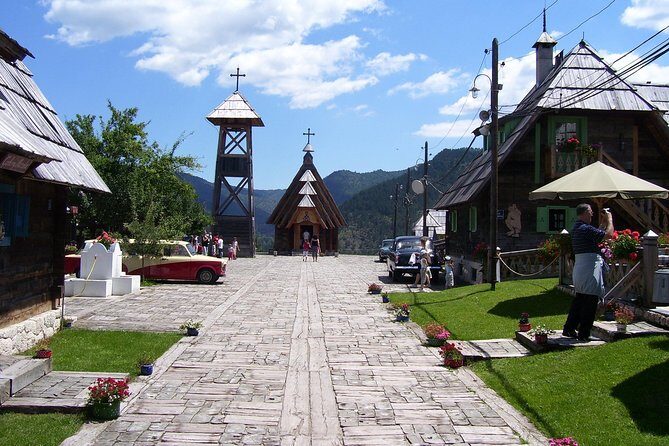
Then you’ll head to Drvengrad, sometimes connected with Mećavnik, a special kind of place: a town built from an artistic vision and a personal meaning tied to home and rebuilding after the 1990s. The site describes a community created for people who didn’t return home after the war—life restarted with a new settlement, built from pine clapboards.
You’ll have about 1 hour here, and the admission is listed as free. For me, that’s one of the best value points in the whole day: you get time to walk, look around, and absorb the tone without paying an extra gate fee on top of the tour price.
The place is presented as a carefully shaped environment, inspired in part by the ancient town of Ephesus, and designed with an urban core rather than modern sprawl. It’s also described as defending society through cultural pursuits and organic food production, with on-site references like a juicery, a barn with cows, and vegetables connected to nearby areas.
If you like travel that feels a little unusual, Drvengrad delivers. It’s not a standard “pay to see ruins” stop. It’s a place with a point of view, and it tends to provoke questions: Who built this? Why like this? What does it aim to preserve?
The downside? With only one hour, you won’t have time for deep exploration. But it’s a strong stop if you want atmosphere, not just sights.

Banjska Stena viewpoint and Lake Perućac: the photo break that pays off
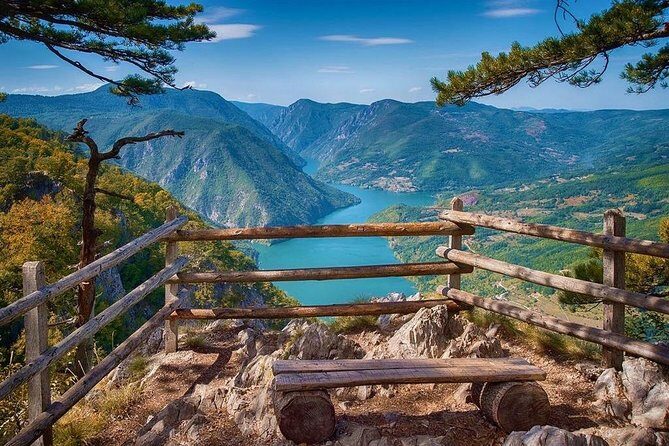
After the town and bridge stops, the day shifts into big-view territory with Banjska Stena. This viewpoint is about 10 kilometers from Mitrovac, and you’ll have roughly 1 hour here, with the stop listing admission included.
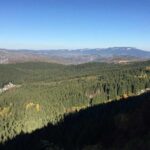
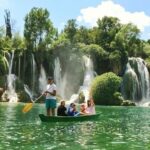
The reason this stop works is that it’s clearly about the view: you get an outlook over Lake Perućac, the Drina canyon, and the Osat area in Bosnia. Lake Perućac is an artificial lake about 52 km long, created in 1966 by damming the Drina for hydroelectric power. Today, it’s described as a major attraction, including boat riding, swimming, and sports fishing.
Banjska Stena also has a story layer. The name ties to Banjsko vrelo, a spring at the foot of the viewpoint, with water described as 4°C in karst origin. The data also notes that the spring was used in winter because it stayed warm, even after the flooding connected with lake formation.
Under the viewpoint is Banjsko točilo, a scree used in the 19th century to transport wood downstream. That’s the kind of detail that makes you look twice at what might otherwise feel like “just a viewpoint.”
Practical tip: bring a light layer. Viewpoints can feel cooler than the town stops, especially with river winds. And since you’ll likely be standing and walking a bit, plan for real shoes, not just “nice looking” ones.
Mokra Gora and the Šargan Eight: heritage railway time
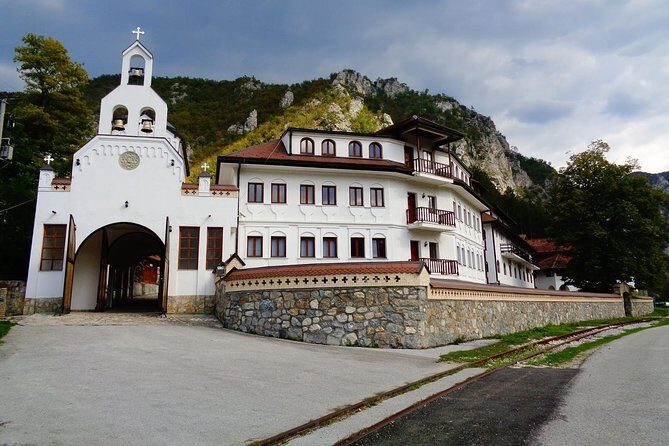
For the final major highlight, you’ll reach Mokra Gora and the Šargan Eight. This is a narrow-gauge heritage railway in Serbia running from Mokra Gora to Šargan Vitasi station. The information you’re given also notes an extension toward Višegrad in Republika Srpska completed in 2010, with plans extending further in later years.
You’ll have around 2 hours here, and the admission is listed as free. This is one of the more “fun” stops in the day because it’s an activity, not just looking at buildings or stones. A heritage railway is slow by design, and that’s what makes it work in a long-day itinerary—you’re forced to slow down too.
If you care about how travel feels, this stop tends to be memorable because of the rhythm. You get a change of pace after the viewpoints, and the day stops being only about what you can stand next to. It becomes what you can watch move.
The only real caution is timing within your two-hour window. Two hours can disappear quickly once you’re waiting, getting oriented, and taking photos. So if you have a must-see shot in mind, aim for it early in the rail time block.
Price and what you’re actually paying for ($167.37 for ~12 hours)
At $167.37 per person for roughly 12 hours, the price can look steep until you break down what’s being handled for you. You’re paying for round-the-day logistics: cross-border-ish travel between regions, a guided experience in English, a group limited to 15, and included costs like all fees and taxes plus bottled water.
The value improves further because multiple key stops are covered with included admission: Andrićgrad and the bridge area, plus Banjska Stena. Others are listed as free, like parts connected with Drvengrad and the Šargan Eight window. Lunch is not included, so you’ll still want to budget for that.
Where your money turns into something you can feel is in the guide/driver quality. The strongest feedback you have here is about competence, warmth, and explanations that make the places click. That’s not a “nice to have” on this kind of route. When you’re juggling a UNESCO bridge, a literary town, and a heritage railway, context is what turns photos into understanding.
I’d think of it like this: if you did this route on your own, you’d spend time planning, coordinating local transport, and figuring out tickets on the fly. Here, the day is pre-built. You pay for that structure, and if you’re the type who values fewer decisions, it’s worth it.
Logistics that matter: timing, language, and your comfort
This tour runs with a clear start time at 8:00 am, and it’s set up for English. You’ll also have a mobile ticket, which is handy if you’re trying to stay light on paperwork.
Averages show it’s often booked about 35 days in advance, so if your dates are firm, you’ll want to secure your spot early. With a 15-person maximum, demand can matter. That small group size is part of what makes the day feel manageable, so it’s not a “wait and see” type of booking.
The day includes no lunch, so you’ll need a plan. Even if you don’t want a full meal, bring something small to cover the gap, especially since some stops are quick. Your energy will affect your experience more than you think on a long, stop-heavy itinerary.
Who should book this one-way tour (and who might skip it)
This is a strong fit if you want a high-effort sightseeing day without having to stitch it together yourself. You’ll enjoy it if you like themes: UNESCO architecture, Ivo Andrić’s influence, and places tied to art and storytelling rather than only “classic monuments.”
It’s also a good match if you value safety and comfort. The trip is repeatedly described as feeling safe and easy, with a driver/guide who keeps the day smooth. When you’re traveling long hours and changing regions, that reassurance matters.
Skip it if you hate rigid schedules or you want long, slow explorations where you can linger for an hour just because a street looks good. This tour is designed for defined stop windows. You’ll see a lot, but you won’t have full freedom to wander endlessly.
Should you book Sarajevo to Belgrade with this tour?
Book it if you want a day where the drive actually earns its keep. The combination of UNESCO bridge viewing, Andrićgrad admission included, a meaningful stop at Drvengrad, and the Šargan Eight heritage railway gives you variety that’s hard to replicate cheaply.
Don’t book it if you’re only interested in one single landmark and you’d rather spend the day on your own schedule. This tour is built as a sequence. It’s best when you like checking boxes that still have soul.
My bottom line: for a one-day one-way transfer, this is a strong deal because it’s not just transportation. It’s guided context plus ticketed highlights plus enough time at key stops to make each one feel real.
FAQ
What time does the Sarajevo to Belgrade tour start?
It starts at 8:00 am.
Does the tour include hotel pickup in Sarajevo?
Yes. Pickup is available either from the Astra tours agency or at the address of your hotel or apartment.
Is lunch included?
No. Lunch is not included.
What’s included in the price?
The tour includes bottled water and all fees and taxes.
Are tickets included for the main stops?
Some admission is included and some stops are listed as free. For example, Andrićgrad and the Mehmed Paša Sokolović Bridge are listed as admission included, while Drvengrad and the Šargan Eight entry are listed as free.
What’s the cancellation window?
You can cancel for a full refund up to 24 hours before the start time.
You Might Also Enjoy

More Full-Day in Sarajevo
More Tours in Sarajevo
- Fall of Yugoslavia, Sarajevo War Tour with Tunnel of Hope Museum and Frontlines
★ 5.0 · 1,314 reviews


More Tour Reviews in Sarajevo
- Fall of Yugoslavia, Sarajevo War Tour with Tunnel of Hope Museum and Frontlines
★ 5.0 · 1,314 reviews