REVIEW · MOSTAR
Traditional Bosnian Cooking Class in Mostar with Lunch and Drinks
Book on Viator →Operated by Explore Mostar Adventures · Bookable on Viator
Burek and dolma in Mostar’s kitchen. This is a 3-hour, expert-led class at Food House Mostar where you practice traditional techniques and then eat what you cooked. I love that the experience combines a real 3-course lunch or dinner with Bosnian drinks, not just tasting bites.
The teaching style is practical and step-by-step, and it works well even if your dough skills are shaky. One thing to consider: there’s no hotel pickup, so you need to get yourself to Rade Bitange 12 on time.
In This Review
- Quick hits you should know before you go
- Finding the kitchen: Food House Mostar on Rade Bitange 12
- The Mostar-style welcome: rakija, coffee, and relaxed pacing
- What you’ll make: mezze starter, japrak/dolma, and classic sweets
- Entrée-to-cooking: how the lesson is structured
- The real star skill: making burek-style pastry (even if you mess up)
- Stuffed vegetables and dolma/japrak know-how
- Drinks and the meal: rakija welcome, plus local wine or beer
- Duration, group size, and timing: making it fit your Mostar day
- What’s included vs not: where the $90.11 really goes
- Practical advice: what to bring and how to get the most out of it
- Who should book this Bosnian cooking class in Mostar
- Should you book it? My honest take
- FAQ
- How long is the Bosnian cooking class in Mostar?
- Where does the experience start, and where does it end?
- Is hotel pickup included?
- What’s included in the price?
- Can kids join, and is alcohol included for everyone?
- Are dietary requirements handled?
Quick hits you should know before you go
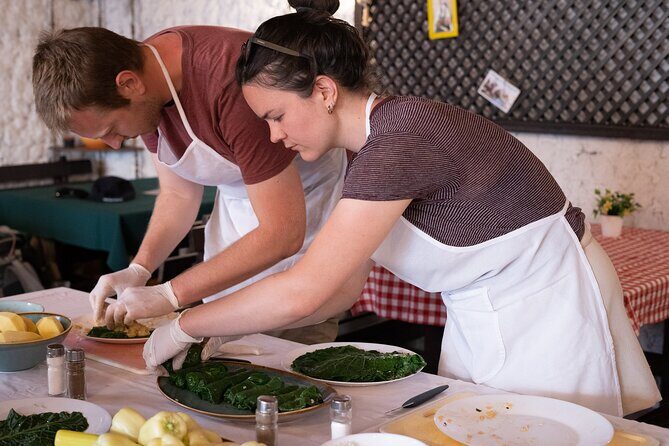
- Hands-on instruction: you knead, roll, and season so you’re cooking, not watching.
- Burek and stuffed-dish skills: expect traditional pastry and rolling techniques, plus classics like japrak/dolma.
- Eat immediately: you sit down for a 3-course meal made by your own hands.
- Bosnian drinks included: a rakija welcome drink, plus local wine or beer with your meal.
- Small group feel: maximum 20 people, so questions and attention don’t vanish.
- Packaging leftovers can happen: at least one class notes they let participants pack leftovers to take home.
Finding the kitchen: Food House Mostar on Rade Bitange 12
Your class starts and ends back at Food House Mostar (Rade Bitange 12, Mostar 88104). It’s a straightforward setup, which is good news if you hate complicated transfers and meeting-point games.
Plan to arrive a few minutes early. There’s no mention of hotel pickup, so treat this as a “show up on your own” experience, and you’ll be happier when the lesson begins on schedule.
If you’re walking from Mostar’s main sights, it’s usually an easy hop, but don’t assume. Bring your map app and confirm the exact start time you booked.
You can also read our reviews of more cooking classes in Mostar
The Mostar-style welcome: rakija, coffee, and relaxed pacing
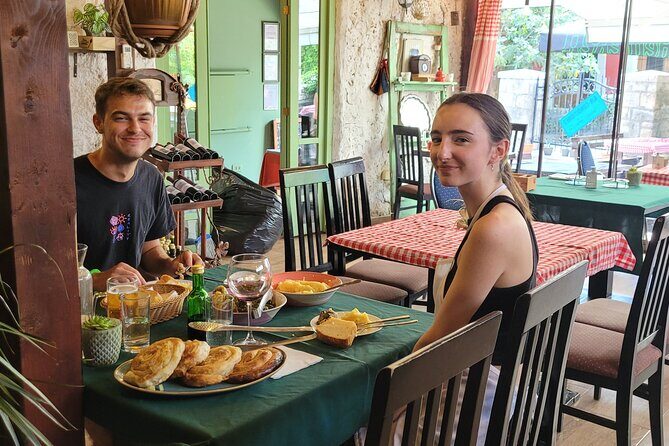
Right at the start, you’ll get a welcome drink (rakija). In some sessions, coffee and small bites show up early too, which is a nice way to get your energy up before dough starts flying around.
The pace is meant to feel relaxed. The best part is that the instructor won’t just explain and move on; they guide you through steps so you actually try each one.
Also, the atmosphere tends to be more than “cooking only.” One review notes the host answered questions about the war with real-life stories. If you’re curious, you may get cultural context along with the recipe talk.
What you’ll make: mezze starter, japrak/dolma, and classic sweets
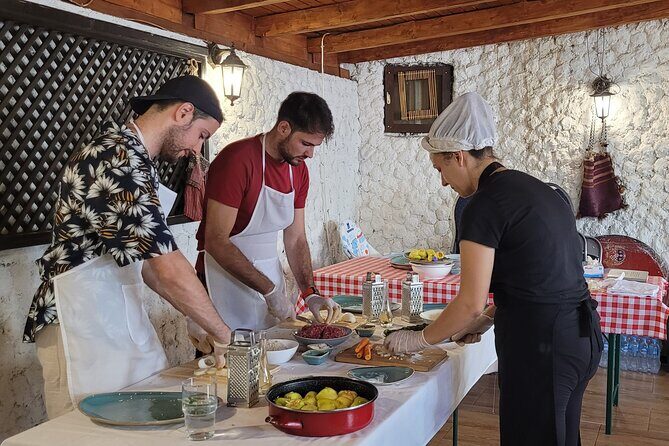
The class is built around Bosnian comfort food, and the menu changes depending on the session. On the sample menu, expect:
- Starter: Bosnian mezze platter
- Main: Japrak and dolma
- Dessert: Hurmasice
That’s a strong lineup because it covers different food skills. Mezze helps you understand flavor and grazing-style traditions. Japrak/dolma put you into the stuffed-vegetable world, where technique matters. And Hurmasice gives you a sweet finish that fits the local pattern of baking and syruped desserts.
You might also see variation based on what the kitchen prepares. Reviews mention stuffed peppers and kale leaves, plus pastry spirals and other sweet cookie-style desserts. The common thread is hands-on rolling, stuffing, shaping, and seasoning.
Entrée-to-cooking: how the lesson is structured
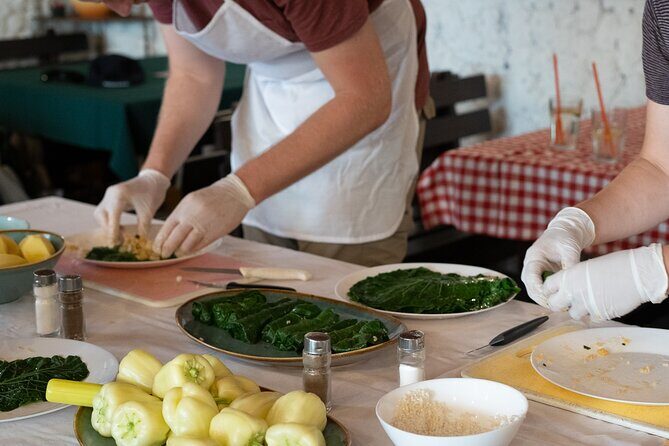
The flow is simple and easy to follow:
- Introduction
- Entree
- Cooking lesson
- Eat what you cooked
- Farewell
That structure matters because it keeps you from feeling rushed. You get orientation first, then you settle in for the lesson with the kitchen tools and ingredients ready.
The “entree” step is more than just a starter dish on a plate. It’s a setup for how the meal works: what you’re tasting, what flavors to look for, and what the instructor wants you to notice before you start cooking your own portion.
Then comes the cooking lesson. This is where you’ll appreciate the class format most: you’re not stuck behind a counter. You’re working at the stove and bench area with the tools and spices the kitchen provides.
The real star skill: making burek-style pastry (even if you mess up)
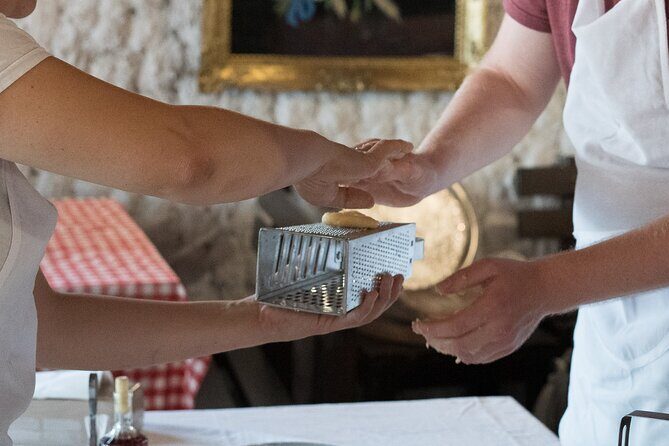
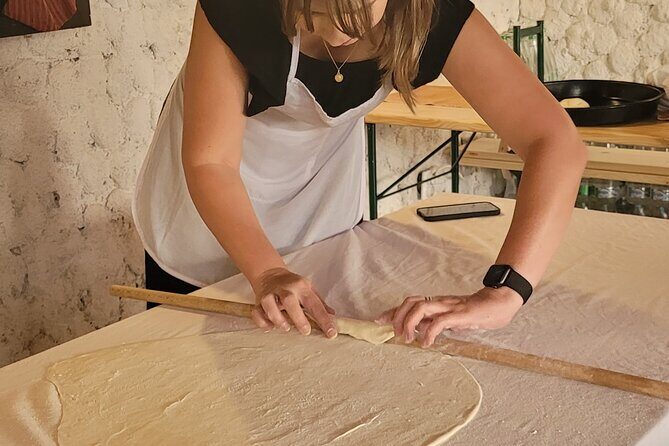
If you’ve ever watched burek being made and thought, that looks impossibly thin, this class is where you try it yourself. Reviews highlight teaching the traditional technique for rolling dough using a long, thin rolling pin.
This is a big deal for value. A lot of cooking classes abroad are “assemble and bake” experiences. Here, you’re learning the mechanics of dough and pastry handling. That means you leave with something you can actually repeat at home, not just a memory of a good meal.
You’ll also learn how to work with fillings and shape the pastry. Some sessions include spiral-style stuffed pastry. Even if your first attempts aren’t perfect, that’s kind of the point: the instructor gives you a path from awkward dough to something that looks and tastes right.
And yes, you’ll probably get flour on your hands. That’s normal. Just bring a calm attitude and expect the process to teach you as you go.


Stuffed vegetables and dolma/japrak know-how
Dolma and japrak are not just dishes here. They’re a technique lesson. Stuffed vine-leaf and cabbage-leaf styles share the same core idea: the filling needs seasoning balance, and the rolling needs consistency so it cooks evenly.
In the sample menu, you’ll make both japrak and dolma. That combination helps you see how slight changes in leaf and method affect texture and flavor.
Practical tip: when you’re rolling, focus on tightness and uniform size rather than perfection. The instructor’s guidance is aimed at producing a roll that holds together and cooks well—not on creating a pastry-perfect Instagram roll.
Drinks and the meal: rakija welcome, plus local wine or beer
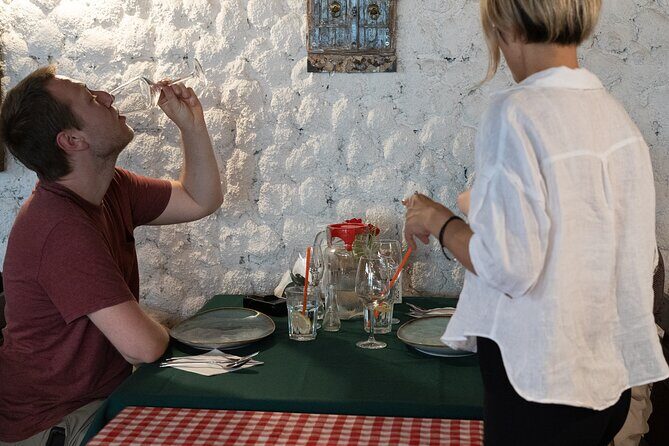
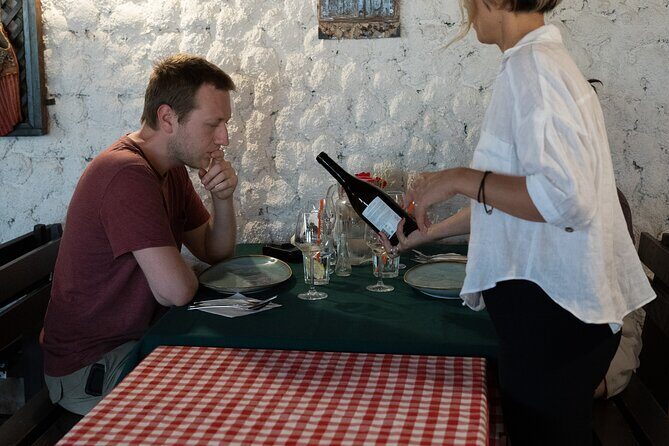
Let’s talk food and drink, because this is part of the value. You start with rakija, and your 3-course lunch or dinner comes with local wine or beer included.
Important consideration: drinking age is 18. Minimum age for the activity is 9, so you’ll want to plan accordingly if you’re traveling as a family and some people can’t or don’t drink alcohol.
Also, additional beverages are not included. So if you get thirsty after cooking (you will), keep an eye on what’s included versus what’s extra.
When you sit down to eat, it’s not a token tasting. You’re eating the meal you made, course by course. That makes the whole class feel like a full experience rather than a workshop that ends in hunger.
Duration, group size, and timing: making it fit your Mostar day
The class runs about 3 hours. That’s a comfortable length: long enough to learn real steps, short enough that you can still do other Mostar stops afterward.
Group size is capped at 20. In practice, that helps keep the class interactive. With smaller groups, questions land, and you don’t spend the whole time waiting for the instructor to notice you.
Scheduling wise, you can usually choose morning or afternoon departures, and the detailed start time shown for the activity is 5:00 pm. Double-check your confirmation message so you’re not guessing.
Booking-wise, this is often reserved about a month and a half ahead on average. If you’re traveling in a busy season, book sooner rather than later.
What’s included vs not: where the $90.11 really goes
Price is $90.11 per person, and the included list is what makes that number make sense.
Included:
- Bosnian cooking class with an English-speaking guide
- Rakija welcome drink
- 3-course Bosnian lunch or dinner
- Local wine or beer with the meal
- Access to the kitchen with spices, tools, and ingredients
Not included:
- Hotel pickup/drop-off
- Additional beverages
So you’re paying for the instruction plus the meal and drink components. If you were to eat a full dinner plus pay for a standalone cooking workshop, you’d likely spend similar or more in many places.
In other words, the cost isn’t just “renting a kitchen.” It’s paying for the chance to learn technique and then feed yourself afterward.
Practical advice: what to bring and how to get the most out of it
This is a real cooking session, not a demo. Wear clothes you don’t mind getting a little messy, because dough handling is part of the deal.
Come with a small hunger buffer. Reviews strongly suggest going with an empty stomach, because the first nibbles and welcome drink are nice, but the main meal is the payoff.
Also, tell them about dietary needs when you book. The info says to advise specific dietary requirements at time of booking, which is the right move. Just keep expectations realistic: the class is built around traditional recipes, so adjustments depend on what’s feasible in that session.
If you’re bringing kids, remember the minimum age is 9. And if alcohol is part of the included meal, drinking age is 18, so plan who will have what.
Who should book this Bosnian cooking class in Mostar
This class is ideal if you want more than pictures of food. It’s for you if you enjoy learning tactile skills: rolling dough, forming stuffed rolls, seasoning correctly, and then eating right away.
It’s also a strong pick for couples and small groups who want a shared activity that ends in a satisfying meal. The max 20 size helps keep it social without feeling chaotic.
If you’re traveling solo, you’ll likely still get hands-on time because the instructor structure is step-by-step and the group cap supports attention.
If you’re expecting a slow, sightseeing-heavy day, this isn’t that. It’s cooking first, culture through conversation, then dinner.
Should you book it? My honest take
If you’re in Mostar and you want a Bosnian food experience that’s practical and genuinely useful, I’d book this. The best part is that it teaches technique, not just names of dishes. And you get the bonus that the lunch or dinner is included with Bosnian drinks.
Skip it only if you strongly prefer a food tasting tour over cooking. Or if you hate arriving somewhere on your own with a fixed start time, because there’s no hotel pickup.
Otherwise, bring curiosity, show up on time, and get ready to roll dough. You’ll eat well, learn something real, and leave with a menu you can repeat.
FAQ
How long is the Bosnian cooking class in Mostar?
The class is about 3 hours.
Where does the experience start, and where does it end?
It starts at Food House Mostar, Rade Bitange 12, Mostar 88104, Bosnia and Herzegovina, and it ends back at the same meeting point.
Is hotel pickup included?
No. Hotel pickup/drop-off is not included.
What’s included in the price?
The price includes the Bosnian cooking class with an English-speaking guide, a rakija welcome drink, and a 3-course lunch or dinner with local wine or beer. It also includes access to the kitchen with spices, tools, and ingredients.
Can kids join, and is alcohol included for everyone?
The minimum age is 9 years. The minimum drinking age is 18. The meal includes local wine or beer, but alcohol rules apply.
Are dietary requirements handled?
You should advise specific dietary requirements at time of booking. How they adjust depends on what the kitchen can accommodate for that session.