REVIEW · SARAJEVO
Sarajevo to Split (or opposite): Transfer With Herzegovina Tour
Book on Viator →Operated by Meet Bosnia Travel · Bookable on Viator
A long day, with built-in highlights. This one-way Sarajevo to Split transfer turns transit into a guided route through Herzegovina’s top sights, from Konjic’s Old Stone Bridge to Mostar’s UNESCO Old Bridge and on to the harbor in Trogir. I like the guided pacing—you’re not just sitting in a van—and I like the small group size (max 8), which makes it easier to ask questions and get real context from the driver-guide. One thing to consider: it’s still a long day (about 10–12 hours), with heat and some walking and steps, especially at Počitelj.
The standout for me is that you travel with a driver-guide who’s explaining what you’re seeing, not leaving you to guess. People have credited guides like Vedo, Kenan, and Jasmin with making the day feel personal—jokes included—plus pointing out details you’d miss on your own. The possible drawback is simple: English quality can vary by guide, and you’ll want the day to run smoothly in the language you booked.
In This Review
- Key things to know before you go
- How this Sarajevo to Split transfer actually works
- Price and value: what you’re really paying for
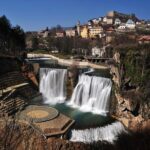
- Konjic stop: Old Stone Bridge, coffee break, and WWII context
- Mostar in one guided hour: UNESCO Old Bridge plus the city around it
- Blagaj Tekija: dervish monastery by Buna spring
- Kravice Falls: mini-Niagara energy with swim-time potential
- Počitelj fortress village: stairways, pomegranate slopes, and the Kula view
- The drive through to Trogir and arrival in Split
- Who this is best for (and who should choose something else)
- Guide quality: how Vedo, Kenan, and Jasmin set the tone
- Quick planning checklist (so the day feels easier)
- Should you book this one-way transfer?
- FAQ
- How long does the Sarajevo to Split transfer with Herzegovina tour take?
- What stops are included on the Herzegovina tour portion?
- Is hotel pickup included, and where does the tour end?
- What’s included in the price?
- Are entrance fees and food included?
- What language is the tour offered in?
- What’s the group size?
- Is there free cancellation?
- Is the tour suitable for children and people with mobility needs?
Key things to know before you go
- Small-group transfer (max 8): more conversation, less chaos.
- Heart of Herzegovina in one day: Mostar, Blagaj, Kravice Falls, and Počitelj are all covered.
- Konjic’s Old Stone Bridge story: a real centuries-long landmark with WWII history.
- Mostar sights beyond the Old Bridge: Crooked Bridge, Koski Mehmed Pasha Mosque area, and Kujundžiluk bazaar.
- Počitelj viewpoint hike: the Fort (Kula) is up high, and it’s stair-and-slope country.
- Bring swim gear if you want Kravice: it’s a popular swim and picnic spot.
How this Sarajevo to Split transfer actually works
This is a one-way trip from Sarajevo to Split (it also runs in the opposite direction). You start with hotel pickup and you finish with a hotel drop-off in Split, with a professional driver-guide along the way. The vehicle is air-conditioned, and bottled water is included, which matters because you’ll be spending hours on the move.
The big value here is that the transfer isn’t treated like “just get there.” Instead, you stop at major Herzegovina locations and you get guided context for what you’re looking at. That’s why it feels different from booking two separate transfers and then trying to add sites with your own timing.
Plan your day around a long drive and a lot of picture opportunities. Most stops are time-limited (for example, Konjic is about 20 minutes and Mostar is about 1 hour), so you’ll get to see a lot, but you won’t have the luxury of a slow, lingering museum-style pace.
A few more Sarajevo tours and experiences worth a look

Price and value: what you’re really paying for
At $156.62 per person, this isn’t a low-cost add-on. But it’s also not just a bus ride. You’re paying for an organized one-way transfer with hotel pickup and drop-off, air-conditioned transport, bottled water, and guided time in multiple places across Herzegovina.
A key part of the value is the “guide brain” at every stop. For example, Mostar is more than Old Bridge photos—you also get to understand the city’s layout and landmarks like the Crooked Bridge and key religious architecture. The same goes for Počitelj, where the view from Kula makes the stepped village make sense fast.
Finally, the small group limit (up to 8 travelers) is a quiet quality upgrade. In a big group, short stops can feel rushed. Here, you’re more likely to get a clear explanation and enough time to step away, stretch, and come back.
Konjic stop: Old Stone Bridge, coffee break, and WWII context
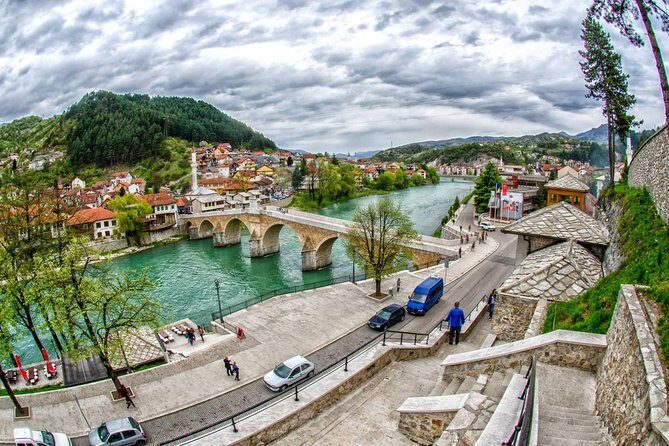
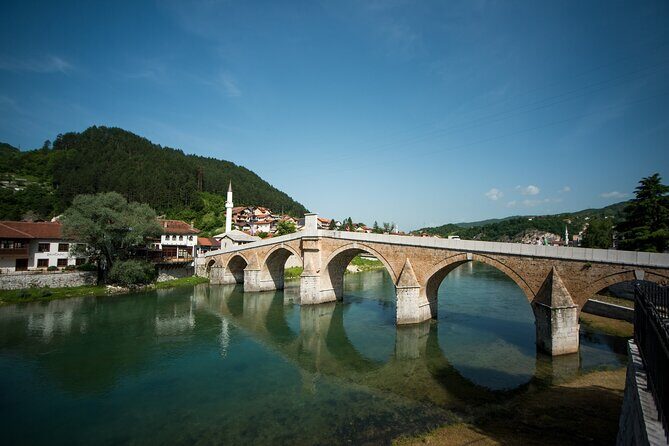
Your first planned stop is Konjic, a small town with a big “this place matters” landmark. The focus is the Old Stone Bridge that connected banks of the Neretva River for centuries, originally built in 1682. During WWII, German occupiers destroyed it during troop withdrawal, and it was reconstructed as the original bridge in 2009. It’s been listed as a national monument since 2003.
Even if you only have about 20 minutes, the story adds weight to the photos. I like that the stop gives you a simple option: grab a coffee or take a short walk and reset before the longer drive stretches out again.
Practical note: this is a quick stop. If you want more time to explore Konjic’s lanes or take a deeper wander, you’ll need to add time yourself later. In a day tour, this is about impact and orientation, not full city coverage.
Mostar in one guided hour: UNESCO Old Bridge plus the city around it
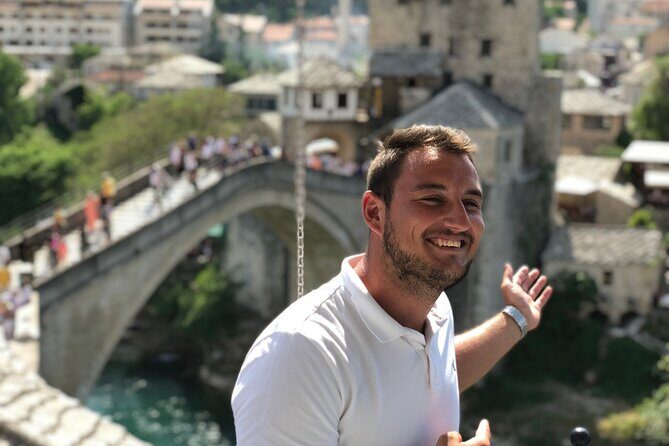
Next comes Mostar, and you’ll cover a lot of the classic highlights in about an hour. The headline is the Old Bridge, built in 1566 and listed as UNESCO World Heritage since 2005. It’s the iconic symbol people come for, but you’re not stuck only looking at the same postcard angle.
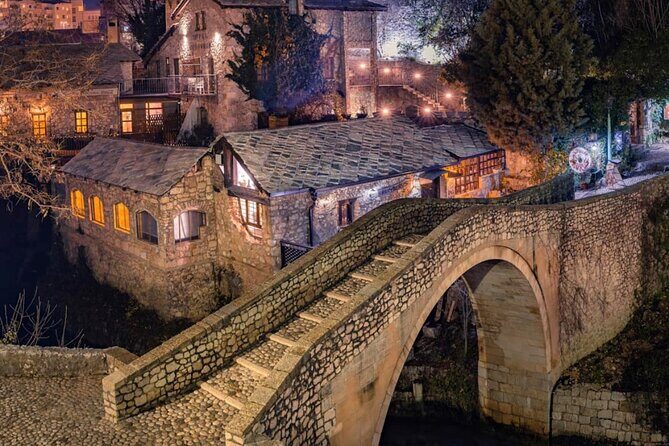
You’ll also see the Crooked Bridge, described as the oldest arch bridge in Mostar, and the tour includes key stops and areas like the Koski Mehmed Pasha Mosque and Kujundžiluk, the old bazaar winding along a cobbled street dating to the mid-1500s. This is the zone where crafts shops and traditional restaurants cluster, so it’s also a good place to decide if you want a quick snack on the fly.
Mostar is where the guide’s role really matters. A good driver-guide will help you understand why the city is built the way it is—stone on stone, with the Neretva River shaping daily life—and why the bridges are more than scenery.
The one consideration: one hour can feel short if you love independent wandering. Use the guide’s suggestions, then take a focused walk for yourself while you still have momentum.
Blagaj Tekija: dervish monastery by Buna spring
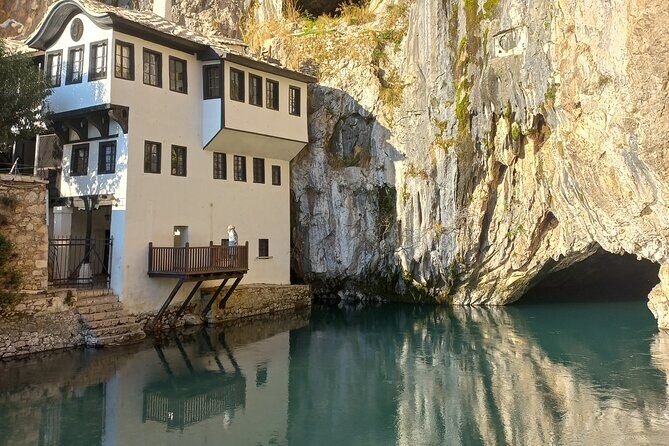
After Mostar, the tour heads to Blagaj and the Blagaj Tekija (the dervish monastery), built around 1520. This is the quieter, more reflective stop on the route. It’s situated by the Spring of the river Buna, surrounded by mountains, and you’re guided through what the site represents in the early Ottoman period.
A unique detail here is the explanation of how the dervishes used the monastery for their rituals, including dhikr, which is described as praise to God. You’re also given the setting: the garden area is cooled by the freshness of the river and the mountain air, which is part of why historic figures and travelers were drawn to the place.
Lunch isn’t included, but there’s a restaurant by the spring where you can eat. If you’re sensitive to heat, this stop can be a nice reset—less “run and photo” energy, more atmosphere.
Plan for shoes you don’t mind using on uneven ground. This isn’t a “museum hallway only” location, and you’ll likely do some stepping around to get to viewpoints and angles.

Kravice Falls: mini-Niagara energy with swim-time potential
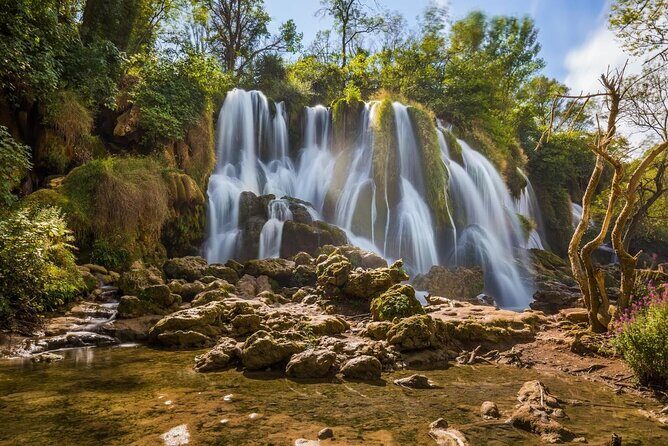
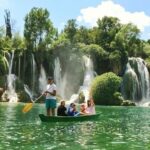
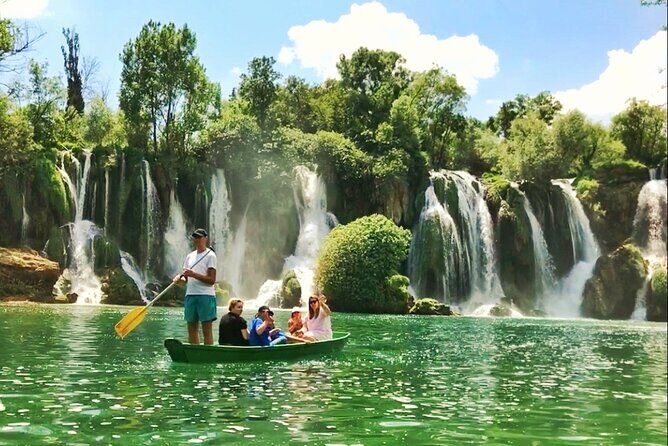
Then it’s off to Kravice Falls, a natural stop on the Trebižat River. The tour frames it as a mini version of Niagara Falls hidden in the Balkans. The falls form a natural amphitheater, and the height is listed as 25 meters. It’s protected as a natural rarity, and it’s also noted as a popular swimming and picnic area.
Your time here is about 40 minutes, which means you’ll want to choose your plan quickly: either enjoy the view and take photos, or set yourself up for a dip if conditions allow. One practical tip I’d follow from past experiences on this route is to bring your swimsuit if you even slightly hope to swim—this is the stop where that option exists.
Also, entrance fees for attractions aren’t included. So assume you may pay small add-ons at the site depending on what’s required when you arrive.
The drawback is that falls are weather-dependent. If it’s extremely hot or dry, the experience might feel less dramatic. Still, even without swimming, this is one of the most scenic “walk to a viewpoint” breaks in the day.
Počitelj fortress village: stairways, pomegranate slopes, and the Kula view
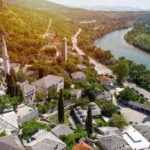
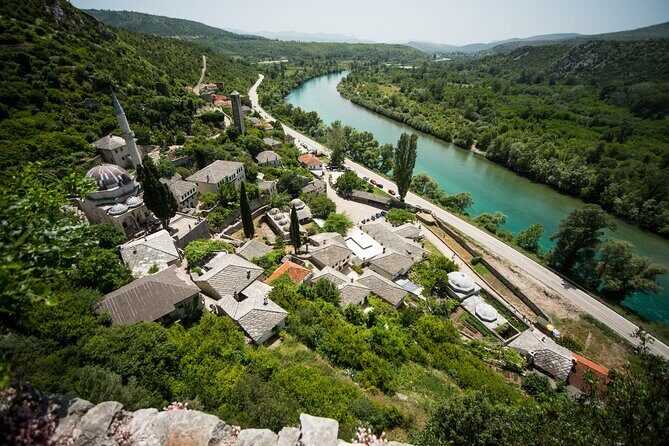
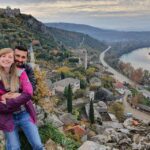
The final major historical stop on the Herzegovina circuit is Počitelj, described as a stepped Ottoman-era fortress village. It sits in a steep rocky amphitheater, with stairways threading through stone-roofed houses and pomegranate bushes. This is the kind of place where photos make sense only after you see the layout in person.
You’ll also climb to the Kula (Fort of Počitelj), positioned at about 45 meters above sea level. From the top, you can take in sweeping views that connect the village to the surrounding region. The tour notes that you can see the Neretva River, the Hajji Alija’s mosque, the mekteb (Muslim primary school), the imaret (charitable kitchen), the medresa (Muslim high school), and the hamam (Turkish public bath), plus the han (public inn) and the sahat-kula clock-tower.
This stop is why the tour asks for moderate physical fitness. You’re not doing a marathon, but you are dealing with stairs and slope. If you have mobility concerns, wear grippy shoes and keep your pace steady.
Počitelj is also one of those places where “wandering” is built into the experience. Even with limited time, you’ll likely want to get a little lost in the lanes, then re-find your route back to the viewpoint.
The drive through to Trogir and arrival in Split
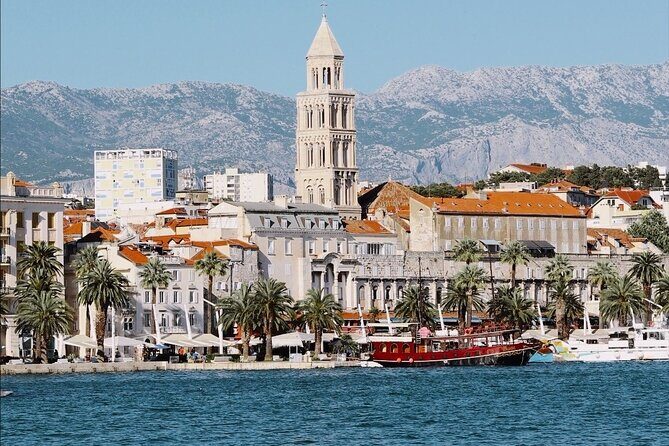
The highlights also mention a visit to the historic harbor in Trogir. This is a nice contrast after the inland river valley sites. Trogir is a coastal stop that helps you connect the Herzegovina experience to the Adriatic side of Croatia.
From there, the tour ends in Split, with a drop-off at your desired location. The end goal is that you’re not left figuring out the logistics after a long day—your transit and handoff are part of the service.
One practical idea: if Split is your base, decide what you’ll do right after arrival. This tour gets you to Split, but it doesn’t schedule a full evening in the city. If you want a relaxed start, plan an easy dinner nearby and save “big walking” for tomorrow.
Who this is best for (and who should choose something else)
This tour is a strong fit if you want to use the one-way travel day wisely. If you’re trying to get from Sarajevo to the Adriatic without losing an entire day to transit, the structure here makes sense. It’s also ideal if you like culture and context, not just scenic stops.
It’s especially good for:
- First-timers who want Mostar and Počitelj highlights without independent planning
- Travelers who like short guided explanations and then free minutes to look around
- Anyone traveling with limited time who still wants nature (Kravice Falls) and atmosphere (Blagaj)
You might choose differently if:
- You hate long days (expect around 10–12 hours, and Počitelj involves stairs)
- You need lots of independent time in each location rather than guided highlights
- Clear English narration is essential—while the tour is offered in English, guide communication can vary in practice
Guide quality: how Vedo, Kenan, and Jasmin set the tone
The reviews you’ll see for this tour strongly emphasize guide personality and local perspective. Names that come up include Vedo, Kenan, and Jasmin—all credited for making the day feel more than a checklist.
What this usually means for you on the ground: you’ll get help noticing the right details at each stop. For example, a guide might point out what to focus on at Mostar’s bridges or explain how Počitelj’s village structure ties into its fortress layout. When the communication is strong, it turns “I saw a bridge” into “I understand why this bridge mattered.”
So if English clarity matters to your enjoyment, I’d treat the guide assignment as part of your planning. If you’re booking late and can’t choose, keep your expectations realistic and be ready to use visual cues and shorter questions when needed.
Quick planning checklist (so the day feels easier)
This tour runs on a tight schedule with multiple walking moments, so a little prep helps.
- Wear comfortable shoes with grip (Počitelj and uneven ground are part of the experience)
- Bring sun protection. The day is long, and outdoor time adds up fast
- If you want to swim at Kravice, bring a swimsuit
- Have a small snack plan. Food isn’t included, so you’ll want options for the breaks you get
- Bring cash or a card for any entrance fees you encounter (not included)
Should you book this one-way transfer?
If your priority is an efficient, well-organized way to go from Sarajevo to Split while still seeing the big Herzegovina highlights, I think this is a smart booking. The value is strongest when you want a guided narrative across multiple stops, not just a vehicle ride between two cities.
I’d pass or look for an alternative if you’re the type who wants long stays in fewer places. Here, you get breadth: Konjic, Mostar, Blagaj, Kravice Falls, Počitelj, plus time toward the Trogir harbor, all within one day.
If you like history, river cities, Ottoman-era sites, and a natural break at waterfalls, this day trip structure is exactly what you’re looking for.
FAQ
How long does the Sarajevo to Split transfer with Herzegovina tour take?
The duration is about 10 to 12 hours.
What stops are included on the Herzegovina tour portion?
You’ll stop in Konjic, Mostar, Blagaj (Blagaj tekija), Kravice Falls, and Počitelj. The highlights also mention visiting the historic harbor in Trogir before ending in Split.
Is hotel pickup included, and where does the tour end?
Yes, hotel pickup is included in Sarajevo, and the tour ends in Split with hotel drop-off. You also have pickup offered as part of the service.
What’s included in the price?
Included are an air-conditioned vehicle, a professional driver-guide, hotel pickup and drop-off, bottled water, and guided tours in the Herzegovina region.
Are entrance fees and food included?
No. Food and drinks are not included, and entrance fees for attractions are not included.
What language is the tour offered in?
The tour is offered in English.
What’s the group size?
The tour has a maximum of 8 travelers.
Is there free cancellation?
Yes, you can cancel for a full refund up to 24 hours in advance.
Is the tour suitable for children and people with mobility needs?
Children must be accompanied by an adult, and the tour notes a moderate physical fitness level is required.
You Might Also Enjoy

More Private Drivers in Sarajevo

More Tours in Sarajevo
- Fall of Yugoslavia, Sarajevo War Tour with Tunnel of Hope Museum and Frontlines
★ 5.0 · 1,314 reviews


More Tour Reviews in Sarajevo
- Fall of Yugoslavia, Sarajevo War Tour with Tunnel of Hope Museum and Frontlines
★ 5.0 · 1,314 reviews