REVIEW · SARAJEVO
Cable Car Olympic Tour With Museum
Book on Viator →Operated by Insider Ltd · Bookable on Viator
A cable car ride can change how you see a city fast, and this one does it. You’ll glide up to Trebević Mountain, then walk the famous Olympic bobsleigh track tied to Sarajevo’s Winter Games—while also threading through classic Old Town sights like Latin Bridge and Bascarsija.
I love the mix of easy scenery and real, physical history: one part is the cable car ride with wide panoramic views, and the other part is stepping onto an Olympic track that you can actually walk. I also like that the group stays small (max 15), so your guide can keep the pace human and answer questions along the way.
One thing to consider: there’s a good amount of walking on hills and stairs, and the tour is meant for people with at least moderate fitness. If that’s you, great. If not, you’ll want to plan your energy carefully and wear grippy shoes.
In This Review
- Key things I’d zero in on before you go
- Trebević Mountain by cable car: the part you’ll remember
- Latin Bridge and the mosque stop: history, but at street level
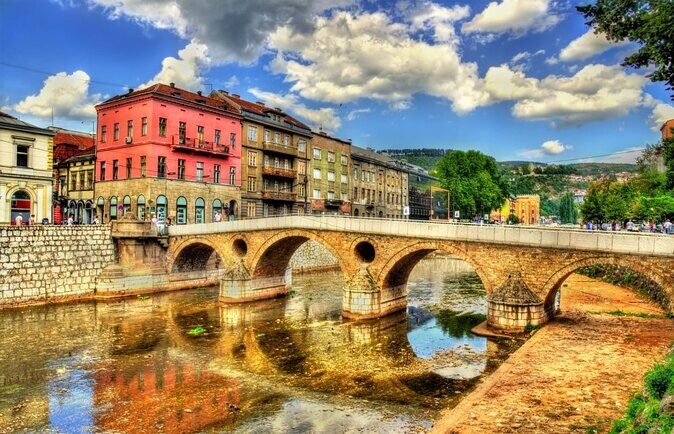
- Latin Bridge (Principov Most)
- Emperor’s Mosque
- Church of Saint Anthony of Padua
- Brewery glance and Old Town wandering in Bascarsija
- Bascarsija bazaar time
- Sarajevo Meeting of Culture
- Trebević itself: nature, Olympic talk, and the feel of the venue
- The Olympic bobsleigh and luge track: the payoff on foot
- Olimpijski Muzej: an extra ticket and a reality check on time
- Price and value: $30 base plus the two add-ons
- Guides and small-group pace: why it feels easier
- What to bring and how to plan your day (10:00am start)
- Should you book this Cable Car Olympic Tour?
- FAQ
- How long is the Cable Car Olympic Tour in Sarajevo?
- What’s the price of the tour?
- What’s included in the tour price?
- What extra tickets should I budget for?
- Is the tour offered in English?
- How big is the group?
- Where does the tour start and end?
- Is the tour very strenuous?
- What happens if the cable cars or conditions don’t work out?
- Which major sights are part of the route?
Key things I’d zero in on before you go
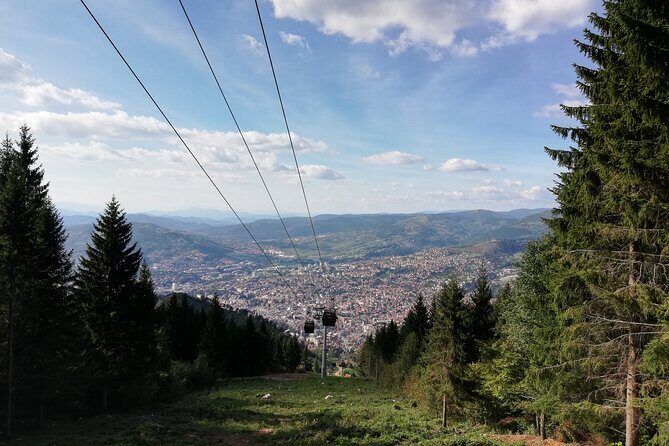
- Trebević by cable car: the system runs 2,100 meters between Bistrik and Mt. Trebević, with skyline views as you rise
- Olympic bobsleigh track access: you get a guided walk on the historic track, not just a distant photo moment
- Old Town on the way up: Latin Bridge, Emperor’s Mosque, and Saint Anthony of Padua help you get context fast
- Small-group attention: max 15 travelers, with guides like Dennis and Medina specifically praised for how they explain Sarajevo
- Museum time is optional in practice: Olympic Museum entry is listed as an add-on, so you can decide how much you want
- You’ll finish back where you started: the tour ends at the meeting point near public transport
Trebević Mountain by cable car: the part you’ll remember
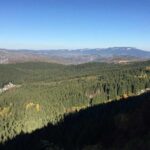
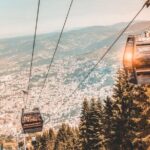
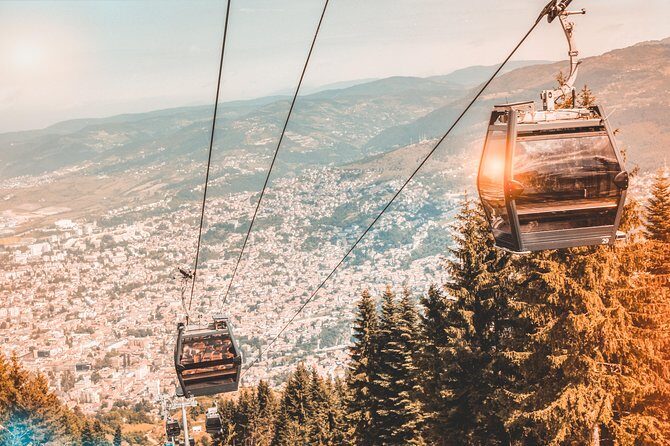
The “big move” here is riding the Sarajevo cable car up to Trebević, the mountain locals call the lungs of the city. From the Bistrik area (on the left side of the Miljacka River), the cable car climbs toward Mt. Trebević and the old Olympic venue. Along the way, you get that rare city view where you can see the urban grid shrink below you while the mountain feels close enough to touch.
Trebević matters beyond the views. The area used to be a go-to for generations of Sarajevans, and the cable car was devastated during the war. It was later renovated in 2018, so when you ride up today, it feels like a living recovery story rather than just a postcard attraction. You’ll also get some talk along the route about Winter Olympic history, which helps the later bobsleigh walk make sense.
Practical tip: plan for wind on the ride and at the top. It’s a mountain. Layers beat one thick jacket.
You can also read our reviews of more museum experiences in Sarajevo
- Fall of Yugoslavia, Sarajevo War Tour with Tunnel of Hope Museum and Frontlines
★ 5.0 · 1,314 reviews
Latin Bridge and the mosque stop: history, but at street level
Before you even hit the cable car, the tour gives you three quick, high-impact cultural stops that set the tone for Sarajevo.
Latin Bridge (Principov Most)
Latin Bridge is tied to one of the most consequential moments in modern European history. The bridge was named Principov Most after Gavrilo Princip from 1918 to 1993, and he was only a few meters away when he assassinated Archduke Franz Ferdinand and his wife, Sofie. That assassination is widely recognized as the spark for the First World War.
This stop is only around 5 minutes, but it’s packed. You’re not reading a plaque in isolation—you’re standing where the story happened. The quick pace also keeps the tour from turning into a lecture.
Emperor’s Mosque
Then you move to Emperor’s Mosque, Sarajevo’s oldest mosque and one of the oldest in Bosnia and Herzegovina. It’s associated with Isa Bey Ishaković, the founder of Sarajevo, and is believed to have been built soon after the city’s founding in 1462 in honor of Sultan Mehmed II “the Conqueror.”
Again, it’s short. But it gives you a meaningful anchor point: Sarajevo’s layers are visible in religious architecture, even when you’re just passing through.
Church of Saint Anthony of Padua
Right after the mosque, you’ll see the Church of Saint Anthony of Padua, a Franciscan neo-gothic church. It’s a good contrast stop—another faith tradition, another time period—without asking you to commit to a long visit.
Net effect: you get Sarajevo’s “where the city comes from” story before you go up into the quieter mountain air.
Brewery glance and Old Town wandering in Bascarsija
One of the nicer surprises in this itinerary is that it doesn’t treat Sarajevo like a museum map only. You get a brief stop at Sarajevska Pivara, Sarajevo Brewery, established in 1864. It’s described as the oldest and most renowned brewery in Bosnia and Herzegovina, and it’s one of those places where history is part of the everyday rhythm of the city.
This is not a long tasting session on the schedule, but it’s long enough to connect the dots: Sarajevo isn’t just dramatic history and Olympic lore. It’s also working local traditions—food, drink, and craft.
Bascarsija bazaar time
You’ll then have time in Bascarsija, Sarajevo’s historic bazaar area. This is where you shift gears from landmarks to strolling—crafts, street-level culture, and the kind of atmosphere that helps you feel the city rather than just see it.
Sarajevo Meeting of Culture
Two minutes at the Sarajevo Meeting of Culture landmark follows. It’s a quick stop, but it’s there for a reason: it visually signals the idea of East and West meeting in Sarajevo’s cultural blend. It’s the kind of “blink and you might miss it” moment that works better when you’re not trying to over-schedule yourself.
Trebević itself: nature, Olympic talk, and the feel of the venue
Once you reach Trebević, you get that “closest mountain from the Old Town” advantage. Trebević is reachable by foot, by cable car, or by a car/taxi ride (around 20 minutes via the Vraca route toward Jahorina via Brus). The tour’s focus is the cable car way, which keeps the route from feeling like a chore.
You’ll spend about an hour here, and that time is not just empty. This is where your guide brings in the Winter Olympic Games context, so when you later step onto the track, it’s not random machinery from the past. It’s linked to a place that people once used—sport, tourism, and city life in one.
Also note: you’re on a mountain. Even if you’re not hiking aggressively, you’ll likely climb and descend in ways that feel more intense than city sidewalks.
The Olympic bobsleigh and luge track: the payoff on foot
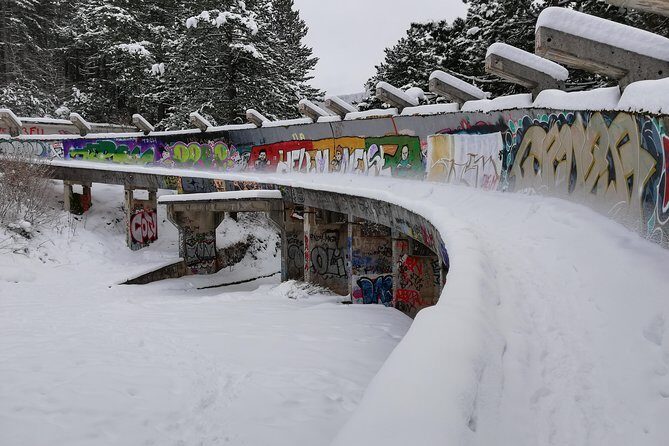
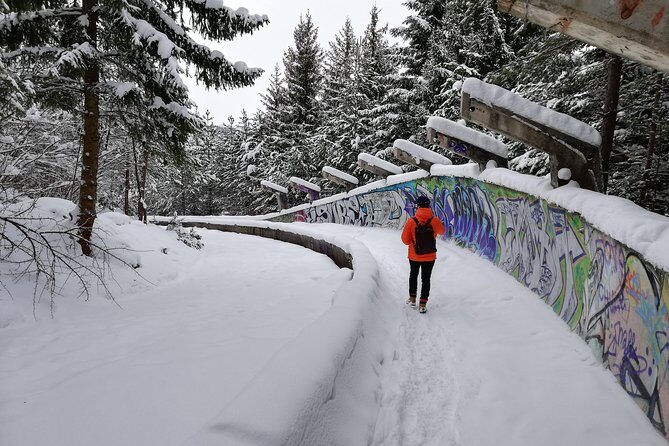
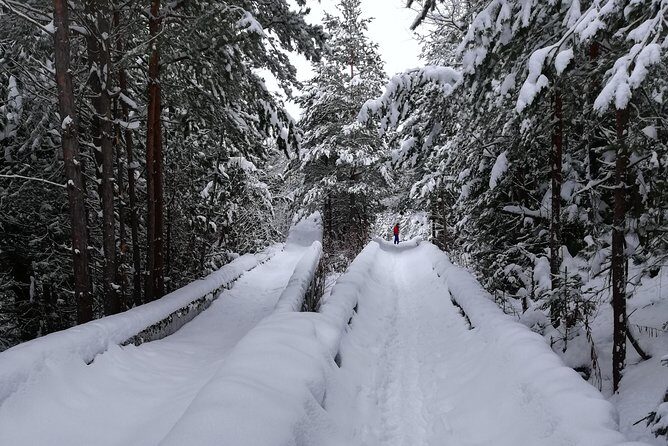
This is the centerpiece walk. You’ll step out onto the Sarajevo Olympic Bobsleigh and Luge Track and get time to explore it up close. The idea here is simple: you don’t just learn about the Olympics from inside a building; you walk on the structure that hosted the action.
The schedule gives you about 30 minutes here, and that’s often the right amount. Long enough to orient yourself and take in the scale. Not so long that you burn all your energy before getting back down.
This is where a small group really helps. When there are fewer people, guides can point out details you might not catch—things like how the track’s form relates to the terrain and what the venue would have meant for the city.
If you’re a photo person: you’ll have chances, but also remember to look away from your phone. The track makes more sense when you see it in motion—at least in your imagination—while the mountain air is right there.
Olimpijski Muzej: an extra ticket and a reality check on time
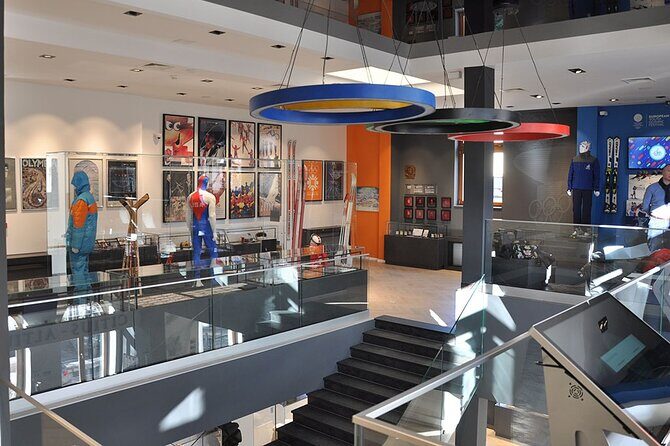
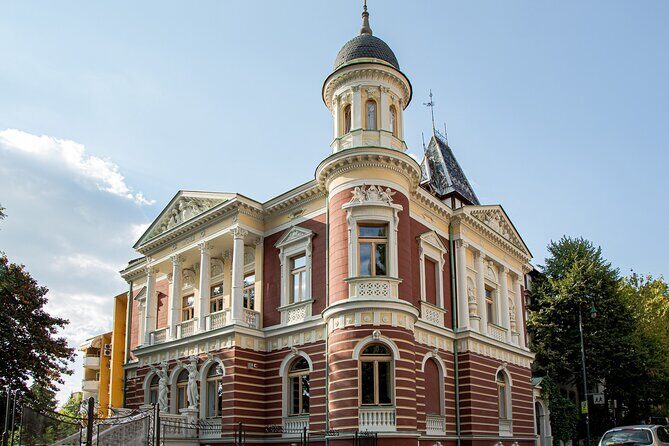
The Olympic Museum (Olimpijski Muzej) is listed as an add-on with an entrance fee of 12 BAM per person. It’s scheduled for about 40 minutes.
Here’s how I’d approach it in practical terms. The tour already includes the bobsleigh track walk, plus Trebević time. That means the museum is valuable if you like artifacts, memorabilia, and the “tell the story in objects” style. If you prefer the outdoors and want your history delivered through place rather than exhibit, the museum can feel like extra.
One more consideration: you’re already doing a mix of cable car + hills + walking. So decide early: do you want a deeper indoor stop, or do you want to protect your legs and keep the day lighter?
Price and value: $30 base plus the two add-ons
The advertised tour price is $30.04 per person for roughly 4 hours. That base cost is for the guided experience and the structure of the day, including time in places like Trebević and the track area with admission listed as included for the bobsleigh/track stop.
Two costs are listed as not included:
- Cable car return ticket: 30 BAM (about €15.5) per person
- Olympic Museum entrance: 12 BAM (about €6.5) per person
So you should mentally budget more than the $30. If you take the museum and round-trip cable car, the full day cost climbs, but you’re also paying for a small-group guide plus access to the key “Olympics on location” parts.
My take on value: this is worth it if you care about the Olympic story in a tangible way and you like being guided through the city’s context. If you only want the cable car views, you could do that on your own. If you only want the museum, you could also do that separately. The power of this tour is that it connects Sarajevo’s landmarks to the Olympic site in one smooth arc.
Guides and small-group pace: why it feels easier
The tour caps at 15 travelers, and that changes the feel of the day. You don’t get stuck in a slow moving line. You also get better attention at the stops—especially on the bobsleigh track, where it helps to hear what you’re looking at.
The quality of the guides shows up clearly in the feedback tied to named guides like Dennis and Medina. The praise isn’t just about facts; it’s about how they explain Sarajevo and how they take care of the group. One example from the experiences shared: when cable cars were not running on a day, Medina was able to pivot and provide a city walking tour instead, making the time useful rather than wasted.
That flexibility matters because mountain plans can change. The best guide style here is practical—keep moving, keep learning, don’t pretend everything stays perfect.
What to bring and how to plan your day (10:00am start)
This tour starts at 10:00am and is built for good weather. The pace includes hills and some stairs, and you’ll want a “walkable day” setup.
Bring:
- comfortable walking shoes with good grip
- a light layer for the mountain air
- water (you don’t want to be rationing mid-hill)
- a way to show your mobile ticket
Also, you meet at Sarajevo Insider – City Tours and Excursions, Zelenih beretki 30, Sarajevo 71000, and the tour ends back at the same meeting point. Because it loops back, you can plan an easy lunch or café stop after without scrambling for transit.
One more point: the tour is offered in English (and German/Croatian guide options are listed). If English is your preference, you’re covered.
Should you book this Cable Car Olympic Tour?
Book it if you want Sarajevo with a spine: Old Town context first, then the mountain venue, then the Olympic track walk. You’ll like it most if you enjoy guided storytelling tied to real places, and you don’t mind some physical effort on hills and stairs.
Skip it or rethink it if:
- you’re not comfortable with walking and uneven terrain
- you’re only interested in one thing (either just the cable car views or only the museum)
- you know you’ll be allergic to extra add-on costs like the cable car return and museum ticket
If you do book, I’d treat the Olympic Museum as your flexible choice. Do it if you still have energy and you enjoy indoor artifacts. If not, prioritize the track walk—the part you can’t easily replicate on your own with the same guidance.
FAQ
How long is the Cable Car Olympic Tour in Sarajevo?
It’s listed at about 4 hours.
What’s the price of the tour?
The tour price is $30.04 per person.
What’s included in the tour price?
The tour includes an English guide (and also German and Croatian guide options are listed), and it includes admission for the Trebević area and the Sarajevo Olympic bobsleigh track stop.
What extra tickets should I budget for?
The cable car return ticket is listed as 30 BAM (about €15.5) per person, and the Olympic Museum entrance fee is listed as 12 BAM (about €6.5) per person.
Is the tour offered in English?
Yes, English is offered.
How big is the group?
The tour maximum size is 15 travelers.
Where does the tour start and end?
It starts at Sarajevo Insider – City Tours and Excursions, Zelenih beretki 30, and it ends back at the meeting point.
Is the tour very strenuous?
It’s described as requiring moderate physical fitness, with walking that includes stairs and hills.
What happens if the cable cars or conditions don’t work out?
The experience requires good weather, and if it’s canceled due to poor weather, you’ll be offered a different date or a full refund. In at least one shared experience, when cable cars were not running, the guide adjusted to a city walking tour instead.
Which major sights are part of the route?
You’ll pass or stop at Latin Bridge, Emperor’s Mosque, the Church of Saint Anthony of Padua, Sarajevska Pivara, Trebević, the Sarajevo Olympic bobsleigh and luge track, Bascarsija, the Sarajevo Meeting of Culture, and the Olympic Museum.
You Might Also Enjoy
More Museum Experiences in Sarajevo
- Fall of Yugoslavia, Sarajevo War Tour with Tunnel of Hope Museum and Frontlines
★ 5.0 · 1,314 reviews
More Tours in Sarajevo
- Fall of Yugoslavia, Sarajevo War Tour with Tunnel of Hope Museum and Frontlines
★ 5.0 · 1,314 reviews
More Tour Reviews in Sarajevo
- Fall of Yugoslavia, Sarajevo War Tour with Tunnel of Hope Museum and Frontlines
★ 5.0 · 1,314 reviews