REVIEW · SARAJEVO
Sarajevo: Islamic Traditions and Daily Life Tour
Book on Viator →Operated by Insider Ltd · Bookable on Viator
Mosques and daily life, all on one walk. This is a 2-hour, English-guided trek through Sarajevo’s Islamic architecture and the everyday spaces Muslims use to learn, travel, eat, and remember. I like how the route connects spiritual sites with real street life—especially in Baščaršija and around the Sebilj fountain. One thing to plan for: two major stops may cost extra on entry, including Svrzo’s House and the Gazi Husrev Bey mosque complex.
I also like that the group is small, with a maximum of 25 people, so questions don’t get lost. A certified guide and a city map help you keep your bearings, and a mobile ticket makes it easy to check in. Guides like Suad and Fuad have a friendly, talk-it-through style, and that matters when you’re trying to understand Islam in Bosnia beyond slogans.
You’ll start at Sarajevo Insider (Zelenih beretki 30) at 10:00am and end back there. Expect a good mix of short stops (free entry) and a couple of longer, pay-to-enter museums/halls.
In This Review
- Key highlights you’ll feel on this tour
- Sarajevo’s Islamic Traditions: why this route works in 2 hours
- Price and what’s free vs what costs extra
- Meeting at Sarajevo Insider and keeping your day simple
- Walking the early landmarks: Mejdan Park to the city’s oldest mosque
- The spiritual heart at Gazi Husrev-beg Mosque
- Sarajevo’s lunar clock moment: timekeeping with an Islamic twist
- From the 16th century school to a modern Islamic studies faculty
- Ottoman daily life at Svrzo’s House (extra ticket) and Morica Han
- Baščaršija, Sebilj, and Bravadžiluk: where food and faith share the same streets
- Optional pause at Alifakovac Cemetery
- What it’s like with your guide (and why that matters here)
- Who should book this tour (and who might not love it)
- Should you book the Sarajevo Islamic Traditions and Daily Life Tour?
- FAQ
- How long is the Sarajevo Islamic Traditions and Daily Life Tour?
- What does the tour cost?
- Is the tour offered in English?
- Where do I meet for the tour?
- How does the ticket work?
- What’s included in the price?
- Which entrances are not included in the tour price?
- Is Alifakovac Cemetery part of the main route?
- How many people are in the group?
- Can I get a full refund if I cancel?
Key highlights you’ll feel on this tour
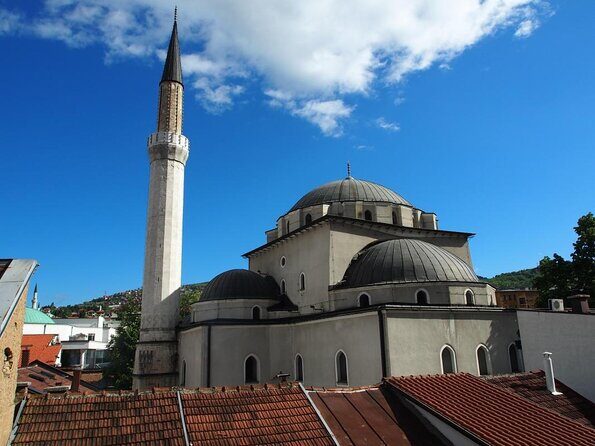
- Islamic Sarajevo, explained street-by-street: you’ll hear how key buildings shaped daily life, not just architecture trivia.
- The Ottoman-to-modern learning thread: medresa school traditions connect to the University’s Faculty of Islamic Studies.
- A lunar clock moment: the Clock Tower’s design ties timekeeping to the Islamic calendar.
- Most stops are free to enter: the walking route is built to keep your costs down, with only two notable add-ons.
- Small-group pace: max 25 people helps keep it personal and question-friendly.
Sarajevo’s Islamic Traditions: why this route works in 2 hours
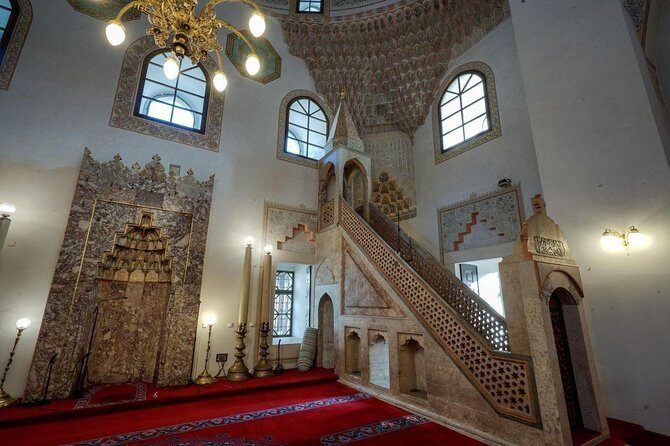
Sarajevo can feel layered fast. One minute you’re in Ottoman-era lanes; the next you’re at a historic park or a school building that looks modern-but-local. This tour is designed to make that layering make sense without dragging you through museum hours you might not want.
You’ll get a guided sequence of places that cover the main pillars of daily life: worship, learning, community gathering, travel and hospitality, and even how people marked time. And because so many stops are free, you can focus on the story the guide tells rather than the ticket line math in your head.
You can also read our reviews of more tours and experiences in Sarajevo.
- Fall of Yugoslavia, Sarajevo War Tour with Tunnel of Hope Museum and Frontlines
★ 5.0 · 1,314 reviews

Price and what’s free vs what costs extra
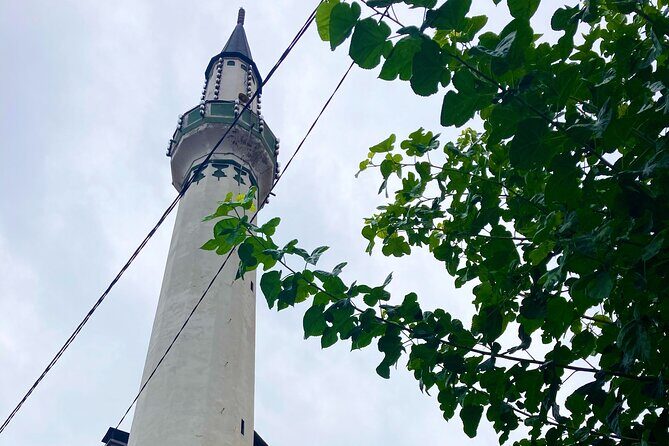
At $30.04 per person for about 2 hours, the value is mostly in the amount of ground you cover and how many stops are included at no extra charge. Many of the stops along the way have free admission, so you’ll pay once for the guide and then mostly walk from site to site.
That said, there are two places where entry is not included:
- Svrzo’s House Museum: 5 BAM (about 3.00€) per person
- Gazi Husrev Bey’s Mosque and Museum: 8 BAM (about 4.50€) per person
If you plan to go inside both, your total budget will be higher, but you’re still likely to come out ahead compared with paying for separate private entries. I’d treat the tour as the “guided itinerary + context,” then decide on those two museum interiors based on your interests.
Meeting at Sarajevo Insider and keeping your day simple
This tour meets at Zelenih beretki 30 with Sarajevo Insider and ends back at the same meeting point. Starting at 10:00am helps because the center is still comfortable for walking, and you can pair the tour with lunch afterward.
They also provide a city map and a mobile ticket, which is practical when you’re doing a foot route in an old quarter with lots of small streets. With a maximum of 25 people, you won’t feel like you’re trapped in a moving line.
Walking the early landmarks: Mejdan Park to the city’s oldest mosque
The tour kicks off at Mejdan Park, a historic spot tied to Sarajevo’s official establishment and to earlier social gatherings. It’s a good opening because it grounds you in the idea that cities aren’t only built by monuments. They form when people meet, trade stories, and keep showing up in the same place.
From there, you’ll reach Jedileri Sanctuary (Turbe sedam braće), associated with spiritual significance for Muslim life in Bosnia. This stop is short, but it’s the kind of place where a guide’s framing helps you notice details you might otherwise skip.
Next comes Emperor’s Mosque, described as the oldest mosque in Sarajevo. The guide connects it to how Sarajevo’s Islamic heritage shaped the city’s name—so you’re not just looking at an old building. You’re learning why names, institutions, and faith footprints are tied together here.
The spiritual heart at Gazi Husrev-beg Mosque
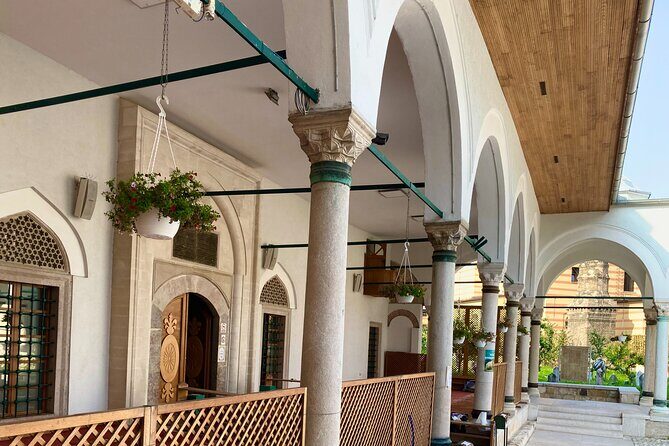
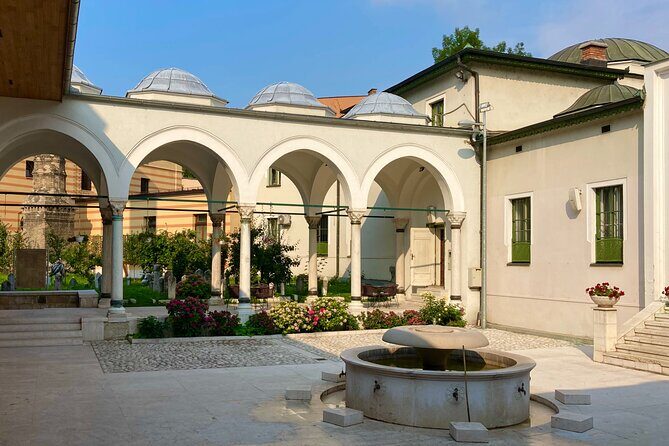
One of the most important segments is the visit to Gazi Husrev-beg Mosque, where you get around 30 minutes. This is the spiritual and cultural center in the story of Sarajevo’s Muslim community.
Because entry to the mosque/museum is not included, you’ll decide on the spot whether you want the interior museum experience. Even if you focus mainly on the exterior and the surrounding area, the guide’s explanations tend to make the neighborhood feel intentional, not random.
If you care about Islamic art, education, and civic life, this is the stop where adding the entry fee can be worth it.


Sarajevo’s lunar clock moment: timekeeping with an Islamic twist
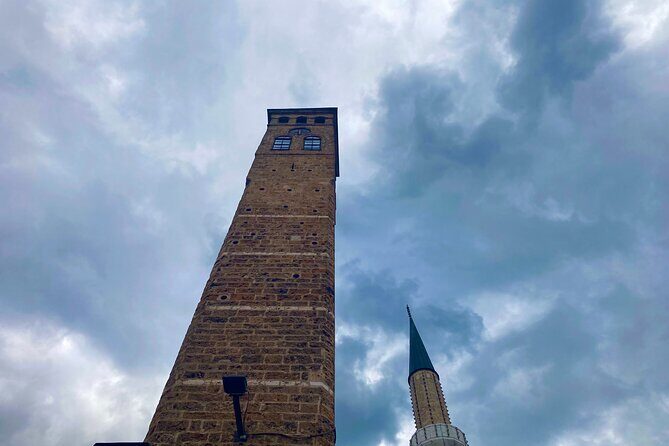
Between the mosque area and the educational buildings, you’ll pause at the historic Clock Tower, noted for a lunar clock. That detail matters because it turns a normal “see-the-big-clock” stop into a cultural lesson.
Instead of treating time as just a modern grid, the tower reflects timekeeping aligned with the Islamic lunar calendar. You’ll leave with a clearer sense of how religion shapes daily rhythms, not only rituals.
From the 16th century school to a modern Islamic studies faculty
Next, you’ll head to Gazi Husrev Begova Medresa, Sarajevo’s first Islamic high school, with roots going back to 1537. This is one of those stops where the guide’s storytelling really helps. A medresa isn’t just a building—it represents training, authority, and the idea that learning belongs in the center of community life.
Then you’ll see the Faculty of Islamic Studies at the University of Sarajevo. The architecture here is a strong contrast: Neo-Moorish-inspired elements combined with contemporary design choices. The effect is practical—this is how tradition continues into modern education settings without pretending the world stopped.
If you’re the type of traveler who likes to connect history to what you can still recognize today, this section tends to land well.
Ottoman daily life at Svrzo’s House (extra ticket) and Morica Han
Now you shift from schools and worship to daily routines.
Svrzo’s House is an 18th-century Ottoman home, restored so you can picture daily Muslim life in the period. This one has an entry fee (5 BAM / ~3.00€), so it’s the classic decision point: do you want the interior interpretation or prefer to keep moving? If you do go inside, you’ll likely understand more of what the guide is hinting at when talking about household life, visiting customs, and social rhythms.
Then, you’ll visit Morica Han, described as the best-preserved Ottoman inn in Sarajevo. This is a travel-and-hospitality stop, which can be a refreshing change from purely religious sites. It also explains a practical side of history: where visitors slept, met, and moved through the city—important for understanding how Sarajevo functioned as a hub.
Baščaršija, Sebilj, and Bravadžiluk: where food and faith share the same streets
When the tour reaches Baščaršija, you’ll walk Sarajevo’s old bazaar lanes, with an Ottoman trade-and-craft feel underfoot. It’s one of the best places to watch how daily life continues around historic structures.
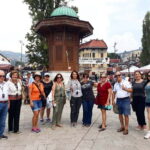
Right near there is the Sebilj Fountain, where you’ll have a moment for water and a quick cultural context. The guide’s explanation helps you see why fountains like this matter: they’re social nodes in a city built for people to pause, talk, and keep going.
Finally, you’ll spend time around Bravadžiluk Street, described as a place for flavors of Muslim culinary traditions and artisanal crafts. This part is less about one single monument and more about letting the neighborhood do the teaching. You’ll likely notice how food and craft culture become part of identity in the old center.
Optional pause at Alifakovac Cemetery
There’s an optional stop at Alifakovac Cemetery, a quieter place to reflect on Sarajevo’s Islamic legacy. If you want a calmer moment away from the bazaar energy, it’s worth considering.
If you prefer to keep the pace strictly architectural and avoid a reflective, slower stop, you can skip it without derailing the main tour flow.
What it’s like with your guide (and why that matters here)
Because the theme is religion and daily life, the quality of the guide makes a big difference. In the best versions of this tour, you don’t just get dates and names. You get a sense of how people lived with faith woven into the city’s structure.
Guides like Suad and Fuad have stood out for being welcoming and friendly, creating room for questions, and sharing extra context beyond the listed stops. One thing I value in this kind of tour is that they’ll adjust to your curiosity—so if you ask why a place matters, you get an answer that connects to Sarajevo, not a generic script.
Who should book this tour (and who might not love it)
This is a strong match if you:
- want Ottoman-era context with a Sarajevo-centered lens
- care about Islamic heritage in a European setting
- like walking tours that mix architecture with daily-life explanations
A couple of practical considerations:
- You’ll be walking, including some uphill stretches, so comfortable shoes are a smart call.
- The tour works best in good weather, since it’s heavily outdoors.
If you’re hoping for a purely museum-only afternoon or you hate walking between sites, you might feel constrained by the format.
Should you book the Sarajevo Islamic Traditions and Daily Life Tour?
I’d book it if you’re short on time and want a guided “map in your head” for Sarajevo’s Islamic spaces—mosques, schools, homes, inns, and the old bazaar in one linked story. At $30.04 with many free-entry stops, it’s a cost-effective way to understand what makes these places matter.
I’d also book it if you like asking questions. The guides behind this experience (including Suad and Fuad) have a reputation for being approachable and for spending time to help you place what you’re seeing into a broader picture.
The only reason not to book is if you’d rather spend your time on other Sarajevo priorities than a focused religious/cultural walking route—or if paying optional site fees is a deal-breaker. If that’s you, at least check which add-ons you’d want before you go inside your budget.
FAQ
How long is the Sarajevo Islamic Traditions and Daily Life Tour?
It lasts about 2 hours.
What does the tour cost?
The price is $30.04 per person.
Is the tour offered in English?
Yes, it’s offered in English.
Where do I meet for the tour?
You meet at Sarajevo Insider – City Tours and Excursions, Zelenih beretki 30, Sarajevo.
How does the ticket work?
You receive a mobile ticket.
What’s included in the price?
The tour includes a certified guide and a city map.
Which entrances are not included in the tour price?
Entrance fees not included include Svrzo’s House Museum (5 BAM / 3.00€) and Gazi Husrev Bey’s Mosque and Museum (8 BAM / 4.50€).
Is Alifakovac Cemetery part of the main route?
It’s listed as optional.
How many people are in the group?
The tour has a maximum of 25 travelers.
Can I get a full refund if I cancel?
Yes—free cancellation is available if you cancel at least 24 hours before the experience starts, and weather-related cancellations also offer a different date or a full refund.
You Might Also Enjoy
More Tours in Sarajevo
- Fall of Yugoslavia, Sarajevo War Tour with Tunnel of Hope Museum and Frontlines
★ 5.0 · 1,314 reviews
More Tour Reviews in Sarajevo
- Fall of Yugoslavia, Sarajevo War Tour with Tunnel of Hope Museum and Frontlines
★ 5.0 · 1,314 reviews