REVIEW · SARAJEVO
Sarajevo: A Cultural Heritage Walk from the Ottoman Empire to Europe
Book on GetYourGuide →Operated by DEVİM TOURS · Bookable on GetYourGuide
Sarajevo changes fast—this walk shows the why. You start at the Sebil in Baščaršija and follow the city’s Ottoman-to-European story with stops that make the buildings feel personal, not like a checklist. It’s quick, small-group friendly, and built around seeing details you’d miss on your own.
I especially like the way the guide connects the Gazi Husrev Bey Mosque area—mosque, madrasa, and clock tower—to daily life in old Sarajevo. I also like the balance on Ferhadiye Street, where you see religious architecture from different communities all in one walking line. You get enough time for photos, but the pace still feels human.
One drawback to plan for: it’s mostly walking, and entrance fees for certain sites aren’t included. If you hate uneven sidewalks or you’re short on comfortable walking time, you might want a slower option.
In This Review
- Key things I’d watch for
- Sebil to Baščaršija: the right start for orientation
- Baščaršija’s Ottoman stops: Gazi Husrev Bey Mosque and the clock story
- Ferhadiye Street: where the city turns European without losing the Ottoman thread
- The guide experience: small group pacing and multilingual help
- Itinerary reality check: 1 hour that doesn’t feel rushed
- Price and value: why $5 is the headline, not the gimmick
- Practical tips so the hour feels smooth
- Who should book this Sarajevo heritage walk
- Should you book this Ottoman-to-Europe Sarajevo walk?
- FAQ
- How long is the Sarajevo heritage walk?
- Where does the tour start?
- How much does it cost?
- Is there a small group option?
- What languages are available for the live guide?
- What’s included in the price?
- Are food and drinks included?
- Are entrance fees included for historical sites?
- What should I wear for the tour?
- Can I cancel if plans change?
Key things I’d watch for
- Sebil as the anchor point so you don’t waste time finding your bearings
- Ottoman landmarks explained clearly (mosque, madrasa, clock tower)
- Ferhadiye Street’s mixed faith landmarks in one practical route
- Photo breaks in side alleys where the details matter
- Small-group or private option for a more personal feel
- $5 for a 1-hour guided orientation with a licensed guide
Sebil to Baščaršija: the right start for orientation
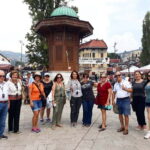
The tour meets in front of Sebil, the small domed fountain right in the middle of Baščaršija square. That matters, because Baščaršija can feel like a maze if you arrive cold. Starting here helps you get your bearings fast, then you can focus on the architecture and street life.
From the fountain, you’re pulled into the historic core where you’ll pass bazaars and traditional crafts tied to the Ottoman era. Even with only an hour total, the route gives you that first “now I get it” moment: Sarajevo didn’t grow in one style or one era. It layered, and you can watch the layers change as you walk.
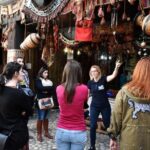
You’ll also get some free time in Baščaršija, plus opportunities to shop along the way. That’s useful if you want a quick souvenir stop without slowing the group down too much.
You can also read our reviews of more walking tours in Sarajevo
Baščaršija’s Ottoman stops: Gazi Husrev Bey Mosque and the clock story
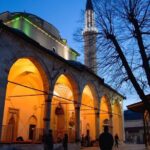
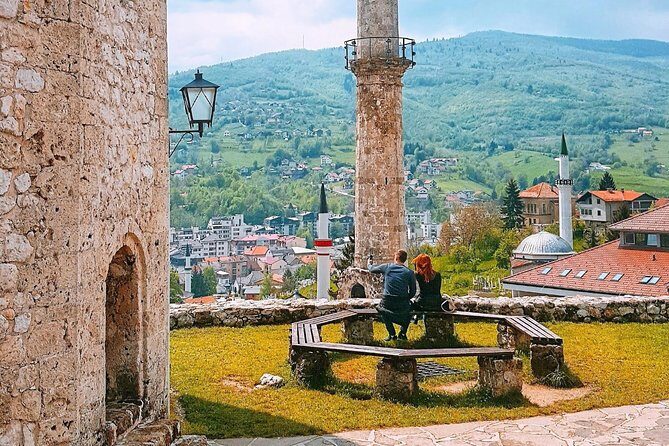
The heart of the Ottoman segment focuses on the Gazi Husrev Bey Mosque area, including the madrasa and clock tower. This is where the guide’s job really shows: you’re not just looking at buildings, you’re learning how the parts fit into the larger cultural picture.
Here’s what I’d recommend you do during this stretch:
- Look for how the mosque complex signals importance through its design and presence.
- Notice the madrasa as more than a building—think of it as education tied to daily culture.
- Use the clock tower as a visual “time marker” in the way the area is laid out.
The best tours teach you what to look for, and this one does that. The stories connect what you’re seeing to why these places mattered, so your photos won’t feel like random snapshots.
Also, because it’s a small group, you can ask questions without feeling like you’re shouting over a crowd. In at least one case I saw, the guide’s explanations made the tour feel short and to the point, not like a slow lecture.
Ferhadiye Street: where the city turns European without losing the Ottoman thread
After the Ottoman-oriented stops, you walk along Ferhadiye Street, and the city’s mood shifts. The street is where you see elegant Austro-Hungarian period buildings side by side with older Sarajevo texture, so you get a real sense of how the city modernized.
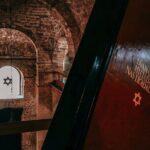
This part is especially helpful if you’ve heard the word “Sarajevo” tied to history but haven’t seen how it plays out in real streets. On Ferhadiye Street, you encounter multiple religious landmarks: a Catholic cathedral, an Orthodox church, and a synagogue. Seeing them along the same walking route helps you understand Sarajevo as a long-running meeting point of different communities, not a single story told in one voice.
If you’re photographing, don’t rush. The tour builds in photo breaks in alleys and along visually impressive spots, so you can capture the contrasts:
- Ottoman-era feeling in the way the core streets move
- Europe-era architectural presence in the larger street fronts
- Religious buildings that visually reinforce how communities coexisted
This is also a good moment to slow down if you like architecture. You’ll probably notice more once you understand you’re watching different eras share the same city block.
The guide experience: small group pacing and multilingual help
What makes this walk work is the guide’s ability to keep it clear in a short time. The group stays small, so you’re not lost in a wave of people. That’s a big deal with a 1-hour duration: timing is everything, and a good guide prevents the “we ran out of time” feeling.
One detail that stood out in the feedback I saw is that a guide named Sanja was praised for both knowledge and communication. That lines up with the tour’s structure: you’re led from point to point, but you also get the stories that make those points make sense.
You can also choose from several languages: Turkish, Byelorussian, Russian, English, and Bosnian. And if some parts are shown in the guide’s original language, that’s still manageable because the key ideas connect to what you’re physically seeing.
If you want the most out of it, do this early: ask one small question at the start. Something like what the guide wants you to notice on Ferhadiye Street. Once you get that “lens,” the whole hour feels sharper.
Itinerary reality check: 1 hour that doesn’t feel rushed
The tour is designed to fit into a single hour, with about 45 minutes in Baščaršija before returning to Sebil. That’s a tight schedule, but it’s also the point. You’re not trying to cover every square and mosque in the city. You’re getting a clean overview of the main historical shift from Ottoman heritage to Europe-era influence.
Because the tour is mostly walking, your comfort matters. Go for closed, comfortable shoes—Sarajevo streets can be uneven, and you’ll be on your feet for most of the experience. If the weather turns, you’ll appreciate having practical sun or rain gear.
During the walk, you’ll get:
- Guided visits and sightseeing moments at the stops
- Short scenic breaks
- Photo breaks in the alleys
- Time to look around and shop in Baščaršija
That mix is smart. It prevents the tour from becoming only fast-moving sightseeing, and it prevents it from becoming a long, drawn-out history class.
You can also read our reviews of more historical tours in Sarajevo

Price and value: why $5 is the headline, not the gimmick
At $5 per person, this is one of the rare guided city experiences that feels priced for real value rather than “sold as a bundle.” You’re getting a licensed guide, visits to the key points in the program, and photo/scenic stops within a defined route.
Here’s the value logic I’d use when deciding:
- You pay for interpretation, not just movement.
- The tour is short enough to fit into almost any day plan.
- The focus is specific: Ottoman traces and the shift to Europe-era Sarajevo.
What can affect your total spend is entrance fees. The tour notes that entrance fees to important historical sites aren’t included, and there’s also an optional add-on possibility. One example given is Blagaj Tekkesi, where an entrance fee of 10 EURO applies if you want to include it upon request.
Food is not included either. The good part: you’re not stuck eating whatever is near the meeting point. If you want lunch, you can keep it flexible and choose a local spot that fits your tastes and timing.
Practical tips so the hour feels smooth
A short walk can still go sideways if you’re unprepared. For this one, I’d plan like this:
Shoes and comfort
Wear closed shoes. If you’re bringing sandals, switch them out before you meet at Sebil.
Weather gear
Bring what matches the forecast: a hat, sunscreen, and (if needed) an umbrella. Even in short tours, the sun or rain can make you rush through the photo stops.
Camera strategy
You’ll have photo breaks, but you’ll still be moving between them. I suggest you take wide shots first, then come back for close details when the guide cues a pause.
Shopping without derailing the group
There’s time to shop in Baščaršija. Keep it light unless you’re sure you can finish quickly and rejoin on time.
Language expectations
If you’re traveling with English as your main language, that’s fine—English is offered. Just keep in mind that some content can be shown in the guide’s original language, so pictures and spot explanations become your main backup.
Who should book this Sarajevo heritage walk
This tour makes a lot of sense if you:
- Want an easy introduction to Sarajevo’s layered Ottoman and Europe-era story
- Like walking tours that explain what you’re seeing in real time
- Prefer small groups, where you can ask questions and not disappear into the mass
- Have limited time and still want context, not just landmarks
It might not be the best fit if you:
- Don’t enjoy walking for most of the hour
- Need a tour that includes site entrance fees (since they’re not included)
- Want a long, stop-and-stay slow experience (this one is intentionally tight)
If you’re on a first visit, this is a strong “get oriented” option. If you’re returning, you might still like it for how it ties the streets together with a clear narrative.
Should you book this Ottoman-to-Europe Sarajevo walk?
Yes—if you want a licensed guide to connect Sarajevo’s Ottoman-era heart around Baščaršija to the Europe-era presence along Ferhadiye Street, this is a solid way to spend an hour. The $5 price makes the value easy to justify, and the small-group setup keeps the experience personal rather than rushed.
Just go in ready for walking, and expect that some site entry may cost extra. If you do that, you’ll leave with a clearer mental map of how these eras coexist in one city—and you’ll know what to look for when you wander afterward.
FAQ
How long is the Sarajevo heritage walk?
It lasts 1 hour.
Where does the tour start?
The meeting point is in front of Sebil, in the Baščaršija district.
How much does it cost?
The price is $5 per person.
Is there a small group option?
Yes. The experience offers a small group or a private tour option.
What languages are available for the live guide?
Turkish, Byelorussian, Russian, English, and Bosnian.
What’s included in the price?
You get professional guidance from a licensed guide, visits to the points in the program, scenic stops, photo breaks, and the small group/private option.
Are food and drinks included?
No. Lunch and drinks aren’t included, but local restaurants can be organized.
Are entrance fees included for historical sites?
Entrance fees to important historical sites during the tour aren’t included. An optional stop like Blagaj Tekkesi has an entrance fee of 10 EURO upon request.
What should I wear for the tour?
The tour is mostly walking, so you’ll want comfortable, closed shoes. Bring weather-appropriate clothing like a hat, sunscreen, and an umbrella if needed.
Can I cancel if plans change?
Yes. Free cancellation is available up to 24 hours in advance for a full refund. There’s also a reserve now & pay later option.
You Might Also Enjoy
More Historical Tours in Sarajevo

More Walking Tours in Sarajevo
More Tour Reviews in Sarajevo
- Fall of Yugoslavia, Sarajevo War Tour with Tunnel of Hope Museum and Frontlines
★ 5.0 · 1,314 reviews