REVIEW · SARAJEVO
From Sarajevo: Srebrenica Genocide Memorial Study Tour
Book on GetYourGuide →Operated by Meet Bosnia Tours · Bookable on GetYourGuide
This day trip hits hard, and it matters. From Sarajevo you’ll cross the Romanija hills, then spend the morning at Potočari—where the scale of the Srebrenica genocide is set out with museum exhibits and an enormous cemetery.
What I like most is the way you’re not left on your own: your English-speaking guide (often local and personally connected) explains the War in Bosnia and what happened in July 1995 with clear, human context. I also really value the pacing—time for documentary-style learning, time to walk the cemetery, and then a second phase in Srebrenica town to understand life after the genocide. One consideration: the topic is emotionally heavy, and in colder months some indoor exhibition spaces can feel quite chilly, so bring layers and expect a slower, more reflective rhythm.
In This Review
- Key things you’ll notice on this tour
- The 12-hour Sarajevo-to-Srebrenica rhythm that keeps you grounded
- Crossing Romanija: the drive that sets the tone
- Potočari Memorial and Museum: how the story is presented
- A practical note for your comfort
- The cemetery at Potočari: walking the scale of 8,000+ graves
- Srebrenica Genocide context: War in Bosnia, then Srebrenica itself
- Watching the documentary and using your guide well
- Srebrenica town and the mineral springs: life after genocide
- Price and value: why $80 for 12 hours can make sense
- Who should book this study tour from Sarajevo
- Should you book this Sarajevo to Srebrenica study tour?
- FAQ
- How long is the Sarajevo to Srebrenica study tour?
- What is included in the price?
- Do I get lunch?
- What language is the tour in?
- What should I bring and wear?
- Is the tour wheelchair accessible?
Key things you’ll notice on this tour
- A small group (max 8) makes hard conversations possible without feeling rushed
- Potočari Memorial links the museum story directly to the cemetery across the complex
- Documentary viewing plus original photo/video exhibitions helps you connect facts to what you’re seeing
- Guides bring local, personal context (names you might meet include Almir, Ago, Ayub, Senad, Armina, Muamer/Muammar, Christian, and Christian/Moamer)
- A stop in Srebrenica town today adds breathing room and shows real continuity, including mineral springs
The 12-hour Sarajevo-to-Srebrenica rhythm that keeps you grounded
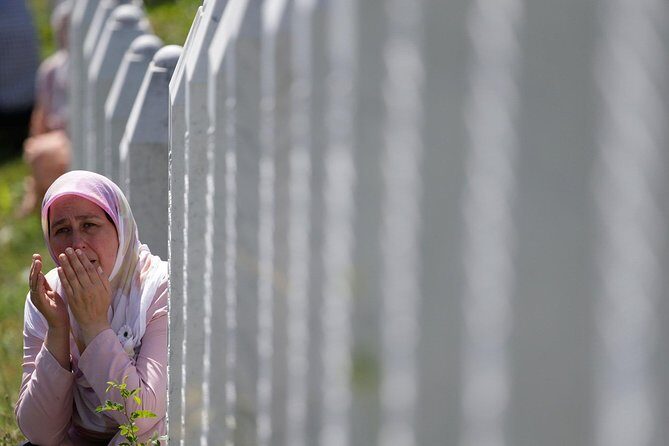
The logistics are simple, and that’s good, because the day asks a lot of your attention. You’re picked up in Sarajevo and then transported in an air-conditioned car or minivan with bottled water and a morning Bosnian sandwich (vegetarian option available). The whole outing runs about 12 hours, and you get back to Sarajevo around 5 pm.
This tour’s structure matters. You’re not just going to one building and calling it done. Instead, you move from learning (museum and film) to witnessing (the cemetery) to understanding what came next (Srebrenica town), and that change of pace helps your brain process what your heart is feeling.
You can also read our reviews of more tours and experiences in Sarajevo.
- Fall of Yugoslavia, Sarajevo War Tour with Tunnel of Hope Museum and Frontlines
★ 5.0 · 1,314 reviews

Crossing Romanija: the drive that sets the tone
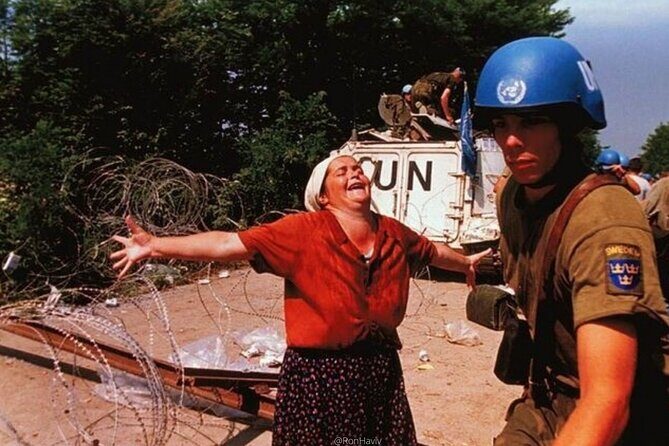
Before you reach the memorial complex, the route itself gives you a sense of the geography. You’ll cross the Romanija mountain, and the scenery is the kind that makes you notice distance and elevation—both of which matter when you think about how people moved, hid, and survived during the conflict.
This isn’t a sightseeing detour. It’s a setup. By the time you arrive, you’ve already spent time looking at Bosnia’s terrain, and your guide can better explain the broader War in Bosnia (1992–1995) context, not just the events in one town.
Potočari Memorial and Museum: how the story is presented
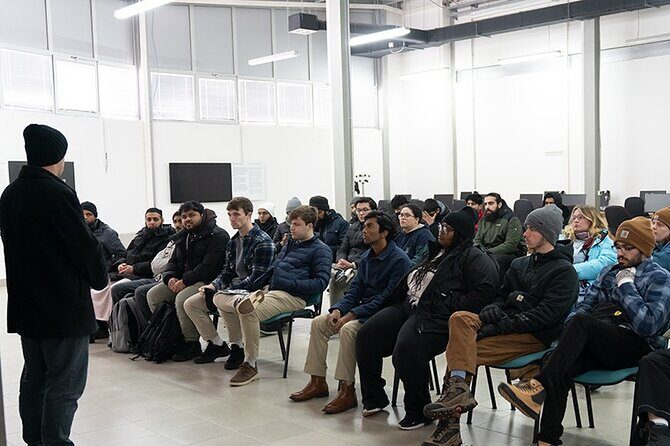
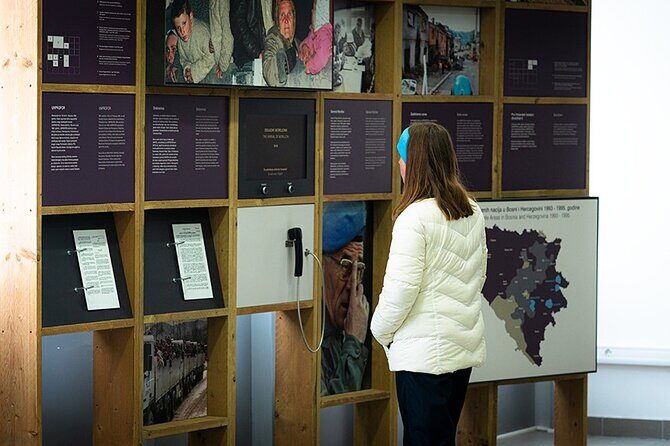
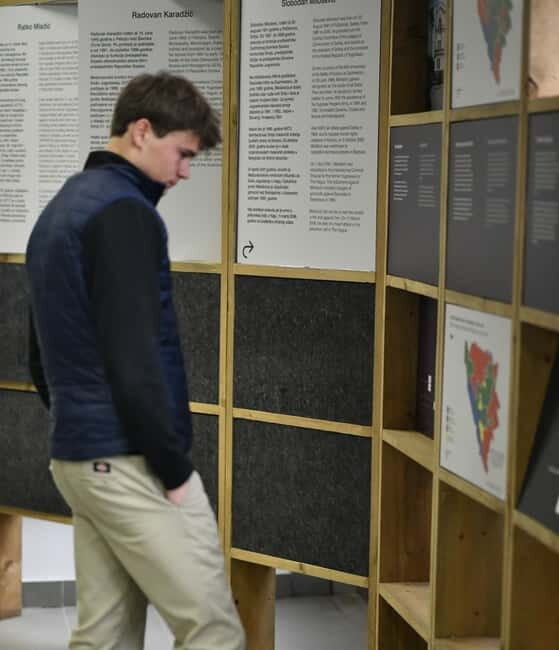
Potočari is both a memorial site and an information hub, and the exhibits are arranged to teach you what happened in a way you can actually follow. You’ll visit with a guided tour, and the day typically includes a documentary about Srebrenica plus access to photo and video exhibitions that show the scale and brutality of the crimes.
A few things about the memorial’s meaning come through clearly. The complex was established in 2001 through the Foundation “Srebrenica–Potocari”—and the memorial and museum are associated with the work of High Representative Wolfgang Petritsch. The memorial was officially opened in 2003, and President Bill Clinton is noted as the figure who opened it.
What you’ll feel while walking through the displays is not just sorrow—it’s structure. The museum makes the timeline and the responsibility easier to grasp, including how the genocide led to the burial and identification work that has continued for decades. The information on successive burials every year and the ongoing identification efforts from mass graves around the river Drina gives the visit a long view, not a short “one-week horror” framing.
A practical note for your comfort
This is a place where you spend real time inside. In colder months, you might find that some exhibition areas don’t feel evenly heated. If you’re visiting in winter, wear layers and plan to keep your body comfortable enough that you can focus on the exhibits, not your shivering.
The cemetery at Potočari: walking the scale of 8,000+ graves
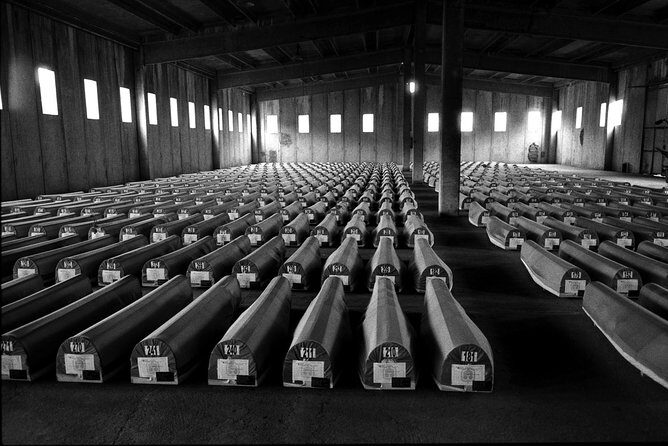
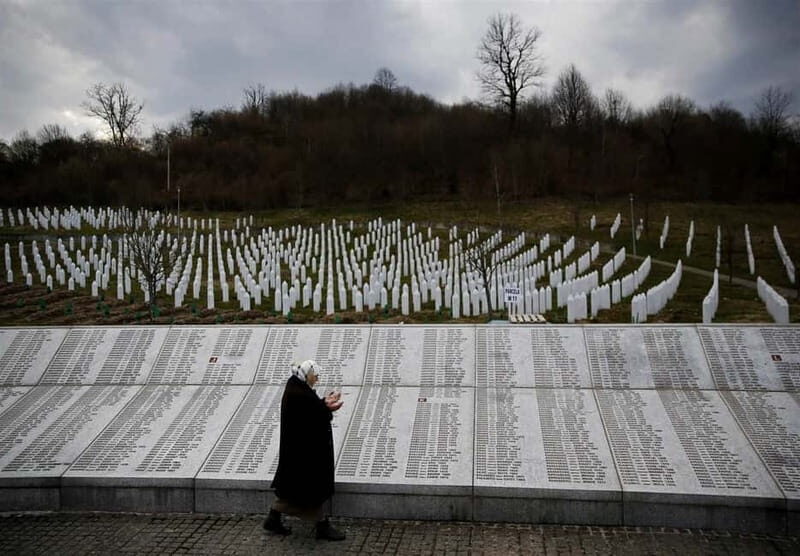
The cemetery experience is the heart of the memorial. After the museum portion, you’ll move to the graveyard area where victims are buried, including over 8,000 graves connected to the July 1995 massacre.
Try not to treat this part like a quick photo stop. The design of the grounds gives you space to slow down, read what’s there, and let the numbers stop being abstract. Your guide’s explanations help, but this is also the kind of place where silence does work.
One detail I’d repeat to you clearly: dress appropriately. The tour itself asks you to bring a headscarf and wear comfortable, respectful clothing, because you’ll be visiting cemeteries and memorial centers. You don’t want your clothes to become a distraction mid-visit.

Srebrenica Genocide context: War in Bosnia, then Srebrenica itself
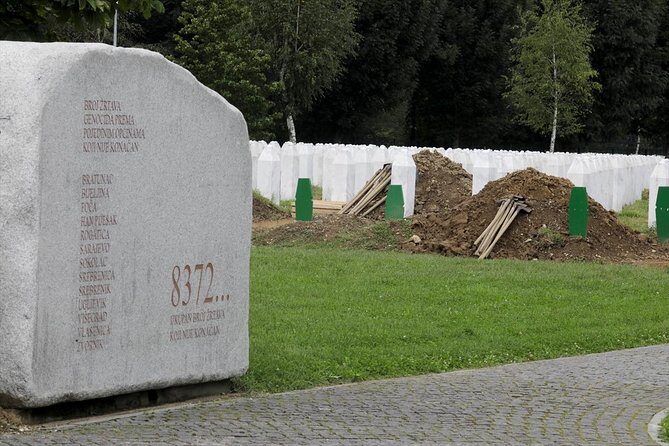
This tour doesn’t act like July 1995 came out of nowhere. Your guide connects the events to the broader War in Bosnia (1992–1995) and to the specific situation of Srebrenica as a UN-designated protected area during the war.
That UN-protected element is a key piece of the story, and it’s often where your understanding shifts from “tragic event” to “system failure.” Your guide explains the progression: how the attack happened on July 11, 1995, and how armed soldiers and paramilitary units killed more than 8,000 people in the following days.
The strongest versions of this tour experience depend on the guide you get. Many guides are local and connected to the region, and you may hear firsthand perspectives. For example, guides named Almir are described as war veterans, and other guides (like Ago, Senad, Ayub, Armina, Muamer/Muammar, and Christian/Moamer) are repeatedly credited with sensitive explanations, personal stories, and patience for questions.
That combination—facts plus lived context—turns a museum visit into real understanding. You leave with a clearer picture of what people meant to each other before the violence, during the violence, and after.
Watching the documentary and using your guide well
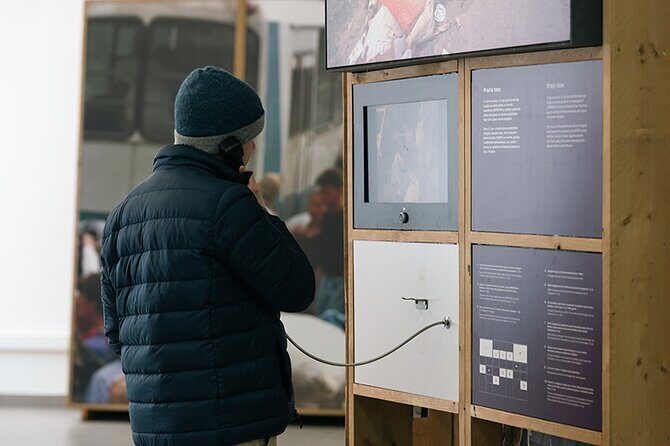
The documentary viewing is short enough to stay focused, but it gives you a foundation before you’re walking through exhibitions and then through the cemetery. If you tend to take in information fast, I still suggest you slow down and watch carefully. It’s the kind of video that anchors the rest of the day.
Here’s how to get the most value from the guide during that time:
- Ask the questions you’re nervous to ask. The day is heavy, but the guides are used to people needing clarity.
- Pay attention to how they connect Sarajevo history and regional conflict to what happened in East Bosnia.
- Use the drive time. Road explanations are often where the “why” comes through best.
This is where the small group size helps. With up to 8 participants, you’re less likely to feel like your question got lost behind the group pace.
Srebrenica town and the mineral springs: life after genocide
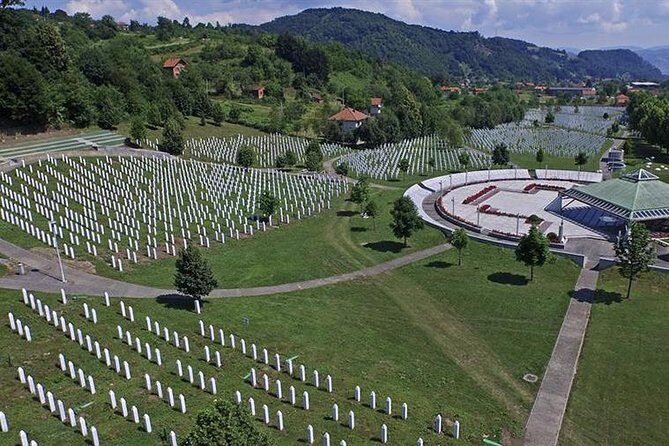
After Potočari, you continue to Srebrenica town for a break, visits, and lunch time (lunch is not included). This part is important because it prevents the day from becoming only a story of death.
You’ll learn how people live now, including coexistence in the city today—a phrase your guide will bring up for a reason. It’s not politeness. It’s context for what rebuilding looks like, and what it costs.
You’ll also hear about the springs of healthy water around the area. The tour information lists minerals and metals in the water, including two-valency iron (ferrous iron), cobalt, nickel, copper, and manganese. I wouldn’t expect this stop to change your life, but it does change your perspective. It’s a reminder that the region isn’t only defined by its worst day.
Price and value: why $80 for 12 hours can make sense
At $80 per person for a 12-hour day, this tour isn’t “cheap,” but it doesn’t feel overpriced for what’s included. Your money supports:
- transport from Sarajevo and back in a modern, air-conditioned vehicle
- a professional, English-speaking guide
- hotel pickup and drop-off
- bottled water
- a morning Bosnian sandwich (vegetarian option available)
- guided access at the memorial complex
The real value, though, is intangible and practical at the same time: you’re paying for interpretation. Without a guide, the memorial is still powerful, but explanations around UN protection, the timeline, and the aftermath work better with someone local who can answer your questions clearly.
One small cost to plan for: lunch isn’t included. You’ll have time to eat in Srebrenica town, but you’ll be covering the bill.
Who should book this study tour from Sarajevo
Book it if you want:
- a guided visit that connects museum exhibits to real events in July 1995
- a day with time to process, not a rushed stop
- local context and careful explanations from guides like Almir, Ago, Ayub, Senad, or Armina (depending on availability)
Skip it if you’re looking for a light day trip, or if you can’t handle emotional material. Even though the guidance is respectful, the subject is inherently difficult. Plan mentally the way you would for a long documentary on human cruelty: take it seriously, but don’t force yourself to “power through.”
This tour also makes sense if you’re the type who likes asking questions and getting straight answers. The small group format makes that easier.
Should you book this Sarajevo to Srebrenica study tour?
If you’re visiting Bosnia and want one experience that gives you the facts and the context you’ll carry afterward, I’d say yes—provided you’re ready for an emotionally heavy day.
The strongest reason to book is the combination of memorial + cemetery + guided explanation, plus the second half in Srebrenica town where you see that life continues. And the small group size matters: it helps your questions land, not float away.
Just go prepared: wear respectful clothes, bring layers for indoor comfort, and plan to spend the day thinking. This isn’t “view and forget.” It’s the kind of visit you remember for a long time.
FAQ
How long is the Sarajevo to Srebrenica study tour?
It lasts 12 hours, with return to Sarajevo around 5 pm.
What is included in the price?
The tour price includes a professional guide, hotel pickup and drop-off, a small group experience (limited to 8), transport in an air-conditioned vehicle, bottled water, and a morning traditional Bosnian sandwich (vegetarian option available).
Do I get lunch?
Lunch is not included. The schedule includes a break time in Srebrenica town where you can have lunch on your own.
What language is the tour in?
The live tour guide is English.
What should I bring and wear?
Bring a camera, wear comfortable clothes, and bring a headscarf. Dress appropriately for visiting cemeteries and memorial centers.
Is the tour wheelchair accessible?
Yes, the tour is listed as wheelchair accessible.
You Might Also Enjoy
More Tours in Sarajevo
- Fall of Yugoslavia, Sarajevo War Tour with Tunnel of Hope Museum and Frontlines
★ 5.0 · 1,314 reviews
More Tour Reviews in Sarajevo
- Fall of Yugoslavia, Sarajevo War Tour with Tunnel of Hope Museum and Frontlines
★ 5.0 · 1,314 reviews