REVIEW · SARAJEVO
SARAJEVO CONCEPTUAL ART TOUR (galleries, art and arhitecture)
Book on Viator →Operated by Art and Tours Sarajevo · Bookable on Viator
Sarajevo’s art has teeth, in a good way. This small-group conceptual art tour walks you through modern galleries and city landmarks where design meets hard-earned memory. You’ll get a guide who explains what you’re seeing, not just where to stand.
What I like most is the way the route blends urban art with gallery time, so you’re not stuck looking at only one type of scene. Stop choices are smart: places like Brodac Gallery and Galerija Java are built for contemporary art, while Ferhadija Street and the Veliki Park sculpture force you to really look. The one possible drawback: some of the themes are heavy, so if you prefer purely light sightseeing, this may feel intense.
Key points to know before you go
- Small group (max 15) keeps the conversation real and the pace manageable
- English mobile ticket makes entry simple on the day
- Former prison-turned-gallery at Brodac adds weight to the art visit
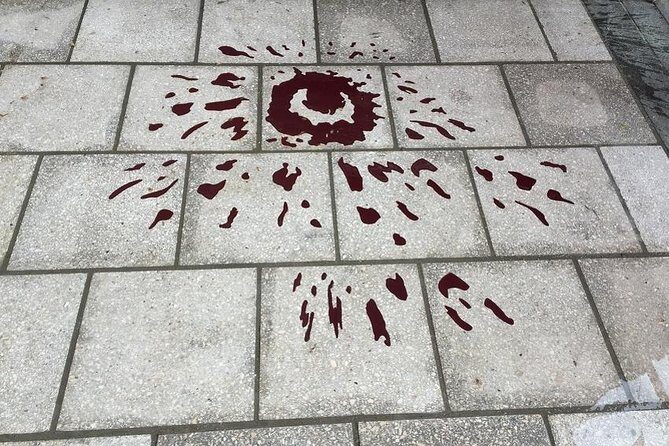
- Sarajevo Roses on Ferhadija Street shows how the city’s siege scars were turned into form
- Mensud Kečo sculpture in Veliki Park brings Srebrenica remembrance into public space
- Includes admission at multiple stops, so you’re not constantly paying extra
In This Review
- A 2–3 Hour Sarajevo Route With Real Context
- Meeting Your Guide Mak: Stories That Change How You See Art
- Stop 1: Brodac Gallery in a Former Prison With Craft Beer Too
- Stop 2: Ferhadija Pedestrian Street and the Sarajevo Roses
- Stop 3: Galerija Java (Titova 21) and Sarajevo’s Contemporary Stage
- Stop 4: Veliki Park and Mensud Kečo’s Srebrenica Remembrance
- Stop 5: Caffe Break at Gallery BORIS SMOJO and Festina Lente on the Bridge
- Price and Value: What $33.64 Buys You in Sarajevo
- Logistics That Make the Tour Easy to Fit Into Your Day
- Who This Tour Is For (and Who Should Skip It)
- Should You Book the Sarajevo Conceptual Art Tour?
- FAQ
- How long is the Sarajevo Conceptual Art Tour?
- What language is the tour offered in?
- Where does the tour start and end?
- How much does it cost per person?
- Is a mobile ticket used?
- Are tickets and admissions included?
- How many people are in the group?
- Can most travelers participate?
- Is there free cancellation?
A 2–3 Hour Sarajevo Route With Real Context
This tour is built for people who like their sightseeing with commentary. You’re in Sarajevo for roughly 2 to 3 hours, which is long enough to slow down and look closely, but short enough that the day still feels flexible.
The group is capped at 15, and that matters. With a smaller crowd, you can ask questions without waiting your turn, and the guide can steer the conversation toward what you’re actually curious about—whether that’s the galleries, the architecture, or the meaning behind specific artworks.
You also get practical convenience. You don’t need to plan a route map yourself. The itinerary is tight and walkable, and the meeting point is easy to find in the city center area (Đulagina 2) with the tour ending near Skenderija. Plus, it runs in English, and you’ll have a mobile ticket, so you’re not hunting for paper tickets.
Meeting Your Guide Mak: Stories That Change How You See Art
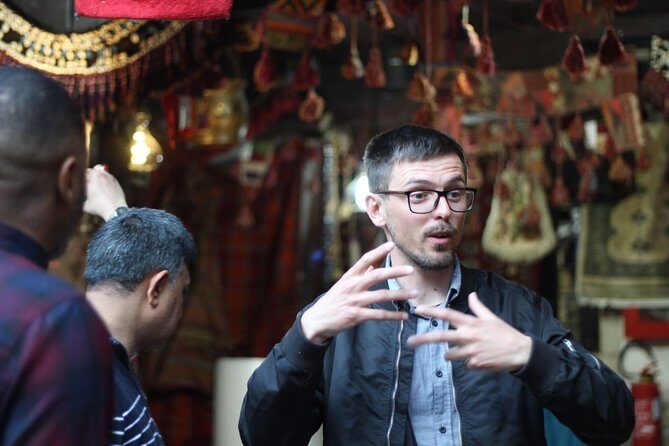
One of the strongest reasons to book this tour is the guide, Mak. His approach is personal and direct: he shares not only background on what you’re looking at, but also his own experiences during the war. That blend of art talk plus lived context changes the tone of the whole day.
If you’ve ever stood in front of contemporary work thinking, I’m missing the point, this is exactly where a guide helps. Mak’s job isn’t to over-explain; it’s to give you tools. When a place carries history—like a gallery that used to be a prison—you start noticing details you would otherwise miss, like the building’s atmosphere and how the space affects the exhibition.
A nice touch: Mak has even given people a book he wrote. That’s not something you should expect every time, but it signals the level of care behind the tour experience.
You can also read our reviews of more museum experiences in Sarajevo
- Fall of Yugoslavia, Sarajevo War Tour with Tunnel of Hope Museum and Frontlines
★ 5.0 · 1,314 reviews

Stop 1: Brodac Gallery in a Former Prison With Craft Beer Too
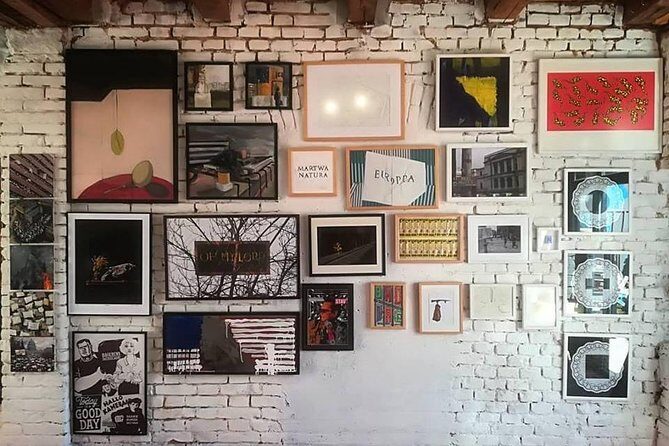
Your first stop is Brodac Gallery, set inside an older building with a past. It used to function as a prison during the Austro-Hungarian occupation. Now it’s used for contemporary Bosnian art, which is a big deal. You’re not just visiting a white-walled space; you’re stepping into architecture that already holds stories.
The visit lasts about 45 minutes, and admission is included. The gallery’s exhibitions aren’t always the same, but the focus stays on contemporary art—exactly the kind of work that pairs well with a site that has survived multiple layers of history.
The practical detail I’d repeat: Brodac is also the kind of place that makes you want to linger. You can grab a local craft beer called Gelender. It’s not required, but it’s a smart way to keep your energy up early in the tour without breaking the flow.
What to watch for during your time here:
- How the old building shape affects the art’s mood
- How contemporary work can feel more intense inside spaces with a heavier backstory
Stop 2: Ferhadija Pedestrian Street and the Sarajevo Roses
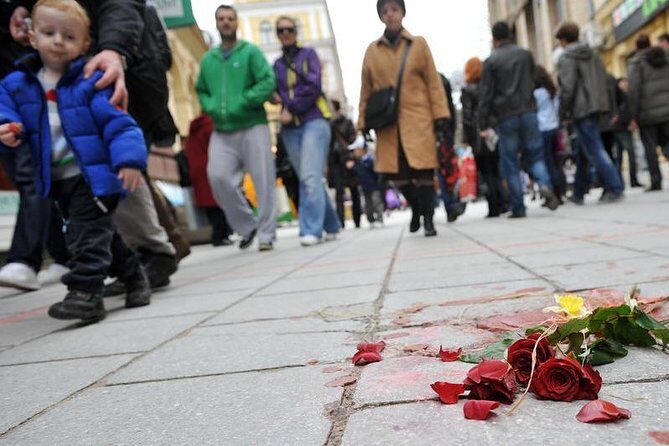
Next you head to Ferhadija Pedestrian Street, one of Sarajevo’s key east-west routes. Here’s the cool part: your stop isn’t only about buildings—it’s about a visible scar that’s become a visual language.
You’ll see the Sarajevo Roses, a concrete impact pattern created by mortar shell explosion damage. Later, the marked concrete was filled with red resin. The result is fragmentation that looks almost floral, arranged by the randomness of impact.
This is where the tour’s title really starts to make sense. Conceptual urban art isn’t always painted on a wall. Sometimes it’s a city’s material history—how war literally broke up concrete—and how later repair transformed it into something you can look at without turning away.
The stop is around 30 minutes and admission is free. That time window is good. You can take a few photos, but also just stand there and compare what you see up close versus from across the street.
A respectful note: this site represents intense urban warfare from the Siege of Sarajevo, when thousands of shell explosions hit the city. If you’re photographing, keep it simple and thoughtful. Let the place do the talking.
Stop 3: Galerija Java (Titova 21) and Sarajevo’s Contemporary Stage
Galerija Java is located right in the center of town at Titova 21. This stop takes about 1 hour, and again admission is included.
Why this gallery works in a conceptual art tour is straightforward: it has played a meaningful role in building Sarajevo’s contemporary art scene by giving artists a strong platform. It supports both Bosnian and international artists, and it collaborates with creators working across different mediums.
If you care about “how art gets made visible,” this stop is worth your attention. A gallery like this isn’t only about one show. It’s about the ecosystem—how artists get chances, how exhibitions get housed in an attractive space, and how contemporary art stays connected to the public.
When you’re inside, focus on three things:
- How the exhibition space shapes what you notice
- How the works reflect modern city life and ideas
- How international connections show up in the presentation
And since this is a guided stop, don’t be shy about asking why certain works seem to fit Sarajevo’s themes of memory and identity.
Stop 4: Veliki Park and Mensud Kečo’s Srebrenica Remembrance
From Ferhadija, you continue to Veliki Park. This part lasts about 30 minutes and is free to visit.
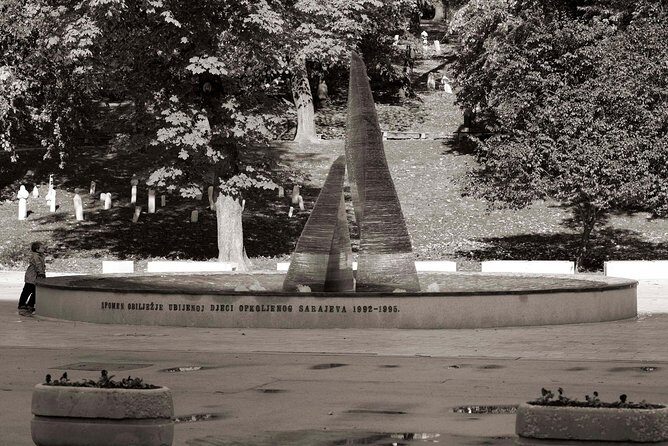
In the park, you’ll see a sculpture by Bosnian artist and sculptor Mensud Kečo dedicated to the genocide in Srebrenica. The piece is called Nermine, dođi. It’s made from concrete, reinforcement bars, plastic, and silicon, and it represents what the artist links to the most distressing documented photograph from Srebrenica.
This is not a casual photo-stop. It’s remembrance placed in public space. Materials matter here. Reinforcement bars and concrete bring an industrial, damaged feeling, while the other materials add texture that makes the sculpture feel less like a monument from a distance and more like something you face up close.
Practical advice for this stop:
- Give it time. Don’t rush through in transit mode.
- If you don’t know much about the context, rely on the guide’s explanation and let the form make sense first.
- Think of it as part of the tour’s bigger story about how Sarajevo processes trauma through art and design.


Stop 5: Caffe Break at Gallery BORIS SMOJO and Festina Lente on the Bridge
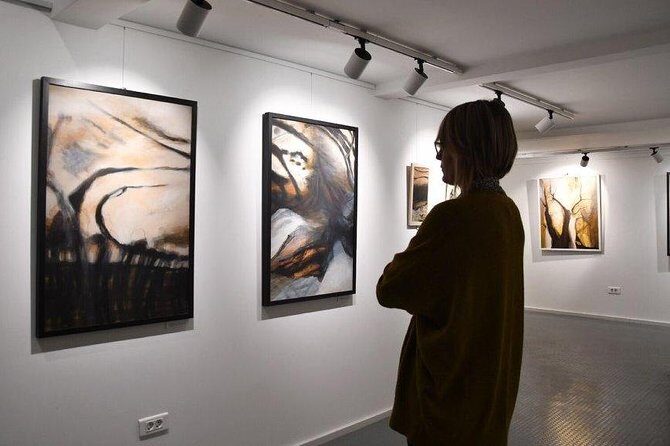
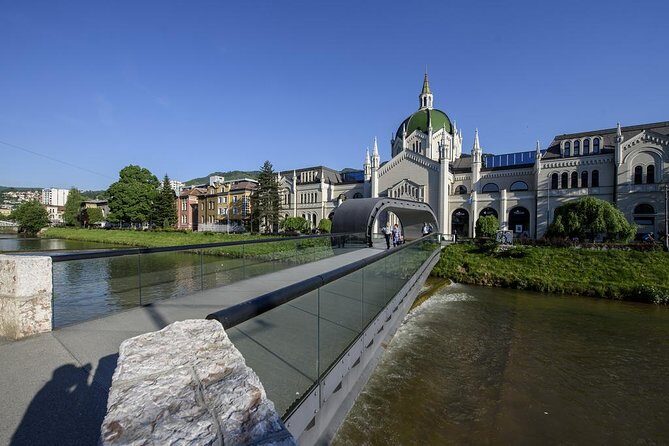
The final leg brings you toward Skenderija Bridge. You’ll make a caffe break at Gallery BORIS SMOJO, then go see the bridge artwork called FESTINA LENTE.
This segment is about 30 minutes total, and admission is included for this stop. The caffe break matters more than it sounds. By this point, you’ve seen two major conceptual “memory spaces” (Sarajevo Roses and the Veliki Park sculpture). A short pause helps you stay present for the last viewpoint.
Then you move to the bridge area to see FESTINA LENTE. The tour frames it as part of Sarajevo’s urban art conversation—how public spaces can carry meaning and identity, not just traffic and routes.
If you like city art, this last stop gives you a satisfying payoff: you shift from galleries and memorial sculpture back to an outdoor landmark. The day ends where the city keeps moving—while still leaving you with things to think about.
Price and Value: What $33.64 Buys You in Sarajevo
The price is $33.64 per person, and for a tour covering 5 stops over 2 to 3 hours, it’s not just about walking with a guide. It’s about guided interpretation plus multiple included admissions.
Here’s what you’re getting value from:
- Included tickets at Brodac Gallery, Galerija Java, and the Skenderija Bridge stop via Gallery BORIS SMOJO
- No planning required for finding the galleries and points of interest
- Small-group size that makes questions worth asking
- Context on conceptual art (especially where the art is tied to Sarajevo’s war and urban history)
If you tried to do this on your own, you could find the locations. But you’d likely lose the key advantage: understanding why these spaces and artworks connect to Sarajevo’s experience. That’s the difference between seeing and really looking.
Logistics That Make the Tour Easy to Fit Into Your Day
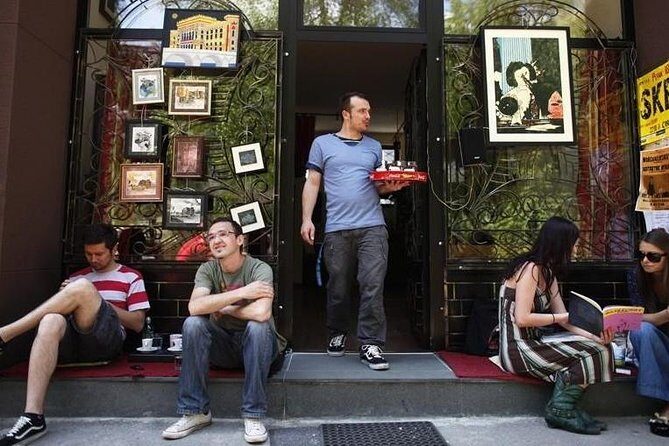
The tour starts at Đulagina 2, Sarajevo 71000, and ends near Skenderija (Skenderija 71000 Sarajevo). Start time is 1:00 pm.
The route timing is built around your attention span:
- Brodac Gallery: ~45 minutes
- Ferhadija Street: ~30 minutes
- Galerija Java: ~1 hour
- Veliki Park: ~30 minutes
- Gallery BORIS SMOJO + bridge: ~30 minutes
Most people can participate, and it’s near public transportation. Still, wear comfortable shoes. Even if you’re not sprinting between stops, the day involves walking between city points, and Veliki Park plus street areas ask for good footing.
If you’re traveling with someone who hates tours that feel like lectures, this format usually works better than a long museum-only day. It’s a mix of stops and outdoor spaces, with regular breaks in between.
Also, if your plans are flexible, you have the safety option of free cancellation up to 24 hours in advance for a full refund.
Who This Tour Is For (and Who Should Skip It)
This tour is a great fit if:
- You want Sarajevo’s modern art scene, not just old-town sightseeing
- You like when a guide connects art to place and history
- You’re comfortable with themes tied to the Siege of Sarajevo and Srebrenica remembrance
- You prefer a small-group pace over big crowds
You might think twice if you:
- Want a strictly light day focused only on fun visuals
- Don’t handle heavy memorial themes well
- Prefer a mostly self-guided museum experience
In other words: it’s not an art show tour where you can casually skim the meaning. It’s about learning how Sarajevo’s artists and urban spaces talk back to history.
Should You Book the Sarajevo Conceptual Art Tour?
I’d book it if you’re curious about how contemporary ideas live in real spaces—galleries in historic buildings, street-level memorial art, and public sculpture that demands attention. The included admissions reduce hassle, and the small-group format helps you actually understand what you’re seeing instead of just collecting photos.
The biggest “yes” sign is the guide. Mak’s storytelling turns the tour from sightseeing into a clearer view of Sarajevo—especially when conceptual art isn’t obvious until someone explains the why.
If you can handle heavy context with respect, this is a strong way to spend an afternoon in Sarajevo. You’ll walk away with better eyes, and you’ll remember the city’s art for reasons beyond decoration.
FAQ
How long is the Sarajevo Conceptual Art Tour?
It runs for about 2 to 3 hours.
What language is the tour offered in?
The tour is offered in English.
Where does the tour start and end?
The meeting point is Đulagina 2, Sarajevo 71000, and the tour ends near Skenderija 71000 Sarajevo.
How much does it cost per person?
The price is $33.64 per person.
Is a mobile ticket used?
Yes, it uses a mobile ticket.
Are tickets and admissions included?
Admission tickets are included for Brodac Gallery and Galerija Java, and also included at the Skenderija Bridge stop via the related gallery stop. The Ferhadija Street and Veliki Park stops are free.
How many people are in the group?
The tour has a maximum of 15 travelers.
Can most travelers participate?
Most travelers can participate.
Is there free cancellation?
Yes. You can cancel for a full refund up to 24 hours before the experience start time.
You Might Also Enjoy
More Museum Experiences in Sarajevo
- Fall of Yugoslavia, Sarajevo War Tour with Tunnel of Hope Museum and Frontlines
★ 5.0 · 1,314 reviews
More Tours in Sarajevo
- Fall of Yugoslavia, Sarajevo War Tour with Tunnel of Hope Museum and Frontlines
★ 5.0 · 1,314 reviews
More Tour Reviews in Sarajevo
- Fall of Yugoslavia, Sarajevo War Tour with Tunnel of Hope Museum and Frontlines
★ 5.0 · 1,314 reviews