REVIEW · SARAJEVO
CENTRAL BOSNIA | A medieval tour (Jajce + Travnik + Pliva lakes)
Book on Viator →Operated by Art and Tours Sarajevo · Bookable on Viator
Medieval forts and lake air, same day. This Central Bosnia tour strings together Travnik, Jajce, and the Pliva region in one efficient 10-hour loop, so you get big sights without too much bus time. I love the mix of stone-and-stories stops with real nature time, and the day’s flow keeps it from feeling rushed.
Two things I really like: first, you’ll walk the old-town sectors of Travnik and Jajce where medieval power still shows in the buildings, not just in photos. Second, Pliva Lakes gives you proper breathing space—walking, swimming, or just sitting with a view and a picnic setup. Add in lunch with local food, and the day feels complete.
One thing to consider: entry tickets are not included for some of the fortress sites (while other stops are free), and the tour depends on good weather. If you hate climbing stairs or uneven stone, wear sturdy shoes and pace yourself.
In This Review
- Key highlights worth your attention
- How a day tour from Sarajevo really works (8:00 start, short stops, big variety)
- Travnik’s Old Town (Stari Grad) and Kaštel: the medieval Lašva province feel
- Sarena Džamija (Multi-Colored Mosque): colors, carvings, and a design that’s a little different
- Tvrdava Stari grad: the Old Fort and why the builders are still debated
- Jajce Fortress: royal-era portals and the view from 470 meters
- Pliva Waterfall in town: a 17-meter drop with a special water trick
- Pliva Lakes (Great and Small): your time to choose how active you want to be
- Mlincici watermills: the old mills by the river (and why the setting feels storybook)
- Lunch and the small-group feel: where the tour’s value really shows
- Price: $90.31 for 10 hours, and how to judge the real cost
- Who should book this Bosnia medieval + lakes day trip
- Should you book Central Bosnia (Jajce + Travnik + Pliva Lakes)?
- FAQ
- What time does the tour start?
- Where is the meeting point in Sarajevo?
- How long is the tour?
- Is the tour offered in English?
- How many people are in the group?
- What is included in the tour price?
- Are entry tickets included?
- Is a mobile ticket used?
- What happens if the weather is poor?
- What is the cancellation policy?
Key highlights worth your attention
- Small group (max 5 people): more chances to ask questions and actually hear answers.
- Travnik’s old fort zone: you’ll see how Kaštel shaped the old-town layout.
- Sarena Džamija in 1757 colors: a mosque with unusual design details and carved wood.
- Jajce Fortress above the town (470m): royal-era architecture and sweeping views.
- Pliva Lakes time (Great + Small): free choice to walk, swim, kayak, or just picnic.
- Mlincici watermills: shingled watermills that still feel like a story set.
How a day tour from Sarajevo really works (8:00 start, short stops, big variety)
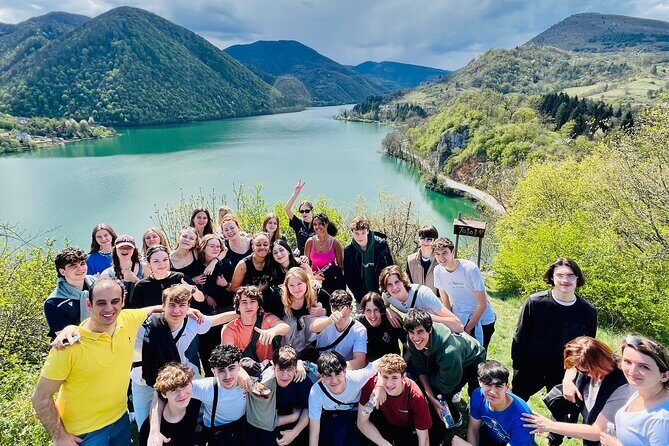
This tour departs from Đulagina 2 in Sarajevo at 8:00 am and returns you to the same meeting point. The total time is about 10 hours, and the pacing is built around short, focused stops—so you get a lot of variety without one long museum slog.
You’ll be with a guide, and the tour is offered in English. It also runs with a maximum of 5 people, which matters more than you’d think on a packed day. Fewer people means fewer distractions and less time waiting at each viewpoint.
One more practical point: you’re given bottled water. Since you’ll be outdoors and walking on uneven surfaces in places, bring a light layer for changing Balkan weather. The day can be canceled due to poor weather, with an alternate date or a full refund.
You can also read our reviews of more tours and experiences in Sarajevo.
- Fall of Yugoslavia, Sarajevo War Tour with Tunnel of Hope Museum and Frontlines
★ 5.0 · 1,314 reviews
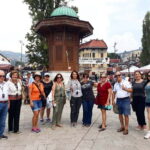
Travnik’s Old Town (Stari Grad) and Kaštel: the medieval Lašva province feel
Your first stop is Stari Grad, Old Town, Travnik, an area tied to the medieval Bosnian Kingdom and the župa Lašva province. The region is first mentioned in 1244, linked to Bela IV of Hungary. That’s a useful anchor: it helps you see Travnik not as just a pretty town, but as a long-term political and defensive zone.
Travnik is also described as one of the fortified towns in the region, with Kaštel shaping today’s old-town sector. In practical terms, that means your walk follows the natural lines of fortification—stone walls, strategic positions, and tight streets that make sense when you remember medieval towns were built for defense first.
You’re in this area for about 30 minutes. One of the best ways to use that time is to pause and look outward from the higher bits. The point isn’t to memorize dates; it’s to connect what you’re seeing with why it was built there.
Admission is free at this stop, so you can spend your mental energy on the town itself.
Sarena Džamija (Multi-Colored Mosque): colors, carvings, and a design that’s a little different
Then you head to Sarena Džamija, built in 1757. This mosque is easy to spot thanks to its bright exterior and intricate artistic details, including painted flower motives and carved woodwork.
The mosque is also known for a local belief tied to the prophet—people believe it stores hairs of the prophet. I’m not here to argue beliefs. What matters for you as a visitor is that the story gives the building extra meaning beyond architecture.
Here’s a design detail that’s genuinely interesting: in Bosnia and Herzegovina, the prayer room is positioned on the first floor, while the ground floor is used for business. That two-level setup isn’t something you see at every mosque, and it helps you understand how religious buildings often functioned as part of everyday civic life.
This stop is about 15 minutes, and admission is free. If you can, take two looks: one from the outside for the colors and one from the entrance area to understand the layout. Even in a short window, it pays off.
Tvrdava Stari grad: the Old Fort and why the builders are still debated
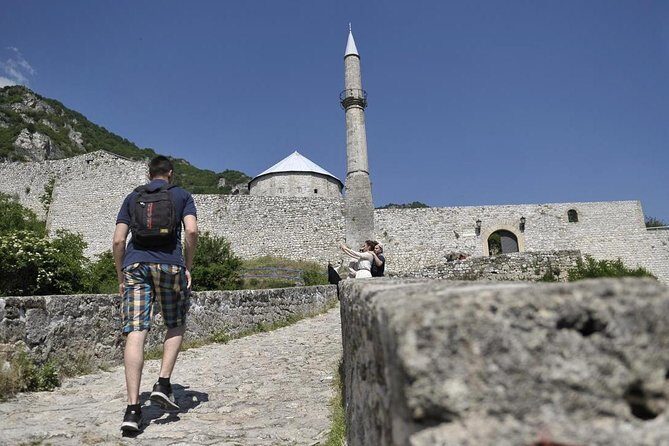
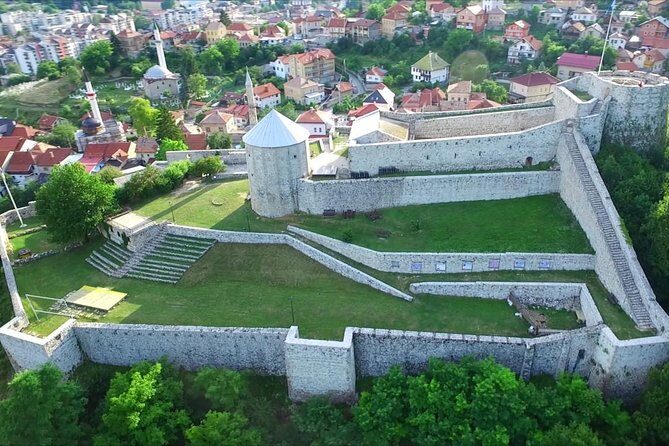
Next comes Tvrdava Stari grad (Old Fort), one of Bosnia’s best-preserved medieval fortified structures. What makes this stop more than a quick ruin look is that the story of its construction is murky. Sources don’t record the exact year, duration, or builder.
Historians generally agree it was built sometime from the second half of the 14th century to the first half of the 15th. And the possible builders are named as either King Tvrtko II Kotromanić or King Stjepan Dabiša. That uncertainty is not a downside—it’s a real part of how medieval history works when records are incomplete.
You’ll have about 15 minutes here. Admission is not included, so plan for the extra cost if you want full access to the fort areas. If you’re short on time, prioritize viewpoints where you can see both the structure and the town context.
Jajce Fortress: royal-era portals and the view from 470 meters
You’ll then move to Jajce, where the Fortress of Jajce sits above the town at an altitude of 470 meters. This is a medieval city complex that dates back to the 13th century, and the fortress was constructed over several centuries, with later periods leaving their marks on the same complex.
One of the most compelling aspects is what the fortress surrounds: it encircles architectural remains of a mid-15th-century castle. In other words, you’re not just looking at one “phase” of medieval life. You’re seeing layers.
On the southwest side is a portal with the royal coat of arms. That portal dates to the time of Tvrtko II and King Stjepan Tomasevic, when the royal court was moved to Jajce in 1421. Even if you don’t know the full timeline, you’ll feel the message: this was power, placed high and kept defensible.
You get around 30 minutes, and admission is not included. If you want the best photos, check the light conditions and pick a viewpoint that lets you include both the fortress details and the town below. Wind can be a factor at height, so a light jacket helps.

Pliva Waterfall in town: a 17-meter drop with a special water trick
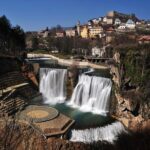
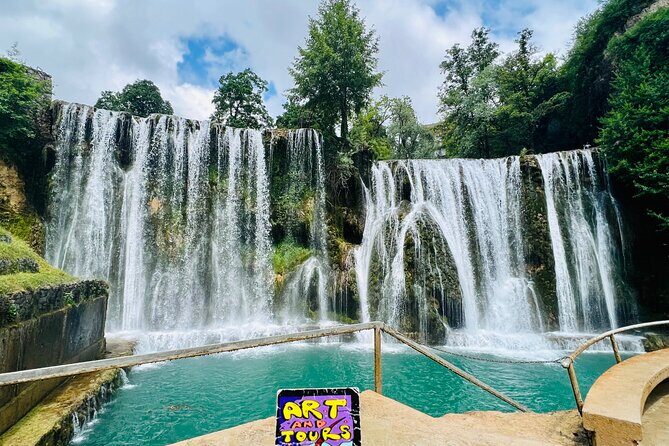
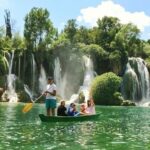
After the fort views, you shift to something fully natural: Pliva Waterfall in the center of Jajce. It’s 17 meters high, and it’s described as one of twelve most beautiful waterfalls in the world. You don’t need that ranking to appreciate it, though—standing here, the waterfall’s energy does the talking.
There’s also a very specific hydrology claim that makes it memorable: it’s the only waterfall in the world said to create an estuary as it joins the Pliva River with the Vrbas River. In plain terms, you can experience more than one kind of water movement in the same spot—the fall and then the meeting of waterways.
You’ll have about 30 minutes, and admission is free. For your time here, alternate between looking from above and watching from closer to where the water drops. The waterfall shifts character depending on the angle.
Pliva Lakes (Great and Small): your time to choose how active you want to be
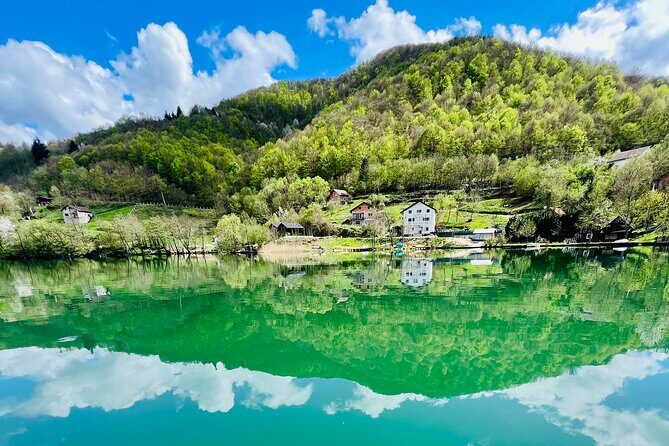
Now for the part that turns the day from history-heavy to balanced: Pliva Lakes, a short distance from Jajce. The focus here is Great Pliva Lake and Small Pliva Lake, with about 1 hour allocated.
This stop isn’t just “look at the water and move on.” You can fish, kayak, canoe, swim, play volleyball, bike, or walk. There are also public barbeque facilities, which makes it realistic to plan a picnic-style break.
The real value of the lakes time is that it resets your pace. After forts and stone towns, you get a slower rhythm—breathing space, photo breaks that don’t feel forced, and the option to actually enjoy the outdoors instead of just passing through it.
Admission is free here, so you’re paying for time, not another ticket. If you’re the kind of person who likes a simple walk with views, do that first, then see if you want a swim or a paddle after you’ve cooled off from walking.
Mlincici watermills: the old mills by the river (and why the setting feels storybook)
Finally, you’ll head to Mlincici near the Pliva area. These are watermills that draw tourists down the river from the big waterfall. The waterfall drop is described as about 65 feet, and that scale matters once you see the river corridor leading away from town.
Mlincici watermills are no longer used for actual milling, but their shingled look and placement make them feel like they belong to a different era. One of the charming details is how people compare them to a fantasy setup—like the mills feel almost troll-proof with dragons hitched up out back. Even if you don’t take it literally, the whimsical vibe can make the stroll more enjoyable.
You have about 1 hour here, and admission is free. Use this time to slow down. If you’ve been sprinting between viewpoints all day, Mlincici is where you can stop for a longer look at the water flow, the mill structure, and the river path itself.
Lunch and the small-group feel: where the tour’s value really shows
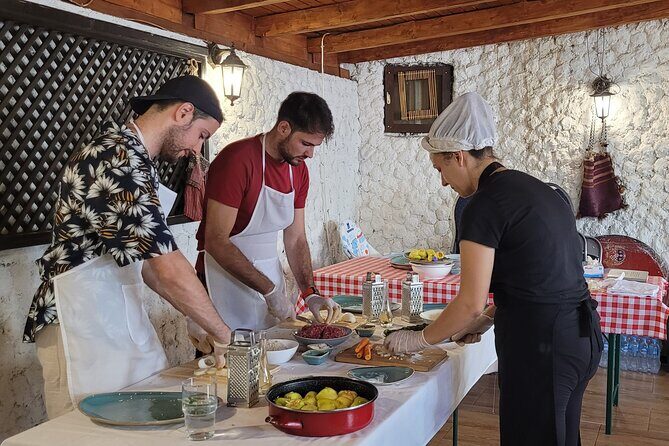
The tour highlights include sampling local cuisine for lunch, and that fits the flow of the day. The win is not the meal name—it’s that lunch is part of the schedule, not something you have to hunt for on the run between sites. In a long 10-hour day, that built-in break keeps the rest of the stops enjoyable instead of exhausting.
And the small group size matters for more than comfort. With up to 5 people, the guide can pace questions around what you actually care about. If your priority is medieval details, you’ll get story context. If your priority is getting outside, you’ll get enough time to do it.
In at least one recent run, the guide named Muki received praise for being strong both on the area and on driving. That’s practical for Bosnia day trips, where roads and timing can make or break the day.
Price: $90.31 for 10 hours, and how to judge the real cost
At $90.31 per person for about 10 hours, this tour sits in the “good value if you use the whole day” category. Here’s why:
- Bottled water is included, which sounds small until you’re walking in heat or you’re busy at stops.
- The day pairs multiple major sights: Travnik’s old town sector, Sarena Džamija, fortress areas in Jajce, Pliva Waterfall, Pliva Lakes, and Mlincici.
- You get a guided experience in English, plus the logistics of getting between towns without you worrying about driving.
The part that can raise your total cost is simple: entry tickets are not included. Some stops are free (like Sarena Džamija and Pliva Waterfall and Pliva Lakes), but others—especially Tvrdava Stari grad and the Fortress of Jajce—aren’t included. So when you budget, set aside money for those paid sites. If you’re the type who always pays for access and climbs into towers, your final spend will be higher.
Still, for a day that mixes medieval fortification and nature without wasting half the time figuring things out, this pricing makes sense.
Who should book this Bosnia medieval + lakes day trip
This is a strong match if you want:
- a medieval Bosnia focus with real-world stops in Travnik and Jajce
- one-day nature time at Pliva Lakes (not just a quick river glance)
- a manageable schedule with several short stops, not one marathon attraction
It might be less ideal if:
- you hate walking between viewpoints or you need very flat ground
- you’re hoping tickets are all included (some fortress entries are not included)
- weather changes would ruin your day—since the tour requires good weather
Should you book Central Bosnia (Jajce + Travnik + Pliva Lakes)?
If you’re staying in Sarajevo and you want a day that feels like two different Bosnia moods—fortress days and water days—this tour is worth serious consideration. The structure works: fortified towns in the morning, a standout natural centerpiece in Jajce, then Pliva Lakes and Mlincici to wrap the day on a calmer note.
My call: book it if you’re comfortable paying a bit extra for the paid fortress access and you can handle short climbs and uneven ground. Skip it only if you want a slow, single-site experience or if you’re very sensitive to weather swings.
FAQ
What time does the tour start?
The tour starts at 8:00 am.
Where is the meeting point in Sarajevo?
The meeting point is Đulagina 2, Sarajevo 71000, Bosnia and Herzegovina.
How long is the tour?
The duration is approximately 10 hours.
Is the tour offered in English?
Yes, the tour is offered in English.
How many people are in the group?
The maximum group size is 5 travelers.
What is included in the tour price?
Bottled water is included. Lunch is also part of the day’s plan for local cuisine.
Are entry tickets included?
Entry tickets are not included. Some stops have free admission, but others (including the fort sites) are not included.
Is a mobile ticket used?
Yes, the tour includes a mobile ticket.
What happens if the weather is poor?
The tour requires good weather. If it’s canceled due to poor weather, you’ll be offered a different date or a full refund.
What is the cancellation policy?
You can cancel for a full refund up to 24 hours before the experience’s start time.
You Might Also Enjoy
More Tours in Sarajevo
- Fall of Yugoslavia, Sarajevo War Tour with Tunnel of Hope Museum and Frontlines
★ 5.0 · 1,314 reviews
More Tour Reviews in Sarajevo
- Fall of Yugoslavia, Sarajevo War Tour with Tunnel of Hope Museum and Frontlines
★ 5.0 · 1,314 reviews