REVIEW · SARAJEVO
Trebevic Mountain Biking Tour from Sarajevo – Bobsleigh Track
Book on Viator →Operated by Torus Tours · Bookable on Viator
Olympic biking starts with a steep grind. This Trebević Mountain Biking Tour from Sarajevo pairs a scenic ascent to Sarajevo’s 1984 Winter Olympics sights with a ride along the famous bobsleigh and luge track area on your bike. You’ll spend the day working up height, then earning those wide city views.
What I like most is the combo of big mountain views and a guided ride that keeps the day fun even when you’re sweating. I also like that the route mixes surfaces and scenery, so it’s not just a long line uphill or one-note downhill. One reality check: most of the effort is the climb, and you’ll want a level of fitness that lets you handle a sustained push toward the top.
In This Review
- What you’re in for (highlights and a heads-up)
- Key points before you book
- Trebević Peak: the climb that makes the whole day worth it
- What makes this stop special
- Best fit for this part
- Sarajevo’s Olympic bobsleigh and luge track: ride where sleds can’t
- Why this works even though the track is damaged
- The ride down: forests, mixed surfaces, and guide-led speed
- Equipment note (the practical “check before you assume”)
- Why the descent is more than fun
- Lunch and picnic setup: small and local, not a buffet
- What to eat and drink in your own plan
- How hard is it, really: the 1000-meter reality check
- The good news: breaks help
- When this might not be for you
- Pace, timing, and group size: why small groups matter here
- Where the tour starts in Sarajevo (and how to think about logistics)
- Weather reality check
- Price and value: what you get for about $120
- Should you book it? My decision rule for you
- FAQ
- How long does the Trebević mountain biking tour take?
- How much does the tour cost?
- Is the tour in English?
- What is the group size limit?
- How physically demanding is this ride?
- Can I cancel and get a full refund?
What you’re in for (highlights and a heads-up)
You can expect a strong sightseeing payoff from Trebević’s high point area, including Olympic-site context tied to Sarajevo 1984. And the bobsleigh/luge track stop feels genuinely special because the track is damaged for sled use now, but you still get to roll through the setting by bike.
The main drawback is straightforward: you should be ready to climb hard. Even with breaks, the tour is not a gentle cruise, and the day’s time can be spent pushing a bike up steep paths.
Key points before you book
- Trebević at 1,627 meters: a central mountain climb with major view potential over Sarajevo
- Bike use on an Olympic bobsleigh/luge track: sleds can’t run now, but you can still ride the lines
- Small group size (max 8): more space, more guidance, less chaos on narrow sections
- You’ll likely work uphill for most of the time: plan for sweat, not just photos
- Lunch is part of the deal: a laid-on picnic at the top area with traditional local food
You can also read our reviews of more cycling tours in Sarajevo
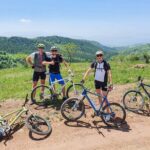
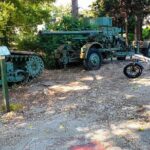
Trebević Peak: the climb that makes the whole day worth it
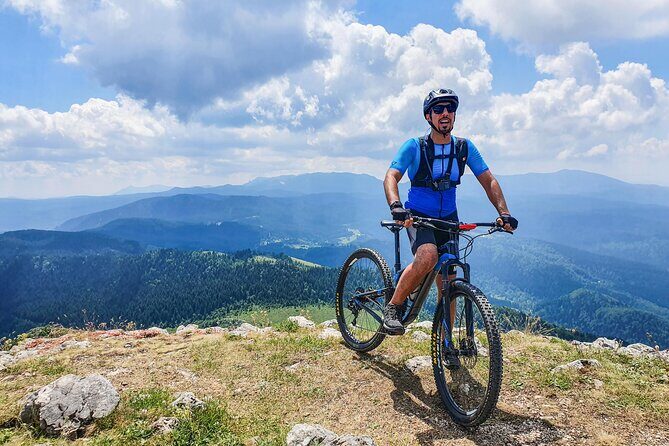
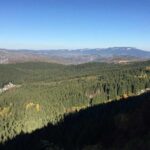
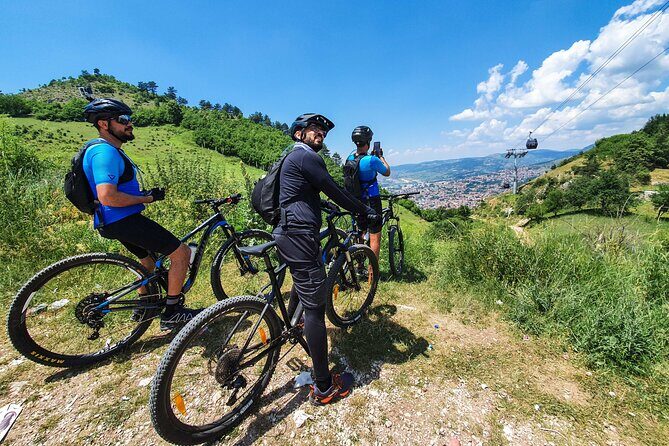
Trebević sits just southeast of Sarajevo and rises to 1,627 meters, making it one of the more “reachable” high points around the city. On this tour, the first real mission is the climb—think of it as a scenic cardio session with frequent stops so you can catch your breath and reset your rhythm.
If you’re picturing a bike-and-camera stroll, adjust that expectation. The day is built around ascent, and you’ll likely spend stretches pushing your bike on steeper sections. That can sound tough, but it’s also the structure that makes the views feel earned. As you get higher, Sarajevo’s layout starts to open up behind you, and the stops become more than routine breaks.
A useful detail here: there’s mention of a cable car that can take you halfway up. That matters if you want the scenery but your legs may not love a full push the whole way. There’s also a note that an uphill help option (a van for an added fee) may be possible if it’s just too hard, but I would treat that as situational and ask your guide in advance. The takeaway is that the tour seems to balance challenge with realistic options when needed.
What makes this stop special
Trebević isn’t just a mountain for views. It’s tied to the 1984 Olympic landscape, so the climb feels like you’re moving through the same terrain that hosted winter sport events in Sarajevo. Even when you’re tired, that context gives your effort a story.
Best fit for this part
This is best for you if you can handle sustained climbing. It’s also best if you don’t mind mixing hiking-with-a-bike into your day. If you want an easy ride where your legs barely notice the effort, look elsewhere.
Sarajevo’s Olympic bobsleigh and luge track: ride where sleds can’t
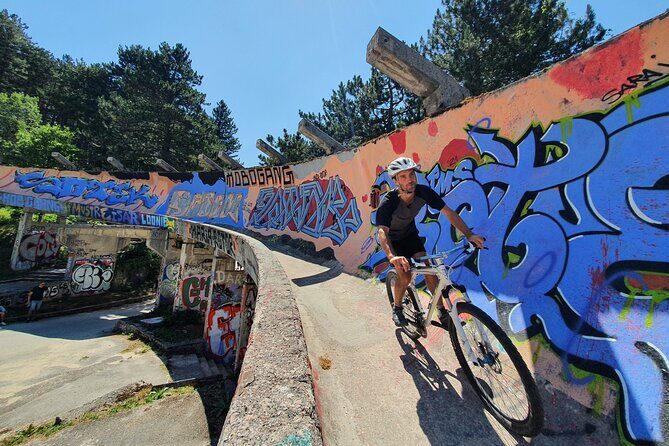
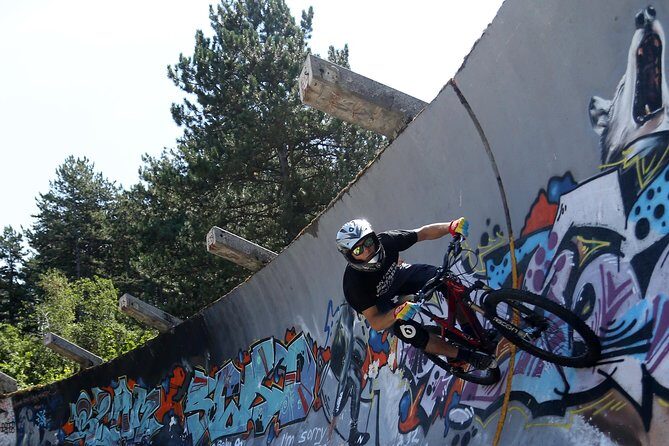
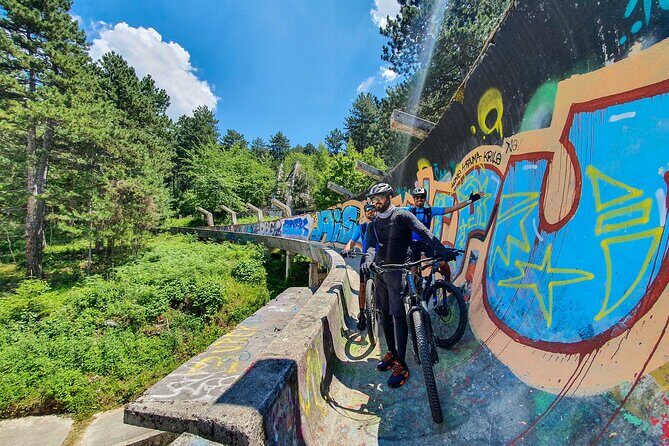
The second stop is the part that turns heads: the Sarajevo Olympic Bobsleigh and Luge Track, perched on Trebević and overlooking Sarajevo. This is the venue built for the 1984 Winter Olympics, and even with its wartime damage, the site still carries serious atmosphere.
Here’s the practical twist: the track is damaged, so bobsleighs and luges can’t go down the track anymore. On this tour, you don’t ride sleds—you ride a bike. You get to pedal through the Olympic setting, and that’s what makes the stop feel different from a normal “viewpoint photo break.”
The time here is short—around 20 minutes—which is perfect. It gives you a focused moment to take it in without turning the day into a museum visit. It also keeps the momentum for the return ride and keeps the pace from dragging.
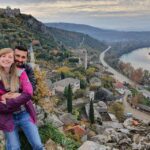
Why this works even though the track is damaged
Even if you know the sled track isn’t active, the ride still gives you something memorable: you’re physically occupying the corridor that athletes used. You’re moving with the same orientation, seeing Sarajevo from the same altitude perspective, and that makes the site feel real rather than historical.
The ride down: forests, mixed surfaces, and guide-led speed
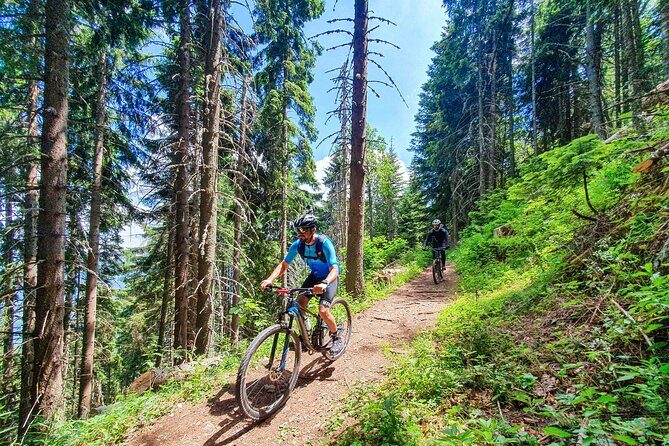
After lunch, the tour shifts from climb mode to descent mode. The best part of the MTB day in Sarajevo is that the downhill is varied, not one long smooth slide. You can expect mixed riding surfaces—rocks, forests, trails, and asphalt—with the guide controlling the flow so you’re not just guessing your way down.
A key theme from the overall experience: the guide steers you through steeper bits with confidence. One common impression is that the steep sections can be thrilling because you’re given direction on how to handle speed and line choice. You’ll still feel it in your legs and balance, but you’re not abandoned out there.
Equipment note (the practical “check before you assume”)
One detail to keep in mind: the bikes provided may not match what you pictured as a true trail-dominant mountain bike. Some riders describe the bikes as not exactly the proper mountain bikes they expected. The good news in the information you have is that they didn’t feel unsafe, so you’re not going to be stuck on unusable gear—but it’s smart to set your expectations: this is more about scenery and endurance than about aggressive technical bike parks.
Why the descent is more than fun
The descent is also where the day’s planning clicks. You’ve climbed long enough that the views feel bigger, and then the guide-led downhill gives you a release. It’s a satisfying cycle: work hard, see more, then move faster.
Lunch and picnic setup: small and local, not a buffet
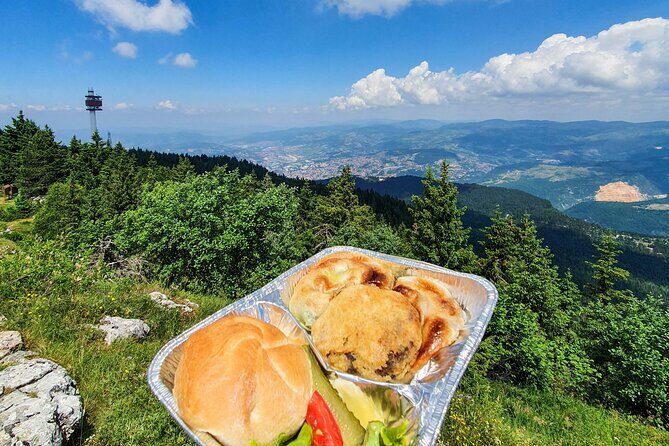
At the top, you get a picnic laid on as part of the tour. The lunch is described as a small travel tray of traditional local food, and it’s carried by the guide. Don’t expect a spread like a resort buffet. Do expect something simple and local that keeps you fuelled for the descent.
This matters because timing and energy are everything on a half-climb day like this. A small lunch can be a feature, not a bug: it’s quicker, easier to digest, and you’re not sitting around long enough for your legs to cool down completely.
What to eat and drink in your own plan
The tour includes the picnic, but your personal comfort depends on hydration. Bring what you need and plan for the reality that the climb can run sweaty. Even if you stop often, you’re still moving uphill for a chunk of the day.
How hard is it, really: the 1000-meter reality check
This tour lists moderate physical fitness as the baseline. In practice, the day is physically demanding mainly because of the ascent. One strong caution from the overall experience is that you’ll be climbing roughly 1000 meters to reach the top. That means you should feel comfortable with leg burn and steady effort, whether you’re riding or walking the steep parts.
If you’re already used to mountain biking and hiking, you’ll likely enjoy the challenge. If you’re new to MTB, the ride can still be possible, but it hinges on your willingness to push and your fitness level. The tour doesn’t demand tricks and jumps. It demands stamina and patience.
The good news: breaks help
The ride is paced with frequent breaks, and the guide is there to keep you motivated and moving. That’s important because without breaks, a steep climb can feel endless. With breaks, it becomes manageable, and the payoff arrives as the view keeps expanding.
When this might not be for you
If you want a mostly flat or mostly easy cycling day, skip it. If you hate steep grades, this will test you. If you can accept sweat and steady uphill effort, you’re in the right category.
Pace, timing, and group size: why small groups matter here
The tour runs about 5 to 8 hours, depending on how the climbing and riding time plays out. That wide range is normal for an itinerary that includes a steep ascent, a short Olympic-track stop, and a full descent.
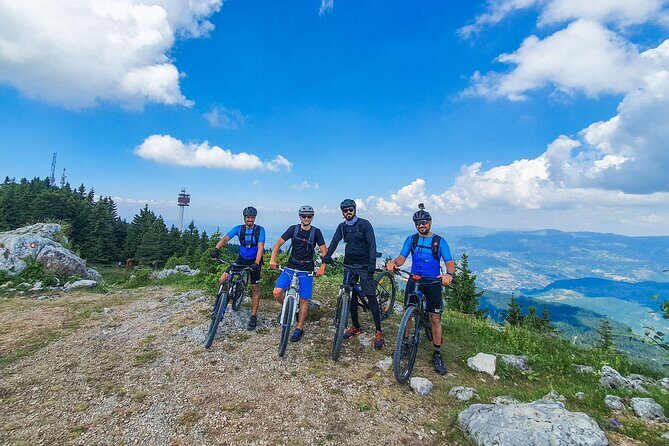
What I like about the structure is the group size: max 8 travelers. In a day like this, small groups are not a luxury. They reduce bottlenecks on narrow paths, make it easier for the guide to spot who’s struggling, and keep the ride from turning into a traffic jam.
You’ll also be riding with English-speaking guiding. If you want the Olympic context explained in plain language and real time (not just a signboard), this helps.
Where the tour starts in Sarajevo (and how to think about logistics)
Meet at Torus Tours, Obala Isa-bega Ishakovića 3, Sarajevo 71000. The tour ends back at the same meeting point. It’s described as near public transportation, which is handy if you’re building a one-day plan around more than just Trebević.
Because the day starts with a steep climb, your biggest logistics win is being early enough to get your gear sorted without stress. Show up with water in mind, comfortable shoes, and a layer for the mountain air. Even on a sunny day, you can cool off during breaks.
Weather reality check
You’re on a mountain, and Sarajevo’s conditions can shift. If rain hits, expect slippery sections during the downhill. Pack like you’re riding in changing conditions, not like it’s one flat sunny park loop.
Price and value: what you get for about $120
The listed price is $120.15 per person. Here’s why that can be fair value if this is your kind of day.
You’re paying for several things that add up: a guided half-day MTB experience, equipment and gear (as described in the tour features), a laid-on picnic, and structured time at two meaningful stops—Trebević and the Olympic bobsleigh/luge area. Both stop admissions are listed as free, so your money is mainly going to the guiding and the ride experience, not ticket fees.
You’re also getting a small-group setup and English guidance, plus the convenience of a mobile ticket and possible group discounts. When you combine all that with the unique location—climbing a Sarajevo mountain tied to the Olympics and then biking through the bobsleigh/luge track setting—you’re not just buying exercise. You’re buying a specific story told through riding.
That said, the value depends on your fitness. If the climb will drain you beyond your comfort level, the experience can turn from fun challenge into hardship. This is why the “difficulty reality check” matters so much.
Should you book it? My decision rule for you
Book this tour if you want a mountain-bike day with a real view payoff, and you’re okay spending a big chunk of time working uphill. It’s especially worth it if you like places with context—Olympic sites, not generic scenery—and you enjoy the mix of forests, trails, and mixed surfaces on the way down.
Skip it if you want an easy, mostly flat ride or if long steep climbing sounds like torture. Even with breaks and possible uphill help options, the core experience is still centered on climbing Trebević.
If you’re new to MTB, don’t automatically rule it out. The ride seems to reward effort more than technical skill, as long as you’re fit enough (or flexible enough) to handle the uphill push.
In short: if you’re the type who likes earning views with your own legs, this tour is a strong yes.
FAQ
How long does the Trebević mountain biking tour take?
The tour lasts about 5 to 8 hours.
How much does the tour cost?
The price is listed as $120.15 per person.
Is the tour in English?
Yes, it is offered in English.
What is the group size limit?
The tour has a maximum of 8 travelers.
How physically demanding is this ride?
The tour calls for moderate physical fitness. The climb is a major part of the day, and it can involve pushing the bike on steep paths.
Can I cancel and get a full refund?
Yes. You can cancel for a full refund up to 24 hours before the experience’s start time. If you cancel less than 24 hours before, the amount you paid won’t be refunded. Free cancellation is also listed as available.
You Might Also Enjoy
More Cycling Tours in Sarajevo
More Tours in Sarajevo
- Fall of Yugoslavia, Sarajevo War Tour with Tunnel of Hope Museum and Frontlines
★ 5.0 · 1,314 reviews

More Tour Reviews in Sarajevo
- Fall of Yugoslavia, Sarajevo War Tour with Tunnel of Hope Museum and Frontlines
★ 5.0 · 1,314 reviews