REVIEW · SARAJEVO
Jajce, Travnik and Pliva watermills – Day Tour from Sarajevo
Book on Viator →Operated by Adventure in Bosnia | Tour Agency | Tours and Excursions · Bookable on Viator
Bosnia’s forts and waterfalls in one long day.
This small-group tour (max 8 people) strings together two historic towns with Pliva scenery, using comfortable private transport so you don’t waste time wrestling bus changes. I love the balance of medieval sights and Ottoman-era landmarks, and I also like that the day moves at a human pace with real pauses for coffee and views. One consideration: it’s an 8–10 hour schedule, so wear good shoes and plan for an early start.
What really makes this tour work is the mix of stops that feel different back-to-back: Jajce’s fort and rock-carved church, then the Pliva watermills and lakes, then Travnik’s fortified old center. I also like that you’re not stuck only in one theme—mosques, stone churches, river falls, and old-world waterpower all show up in the same day. Guides such as Senad, Kenan, Emir, and Mufid are often praised for keeping the stories clear and the mood friendly, including light humor when the group has a travel day rhythm.
The main drawback is practical: lunch isn’t included, and only some entrances are free. You’ll budget extra for the two fortresses (Travnik and Jajce) and decide where you want to eat during the included break.
In This Review
- Key Highlights You’ll Actually Feel in the Day
- A Small-Group Bosnia Day Route That Starts in Sarajevo
- Fortress of Jajce: Walking the Last Stronghold Feel
- Catacombs of Jajce: The “Catacomb” That’s Really a Rock Church
- Crkva Sv. Marije: One Church, Three Eras of Use
- Esma Sultana Mosque: A Mosque Named After a Woman
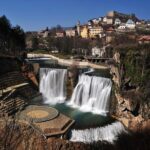
- Pliva Waterfall: 17 Meters of Power Right in the Middle of Town
- Mlincici Watermills + Pliva Lake Lunch Break
- Pliva Lakes: Clear Water Stops With a Slow Reset
- Travnik’s Old Fort: The Medieval Viewpoint That Explains the Region
- Travnik Coffee at Plava Voda + Sarena Dzamija
- Time, Pace, and What to Pack for an 8–10 Hour Day
- Price vs. Value: What You’re Paying For (and What You’re Not)
- Who This Tour Fits Best (and Who Might Want to Skip It)
- FAQ
- FAQ
- What time does the tour start?
- How long is the day tour?
- Do I get picked up from my hotel in Sarajevo?
- Is lunch included in the price?
- Are entrance fees included?
- How big is the group?
- Is the tour offered in English?
- Should You Book This Jajce, Travnik and Pliva Watermills Day Trip?
Key Highlights You’ll Actually Feel in the Day
- Max 8 travelers for easier questions, tighter timing, and less waiting around
- Pickup from any hotel in Sarajevo plus WiFi and bottled water on board
- Pliva Waterfall (17 m) right in town, plus the unusual spot where the Pliva and Vrbas rivers meet
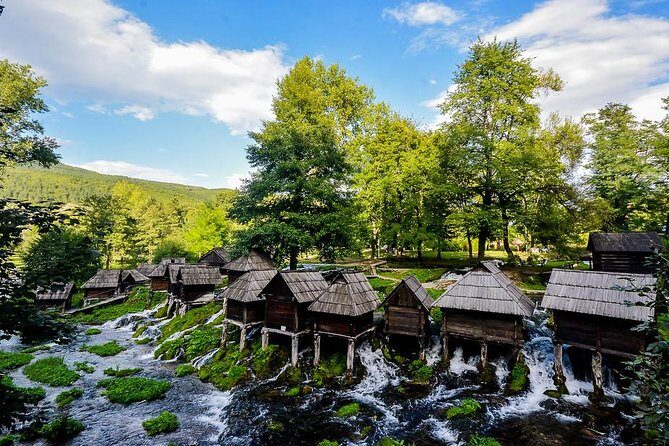
- Mlincici watermills: about 20 small mill huts that recall Austro-Hungarian-era farming life
- Historic “layer cake” in Jajce: late Romanesque rock church adaptations, mosque conversions, and the last Bosnian kingdom setting
- Travnik’s old fort + multi-coloured mosque without the headache of planning and driving yourself
A Small-Group Bosnia Day Route That Starts in Sarajevo
This is the kind of day trip that makes sense if you want more than one photo-stop. You start early in Sarajevo (the tour begins at 8:00 am) and you’re back to the pickup point at the end. It’s long, but that length is what lets you see Jajce and Travnik in a single day, instead of picking just one.
The logistics are designed to reduce friction. You get private transport, WiFi on board, and bottled water. Plus, the group size is capped at 8, which matters when schedules are tight—especially around viewpoints and short indoor stops.
The tour is offered in English with a mobile ticket. If you’re traveling solo, with a couple, or with friends, this size tends to feel more like a road trip with structure than a crowded coach ride.
You can also read our reviews of more tours and experiences in Sarajevo.
- Fall of Yugoslavia, Sarajevo War Tour with Tunnel of Hope Museum and Frontlines
★ 5.0 · 1,314 reviews
Fortress of Jajce: Walking the Last Stronghold Feel
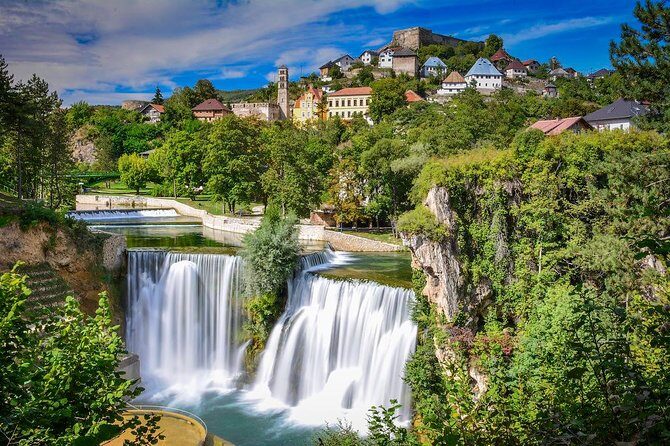
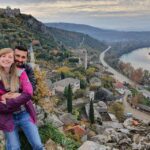
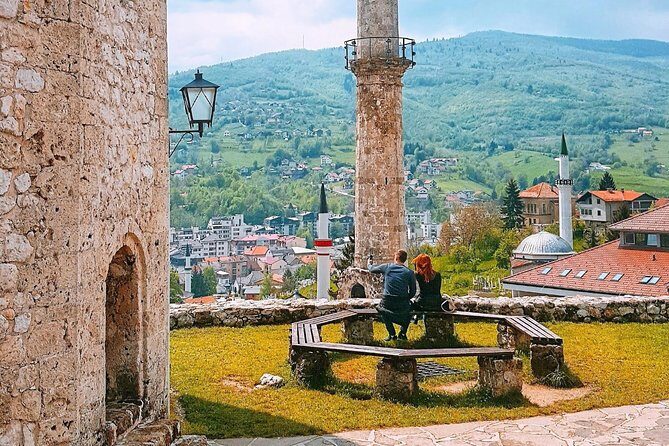
Jajce is often described as a historic strong point—an “old capital” vibe—with the Fortress of Jajce doing the job of setting the tone immediately. You’ll spend about 30 minutes here.
What I like about a fort-first start: you get oriented. The stone walls and elevated position make it easier to understand why this town mattered—especially during the final years of the Bosnian kingdom, when shifting power pressured older defenses.
A heads-up: the Fortress of Jajce admission is not included. You’ll need to pay on the spot (listed as €2.50 per person). If you’re trying to keep costs predictable, treat the fort fees as part of the baseline planning.
Catacombs of Jajce: The “Catacomb” That’s Really a Rock Church
Next comes a short stop—about 5 minutes—at the place locals call the catacombs. The key detail: it’s not a true catacomb system. Instead, it’s an underground Christian small church carved into rock in a late Romanesque style.
Because this is quick, don’t rush it. Look for the shape of the carved space and the way it reads like it was made to be used, not just displayed. It’s a compact stop that adds depth to the Jajce story without eating your whole morning.
No ticket is mentioned for this stop, so it’s one of those “included-feeling” moments in the middle of the day.
Crkva Sv. Marije: One Church, Three Eras of Use
If you want a stop that feels like Bosnia’s layers are written into stone, this is it. Crkva Sv. Marije Jajce begins as a Romanesque church area and later gets adapted into a Gothic-style church when Jajce became capital.
Here’s the part that makes people pause: the church holds major names and events around the last Bosnian king. It also has a later conversion story—during the Ottoman period, it becomes a mosque named after Sultan Suleiman I. Fires damaged it multiple times, and by the last major fire (1832), only the walls remained and it hasn’t been used since.
The stop is about 5 minutes, and it’s free. Because it’s short, arrive with your “slow brain” switched on for a minute—read what you can, then step back and let the different eras connect.
Esma Sultana Mosque: A Mosque Named After a Woman
Then you’ll walk to Esma Sultana Mosque (also known as Čaršija Mosque). It’s located on the main street through the town center.
This is one of those easy-to-miss details unless your guide points it out: it’s noted as the only mosque in Bosnia and Herzegovina named after a woman, and it’s been declared a national monument. The stop is about 10 minutes and free.
Practical tip: since this is on the street, you may end up spotting it again later as you move through Jajce. Keep an eye out for how the stone and design fit into the older town flow.

Pliva Waterfall: 17 Meters of Power Right in the Middle of Town
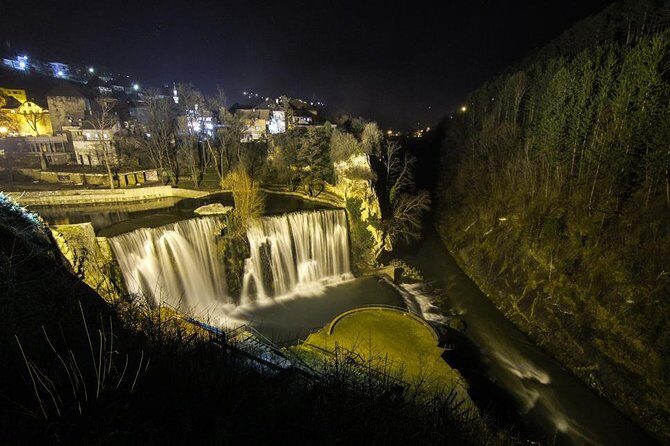
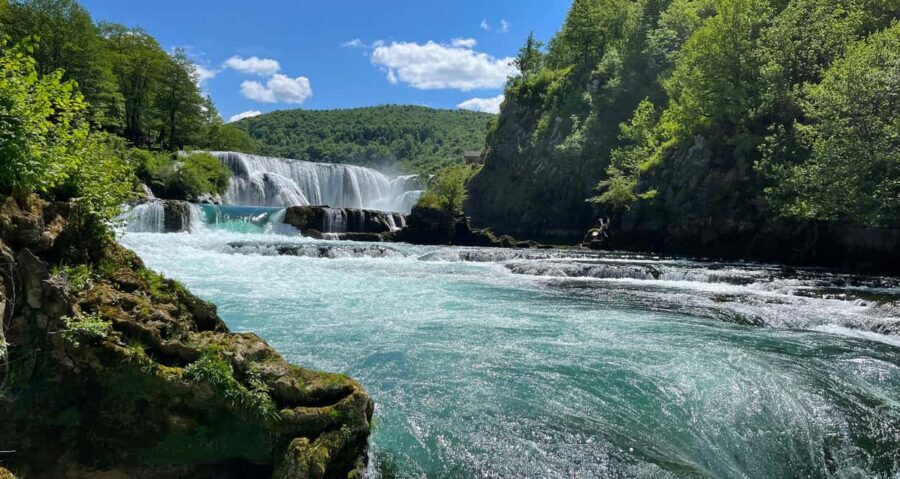
After forts and churches, you’ll get a natural spectacle with Pliva Waterfall. It drops about 17 meters and sits in the center of Jajce—so you’re not trekking out to a remote viewpoint just to see water do its thing.
The standout detail: it’s described as the only waterfall in the world that creates an estuary where the Pliva River joins the Vrbas River. That’s a fancy-sounding fact, but you’ll “get it” visually—water that isn’t just falling but also combining.
This stop is about 30 minutes and is free. You’ll likely stand in at least one spot below or close, and you may also look down from above depending on timing. Either way, plan to spend real time here, even if you feel rushed in the rest of the day.
Mlincici Watermills + Pliva Lake Lunch Break
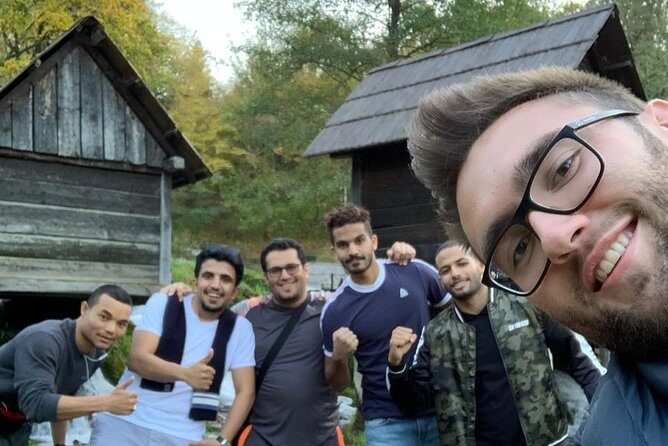
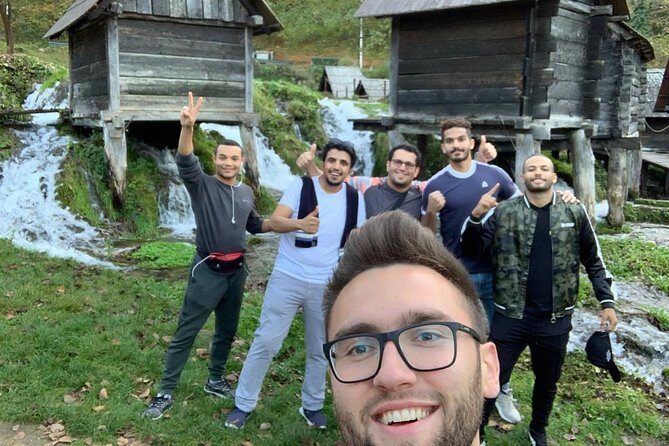
Now you’re headed into one of the most photographed sections of the day: the Mlincici area. Downstream near the Pliva Lakes, you’ll see around 20 small mill huts that once served as watermills for local farmers.
The age matters. Many of the huts date to roughly 1867–1918, the Austro-Hungarian period, so the mill village feel is both practical and historically anchored. People often describe it like a storybook village, and I get why—because it’s compact, scenic, and clearly designed around water flow.
This is about 30 minutes, and it’s listed as free. Then you’ll have the lunch break. Lunch itself is not included, but you get a chance to eat around the lakes with strong views.
If you want an efficient day: bring a small snack for mid-afternoon hunger anyway. Even with a lunch break, the day’s pace and driving time can throw off your appetite.
Pliva Lakes: Clear Water Stops With a Slow Reset
After Mlincici, you’ll spend a short 10 minutes at the Pliva Lakes. The emphasis here is the water clarity and the “fairytale” look—crystal-clear water framed by the natural setting.
This stop is free and short by design. It’s meant to be a reset button after walking and historical reading. If you’re the kind of traveler who loves to just stare at water for a minute, this is your window.
Travnik’s Old Fort: The Medieval Viewpoint That Explains the Region
Once the Jajce portion winds down, you shift to Travnik and its fortified old core. The schedule gives you about 40 minutes for Tvrdava Stari grad (Old Fort).
This stop is especially valuable if you like seeing how Bosnia’s town centers were built for defense and control. Later historical periods left visible “add-ons,” so you’re not looking at one single era—more like a layered timeline in stone.
Again, plan for cost: the Travnik fortress admission isn’t included, and it’s listed as €2.00 per person.
If you only care about photos, you might move quickly. If you care about understanding why the town was shaped this way, slow down here—you’ll get more “story” from the walls and arrangement.
Travnik Coffee at Plava Voda + Sarena Dzamija
Travnik time isn’t all climbing. You’ll have a 30-minute break for Bosnian coffee at Plava voda springs—with the river flowing nearby and even under parts of the setting. This is a good moment to refuel and ask questions.
Then you’ll visit Sarena Dzamija (Suleymanis Mosque / Multi-coloured Mosque), built in 1757 in the Ottoman era. This is a quick stop—about 5 minutes—and it’s free.
The practical value of short mosque stops: even if you don’t go inside, you learn to read the town’s religious architecture as part of daily urban life, not just a museum item. And because the timing is short, it doesn’t derail your day.
Time, Pace, and What to Pack for an 8–10 Hour Day
This tour is built for one main idea: cover a lot of ground without you doing the driving. The tradeoff is that it’s still a full day, and the order matters.
A few practical points that will make your day easier:
- Start fresh. You begin at 8:00 am, and the early hours matter for staying on schedule.
- Wear shoes you can walk in. You’ll move through uneven old areas and viewpoint steps.
- Bring a small buffer snack. Lunch isn’t included, and even with a proper break, hunger can hit before you expect.
- Plan for variable weather. Waterfalls and lakes look great in good light, but wind and cold can make standing still less fun.
- If you’re visiting in winter, some small shops and tourist spots can feel quiet. The big sights still work; the “extra wandering” may be limited.
Also: even with planning, local events happen. On days when something is going on at a major stop (Jajce is a common example), timing can shift slightly. Build a relaxed mindset. The guide can usually make adjustments while keeping the key parts of the day on track.
Price vs. Value: What You’re Paying For (and What You’re Not)
At $95.58 per person, you’re not just paying for sites—you’re paying for the structure that lets you see Jajce + Travnik + Pliva watermills in one day.
Here’s how the value breaks down:
- You get private transportation between towns and stops. That alone can be the difference between a stressful self-drive day and a comfortable one.
- Bottled water and WiFi on board help on a long day.
- Many stops are free (church/mosque entrances, waterfall, watermills area, and lakes).
- You do pay small extra amounts for the two fortresses: €2.00 for Travnik and €2.50 for Jajce.
So the ticket price is mostly about time and convenience, not stacking lots of expensive admissions. If you were driving yourself, you’d still spend hours on the road and time finding parking, plus you’d need to coordinate entrance fees and timing. This tour bundles it.
Who This Tour Fits Best (and Who Might Want to Skip It)
This is best for you if:
- You want a single-day taste of central Bosnia without planning two separate trips
- You like a mix of medieval fortifications and Ottoman-era landmarks
- You enjoy scenic stops—waterfall, mills, and lake views—without carrying the full logistical load
- You value a small group and the chance to ask questions to a guide such as Emir or Kenan
This might be less ideal if:
- You hate long days. You’re out most of the day, starting at 8:00 am.
- You prefer slower, more spontaneous exploring with lots of free roaming. This is structured for “see the key places” efficiency.
Accessibility is not detailed in the provided info, though the tour notes say most travelers can participate. If you have mobility limitations, it’s worth asking ahead so you understand how the walking and steps at fort areas will work for your needs.
FAQ
FAQ
What time does the tour start?
It starts at 8:00 am.
How long is the day tour?
It runs about 8 to 10 hours.
Do I get picked up from my hotel in Sarajevo?
Yes. Pickup is offered from any hotel in Sarajevo.
Is lunch included in the price?
No. Lunch is not included, though you’ll have a lunch break during the day.
Are entrance fees included?
Not all of them. The Fortress of Travnik (€2.00) and the Fortress of Jajce (€2.50) are not included. Other listed stops are free.
How big is the group?
The tour has a maximum of 8 travelers.
Is the tour offered in English?
Yes. It is offered in English, and you receive a mobile ticket.
Should You Book This Jajce, Travnik and Pliva Watermills Day Trip?
Book it if you want a high-return day: forts and old towns plus the Pliva waterfall, watermills, and lakes—without the driving hassle. The small-group cap and private transport make the schedule feel manageable, and the free entrances at many stops keep costs from ballooning.
Skip it if you’d rather spend a day in one town only, or if long travel hours don’t work for you. But if you’re in Sarajevo and you want central Bosnia in one shot, this is one of the cleaner ways to do it.
You Might Also Enjoy
More Tours in Sarajevo
- Fall of Yugoslavia, Sarajevo War Tour with Tunnel of Hope Museum and Frontlines
★ 5.0 · 1,314 reviews
More Tour Reviews in Sarajevo
- Fall of Yugoslavia, Sarajevo War Tour with Tunnel of Hope Museum and Frontlines
★ 5.0 · 1,314 reviews