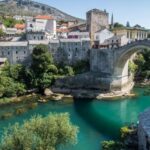
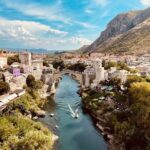
REVIEW · MOSTAR
Walking tour in Old Town Mostar
Book on GetYourGuide →Operated by AMAT TRAVEL · Bookable on GetYourGuide
Old Town Mostar walks like a time machine. You get the Ottoman-era story in a tight route, with stops that make the city’s Crooked Bridge area feel instantly understandable, even if you only have an hour. One thing to consider: timing can run a little short depending on how fast the group moves, so wear comfy shoes and don’t bank on a long linger at every corner.
I like that this is a true guided walk, not a self-tour with an audio app. With Andrej (the local guide, 38, leading in English and French), you’re walking through a compact slice of Mostar that dates back to the 15th century and connects changes in power to changes in architecture. If you need deep coverage of every era, including conflict and post-war life, you may want to ask about that directly.
Key highlights you’ll actually feel on the ground
- A 15th-century Old Town route that was Mostar’s main artisanal and commercial area under Ottoman rule
- Crooked Bridge + Nezir-Aga Mosque as your quick orientation into Ottoman-era Mostar
- Tannery and hammam stops that shift you from monuments to daily work and bathing culture
- Halebija tower area where you’ll spot the oldest coffeehouse and a traditional divers club
- Kujundžiluk (jewelers street) after you cross the Old Bridge
- Mehmed Pasha Koski Mosque courtyard to end the walk with a strong architectural finish
In This Review
- Walking Old Town Mostar from the 15th Century to the Ottoman Exit
- Meeting Andrej at the Western Entrance (Next to the Tobacco Kiosk)
- Crooked Bridge and Nezir-Aga Mosque: your Ottoman orientation in one sweep
- From Tannery to Hammam: how work and daily life shape the streets
- Halebija Tower Area: oldest coffee and the divers club
- Crossing the Old Bridge, then Kujundžiluk’s jewelers street
- Ending at Mehmed Pasha Koski Mosque courtyard: a clean architectural finish
- Price and value: is $58 per group worth it?
- What to watch for during the walk (so you don’t miss the good stuff)
- Who should book this Mostar Old Town walk?
- A quick reality check: guides, timing, and what to do if your start slips
- Should you book the Walking Tour in Old Town Mostar?
- FAQ
- How long is the walking tour in Old Town Mostar?
- Where do we meet the guide?
- Who is the guide and what languages are offered?
- Is the tour wheelchair accessible?
- What’s included in the price?
- What isn’t included?
Walking Old Town Mostar from the 15th Century to the Ottoman Exit
This is the kind of tour where you start noticing patterns fast. Mostar’s Old Town here was the main artisanal and commercial zone in Ottoman times, lasting until the 1870s, and the guide ties that timeline to what you see around you. The route is built to keep you moving, so the city’s “layer cake” of rulership shows up without you needing a history degree.
You’ll get the Ottoman story first, but the tour also aims to explain architecture under different rulers. That matters because in Mostar, buildings aren’t just buildings. They’re clues—how people lived, worked, worshiped, and traded shifts with power, and you’ll see those shifts through key landmarks.
The pacing is compact. The tour is listed at about 1 hour, and you should expect roughly 1 hour and 15 minutes in real life. That’s a good length for first-timers who want context before wandering on your own.
Meeting Andrej at the Western Entrance (Next to the Tobacco Kiosk)
Your meeting point is the entrance to the Old Town from the western side, right next to a tobacco shop (kiosk). That small detail matters more than it sounds, because once you’re inside the Old Town maze, it’s easy to waste time if you’re not lined up with the start.
Andrej is the guide. He’s 38, and he leads in both English and French, so you can follow along in your preferred language without that awkward translation lag that sometimes happens on tours like this.
One practical tip: arrive a few minutes early. I’m glad to see this is a private-group format, but even the best guides can get delayed if people are late or the group has to find the meeting point. Starting on time keeps the whole route feeling smooth.
You can also read our reviews of more walking tours in Mostar
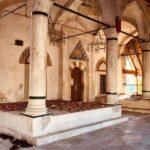
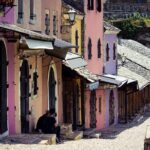
Crooked Bridge and Nezir-Aga Mosque: your Ottoman orientation in one sweep
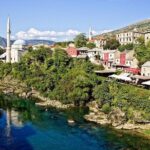
The tour kicks off from the western approach into the old town, and it begins with two landmarks that do a lot of work for your understanding: the Crooked Bridge and Nezir-Aga Mosque.
This is a smart pairing. The bridge gives you the city’s dramatic engineering and its role as a connector, while the mosque brings in religious architecture and layout. Together, they help you build a mental map: Mostar under Ottoman rule isn’t just about one monument. It’s a network—movement across water, plus the structures people organized daily life around.
As you listen, focus on what changes from place to place: how the buildings sit, how streets funnel you toward views, and how the architecture reads differently depending on what power was in control. Even without getting every date, you’ll start seeing why the guide keeps moving you from one “type” of structure to another.
From Tannery to Hammam: how work and daily life shape the streets
After the mosque area, you’ll pass by a tannery and a hammam. These stops are easy to overlook if you’re only hunting for postcard views, but they’re exactly what makes this walk feel grounded.
A tannery signals production and trade—skills, materials, and labor tied to the city’s commercial role. A hammam shifts the focus to routine life: bathing, social interaction, and the cultural importance of shared spaces. These aren’t just side stops. They’re how you connect architecture to real human rhythms.
What I like about this section is that it pushes you past the “look at this old building” mode. You start asking better questions: Who used these spaces? What does the surrounding street pattern suggest about movement and access?
Halebija Tower Area: oldest coffee and the divers club
As you get closer to the Old Bridge, the tour takes you to a cluster of very specific cultural markers: an older coffee spot (the oldest coffee in the city) and a traditional divers club, both tied to the tower Halebija.
This is one of the most interesting parts of the route because it’s not just architecture—it’s social identity. Coffeehouses and diving traditions point to how people organized leisure and work, and they also show how traditions can remain recognizable even as the city changes around them.
Here’s what to do: don’t rush the listening. Stand for a moment, look at how the tower area controls the view line, and then take in how the surrounding points connect back toward the Old Bridge. The guide is essentially using these sites to connect daily culture to the bigger centerpiece of the city.
If you’re a coffee person, this is where you’ll feel the temptation for the optional traditional Bosnian coffee. Just know the coffee itself isn’t included in the tour price—treat it as a choose-your-own-add-on after you see what the guide points out.
Crossing the Old Bridge, then Kujundžiluk’s jewelers street
Next comes the moment you came for: crossing the Old Bridge. Once you’re over, you’ll step into Kujundžiluk, known as the street of jewelers.
This segment is valuable because it changes your perspective. Before the crossing, you’ve been getting oriented to monuments and daily-life sites. After the crossing, the focus becomes commerce and craft—how trade shapes streets, storefronts, and pedestrian flow.
Kujundžiluk is also a strong place to practice “reading the city.” Pay attention to how the street funnels you, how buildings frame the path, and how the commercial theme matches the city’s role during Ottoman rule as the main artisanal and commercial area. Even if you don’t buy anything, you’ll understand why this street mattered.
If you want photos, this is your time window. Keep moving, but don’t sprint. The bridge plus jeweler street combination gives you both dramatic structure and human-scale details.


Ending at Mehmed Pasha Koski Mosque courtyard: a clean architectural finish
The tour concludes in the courtyard of Mehmed Pasha Koski Mosque.
This ending location works well. You get to finish with a space that feels purpose-built, rather than ending mid-street. Courtyards naturally slow you down, and that’s helpful after you’ve been walking through bridge approaches and commercial lanes.
The guide also uses this final stop to wrap up the architecture-under-different-rulings theme. You’ll come away with a clearer sense of how the city’s rulers left physical fingerprints in the built environment—even when the city keeps changing over time.
One more practical note: the tour does not include mosque entrances. If you want to go inside, you’ll need to treat that as an optional add-on and follow whatever access rules are in place that day.
Price and value: is $58 per group worth it?
The tour price is listed at $58 per group up to 43, and it’s a private group with a licensed local guide. That pricing setup can be good value if you’re splitting with friends or family, because you’re not paying an inflated per-person fee for a short orientation walk.
You’re also getting human guidance. A licensed local guide matters here because Mostar’s Old Town is dense and easy to misread. The guide’s job is to connect what you see—bridges, mosques, craft areas, and tower landmarks—to why those things mattered across centuries.
Now the fair caution: some people expect a tour to run longer than it does. One issue that comes up is that the tour may finish sooner than the expectation if the group is quick or the schedule gets tight. You can protect yourself by arriving on time, keeping up, and treating this as an efficient orientation rather than a slow, museum-like experience.
What to watch for during the walk (so you don’t miss the good stuff)
This tour is strongest when you lean into the guide’s structure: Ottoman-era landmarks, then daily-life spaces, then commerce streets, then a final architectural landing.
To get the most out of it, do these three things:
- Keep your eyes on transitions: how you move from bridge views to mosque settings to work/culture stops.
- Ask one follow-up question whenever something sounds like it belongs to daily life, not just architecture.
- If you care about a specific modern angle, bring it up early. The tour is built around older eras, but you can still steer the conversation.
Also remember: this is a walking tour. Comfortable shoes are not optional. You’re covering enough ground that you’ll notice your legs if you’re in anything too stiff or too slippery.
And one limitation to note clearly: this tour is not suitable for wheelchair users.
Who should book this Mostar Old Town walk?
This walk is ideal if you:
- Want a first pass through Old Town Mostar that helps you understand what you’re looking at
- Enjoy guided storytelling that connects landmarks to centuries and architecture under different rulers
- Prefer short tours with a clear route rather than free-form wandering
You might look for something else if you:
- Need a longer, slower tour that spends extra time at each stop
- Want guaranteed coverage of every modern historical topic with deep time spent on 20th-century conflict and aftermath (this walk is oriented more toward older eras)
- Expect mosque interiors included as part of the base experience
If your goal is to get your bearings fast and then explore independently, this fits nicely.
A quick reality check: guides, timing, and what to do if your start slips
This is a private-group tour, which usually means things feel more controlled. Still, practical issues happen. I’d suggest you give yourself a small buffer: show up early, and if you don’t see Andrej at the kiosk meeting point, check in rather than waiting silently.
The best way to protect your experience is to treat the listed duration as a planning guideline, not a promise. Think of it as a focused introduction with an efficient route. If everything runs smoothly, it will feel perfectly timed. If it doesn’t, you’ll still get the key sites without losing your whole day.
Should you book the Walking Tour in Old Town Mostar?
I’d book it if you want a guided walk that turns Old Town Mostar from a collection of landmarks into a route with meaning. The standout for me is the structure: Crooked Bridge and Nezir-Aga Mosque, then tannery and hammam, then the Halebija tower area with the city’s oldest coffee and a traditional divers club, and finally the Old Bridge, Kujundžiluk jewelers street, and Mehmed Pasha Koski Mosque courtyard. That sequence gives you both monument power and everyday life context.
Skip it or plan alternative options if you’re expecting mosque entrances and long stops to linger inside, or if you’re looking for a deep, modern-history-focused narrative. In that case, use this tour as orientation, then add something else for the era you most care about.
If you can arrive early, walk at a steady pace, and ask a question or two, you’ll leave with a city map in your head—and you’ll know what you’re looking at when you return for a second look.
FAQ
How long is the walking tour in Old Town Mostar?
It’s listed as 1 hour, with an approximate real-world completion time of around 1 hour and 15 minutes.
Where do we meet the guide?
You meet at the entrance to the Old Town from the western side, next to a tobacco shop (kiosk).
Who is the guide and what languages are offered?
The guide is Andrej. The tour is offered in English and French.
Is the tour wheelchair accessible?
No. This walking tour is not suitable for wheelchair users.
What’s included in the price?
The tour includes a licensed local guide in English and French.
What isn’t included?
Not included are optional activities like boat rides, entrances to mosques, and traditional Bosnian coffee, plus food and drinks.