REVIEW · SARAJEVO
From Sarajevo: Jajce, Travnik, Pliva Lake, & Watermills Tour
Book on GetYourGuide →Operated by Dream Balkans Travel · Bookable on GetYourGuide
Jajce hits you fast, then keeps going. This day trip mixes medieval towns, Ottoman-to–Austrian-Hungarian change, and Central Bosnia nature in one packed route.
I especially loved the Jajce Waterfall at 21 meters high, where the mist actually reaches you, plus the chance to see the town from above in the citadel area. The other standout for me was the Travnik Fortress and its views over the old town.
One thing to plan for: it’s a long day with a moderate amount of walking, plus some uphill and underground areas, and the tour runs rain or shine.
In This Review
- Key Points Worth Packing For
- From Sarajevo to Central Bosnia: what this day trip really delivers
- Getting the story of Sarajevo right: Ottoman, Austro-Hungarian, Yugoslav
- Jajce from the inside: medieval town energy, citadel views, and catacombs
- The 21-meter Jajce Waterfall: why it feels bigger in real life
- Watermills at Mlincici: the slow walk and the smell of flour
- Travnik’s Old Town and fortress: clock towers plus Ottoman power
- Plava Voda, medresa, mosques, and Mlincici: the stops that flesh out the region
- Lunch, pacing, and the walking reality (what to wear)
- Price and value: what $88 covers and what you pay on top
- Guides make or break this kind of day trip
- Who should book this tour (and who should consider another plan)
- Should you book Dream Balkans Travel’s Sarajevo to Jajce, Travnik, Pliva Lake, and Watermills Tour?
- FAQ
- How long is the tour?
- Where do you get picked up in Sarajevo?
- What languages are the guides?
- Is lunch included in the tour price?
- Are entrance fees included?
- Is the tour walking-heavy?
- Does the tour run in bad weather?
- Is there a skip-the-ticket-line benefit?
Key Points Worth Packing For
- Local guides who make history personal: I’ve seen Ahmed, Gigi, Adis, Kenan, Adnan, and others turn facts into stories from their own families and region.
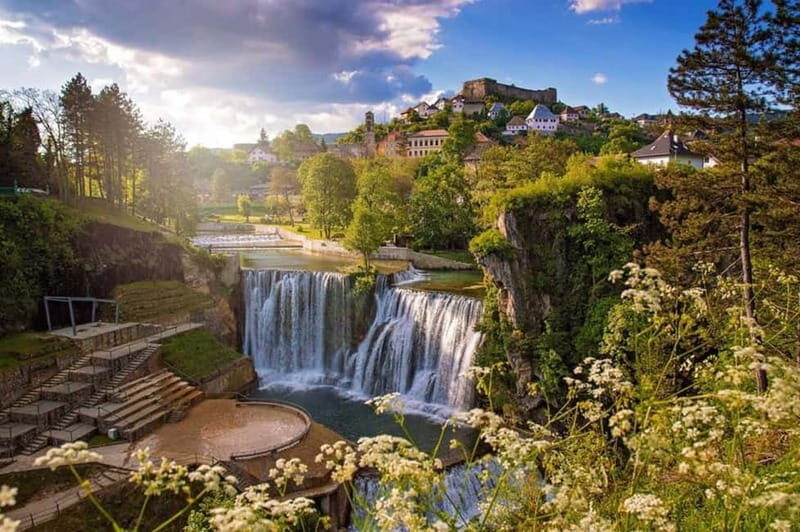
- The Jajce Waterfall is the main event: you’ll get close enough to feel the spray, and the surrounding river meeting point is unforgettable.
- Underground catacombs add real mood: you’ll visit the Catacombs Underground Church in Jajce, linked to the Hrvatnić family.
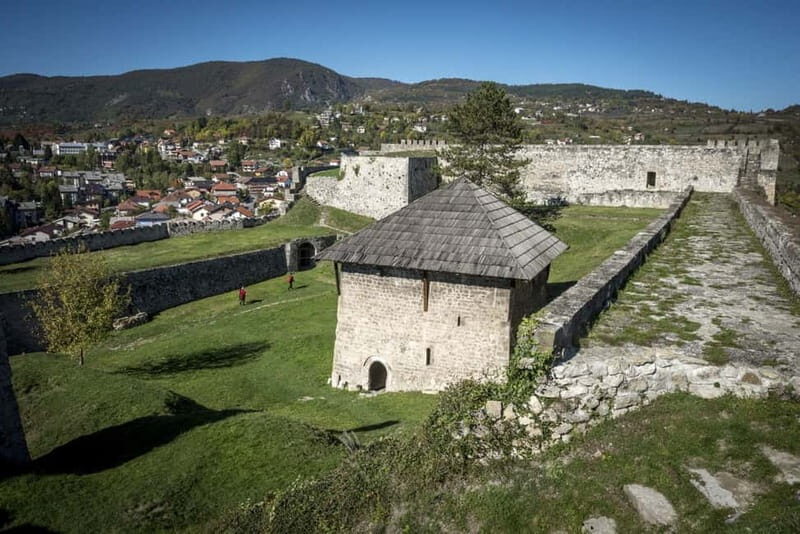
- Fortresses give you the big-picture views: both Jajce and Travnik fortress areas are built for panoramas.
- Watermills feel hands-on: you can walk around the mills at Mlincici and nearby watermill clusters, with a chance to buy freshly milled flour from a mill still in operation.
- You’ll see more than big landmarks: stops like Plava Voda, medresa and mosque exteriors, and Pliva Lake viewpoints help you understand the region beyond postcard shots.
From Sarajevo to Central Bosnia: what this day trip really delivers
This is the kind of trip that’s hard to replicate on your own in a single day. You start in Sarajevo, then work your way through Central Bosnia’s mix of towns, faiths, and eras—without worrying about timing buses, connections, or navigation.
The route is built for variety. You’ll trade city history for fortress views, then swap stone streets for waterfall spray and river scenery. It’s not just sightseeing. The day gives you context for why Sarajevo grew the way it did, and why towns like Jajce and Travnik ended up with such layered identities.
You’ll also get a practical rhythm. There are guided segments, plus photo stops and short walks, so the day doesn’t feel like one long lecture. And because it’s run with small groups or private options, you often get more flexibility than on a huge coach tour.
You can also read our reviews of more tours and experiences in Sarajevo.
- Fall of Yugoslavia, Sarajevo War Tour with Tunnel of Hope Museum and Frontlines
★ 5.0 · 1,314 reviews

Getting the story of Sarajevo right: Ottoman, Austro-Hungarian, Yugoslav
The morning is set up to help you read Sarajevo as more than a single city vibe. On the drive out, you’ll pass through parts of Sarajevo that reflect different periods—Ottoman, Austrian-Hungarian, and Yugoslav influences. The goal is simple: you’ll get your bearings fast, so later stops make more sense.
Why I like this approach: when you only focus on landmarks inside Sarajevo, it’s easy to treat history like isolated “things to see.” Here, the drive is used like a moving timeline. It helps you understand how the city developed instead of just where it ended up.
If you like history but don’t want your day hijacked by nonstop dates, this works well. The route gives you enough guidance to connect dots, and then you’re off to places where you can look, walk, and feel the differences.
Jajce from the inside: medieval town energy, citadel views, and catacombs
Jajce is the first big “wow” town, and it earns it. The place has that lived-in medieval atmosphere, with national monuments and a layout that makes walking feel purposeful rather than random.
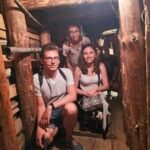
You’ll spend time with a guided walkthrough, including the underground catacombs area tied to the Hrvatnić family. Seeing an underground burial space shifts the tone immediately. Above ground, the town feels like a normal destination. Underground, it feels like you’re stepping into a different kind of time.
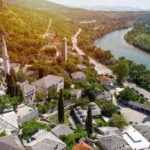
After that, you go back above ground to the citadel area for panoramic views. This is one of those classic fortress setups where you can finally see what the builders were thinking: how control, travel routes, and defense all relate to the terrain. It’s also the best kind of photo moment—not because it’s staged, but because the geography basically does the work for you.
Practical note: underground spaces and steep bits mean you’ll want decent grip shoes. If it’s cold or wet, take extra care on slick steps.
The 21-meter Jajce Waterfall: why it feels bigger in real life
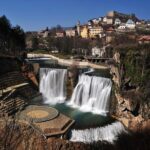
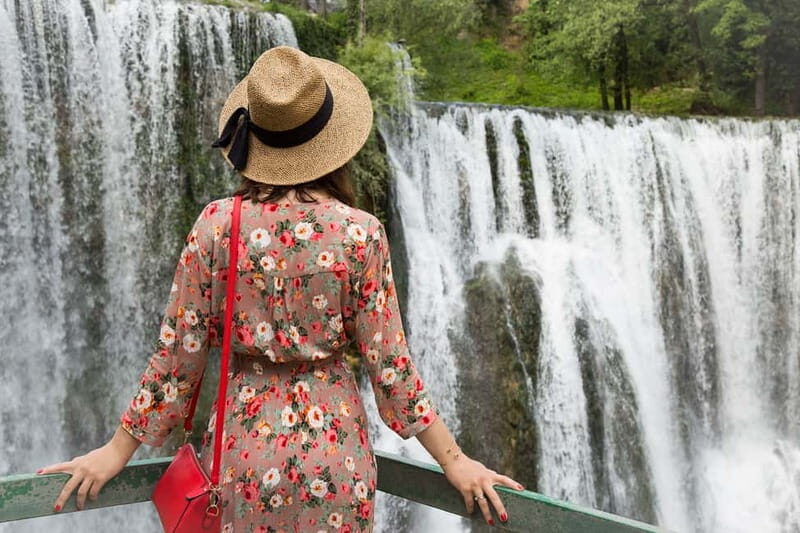
Then comes the highlight most people remember later: the Jajce Waterfall. It drops about 21 meters and joins two rivers. Up close, it’s not a distant scenic view. It’s a force of weather.
The guided portion helps you understand what you’re looking at, but honestly, the atmosphere does most of the convincing. When water hits stone, everything around it changes—light, sound, even how your clothes feel. One review described getting slightly drenched, and that tracks with what you should expect.
If you’re the type who likes nature but also wants a reason for the spot, this one works. It’s not just pretty. You’re seeing a physical centerpiece that shaped how people settled and moved through the area.
Watermills at Mlincici: the slow walk and the smell of flour
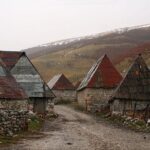
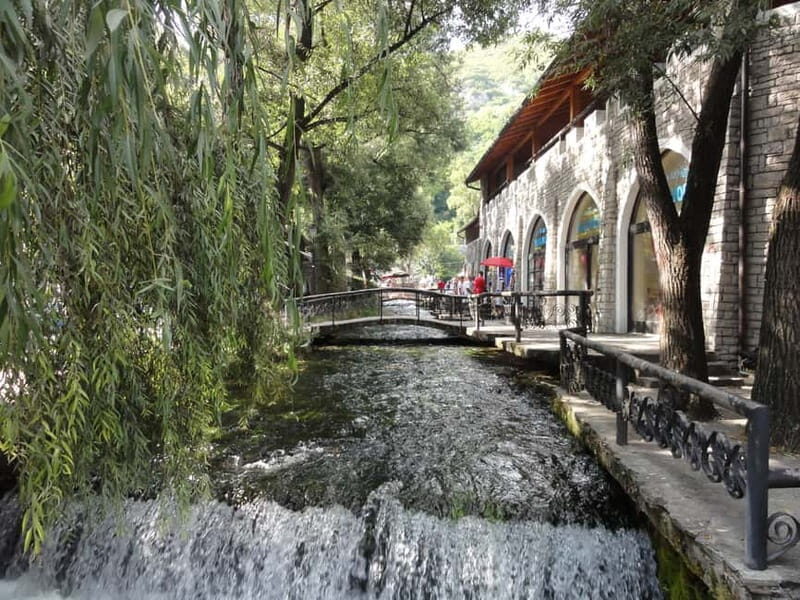
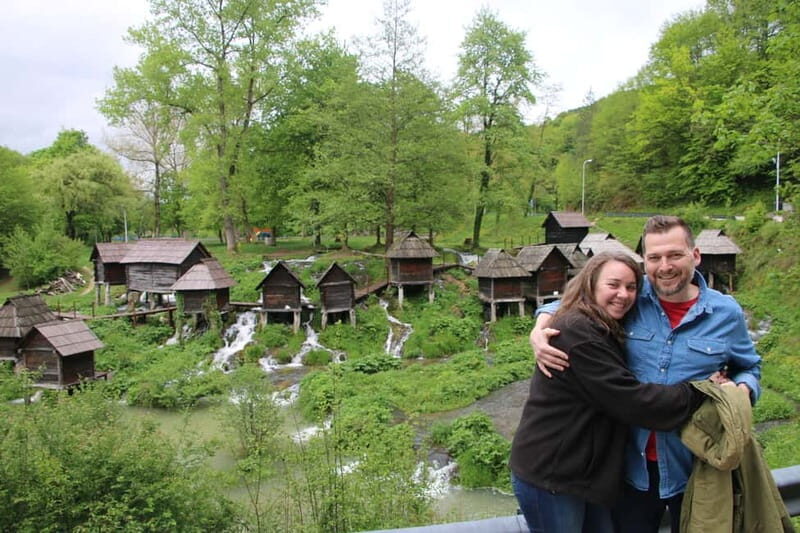
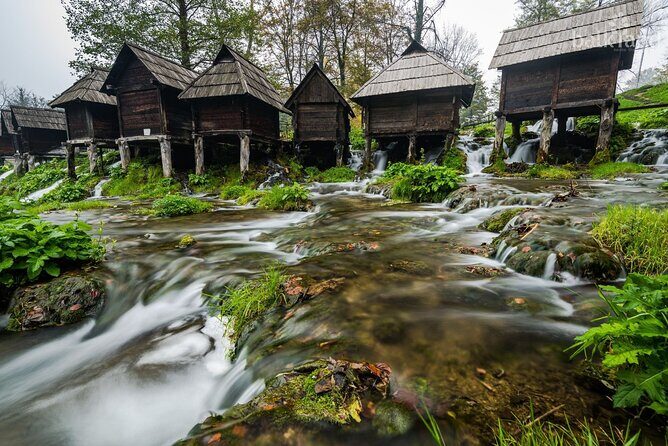
After the waterfall, the day turns gentler. You’ll head to the cluster of historical watermills near Jajce, and later also to Mlincici, with time to walk around and take it in.
This part is special because it feels practical, not just historic. One of the coolest details: you can even purchase freshly-milled flour from a mill that’s still in operation. That tiny act turns the story into something you take home, even if all you do is carry a bag for your kitchen.
Why I think this stop punches above its weight: it’s the rare historical place where you’re allowed to linger. You’re not just looking at ruins behind glass. You’re near working water energy and the small everyday systems that grew around it.
Weather tip: if it’s rainy, the streams can look extra dramatic. Just keep an eye on slippery ground and wear layers you don’t mind getting damp.

Travnik’s Old Town and fortress: clock towers plus Ottoman power
Once lunch is handled, the day continues to Travnik’s 15th-century Old Town. Travnik is a great contrast to Jajce: both are historic, but they don’t feel like copies.
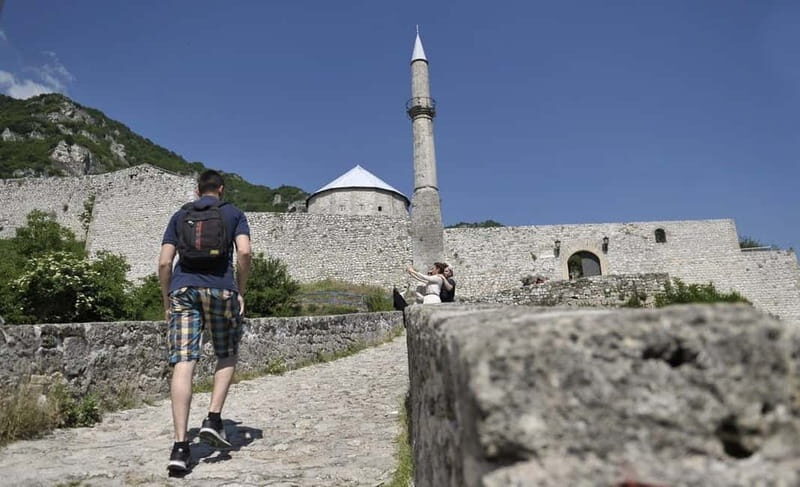
In the town center, you’ll see two clock towers, which are a quick visual marker that helps you orient yourself. Then you’ll visit the Travnik Fortress, once used by Ottoman viziers (governors) as a seat of power. That detail matters. You’re not just walking around an old wall—you’re seeing the setting of governance and strategy.
From the fortress area, the views help you connect the dots again. Fortresses are built to control movement, spot threats, and hold routes. Travnik’s position makes the landscape feel like it has logic.
If you like when a tour stops explain why a building exists, this one is strong. The fortress gives you both an architectural experience and a bigger historical frame.
Plava Voda, medresa, mosques, and Mlincici: the stops that flesh out the region
Not every stop on this tour is a single headline attraction. Some are photo stops and short walks, but they do important storytelling work.
You’ll make time around:
- Plava Voda for photos and a guided look
- Elci Ibrahim-pasina medresa area for a photo stop and walking segment
- Ornamented Mosque for photo stop and walk/visit
- Dzamija Esme Sultanije as a guided walk/pass-by moment
- A church area stop: Crkva Svete Marije Sa Tornjem Svetog Luke (guided walk/pass-by)
- Pliva Lake viewpoint for photos and a guided viewpoint visit
The value here is balance. After fortress walls and a waterfall, it’s easy to feel like you’re just hopping between tourist sites. These smaller stops help you see how daily life and belief systems shaped the streetscape.
You’ll also notice the tour rhythm keeps moving, but not chaotically. It’s more like a guided circuit: walk a bit, pause for photos, learn the context, then move on.
Lunch, pacing, and the walking reality (what to wear)
You’ll have a meal break at a local restaurant. Lunch isn’t included in the tour price, but you’ll be offered the chance to refuel while the route is still fresh in your mind.
Earlier, you’ll also get a traditional Bosnian sandwich (vegetarian option available) and a bottle of water. I like that combo because it keeps you from spending the entire day thinking about food. It’s also useful if the day runs long or weather changes slow things down.
Pacing: it’s a full day, and some of the walking is uphill and underground. You’ll want:
- Comfortable shoes with grip
- A light rain layer or umbrella you can actually use while walking
- A warm layer if you’re going in colder months
- A phone or camera strap (because you’ll be switching between waterfall mist, viewpoints, and fortress climbs)
The tour runs rain or shine, so you should plan for wet surfaces. The guides seem to handle it well, but your best move is to show up ready.
Price and value: what $88 covers and what you pay on top
At $88 per person for a roughly 10-hour day, the value is in the structure: hotel pickup/drop-off, air-conditioned transport, and an English-speaking live guide who connects the places into a single story.
What’s included:
- English-speaking guide
- Air-conditioned transportation
- Traditional Bosnian sandwich (vegetarian option available)
- Bottle of water
- Hotel pickup and drop-off
- Skip the ticket line
What’s not included:
- Entrance fees to Jajce Castle, Jajce Catacombs, and Travnik Fortress
- Lunch
So the real budgeting question is entrance fees plus lunch. If you’re the type who likes to know your totals up front, I’d set aside extra cash/credit just for those sites and your lunch stop.
Why skip-the-ticket-line matters: even when entrances cost extra, it’s still a time-saver. In a schedule this packed, that time can become more walking time or just fewer stress moments.
Guides make or break this kind of day trip
This tour’s reviews consistently point to one thing: the guide experience. I’ve seen names like Ahmed, Gigi, Adis, Kenan, and Adnan show up in glowing notes, and the common thread is how personal and clear the history feels.
Some guides bring family anecdotes. Others tailor the day. One example: a group noted their guide helped include a boat ride on Pliva Lake, and they still kept enough free time to explore on their own.
That’s what you should look for when booking. The route is strong, but the guide is the translator between what you see and what it means.
Who should book this tour (and who should consider another plan)
Book this if you want:
- A structured day outside Sarajevo
- Fortresses and panoramic viewpoints
- Waterfall time plus watermill walking
- A mix of guided explanations and free exploration
- A guide-led route that covers more ground than you’d manage independently
You might skip this if:
- You hate long days with frequent walking breaks (even if the walking is described as moderate)
- You’d rather do one place slowly instead of stacking Jajce and Travnik in the same day
- You’re expecting lunch to be included in the price (it isn’t)
Should you book Dream Balkans Travel’s Sarajevo to Jajce, Travnik, Pliva Lake, and Watermills Tour?
If you’re trying to squeeze real Central Bosnia into one day, I’d say yes—with smart expectations. The route gives you major natural drama (the waterfall), serious heritage (catacombs and fortresses), and hands-on cultural texture (watermills and the town stops).
My “yes” comes with one practical checklist:
- Plan for entrance fees at Jajce Castle, Jajce Catacombs, and Travnik Fortress
- Budget for lunch
- Wear grippy shoes for wet steps and uphill bits
- Bring a jacket even in mild weather, because waterfall mist is real
If those fit your style, this is a strong pick. You’ll leave with photos, stories, and a clearer sense of how this region’s layers connect—from Sarajevo’s eras to Travnik’s Ottoman-era power and Jajce’s dramatic water.
FAQ
How long is the tour?
It’s listed as a 10-hour experience.
Where do you get picked up in Sarajevo?
Pickup is available from Sarajevo, with two location options: Skenderija and another pickup option based on the tour’s listed options.
What languages are the guides?
The tour is available with an English-speaking live guide, and Bosnian is also listed.
Is lunch included in the tour price?
No. Lunch is not included.
Are entrance fees included?
No. Entrance fees to Jajce Castle, Jajce Catacombs, and Travnik Fortress are not included.
Is the tour walking-heavy?
It includes a moderate amount of walking, and the itinerary includes uphill and underground segments.
Does the tour run in bad weather?
Yes. It takes place rain or shine.
Is there a skip-the-ticket-line benefit?
Yes. The tour notes skip the ticket line for the included ticketing process.
You Might Also Enjoy
More Tours in Sarajevo
- Fall of Yugoslavia, Sarajevo War Tour with Tunnel of Hope Museum and Frontlines
★ 5.0 · 1,314 reviews
More Tour Reviews in Sarajevo
- Fall of Yugoslavia, Sarajevo War Tour with Tunnel of Hope Museum and Frontlines
★ 5.0 · 1,314 reviews