REVIEW · SARAJEVO
Travnik, Jajce & Pliva Lakes Day Tour From Sarajevo (fees Incl.)
Book on Viator →Operated by Funky Tours · Bookable on Viator
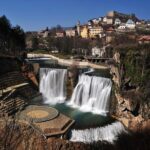
One day, three towns, and jaw-dropping water. I love the Jajce waterfall right in the city center, and I love that entrance fees are included so you can spend the day seeing instead of calculating. The trade-off: it’s a full 11-hour schedule with lots of walking stops, so bring solid shoes and expect some time pressure.
This is set up as a smooth, small-group outing, with pickup from central Sarajevo (often around the old town/Baščaršija area). You’ll be in good hands with an English-speaking guide, and the group size is capped at 8, which helps the stories land and keeps questions moving.
Guides such as Emir, Adnan, Christian, Ajla, Dadu, and Saudnic are reported as friendly, history-forward, and especially patient for families. That’s important here, because the day crosses kings, wartime politics, underground worship spaces, and mosque visits without feeling like separate random stops.
In This Review
- Key highlights to look forward to
- Entering the route: why this day tour works from Sarajevo
- The scenic drive toward Jajce: central Bosnia in motion
- Jajce Waterfall and the city-center walk: medieval power meets daily life
- The AVNOJ Museum stop: why Jajce mattered in 1943
- Catacombs of Jajce: underground faith and ducal last residence
- Fortress of Jajce and Medvjed Kula: defense, power, and names with stories
- Pliva Lakes: the reset button after fortress and catacombs
- Mlinčići (the watermills): pastoral scenery with Austro-Hungarian roots
- Travnik Old Town and the fort: the second cultural chapter
- Sarena Dzamija (painted mosque): a closing moment of faith and art
- Pace, comfort, and what to pack for this 11-hour circuit
- Price and value: does $96.12 feel fair?
- Who should book this tour (and who should skip it)
- Should you book? My quick call
- FAQ
- What time does the tour start and when do I return?
- Is pickup available from Sarajevo?
- What language is the tour offered in?
- How much does the tour cost?
- Are entrance fees included?
- Are food and drinks included?
- How long is the tour?
- What is the cancellation policy?
- Is the group size small?
Key highlights to look forward to
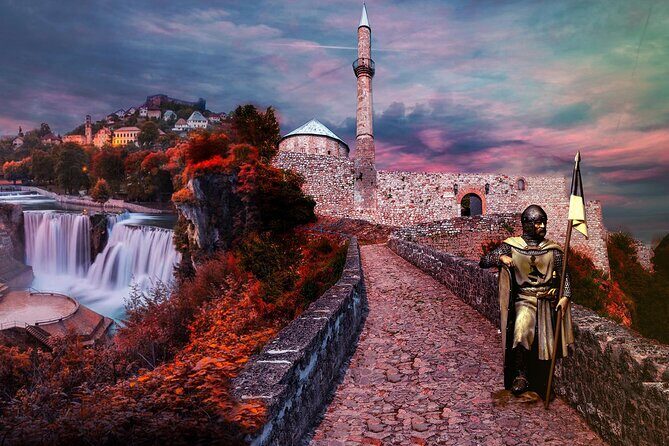
- Jajce waterfall in the middle of town plus a walk through the historic core
- Catacombs + fortress sights where you can actually feel the medieval setting
- Pliva Lakes time for calm-water views, photos, and optional paddling (if you’re into it)
- Travnik Old Town and fort views paired with a real sense of local culture
- Entrance fees handled for key museums and monuments so your budget stays predictable
- Small group pace that makes questions and photo stops less chaotic
Entering the route: why this day tour works from Sarajevo
This tour is built for people who want more than one “pretty town” photo. You’re not just driving out and back—you’re moving through Bosnia’s layers, from medieval royal power, to WWII-era political decisions, to Ottoman-era faith sites, and then finishing with the calm, green-blue mood of the Pliva lakes.
You’re also getting practical value. The price includes multiple admission fees tied to the main stops. That matters on a day like this, because if you had to pay everything yourself, the total can creep up fast while you’re already trying to keep the day organized.
It starts early, around 8:00 am, and you’re back around 8:00 pm. That is a long day, but it’s also why you get a real cross-section of the region instead of only one town. If your vacation style is slow, this might feel packed. If you like seeing a lot and then processing it later over dinner, it fits nicely.
You can also read our reviews of more tours and experiences in Sarajevo.
- Fall of Yugoslavia, Sarajevo War Tour with Tunnel of Hope Museum and Frontlines
★ 5.0 · 1,314 reviews
The scenic drive toward Jajce: central Bosnia in motion
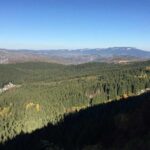
The morning ride takes you through central Bosnia, passing by Visoko and the valley tied to the Bosnian Pyramids story (it notes that this can be arranged, but it’s recommended in a 2-day package due to time limits). As you head toward Jajce, you travel along the flows of the rivers Bosna and Lasva and especially past the canyon of Vrbas.
This part is worth paying attention to because it explains the geography behind the towns. Bosnia’s power centers weren’t random—they grew where movement, water, and defensible terrain made sense. Even without a stop, the drive gives you that “why here?” context before you start walking in Jajce.
Tip: if you’re sensitive to car time, bring a light layer. Mountain-valley weather changes can catch you off guard.
Jajce Waterfall and the city-center walk: medieval power meets daily life
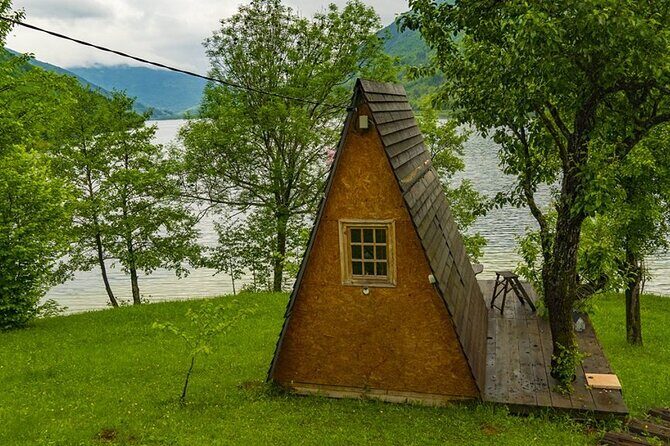
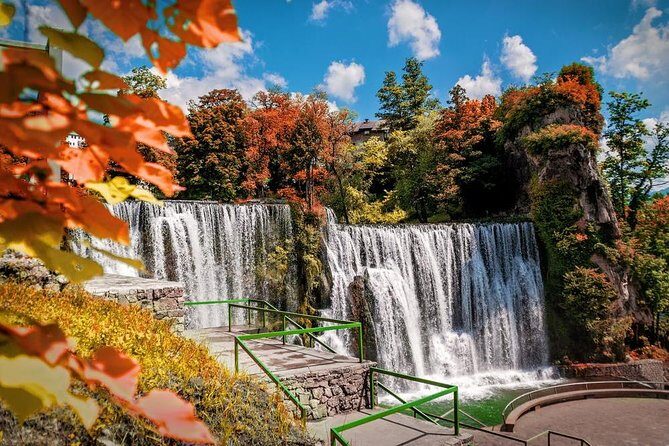
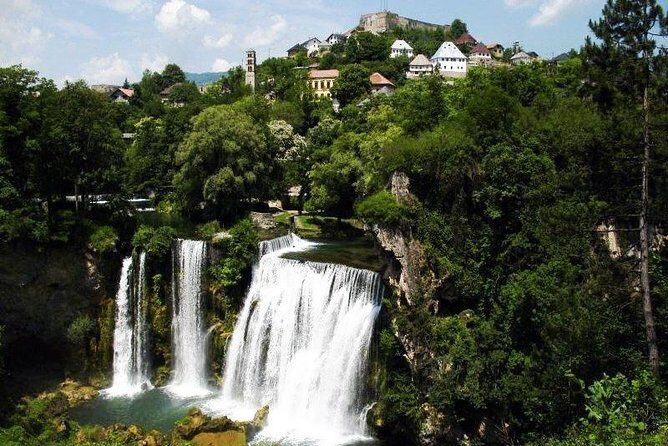
Jajce is where the day turns visual. The first big hit is Pliva Waterfalls, described as one of the most beautiful waterfalls in the world and notable for being placed in the city center. That alone is a strong reason to come. It’s not a remote viewpoint you reach after a long hike—you see it as part of the town’s street life.
After that, you’re set up for a guided walking tour through key Jajce sights, with about 2 hours in the city. You’ll see the Jajce Citadel (fortress), the Museum tied to AVNOJ’s second session, Medvjed Kula, the Tower of St. Luke, plus catacombs. It’s a lot packed into a walk, but the guide’s job is to connect the dots so the stops don’t feel like a checklist.
What I like about this approach is that the day mixes “wow” with “why.” You get the scenery first, then the guide turns it into history you can actually picture—who held power, what changed, and what people built to protect or worship.
The AVNOJ Museum stop: why Jajce mattered in 1943
One of the most interesting stops is the Museum of the II Session of AVNOJ. This was held in Jajce on November 29, 1943, and the outcome is described as the foundation of SFR Yugoslavia. The tour also frames the Jajce-born Yugoslavia as the socialist counterpart to the royal residence from the Middle Ages—basically, the same kind of place used for a new era.
You’ll spend around 20 minutes here. That’s not a long museum visit, so don’t expect to read every label like it’s a semester. But it’s enough time to understand the big arc: what was decided, what it meant politically, and why a building in Jajce became part of Yugoslav state-making memory.
A practical note: since the museum had damage during the 1992–1995 war and storerooms were plundered, you might find certain exhibits feel more “historical record” than “museum perfection.” For many people, that makes it even more real.
Catacombs of Jajce: underground faith and ducal last residence
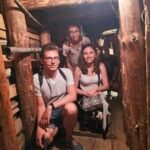
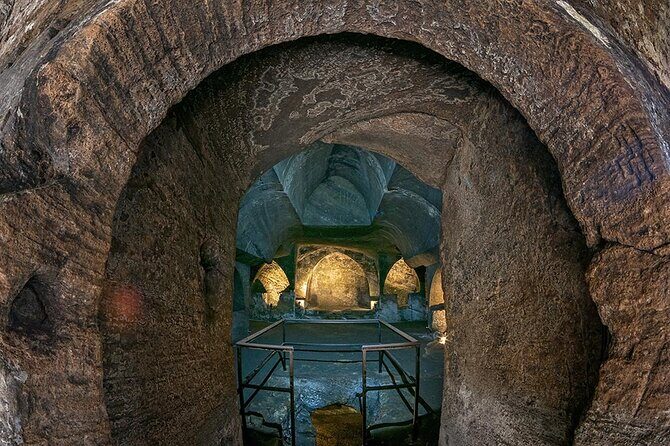
Then you go underground. The Catacomb of Jajce is an underground church/crypt inside the city walls, carved into solid rock about 6 meters under the earth. The building order is linked to Hrvoje Vukčić—Hrvatinić, with the catacombs described as part of his last residence, linked to the ducal family.
You’re given about 15 minutes. Again, this is a quick hit, but it’s the kind of place that makes time feel shorter because the setting is so unusual. If you like architecture, sacred spaces, or just oddball medieval engineering, this is a highlight.
Consideration: it’s underground, so plan for cooler temperatures and bring a steady pace. If you dislike tight spaces, this stop may feel more intense than the open-air fortress areas.

Fortress of Jajce and Medvjed Kula: defense, power, and names with stories
You’ll visit the Jajce fortress for about 20 minutes. The fort is described as the main stronghold of the medieval defense system, built between the 13th and early 14th centuries. Later, when the royal court moved into Jajce, a palace was built within the fortress.
There’s also a detail worth knowing before you arrive: Hrvoje Vukčić is named as the most famous ruler tied to Jajce at the turn of the 14th and 15th centuries, and the fortress includes a “royal portal” opened around the 15th century. Even if you only catch portions of the details, the guide’s storytelling helps you “see” how the place worked.
Nearby is Medvjed Kula (Bear Tower), with about 10 minutes. It’s described in Romanesque style, and its name is linked to wall thickness (walls reaching between 4.5 and 6 meters). There’s also a mythical story that it was a place where bears fed on captives and convicts, held there—dark folklore that gives the tower its nickname.
Also included in this block is the Tower of St. Luke, said to be the bell tower of the Gothic church of Holy Mary. It’s described as the only surviving medieval tower in the continental part of the Balkans, with height listed around 23.15 meters, built in the first half of the 15th century. The relics of St. Luke the Evangelist were brought to Jajce by Queen Mara Jelena as her dowry, which is one of those “history-as-objects” facts that sticks.
Pliva Lakes: the reset button after fortress and catacombs
Then the day shifts from stones to water. You’ll head to the Large and Small Pliva Lakes for about 1 hour, plus an extra stop at Mlinčići near Small Pliva for around 15 minutes.
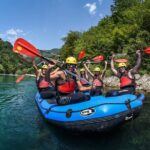
This is where the tour lets your brain rest. After Jajce’s tunnels and towers, Pliva gives you open air, photos, and options: walking around, swimming, fishing, or just lingering on the beaches. The notes also mention kayaking or canoeing on still waters, and that world and European championship kayaking and canoeing happened here in 1963.
Even if you don’t paddle, you’ll probably still enjoy the lake time. It’s one of the easiest parts to “do at your own speed” because you’re not in a museum clock. If you’re the type who likes taking photos of water reflections and just watching people, this is your window.
Quick reality check: 1 hour isn’t enough to make this a full lake day. It’s more like a taste—so if you’re a major lake person, you might want a longer stay later.
Mlinčići (the watermills): pastoral scenery with Austro-Hungarian roots
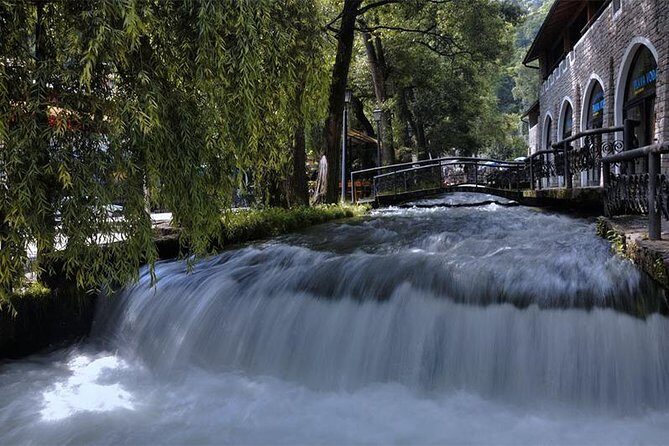
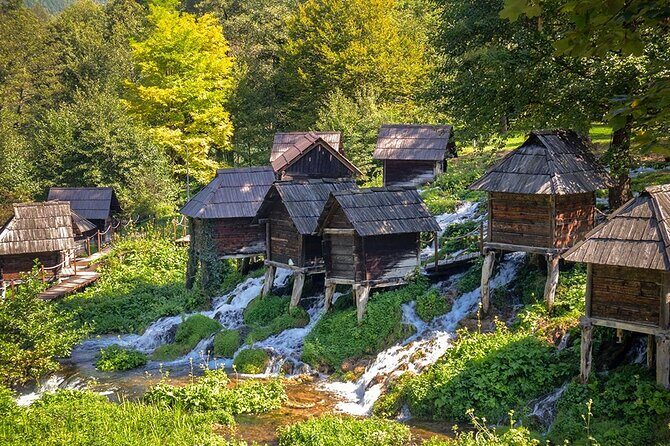
Mlinčići is described as the mills area at Small Pliva Lake, with the popular name “Mlinčići.” The tour frames it as a site that once had strong tourist value tied to the Austrian-Hungarian monarchy.
You get about 15 minutes here, with “easy walks” and photo time. This is one of those stops where the payoff is partly in the pace. You’ll see enough to understand why it’s considered picturesque, but the tour doesn’t try to overstuff the moment.
Tip: if it’s rainy, dress for it. A wet day doesn’t ruin the mills, but it can make the ground slippery around paths.
Travnik Old Town and the fort: the second cultural chapter
After the lakes, you switch towns again—this time to Travnik, which is framed as a vizier town and as the birthplace of Nobel-winning author Ivo Andrić. You’ll spend about 1 hour in the Old Town area (Stari Grad / Old Town / Travnik).
The tour also points out local food, especially cevapi and white cheese. That’s a useful heads-up because it helps you decide what to snack on during your Travnik time instead of wandering into a random menu just because it’s close.
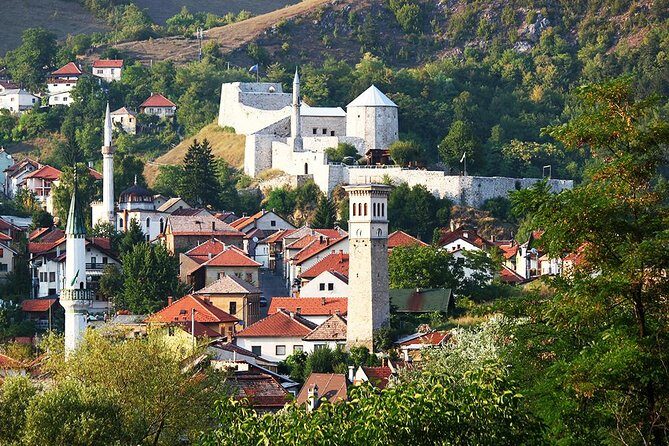
Then comes the Old Fort in Travnik (Tvrdava Stari grad) for about 30 minutes. It’s described as one of the most beautiful and best preserved medieval fortified buildings in Bosnia, with later historical periods leaving their marks. If you enjoyed Jajce’s fortress feel, Travnik gives you a different angle on defense and urban shape, without repeating the same exact story.
Sarena Dzamija (painted mosque): a closing moment of faith and art
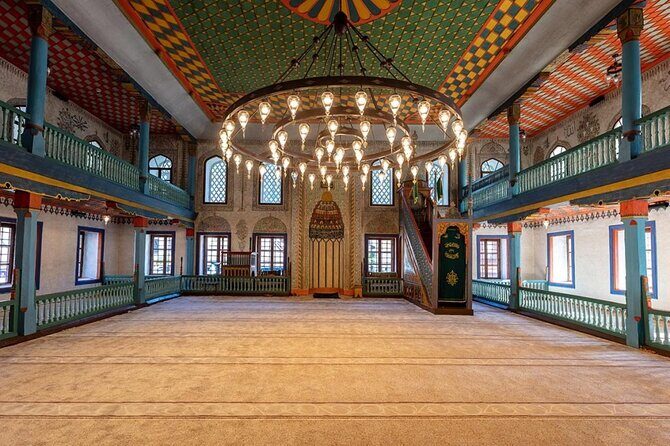
The last sightseeing stop is Sarena Dzamija, described as likely the most beautiful mosque in all Bosnia and Herzegovina. It’s a 20-minute stop, so you’re not sitting down for a long visit. Think of it as a respectful look, quick context from the guide, and time to absorb what makes the mosque special.
This is also a good time to remember that Bosnia’s heritage is layered. Earlier stops included royal residences, war-era political framing, and medieval underground worship spaces. Ending with an active religious art site helps the day feel complete rather than stuck in one era.
Practical note: since it’s a mosque visit, plan for modest dress. The tour doesn’t spell out clothing rules, but in general you’ll want to look prepared.
Pace, comfort, and what to pack for this 11-hour circuit
This day is scheduled tightly: quick transfers, short timed visits, and then more walking. The upside is you see a lot. The downside is you won’t have hours of free wandering in every place.
A couple of things I’d plan around:
- Walking time adds up. Citadels, catacombs areas, and forts aren’t flat museum floors. Wear supportive shoes.
- Bring a small bag of basics. Water bottles are not included, and food/drinks are not part of the price.
- If you travel with kids or need frequent breaks, ask early. One account highlighted a guide being patient with children and slower needs, and there’s also a suggestion that more frequent toilet stops would help. That tells me it’s worth being proactive about breaks.
- Rain happens. One account specifically referenced rain and still called the day rich and interesting, which usually means you’ll still get to see the sights—it’s just your footwear choice that matters more.
If your ideal day is one big site plus long downtime, you might find this too much. If your ideal day includes movement, stories, and photos at multiple “wow moments,” you’ll likely enjoy the pace.
Price and value: does $96.12 feel fair?
At $96.12 per person for an ~11-hour day tour, the biggest value lever is that key entrance fees are included. You’ll see included admissions listed for:
- Jajce Catacombs (2.5 EUR per person)
- Jajce Fort (2.5 EUR per person)
- Jajce AVNOJ Museum (1 EUR per person)
- Travnik Fort (2 EUR per person)
So you’re not paying extra on arrival for the main paid sights tied to the route. Add in the guided walking segments, plus transportation from Sarajevo, and it starts to make sense as a “pay once, then relax into the day” format.
Is it cheap? Not really. But it’s also not a barebones taxi transfer. You’re getting a full itinerary with organized stops, included entry where it matters most, and an English-speaking guide.
Food and drinks are not included, so budget a bit for lunch. The tour does include breaks, and one review mentioned a guide taking people to a best cevapi place in his home town, but that isn’t part of the stated inclusions—so treat it as a bonus, not a guarantee.
Who should book this tour (and who should skip it)
Book it if:
- You want Jajce and Travnik in one day, plus Pliva Lakes
- You like guided context—especially political and faith-related history mixed with scenery
- You prefer a small group (max 8) over a big coach swarm
- You’d rather pay a single price than track multiple admissions
Skip it if:
- You hate tight schedules and prefer long, slow museum time
- You’re not comfortable with lots of walking and moving between multiple stops
- You want food handled for you—since meals and drinks aren’t included
Should you book? My quick call
I’d book this if your priority is variety: waterfalls, fortifications, underground catacombs, a museum tied to AVNOJ’s 1943 session, and then water at Pliva Lakes—plus Travnik’s old town and fortified views. The included admissions help the value feel concrete, and the small group setup makes it easier to ask questions (especially if you’re traveling with kids and need patience around pace).
FAQ
What time does the tour start and when do I return?
The tour starts at 8:00 am in Sarajevo and returns at around 8:00 pm.
Is pickup available from Sarajevo?
Yes. You can meet the team at the Funky Tours office in the old town (Bascarsija), and complimentary pickup and drop-off services are available depending on your chosen starting and ending locations in Sarajevo.
What language is the tour offered in?
The tour is offered in English.
How much does the tour cost?
The price is listed as $96.12 per person.
Are entrance fees included?
Yes. Key admissions are included for Jajce Catacombs, Jajce Fort, Jajce AVNOJ Museum, and Travnik Fort.
Are food and drinks included?
No. Food and drinks are not included.
How long is the tour?
It lasts about 11 hours.
What is the cancellation policy?
You can cancel for a full refund up to 24 hours in advance of the experience’s start time. Cancellations less than 24 hours before start time are not refunded.
Is the group size small?
Yes. The tour has a maximum of 8 travelers.
You Might Also Enjoy
More Tours in Sarajevo
- Fall of Yugoslavia, Sarajevo War Tour with Tunnel of Hope Museum and Frontlines
★ 5.0 · 1,314 reviews
More Tour Reviews in Sarajevo
- Fall of Yugoslavia, Sarajevo War Tour with Tunnel of Hope Museum and Frontlines
★ 5.0 · 1,314 reviews