REVIEW · SARAJEVO
Sarajevo: Srebrenica Genocide Study Tour with War Veteran
Book on GetYourGuide →Operated by Dream Balkans Travel · Bookable on GetYourGuide
Srebrenica is not a normal day trip. This 10-hour small-group tour from Sarajevo, led by war veteran guides such as Adis or Adnan, takes you to Potocari’s battery-factory museum and memorial complex, then onward to Srebrenica’s quiet, post-war reality. I love the War veteran guide approach that mixes facts with lived experience, and I love that Potocari Memorial centers the victim stories, including recorded testimonies gathered by a local journalist. The only real drawback is that it’s emotionally heavy, so plan your evening carefully and don’t book if you’re looking for something light.
You’ll start at 8 AM outside Info Bosnia Tourist Information Center on Ferhadija (right by Sarajevo Meeting of Cultures), then ride about 2.5 hours each way through mountainous, desolate country. Expect small-group attention, an air-conditioned vehicle, and a tour sandwich included, with lunch in Srebrenica because dining options are limited there—plus an end time of around 6 PM back in Sarajevo.
In This Review
- Key things I’d circle before you book
- Why this Sarajevo to Srebrenica tour hits differently
- The 8 AM start and the road to Potocari: Kravica, Bratunac, and the context you gain en route
- Potocari’s battery factory museum: where the former Dutch battalion site becomes a learning space
- The memorial room and Potocari cemetery: recorded voices, cemetery silence, and the part that’s hard to look at
- Srebrenica town stop: a ghost city visit that helps you understand the aftermath
- Price and logistics: is $80 good value for this kind of day?
- Who should book this Srebrenica trip, and who should think twice
- Tips to make the day feel smoother (and more respectful)
- Should you book this Sarajevo to Srebrenica genocide study tour?
- FAQ
- How long is the Sarajevo to Srebrenica tour?
- Where does the tour start in Sarajevo?
- What does the tour cost?
- Is the tour guided in English?
- What’s included in the price?
- Is lunch and drinks included?
Key things I’d circle before you book
- War veteran-led context that stays factual, even when the stories come from real life
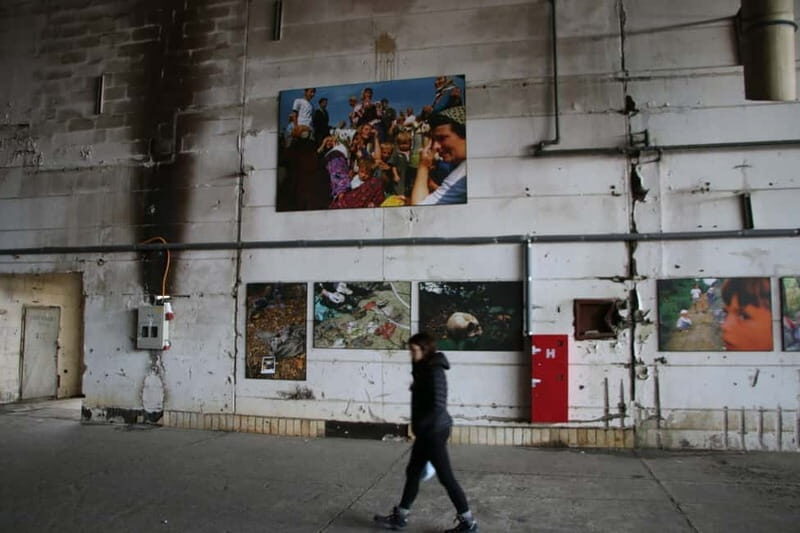
- Potocari’s battery factory museum inside the former UN (Dutch battalion) headquarters
- Memorial room with recorded victim accounts and a separate section devoted to those responsible
- A cemetery that keeps growing, currently listing 6,575 identified victims
- Srebrenica town time to connect history with the modern landscape you can still see today
Why this Sarajevo to Srebrenica tour hits differently
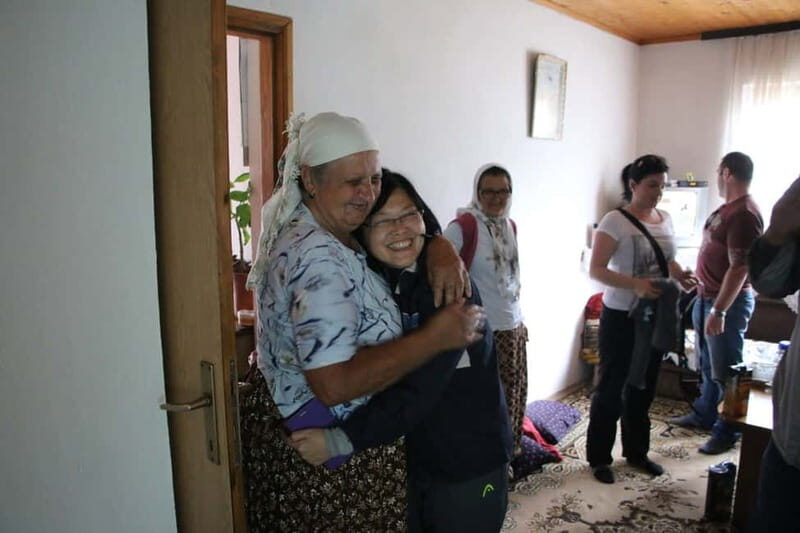
If you’re coming to Bosnia looking for a box-tick history lesson, this day will gently refuse. This trip is built around one thing: understanding what happened in Srebrenica through the people who lived nearby or directly through the war years. That means your guide doesn’t just point at dates on a timeline. They connect the road, the buildings, and the choices people had to make under siege conditions.
I also like how the experience doesn’t turn into storytelling for its own sake. The guides are described as careful with objectivity—sharing facts and context clearly—while still speaking from first-hand knowledge. That balance matters, because when the subject is genocide, you want accuracy as much as emotion. It’s not just about feeling sad. You’re meant to leave with a sharper understanding of how the Yugoslav Wars unfolded and how Srebrenica became the tragedy it is remembered for today.
One more detail I really appreciate is the structure inside Potocari itself. You don’t only do a museum and a quick walk. You spend time in a museum environment, then move to a memorial room focused on recorded stories, and then visit the cemetery where identified victims are laid to rest. That pacing helps your brain process what you’re seeing.
You can also read our reviews of more tours and experiences in Sarajevo.
- Fall of Yugoslavia, Sarajevo War Tour with Tunnel of Hope Museum and Frontlines
★ 5.0 · 1,314 reviews

The 8 AM start and the road to Potocari: Kravica, Bratunac, and the context you gain en route
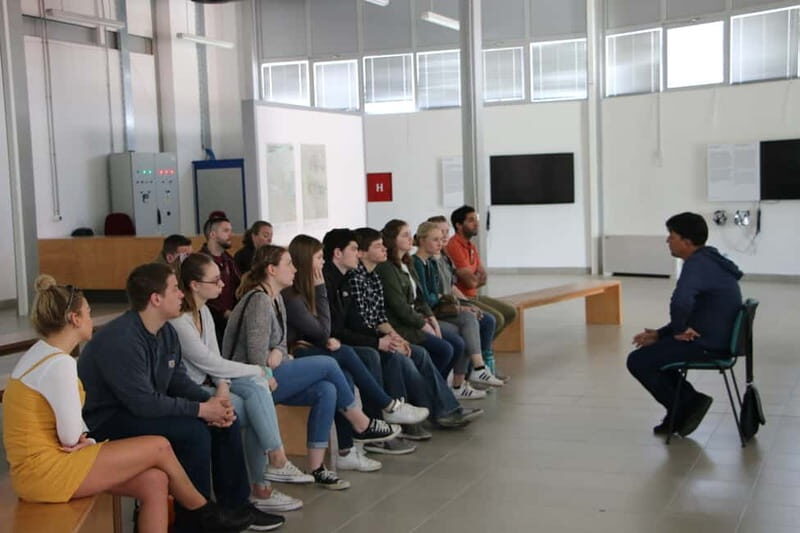
You leave Sarajevo early—8 AM—because the day needs room for real stops, not just window-shopping the way some day trips work. Your first base in Sarajevo is the Info Bosnia Tourist Information Center on Ferhadija, the main pedestrian street. If you’re staying outside the Old Town, pickup can be arranged, which is a nice touch if you don’t want to drag yourself across town before a long day.
Once you’re underway, you travel roughly 2.5 hours to Srebrenica area. The drive passes through Kravica and Bratunac, and the route itself sets the mood. The area is described as mountainous and desolate, and that’s not scenery for postcards. It’s the kind of terrain that shapes movement, vulnerability, and what communities could realistically protect.
As you ride, your guide starts placing the war into context—especially the Yugoslav conflict environment that fed into what happened in and around Srebrenica. You’ll likely hear how the larger breakdown of Yugoslavia fed chaos on the ground, and how Srebrenica’s position became both strategically important and tragically precarious.
This is also where you’ll notice the small-group advantage. With a group limited to 8, the conversation can stay focused. Questions you have along the way don’t need to wait until the end of the day when everyone is tired and the bus is ready to roll.
Potocari’s battery factory museum: where the former Dutch battalion site becomes a learning space
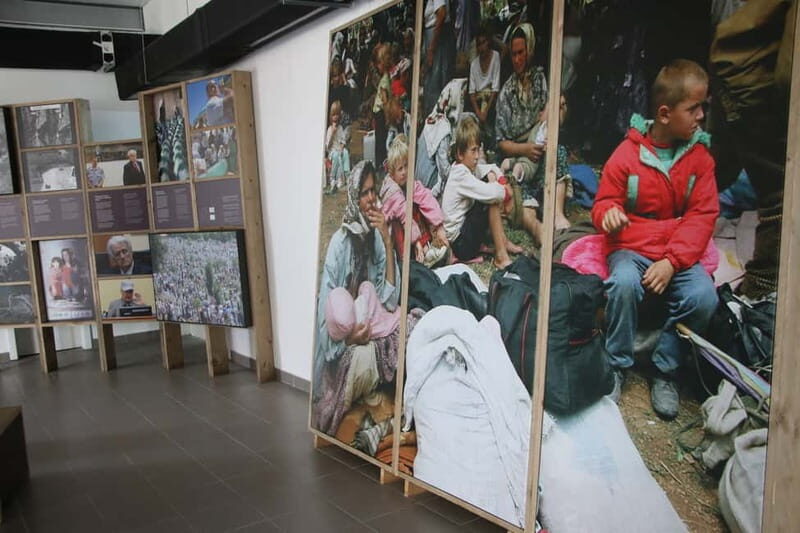
Your first major stop is in Potocari, at a battery factory complex used by UN forces during the war in Bosnia. In the war years, the Dutch battalion of the UN was housed there—an important detail, because it explains why this location became a focal point for what followed. Today, the site is home to the Museum of Srebrenica Genocide, described as one of the more modern museums in Bosnia and Herzegovina.
I’d call this museum the tour’s backbone. It’s where you get the why and the how in a structured way before you step into the more personal memorial spaces. You’ll meet the curator during your visit, and the tone shifts from general history to lived survival stories from people in the Srebrenica enclave. That curator interaction matters because it reinforces that this is not a generic exhibit. It’s a place run by people who understand the subject from close up.
Also, museum time here isn’t just about viewing panels. It’s about absorbing an environment designed to help you grasp the scale of what happened and what survival meant day to day. You’re not rushed straight through. The goal is comprehension—knowing what the system looked like, what the gaps were, and why so many people ended up where they ended up.
One practical note: museum visits can be mentally tiring. If you tend to burn out in galleries, take small pauses. Step out for a minute, refocus, then re-enter. This isn’t a place where you win by sprinting.
The memorial room and Potocari cemetery: recorded voices, cemetery silence, and the part that’s hard to look at
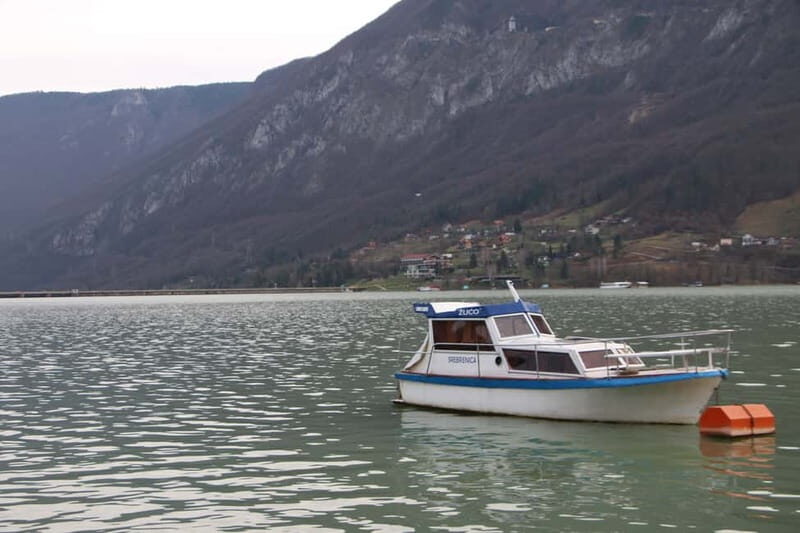
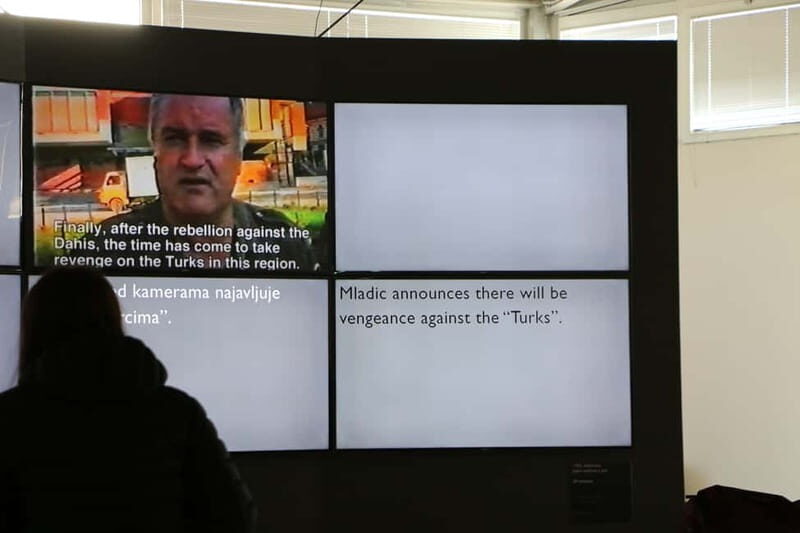
After the museum, you continue to the memorial room. This is where the tour shifts from learning to listening. Victim stories are presented through accounts recorded by a local journalist, so you’re hearing how people experienced those days—not just what happened to them in a report.
The room also includes a section dedicated to the people responsible for the massacre. That can be unsettling, but it’s important. It keeps the memory from turning into only grief. It insists on responsibility and on accurate remembrance.
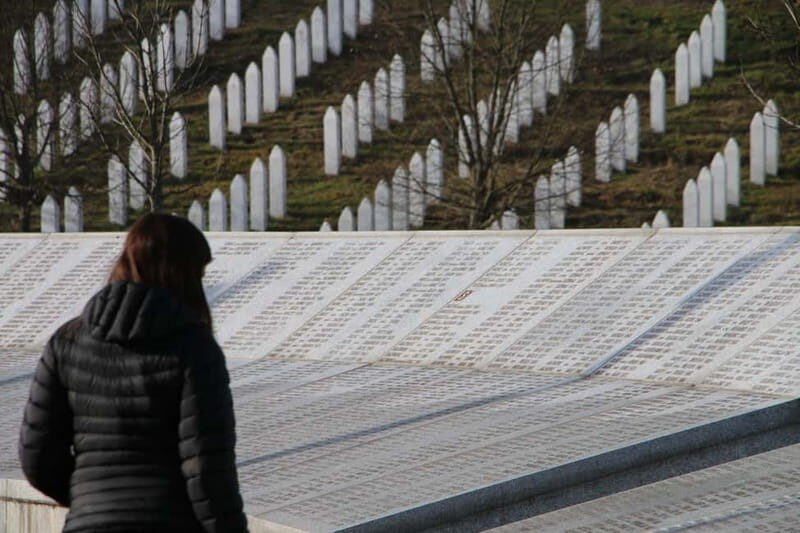
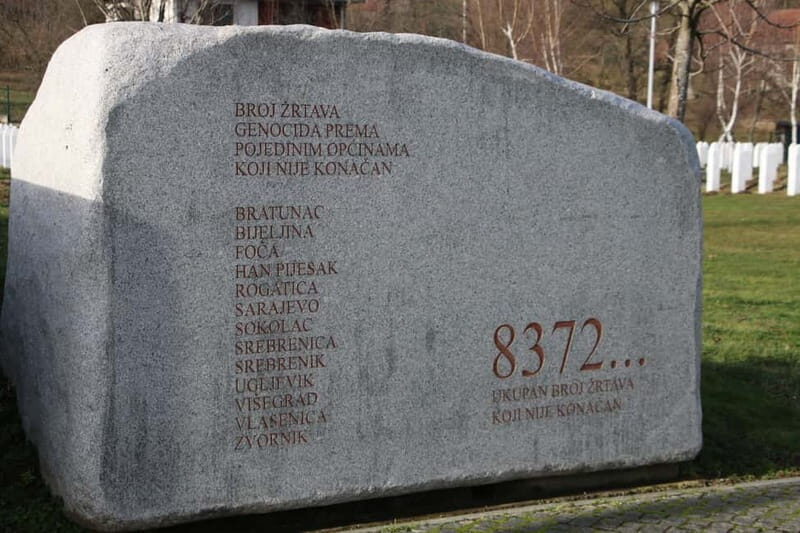
Then you move on to the cemetery within the memorial complex. This cemetery currently counts 6,575 identified victims, and the number increases each year as more victims are found and identified. That detail is not just a statistic—it’s a reminder that the work of remembrance isn’t finished. Even years later, identification continues, and families still wait for answers.
Walking through a cemetery tied to genocide is different from visiting a battlefield memorial. The atmosphere is still. It asks you to slow down. You won’t be treating this as another photo stop, and you shouldn’t. Give yourself the time your guide allows. If you need a moment, take it. If you want to stand quietly and read, do that too.
Srebrenica town stop: a ghost city visit that helps you understand the aftermath
Once you’ve finished Potocari, you head into the city of Srebrenica. This is a very important transition: the memorial spaces show what happened. The town stop helps you understand what came after.
Srebrenica is described as having once been an industrial leader and among the oldest settlements in the area—now often referred to as a ghost city. That contrast is jarring in person. It’s one thing to learn the timeline. It’s another to see a place that still looks like it’s carrying the pause after catastrophe.
You’ll have time for a photo stop, plus guided time in town. The route also includes viewpoints over Srebrenica, which gives you a sense of scale and geography. That matters because genocide isn’t only a moral failure—it’s also a product of terrain, distance, movement routes, and who had access to safety.
Lunch happens in Srebrenica. The reason is simple: there are not a lot of restaurants nearby. This is one of those small logistics details that actually affects the experience. You’re not trying to find food while rushing between sites. You’re getting a break inside the schedule.
And yes, the emotional weight stays with you here. The tour includes discussion of life in Srebrenica and ongoing coexistence, which helps explain why the memory work isn’t only about the past. People live in the area now. That coexistence isn’t automatic or easy, but it’s part of how the community continues.


Price and logistics: is $80 good value for this kind of day?
At $80 per person for a 10-hour day, this tour can be a strong value—mainly because what you’re buying isn’t just transport. You’re paying for access to the Potocari experience with a guide who brings first-hand context, plus structured time at the museum, memorial room, cemetery, and town.
A lot of day trips feel interchangeable: sit on a bus, see a few stops, and leave. This one is different because the guide’s war involvement shapes how explanations land. People also note that the guides handle questions and keep a factual tone while still sharing personal experience. That’s rare. It’s what turns a visit into learning instead of sightseeing.
Logistics are also handled in practical ways:
- Small group size limited to 8 keeps attention from getting diluted
- Air-conditioned transport makes the long day manageable
- Pickup and drop-off are available, which matters when you’re starting early at 8 AM
- You skip the ticket line at the main sites, so you spend more time where it counts
Food-wise, you get a sandwich included for the tour—traditional Bosnian sausage, with vegetarian/vegan options if you request it. Food and drinks aren’t otherwise included unless specified, so you’ll want to plan for whatever you’ll have at lunch.
One last value point: the day ends around 6 PM. That gives you back your evening in Sarajevo without turning the trip into an overnight marathon.
Who should book this Srebrenica trip, and who should think twice

This is for you if you want to understand Srebrenica beyond headlines. If you’re the kind of person who reads the names in memorials, asks why certain events happened, and appreciates clear historical context, you’ll likely feel you got your money’s worth.
It’s also a good fit if you like learning from locals who can answer questions in a direct way. Guides such as Adis, Adnan, Senad, and Almir are specifically mentioned in guide experiences, and the common theme is patience and clear explanation—even when topics get very serious.
This might not be the right choice if you want a light, casual day out. The subject matter is heavy. Even with a respectful, well-managed format, you’ll feel it. If you know you struggle with emotionally intense content or you’re visiting with limited emotional bandwidth, you may want to skip this and choose a different Bosnia experience that matches your pace.
Tips to make the day feel smoother (and more respectful)
I recommend you show up ready to slow down. Bring a bottle of water for the ride if it helps you feel comfortable, and dress in layers. You’ll spend time outdoors around the memorial complex and the town viewpoint.
Mentally, give yourself permission to not absorb everything at once. The cemetery and memorial room do their own work on you. You don’t need to force every detail into your head in real time. If you take a short note for yourself after lunch, you’ll be able to process later in Sarajevo without rushing.
Finally, ask questions. This tour is designed for conversation. If something isn’t clear—about the conflict, the UN base role, or how Srebrenica fits into the broader Yugoslav Wars—your guide can likely answer in plain language.
Should you book this Sarajevo to Srebrenica genocide study tour?
Book this tour if you want a well-paced, small-group day that gives you both historical context and human-scale memorial time—with a war veteran guide and structured stops at Potocari’s museum, memorial room, cemetery, and Srebrenica town.
Skip it if you’re chasing a carefree sightseeing day, or if you know you can’t handle emotionally heavy topics right now. This is one of those experiences where respecting the subject matters more than collecting photos.
If you’re willing to take the day seriously and keep your schedule light afterward, this is a powerful, value-packed way to understand Srebrenica during your Sarajevo trip.
FAQ
How long is the Sarajevo to Srebrenica tour?
The tour runs about 10 hours, starting at 8 AM and returning to Sarajevo around 6 PM.
Where does the tour start in Sarajevo?
It starts at 8 AM in front of the Info Bosnia Tourist Information Center on Ferhadija, on the main pedestrian street near Sarajevo Meeting of Cultures. Pickup from other accommodation can be arranged if requested.
What does the tour cost?
The price is $80 per person.
Is the tour guided in English?
Yes. You’ll have a live tour guide in English.
What’s included in the price?
Included are a war veteran guide, transport in an air-conditioned car or minivan, a small-group tour (up to 8 participants), hotel pickup/drop-off if needed, and a sandwich during the tour. The tour also includes guided visits and time in Potocari and Srebrenica.
Is lunch and drinks included?
Lunch is taken in Srebrenica, but food and drinks are not included beyond the sandwich unless specified.
You Might Also Enjoy
More Tours in Sarajevo
- Fall of Yugoslavia, Sarajevo War Tour with Tunnel of Hope Museum and Frontlines
★ 5.0 · 1,314 reviews
More Tour Reviews in Sarajevo
- Fall of Yugoslavia, Sarajevo War Tour with Tunnel of Hope Museum and Frontlines
★ 5.0 · 1,314 reviews