REVIEW · SARAJEVO
From Sarajevo: Višegrad, Andrićgrad, Drvengrad & Šargan tour
Book on Viator →Operated by Meet Bosnia Travel · Bookable on Viator
A border-hopping heritage day can feel surprisingly smooth. I like how this trip stitches together Bosnia’s UNESCO bridge town and Serbia’s mountain rail views in about 10–12 hours, and I love that the driving is handled for you so you can just focus on the scenery. The possible drawback: it’s a fast pace, with short stop times—so if you want deep museum time, you may feel a bit rushed.
You start early (usually 8:00 a.m.) in Sarajevo, with a small group—max 7 people—and an English-speaking driver/guide. The tour also includes hotel pickup if you’re staying outside the old town area, which saves you from a scramble before departure.
Here’s the trade-off: you get a lot of variety—bridge, film-inspired towns, a monastery, and a mountain railway—but you pay extra for a couple of key entries and food. Think of it as a well-organized “greatest hits” day rather than a slow, relaxing getaway.
In This Review
- Key highlights that matter
- From Sarajevo to Višegrad: the trip’s whole value
- Mehmed Paša Sokolović Bridge: the UNESCO stop that sets the tone
- Andrićgrad: Kusturica’s film town meets the Bridge on the Drina
- Serbian mountain air: Mokra Gora and the Šargan Pass viewpoints
- Šarganska Eight: the optional train ride that people build a day around
- Drvengrad (Wooden Town) and Mećavnik: what you’re really paying for
- Dobrun Monastery (1343): the quiet, old-world reset
- Price and what’s actually included in the $80.46
- Guides make or break the experience: what stands out
- Who this tour is for (and who should consider something else)
- Should you book this Sarajevo to Višegrad–Andrićgrad–Drvengrad–Šargan day trip?
- FAQ
- What time does the tour start?
- Where is the pickup point in Sarajevo?
- Is hotel pickup included?
- How long is the tour?
- Is the Šargan Eight train ride included in the price?
- Are there entrance fees?
- Is food included?
Key highlights that matter
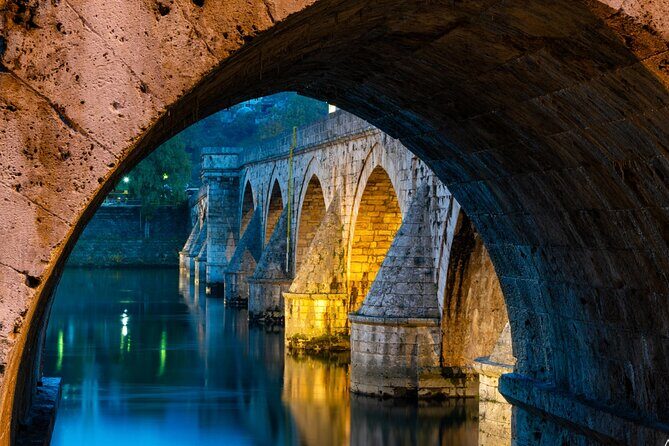
- Mehmed Paša Sokolović Bridge (UNESCO): completed in 1577, designed by Ottoman architect Mimar Sinan.
- Andrićgrad connection: built for Ivo Andrić’s Bridge on the Drina story and tied to Kusturica’s film location.
- Mokra Gora + Šargan Pass area views: mountain scenery in Serbia, not just a drive-through.
- Šarganska Eight railway (optional ride): narrow-gauge engineering and an open-air feel; ticket costs extra.
- Drvengrad / Mećavnik wooden village: real log cabins from the region, assembled on hillside bases.
- Dobrun Monastery: a calmer, older stop built in 1343.
From Sarajevo to Višegrad: the trip’s whole value
This is one of those day trips that works when you have limited time but you still want variety. You’ll spend your morning in eastern Bosnia around Višegrad, then you’ll cross into Serbia for the Šargan Pass / Mokra Gora area and the Šarganska Eight. Later, you loop back with another hilltop village stop and a monastery.
What makes it good value isn’t only the places—it’s the logistics. You’re in a car with an air-conditioned vehicle and a driver/guide, plus pickup is offered. That means you’re not piecing together separate buses or timing tickets on multiple days. It’s also booked well in advance on average, which is a sign people find the schedule practical.
You’ll want to treat it as an all-day plan. The stops are timed, not open-ended. That’s not a problem if you like momentum and quick context—but it’s worth knowing up front.
You can also read our reviews of more tours and experiences in Sarajevo.
- Fall of Yugoslavia, Sarajevo War Tour with Tunnel of Hope Museum and Frontlines
★ 5.0 · 1,314 reviews

Mehmed Paša Sokolović Bridge: the UNESCO stop that sets the tone
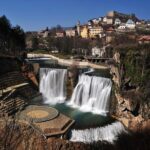
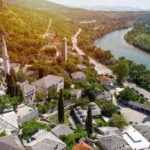
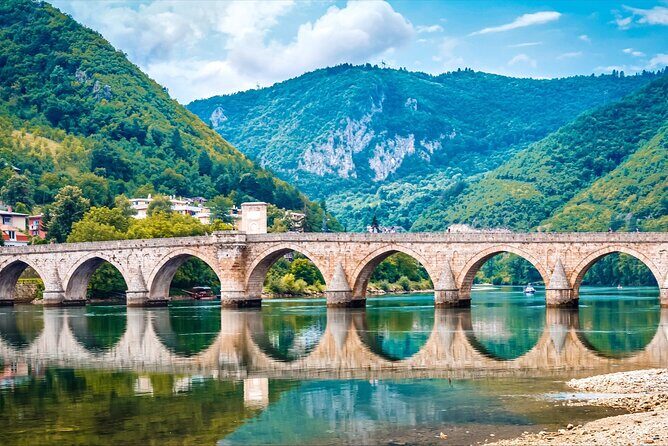
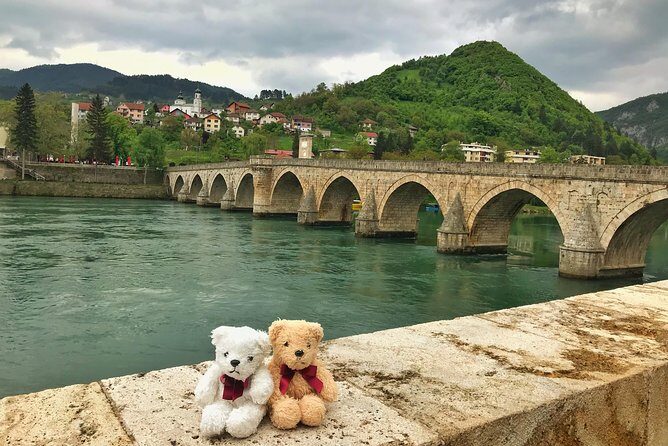
Your first major sight is the Mehmed Paša Sokolović Bridge in Višegrad over the Drina River. The tour gives you about 45 minutes here, and that’s a sensible window: enough time to appreciate the scale, take photos from the river area, and still move on.
This bridge is UNESCO-listed (added in 2007) and it was completed in 1577 under the order of Grand Vizier Mehmed Paša Sokolović. The architect was Mimar Sinan—a name you’ll likely recognize if you’ve seen other Ottoman-era engineering in the Balkans. The point isn’t trivia. It’s that the bridge is a physical link between eras and cultures, which becomes especially meaningful given how often Ivo Andrić’s work centers the bridge and the river.
Practical tip: try to time your photos and walking early in the stop. The bridge area is the “anchor” of the whole day. If you want to linger, this is the place where an extra few minutes feel worth it.
Andrićgrad: Kusturica’s film town meets the Bridge on the Drina
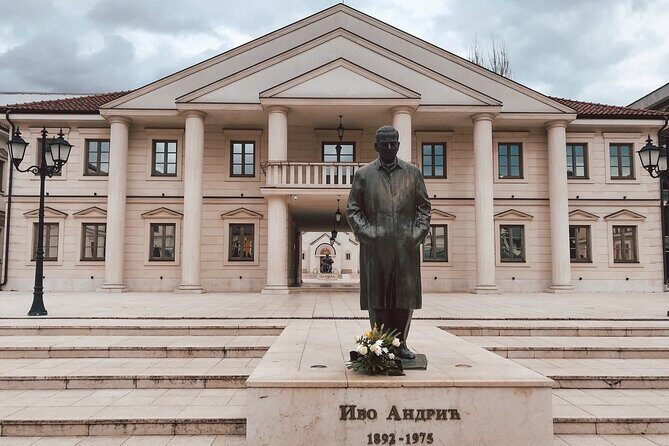
Right near the bridge is Andrićgrad, also UNESCO-linked through the bridge area. You’ll get about 30 minutes here, which is enough for a focused look but not enough to treat it like a full-day museum district.
Andrićgrad is built as a Kusturica project, and it stretches from the bridge up toward the confluence of the Rzav River. It was created from scratch after Drvengrad, and it functions as a location for Kusturica’s film Na Drini ćuprija, based on Ivo Andrić’s Nobel Prize-winning novel The Bridge on the Drina.
What I like about this stop is the way it turns a literary reference into something you can walk through. You’re not just reading about the Drina—you’re standing in a constructed setting that interprets the story.
Possible consideration: Andrićgrad is intentionally curated and themed. If you prefer more “ordinary” towns where daily life is the main event, you might find yourself wanting more time in the river-and-street reality of Višegrad instead. Still, for a short day plan, it’s a smart stop that adds story.
Serbian mountain air: Mokra Gora and the Šargan Pass viewpoints
After the Višegrad area, you’ll head toward Serbia’s Mokra Gora, a valley between the mountains of Tara and Zlatibor. The tour description highlights that Mokra Gora connects to the Šargan Pass, with natural links north toward Zborište (near Tara’s highest peak) and south toward Zlatibor.
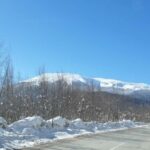
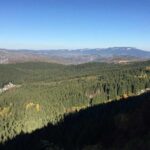
This part of the day is about views and geography. It’s also where the trip starts to feel different from a straight “urban highlights” day. You’ll pause for scenery in the national park area under the east foothills of Tara.
Don’t expect this to feel like a long hiking outing. Your time is still guided by a day-trip rhythm. But if you want at least one stretch where you can look out over big terrain instead of just monuments, this is the moment.
Šarganska Eight: the optional train ride that people build a day around
One of the biggest drawcards here is the Šargan Eight—the Šarganska Eight—a famous narrow-gauge railway section known for engineering that helps it climb quickly over a short distance. You’ll have about 30 minutes at Šargan / Mokra Gora.
Here’s the key detail: the train ride ticket is not included in the tour price, and it’s optional. Entrance is free, but if you want the ride, you’ll buy it on your own at 1,200 RSD (Serbian dinar) or 10€ per person (payable by card or cash, according to the tour info).
Why this optional piece matters: if you’re the kind of person who loves rail history, you might end up treating the train as the highlight. If you’re more interested in quick sightseeing and don’t want extra waiting, you can skip the ride and use your time for the viewing points and exhibits near the track.
A note on pacing and queues: the train involves entering a ticket area and getting in line, so it can swallow more time than you expect. I think the best strategy is simple: decide your priority when you arrive. If your camera is ready and you don’t mind a bit of waiting, it can be magical—especially if the weather turns. If you’re time-sensitive, you can still enjoy the open-air setup without committing to the ride.

Drvengrad (Wooden Town) and Mećavnik: what you’re really paying for
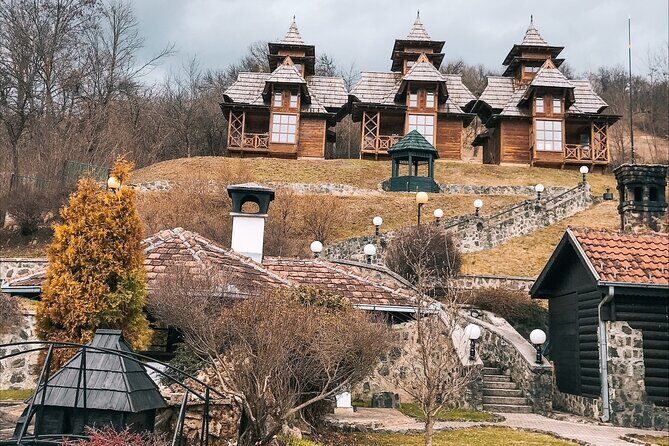
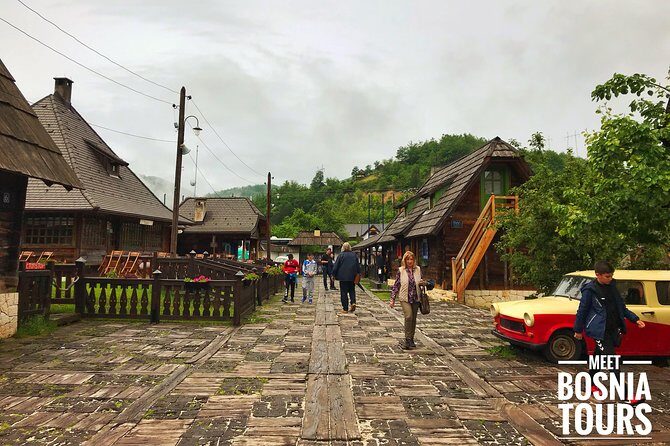
Next up is Drvengrad, also called Wooden Town, located at Mećavnik on a hill. You get 1 hour 30 minutes here, which is one of the more generous stop durations on the day—great for a relaxed pace and lunch time.
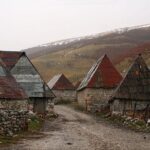
Drvengrad was created on initiative of Serbian filmmaker Emir Kusturica. The village uses authentic log cabins from the region transported to the site. The oldest of those cabins dates back about 90 years. Once moved, the buildings were placed on high stone bases, and cellars were built with hillside terrain in mind.
This is one of those “crafted place” experiences. It’s not a centuries-old village where people have always lived the same way. Instead, it’s an intentional build that tries to capture regional architecture and atmosphere.
So should you care? I think you should if you want a visual contrast after the bridge and the monastery. Drvengrad is also where many people choose to slow down because there’s typically space for lunch and wandering.
Possible drawback: if you’re expecting major historical complexity or museum-grade explanations, this might feel more like a themed environment. It can still be fun, but it’s worth aligning your expectations with the fact that it’s a deliberately constructed attraction.
Dobrun Monastery (1343): the quiet, old-world reset
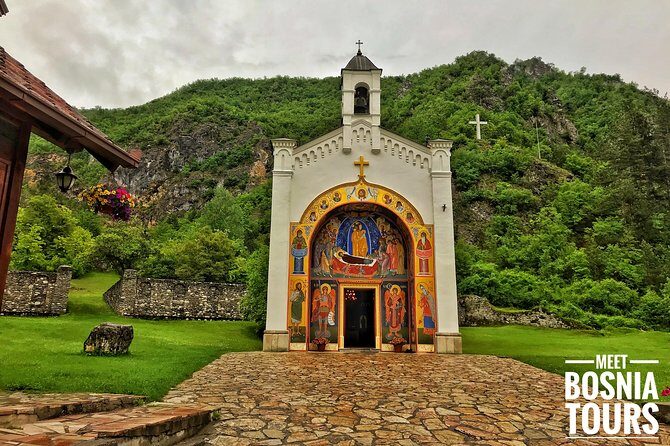
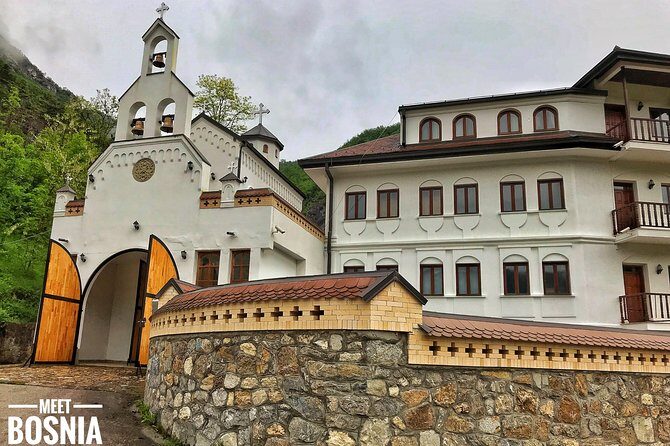
You finish with Orthodox Monastery Dobrun, built in 1343. Your time here is short—about 20 minutes—but that’s enough to see the key structure and absorb the calm compared to the busier themed stops.
This monastery sits in a mountainous region close to Višegrad. The tour keeps it brief, which makes sense: you’re packing in a lot of content already, and Dobrun is best when you treat it as a pause—something to reset your eyes and thoughts.
What I appreciate: even with limited time, the age alone gives weight. A stop like this makes the whole day feel more grounded than just film sets and engineered railways.
Price and what’s actually included in the $80.46
At $80.46 per person (for this 10–12 hour loop), you’re paying for the core service: car, driver/guide, hotel pickup and drop-off, fuel surcharge, and an air-conditioned vehicle. You also get a small group limit (max 7) and the tour runs in English.
Food and drinks are not included, so you’ll either buy lunch on your own or use the free time at the wooden town stop to eat. If you skip this planning, you’ll feel hungry during the long stretches between sights.
Entrance costs are extra:
- Drvengrad: 3€ per person
- Šargan train ride (optional): 1,200 RSD or 10€ per person
So how do you judge value? I’d say it’s a fair deal if you like the idea of seeing both Bosnia and Serbia in one day with zero driving work and guided context. If you’re mostly interested in just one or two sites, you may feel the cost is more about transportation than admissions. And if you’re unsure about the train ride, your final spend can swing depending on whether you buy that optional ticket.
One more practical note: cancellation is free up to 24 hours in advance for a full refund. If your schedule is flexible, that’s comforting.
Guides make or break the experience: what stands out
The guide quality is a clear pattern in how this tour is received. Names like Kristijan, Amir, Kenny, Kenan, and Ejup come up repeatedly, and the praise is consistent: people appreciate how guides explain the places and how comfortably they manage the day so it feels fuss-free.
In plain terms, this matters because the route includes places that mix very different vibes—UNESCO bridge, themed villages, an active rail option, and an old monastery. A good guide helps you connect the dots fast, so you don’t just “see things” but understand why they matter.
Who this tour is for (and who should consider something else)
This tour fits best if you:
- want to cover Višegrad + Mokra Gora + Serbian mountain sights in one day
- like guided context, not self-planning
- enjoy engineering and story-driven places (bridge + film-linked towns + railway)
- are okay paying small extra entrance fees and buying your own meals
Consider a different plan if you:
- want long time at fewer sites instead of quick hits
- dislike themed, purpose-built attractions and prefer everyday towns
- strongly dislike any chance of waiting for the train ride (since it’s optional, you can skip it, but the area is still part of the flow)
Should you book this Sarajevo to Višegrad–Andrićgrad–Drvengrad–Šargan day trip?
I’d book it if your goal is maximum ground covered with minimal stress. The combination of a UNESCO bridge, Ivo Andrić’s world, and the Šarganska Eight engineering gives you a day that feels bigger than the distance on the map.
Before you commit, decide one thing: the Šargan train ride. If you’re the type who loves historic-looking railway moments, plan to add that optional ticket cost and go in with patience for the queue. If you’d rather spend your time wandering without delays, skip the ride and still enjoy the open-air railway setup and the views.
If you want a single-day “greatest hits” route that blends Bosnia and Serbia without sorting logistics yourself, this is a strong choice.
FAQ
What time does the tour start?
It starts at 8:00 a.m., usually meeting in front of Meet Bosnia Agency at Gazi Husrev begova 75 in Sarajevo.
Where is the pickup point in Sarajevo?
The meeting point is Meet Bosnia Tours (Days Out, Excursions and Activities) at Gazi Husrev Begova 75, at the crossroad of Mula Mustafe Bašeskije, Sarajevo.
Is hotel pickup included?
Yes. Pickup and drop-off are included, and hotel pickup is organized if you stay outside the Sarajevo old town area.
How long is the tour?
The duration is approximately 10 to 12 hours.
Is the Šargan Eight train ride included in the price?
No. The ride is optional, and you pay for the ticket separately if you choose to go.
Are there entrance fees?
Yes. Drvengrad costs 3€ per person, and the Šargan train ride costs 1,200 RSD or 10€ per person.
Is food included?
No. Food and drinks are not included, and you’ll need to plan your own lunch during free time.
You Might Also Enjoy
More Tours in Sarajevo
- Fall of Yugoslavia, Sarajevo War Tour with Tunnel of Hope Museum and Frontlines
★ 5.0 · 1,314 reviews
More Tour Reviews in Sarajevo
- Fall of Yugoslavia, Sarajevo War Tour with Tunnel of Hope Museum and Frontlines
★ 5.0 · 1,314 reviews