REVIEW · SARAJEVO
7 Days Balkan Tour Bosnia Croatia Montenegro Albania N.Macedonia
Book on Viator →Operated by Tour Mage · Bookable on Viator
Sarajevo starts the story, then the region keeps unfolding. This 7-day, English-speaking tour strings together Ottoman-era towns, war-history sites, and coastal city breaks across Bosnia, Croatia, Montenegro, Albania, and North Macedonia—without you needing to plan the routes. I especially like the way the trip pairs guided walks (Sarajevo, Mostar, Dubrovnik, Kotor, Tirana, Ohrid, Skopje) with big “look at this” stops like the Old Bridge area in Mostar and the War Tunnel.
Two other things stand out: you get 4-star hotel stays for 6 nights plus breakfast, and the driver/guide team includes people like Elvis, Edis, and Zulfo—proper storytellers who can answer both old-history questions and what daily life looks like now. One thing to consider: this is a packed road trip with long drives and time in the sun, so you’ll want comfy shoes and a flexible mindset about pacing.
In This Review
- Key highlights to pay attention to
- Sarajevo’s Old Town on foot, then the War Tunnel
- Driving into Herzegovina: Konjic, Mostar, and the river views
- Blagaj, Pocitelj, and Kravice Falls: nature plus medieval walls
- Dubrovnik inside the walls, then Kotor and Budva on Montenegro time
- Shkoder to Tirana: Albania’s layers in one guided sweep
- Ohrid: a calmer finish before Skopje’s two-sided old town
- Skopje: Ottoman bazaar streets plus Alexander the Great heritage
- Value check: what you’re really paying for at $2,013.49
- Who this tour fits best (and who should think twice)
- Should you book Tour Mage’s Balkans week?
- FAQ
- What countries does this 7-day tour cover?
- Where does pickup happen?
- How long is the tour?
- What’s included in the hotel stays?
- Are meals included?
- Do you get local guides during the day?
- Is admission included for all stops?
- Is this a private tour?
- What ticket method do you use?
- What is the cancellation policy?
Key highlights to pay attention to
- Sarajevo’s old-town route: City Hall, Bascarsija, the Sebilj area, and the Latin Bridge WWI story all in one flow
- War Tunnel context: panoramic driving through the city, then a guided look at the Siege of Sarajevo
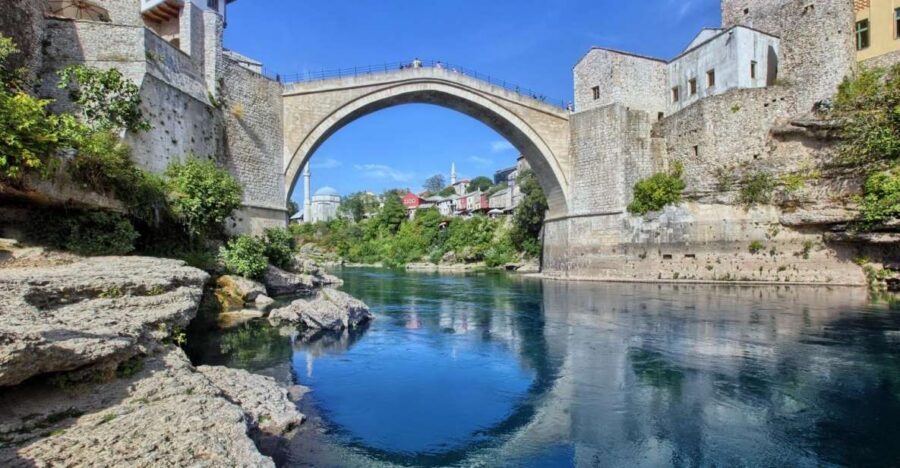
- Mostar’s Ottoman heart: Stari Most, both river banks, and the Koski Mehmet Pasha mosque
- Herzegovina day trips: Buna springs/Derwiah house, Pocitelj, and Kravice Falls
- A two-stop Montenegro feel: Kotor’s Old Town first, then Budva with free time
- Albania to North Macedonia momentum: Shkoder and Tirana on one day, then Ohrid and Skopje
Sarajevo’s Old Town on foot, then the War Tunnel
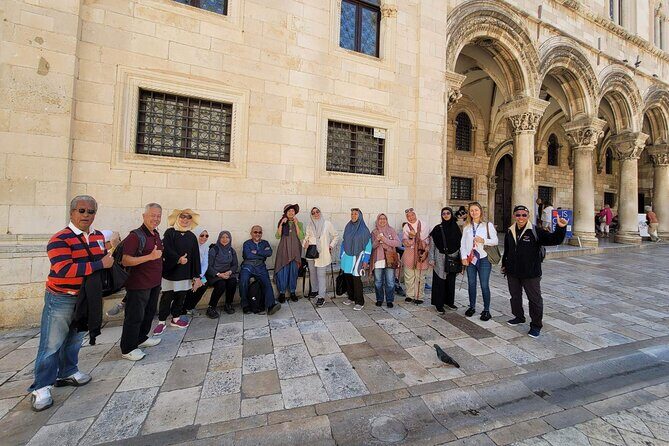
I like tours that show you a place at walking speed first. In Sarajevo, you start in the historic core with a guided introduction through the old craft streets that lead to Bascarsija Square and the Sebilj monument. You get bearings fast: City Hall, then the maze-like lanes that explain why Sarajevo has always been a crossroads city.
Next, you visit a working coppersmith shop called Hidic (Hidic Coppersmith Store). It’s short—about 15 minutes—but it helps you understand Sarajevo’s Ottoman craft roots in a practical way. Watching metalwork done by hand is one of the few “history lessons” that doesn’t feel like a lecture. It’s also a good moment to slow down and take a few photos before the route becomes more “on to the next place.”
From there, the tour threads through major landmarks with stories attached. You’ll pass by the Gazi Husrev-beg Mosque, where the focus is Gazi Husrev Bey’s legacy—he funded major projects like a large mosque, schools, a caravan hotel, and a covered market. That framing matters. It’s not just architecture; it’s how wealth, power, and community planning shaped the city.
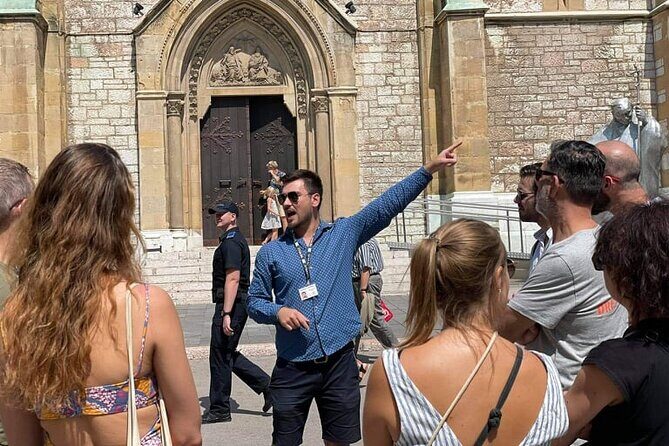
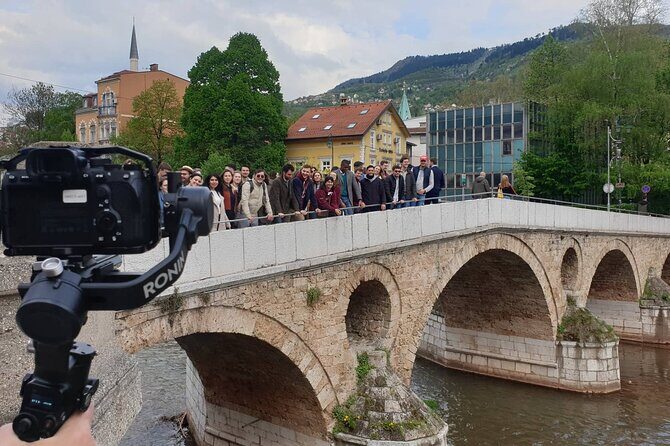
Then comes the Latin Bridge, famous because it ties directly to the assassination that helped set off World War I. It’s only a brief stop, but it gives you a mental timeline. You’ll also have time next to the Jewish Museum of Bosnia and Herzegovina to learn about Jewish heritage in the capital (the museum itself is marked as not included, so expect it as a short orientation-style stop). A Catholic stop follows at Katedrala Srca Isusova near Second Square, plus a pause at Pijaca Markale, linked to the Siege of Sarajevo and the marketplace massacre.
That stretch is emotionally heavy, so I recommend using it like a reset point. You’re seeing layers of faith, identity, and conflict in close proximity, and the tour doesn’t try to sugarcoat it. The city includes the Serbian Orthodox Cathedral as well, with another short stop that adds to the wider “this is a multi-layer city” story.
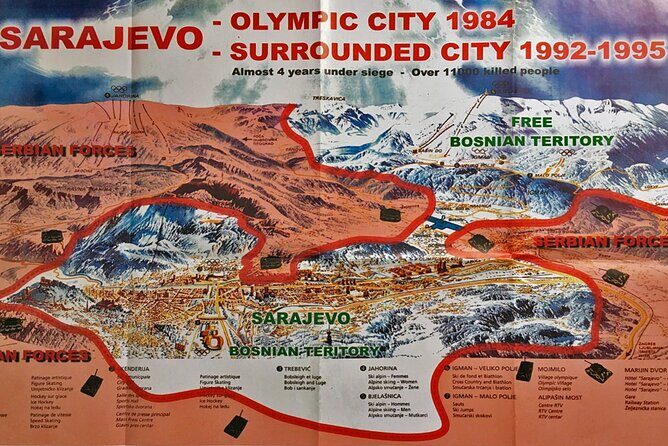
The big payoff is Sarajevo War Tunnel. After your walking portion, you take a panoramic drive through the city toward the tunnel museum. The time block is about an hour, and this is the day’s most direct “how did people survive” element. If you want context for the rest of the Balkans, this is one of the best places to get it. The tunnel concept turns abstract war-history into a physical reality.
Practical note: admission is marked as included for the tunnel museum, while other sites show mixed ticket notes. So if you have a strong interest in a specific interior (not just the exterior and stories), bring a little extra cash or plan to adjust depending on what’s covered.
You can also read our reviews of more tours and experiences in Sarajevo.
- Fall of Yugoslavia, Sarajevo War Tour with Tunnel of Hope Museum and Frontlines
★ 5.0 · 1,314 reviews
Driving into Herzegovina: Konjic, Mostar, and the river views
Day two starts with a quick regional shift toward Herzegovina. After breakfast, you head to Konjic and visit the Stone Ottoman bridge from the 17th century on the upper part of the Neretva River. It’s a small stop, but it’s the kind of detail that makes the wider region feel connected instead of just “different cities.”
Then you’ll drive one of the more scenic roads in the country, passing by Jablanico Lake and through Neretva Canyon. This is one of those stretches where the window time counts. If you’re the type who enjoys geography as much as monuments, you’ll appreciate it.
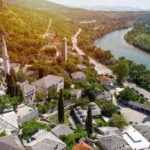
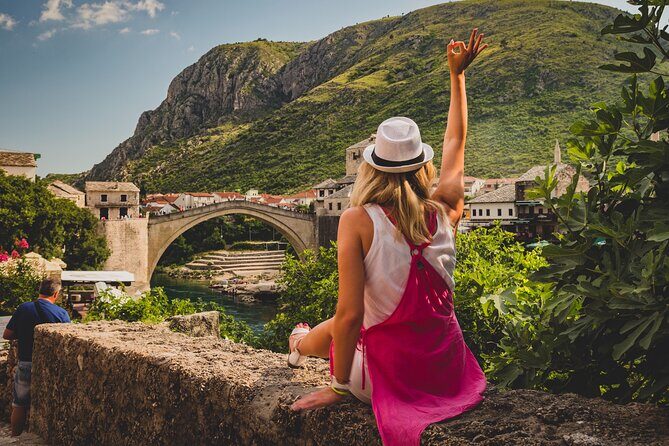
Arriving in Mostar is the main event. You get a guided old-town tour focused on Ottoman-era details and the layout around the river. Expect stops like the Ottoman bazaar area, the Crooked Bridge, and the dramatic Stari Most (Old Bridge) with time to see both river banks. You’ll also visit the Koski Mehmet Pasha mosque. Even if you’ve seen photos of Stari Most, standing near it with a guide explaining the significance is a different experience than scrolling past an image.
After the sightseeing, you check into your hotel and the rest of the day is free and easy. I like this kind of structure: one concentrated block of learning, then room to wander at your own pace. In Mostar, that free time is where you’ll enjoy small cafes, take a slower walk along the river, and decide how much you want to linger at the bridge area.
One consideration: Mostar is popular, and the riverfront can be busy. This matters because free time after a long day can either feel relaxing or rushed depending on your expectations. Aim for early evenings and let the route guide where you go next.
Blagaj, Pocitelj, and Kravice Falls: nature plus medieval walls
Day three balances culture with nature. You start with Blagaj, visiting the Buna River springs and the Derwiah house. The tour frames it simply: springs, then the historic house tied to the location. Even if you don’t know the background yet, the setting helps you feel why this area mattered.
Next is Pocitelj, a medieval stone town. The stop is built for pictures and a possible climb to the fortress from the 16th century. This is one of those “short but memorable” places. You’ll get a strong sense of how the town was designed for defense and visibility, and the stone walls create instant atmosphere.
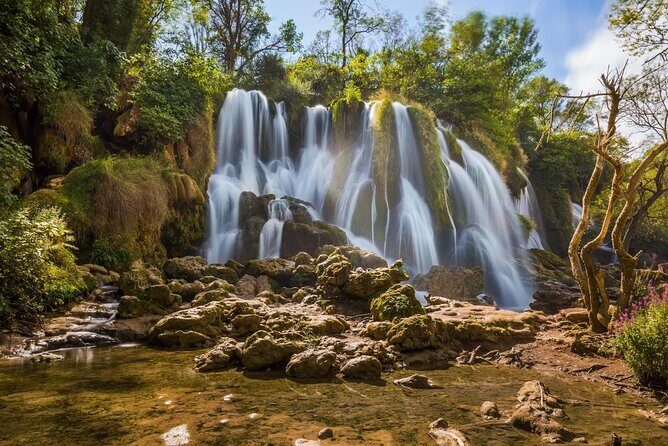
Then you hit Kravice Falls—about two hours. This is the day’s break from walking on historic streets. The focus here is the scenery: a waterfall stop that’s meant to be an easy reset after dense city history. If you come to the Balkans for contrast, this is your contrast day.
You end with Neum, the only coastal town in Bosnia and Herzegovina on the route. It’s a long travel block—about 12 hours—so think of Neum as your recharge stop: sleep, sea air (even if you keep it low-key), and prepare for the Croatia jump.
Dubrovnik inside the walls, then Kotor and Budva on Montenegro time
Day four is a classic “coastal rhythm” transition: check out in Bosnia, then head into Croatia. Once you reach Dubrovnik, you meet a local guide for a walking tour inside the stone walls. After that, you get about two hours of free exploration before continuing into Montenegro.
Dubrovnik is one of the most visually dominant cities on this route, and the walking tour matters because it gives you context for what you’re looking at within the walls. Without that, you can end up treating it like a photo set only. With the guide framing, you notice more: how the city’s geometry directs movement, where landmarks connect, and what the walls protect.
In Montenegro, you visit Kotor next. You get a local tour of the Old Town, then free time. Kotor’s layout works well with “guided first, free second,” because you can orient quickly and then stroll at your own pace. Afterward, you proceed to Budva, where you walk the Old Town, check in, and have the rest of the day free.
Budva is a good place to decompress after a long day of travel. You’re not forced to fill every hour, and the free time gives you a chance to pick your own pace—beachside, cafe, or just wandering. The only caution I’d add: sea-front days often tempt you into spending more than you planned on drinks or snacks. Stick to your budget and treat meals as optional upgrades, not automatic “tour food.”
Shkoder to Tirana: Albania’s layers in one guided sweep
Day five shifts fully into Albania. You start with Shkoder and a local guide. The visit is about a 3-hour block before you drive to Albania’s capital.
In Tirana, you check in after a guided city tour that covers major stops like Skanderbey Square, Ethem bey mosque, Mother Theresa Square, communist bunkers, and Piramida. The selection is smart for first-timers because it shows how Tirana handles different eras in the same urban space. You don’t just learn “history”; you learn how history appears in public life through buildings, monuments, and the way people use the streets.
Then the evening is free and easy. With Tirana, free time often turns into wandering plus one or two “sit and watch” moments. You’ll get to notice the city’s day-to-day energy without feeling locked into a schedule.

Ohrid: a calmer finish before Skopje’s two-sided old town
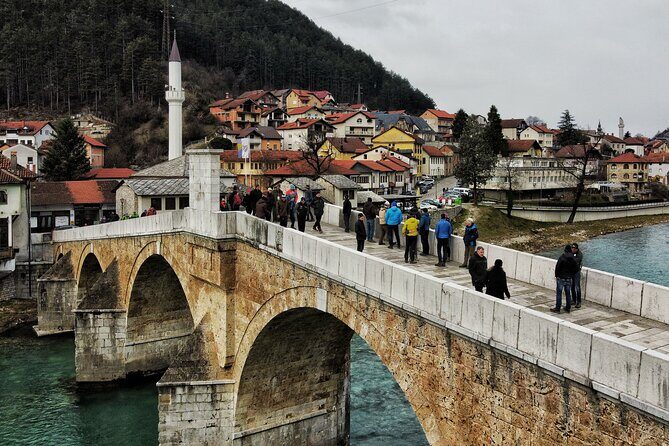
Day six takes you to Ohrid in North Macedonia. You check out, drive about two hours with border crossing, and then meet a local guide in Ohrid’s Old Town. The guided stops include a promenade area, entrance gates to the Old Town, a Pearl shop and Old paper factory, plus St Sofia monastery.
Ohrid works well as a change in tempo. Compared to the heavier siege history in Sarajevo and the “monument concentration” of Dubrovnik and Mostar, Ohrid feels more like a place to slow down. The rest of the day is free, which is exactly what you want after several back-to-back city blocks.
If you’re planning your time well, this is a good day to catch up on sleep and do one long walk. You’ll also get a more relaxed feel right before you reach Skopje, which is more about dramatic storytelling and visible layers of influence.
Skopje: Ottoman bazaar streets plus Alexander the Great heritage
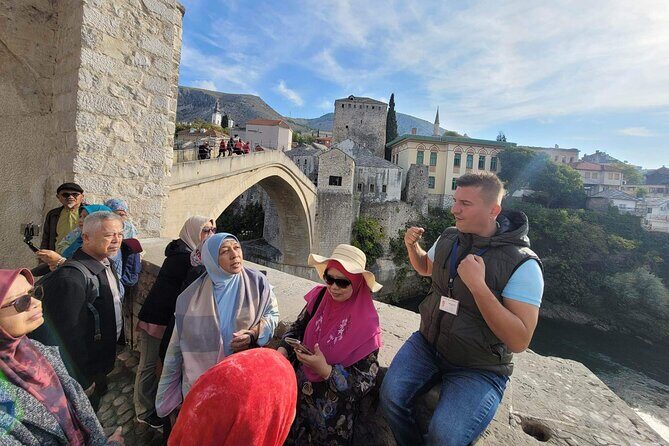
Day seven is Skopje. You drive about three hours from Ohrid with short stops, then meet a local guide for a walking tour that covers both sides of river Vardar. You’ll see the Ottoman-influenced Old Town with bazaar-style streets and small shops and restaurants, plus the Macedonian side focused on Alexander the Great heritage.
This “two sides of the river” format is one of the most useful ways to understand Skopje. Instead of treating the city as one uniform experience, you’re taught to notice differences in architectural style, historical framing, and how people move through the space.
After the tour, the guide transfers you to your accommodation or the airport, depending on your choice. That makes the end smoother. You don’t have to guess how to wrap up the day.
Value check: what you’re really paying for at $2,013.49
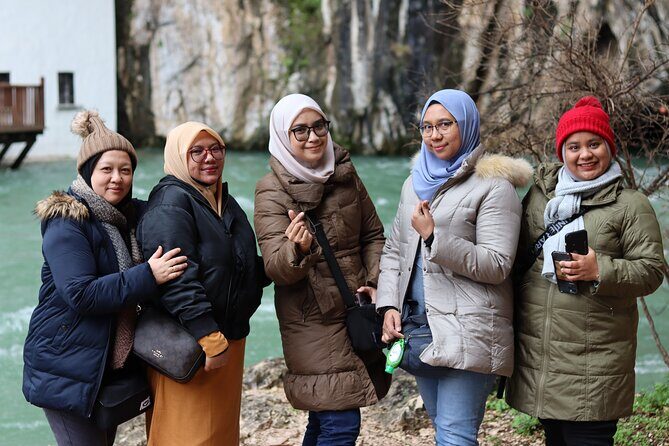
The price is $2,013.49 per person for about 7 days, with 6 nights in 4-star hotels and breakfast (6). You also get an air-conditioned vehicle, an English-speaking driver/guide, local tour guides, and all fees and taxes are listed as included.
So what does that mean in real-life value?
- You’re paying for the hard parts: planning multi-country routes, handling daily logistics, and keeping the story connected with local guides.
- You’re paying for comfort: 4-star hotels during road-trip days. That’s not a small factor when you’re moving almost every day.
- You’re paying for time: the tour blocks the key sights so you’re not spending your vacation chasing ticket windows or transport transfers.
One caution: the itinerary shows some stops as admission not included (for example, places like the Gazi Husrev-beg Mosque, Jewish Museum, and some cathedral entries). The tour still lists all fees and taxes as included, so your actual out-of-pocket may be small, but you should be mentally ready for optional add-ons if you choose to enter everything.
For me, this tour feels like solid value if you want: (1) guided context, (2) good hotel quality, and (3) minimal stress. If you prefer pure free-time wandering with zero structure, you might find the schedule full.
Who this tour fits best (and who should think twice)
This works best for people who enjoy history and human stories tied to real places. It’s also great if you want a guided week where you can ask questions and get answers—something the reviews highlight through the strength of drivers and guides like Elvis, Edis, and Zulfo.
It’s also a good fit for families and mixed ages, since the format is designed around guided blocks and rest periods. One of the reviews mentions a teenage son and the driver’s ability to keep things interesting without turning it into a kids-only tour.
Think twice if:
- You hate long drives. The itinerary includes multiple long travel blocks (including a 12-hour day into Neum and day-to-day cross-country movement).
- You expect lots of downtime every afternoon. Some days include free time, but the day structure includes multiple stops and guided tours.
Should you book Tour Mage’s Balkans week?
I’d book it if you want a guided sampler that still feels grounded: Sarajevo first with walking history, then Mostar and Herzegovina for Ottoman and river settings, then coastal breaks through Dubrovnik and Montenegro, finishing with Tirana, Ohrid, and Skopje. The guide talent—people like Elvis, Edis, and Zulfo—matters here because the trip is heavy in places, and it’s better when someone can explain what you’re seeing.
I’d skip or modify if you’re chasing only beaches and postcard snapshots. This route spends time on museums, bridges tied to world events, and war-related sites. You’ll get beauty for sure, but the backbone is storytelling.
FAQ
What countries does this 7-day tour cover?
It covers Bosnia and Herzegovina, Croatia, Montenegro, Albania, and North Macedonia.
Where does pickup happen?
Pickup is offered from any location in Sarajevo.
How long is the tour?
The duration is listed as 7 days (approximately).
What’s included in the hotel stays?
You get 6x accommodation at 4* hotels.
Are meals included?
Breakfast is included for 6 days. Lunch and dinner are not included.
Do you get local guides during the day?
Yes. The tour includes local tour guides plus an English-speaking driver/guide.
Is admission included for all stops?
The tour lists all fees and taxes as included, but several individual stops are marked as admission ticket not included (for example, Gazi Husrev-beg Mosque and the Jewish Museum). The Sarajevo War Tunnel admission is marked as included.
Is this a private tour?
Yes. It is private, meaning only your group participates.
What ticket method do you use?
A mobile ticket is offered.
What is the cancellation policy?
You can cancel up to 6 days in advance for a full refund. Cancel 2–6 days before for a 50% refund. Cancel less than 2 days before and you won’t receive a refund.
If you want, tell me your travel month and whether you prefer more walking or more chill time—I can suggest which day(s) to approach with extra energy and which ones to pace more slowly.
You Might Also Enjoy
More Tours in Sarajevo
- Fall of Yugoslavia, Sarajevo War Tour with Tunnel of Hope Museum and Frontlines
★ 5.0 · 1,314 reviews
More Tour Reviews in Sarajevo
- Fall of Yugoslavia, Sarajevo War Tour with Tunnel of Hope Museum and Frontlines
★ 5.0 · 1,314 reviews