REVIEW · MOSTAR
Break-up of Yugoslavia & The War in Mostar: Life Under Siege
Book on Viator →Operated by Mostar Travel Agency · Bookable on Viator
Mostar hits harder when you understand the war behind it. This tour connects the breakup of Yugoslavia to what everyday life became during the 1992–1995 siege, using real places you can still see. I especially like the local, personal storytelling from guides who lived through it, or studied it up close, and share it in clear time order.
I also love how physical the visit feels. You’ll start at a cliffside hidden aircraft hangar tied to Tito-era plans, then move to the War Museum, and finally walk near spots where fighting lines once ran through the city center.
The main drawback: this is emotionally heavy and information-focused, not a casual photo tour. If you’re expecting lots of bright, easy sightseeing, you might be caught off guard.
In This Review
- Key moments to look for
- Why Mostar’s war story still shapes your walk across town
- Stop 1: The Tito-era aircraft hangar and the idea of being unseen
- Stop 2: Mostar War Museum—stories, timelines, and the map that makes it click
- Stop 3: Šantića Street and the west front line you can still trace
- The guide’s personal perspective: why it matters more than facts alone
- Timing, comfort, and what to wear for this 3-hour format
- Price and value: what you’re really paying for at about $42.33
- Who should book this Mostar war-history tour
- Should you book it? My take
- FAQ
- How long is the tour?
- Is hotel pickup and drop-off included?
- What language is the tour in?
- How many people are in a group?
- What stops will we visit during the tour?
- Is the museum entrance included?
- Can children join the tour?
Key moments to look for
- Tito-era planes and a fortress-like hangar just outside town, tucked into mountain rock.
- First-person siege context at the Mostar War Museum, with a guide building a timeline on a board.
- Walking the west front line near Šantića Street, with surviving bunkers and street-level reminders.
- The city’s invisible divide, explained as you compare past images with today’s streets.
- Small group feel (max 8), which makes question time actually work.
- Air-conditioned transport and hotel pickup in Mostar, so you spend less time figuring out logistics.
Why Mostar’s war story still shapes your walk across town
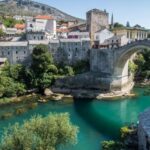
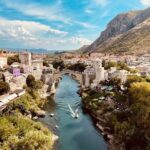
Mostar today looks like a classic Balkan mix of old stone buildings, cafés, and that famous bridge. But after 1992–1995, the city also became a living border—some parts rebuilt, other scars left in place, and neighborhoods shaped around who controlled which side.
What makes this tour different is how it connects big history to daily life. You’ll hear how the breakup of Yugoslavia led into the conflict, then watch how Mostar’s geography turned into strategy, hiding places, and front-line streets you can still stand on.
This is the kind of tour that helps you read the city instead of just passing through it.
You can also read our reviews of more tours and experiences in Mostar.

Stop 1: The Tito-era aircraft hangar and the idea of being unseen
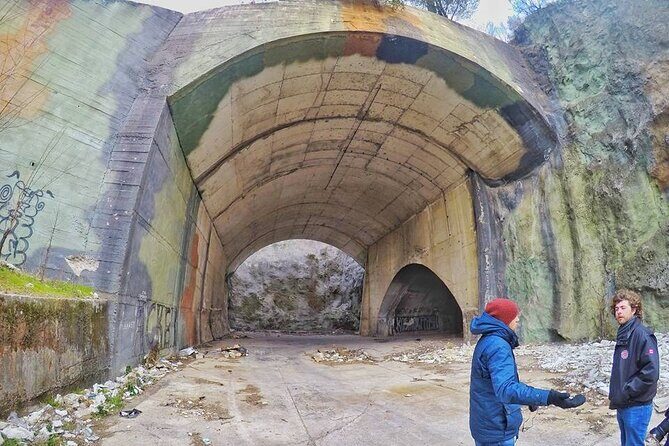
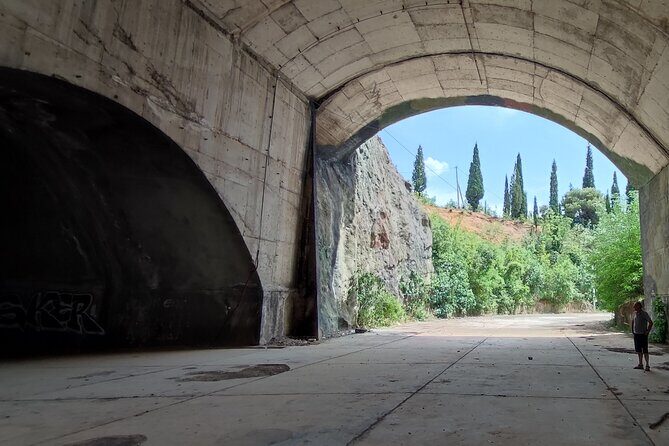
The tour begins just south of Mostar at an abandoned aircraft hangar tucked deep into the mountains. The point isn’t just to see a ruin; it’s to understand the logic behind it. Tito had fighter jets stored there, ready to deploy, with the mountain fortress protecting them from attack and keeping them out of sight of citizens and spies.
I like the way this stop sets the tone. Early on, you get the idea that war isn’t only front lines and guns—it’s also secrecy, positioning, and who knows what, when.
What to expect here: a short walk-through and explanations while you take in the scale of the hanger and how the terrain did the heavy lifting. The admission for this part is free, so you’re really paying for context and guidance, not entry fees.
A practical note: because this is a hangar in a mountainous area, it can feel a bit rugged. Wear shoes that handle uneven ground, and keep your expectations flexible if lighting or access varies.
Stop 2: Mostar War Museum—stories, timelines, and the map that makes it click
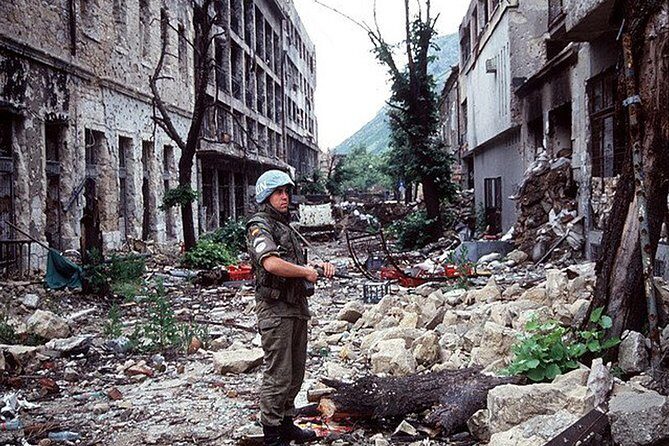
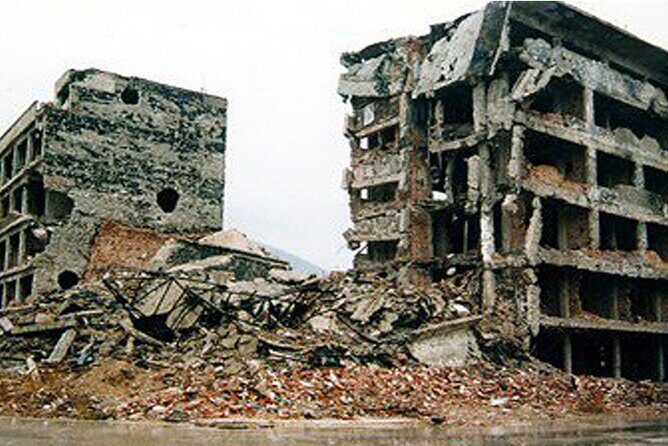
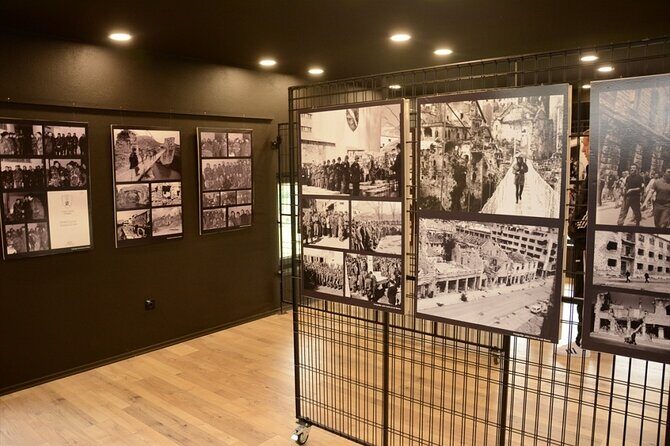
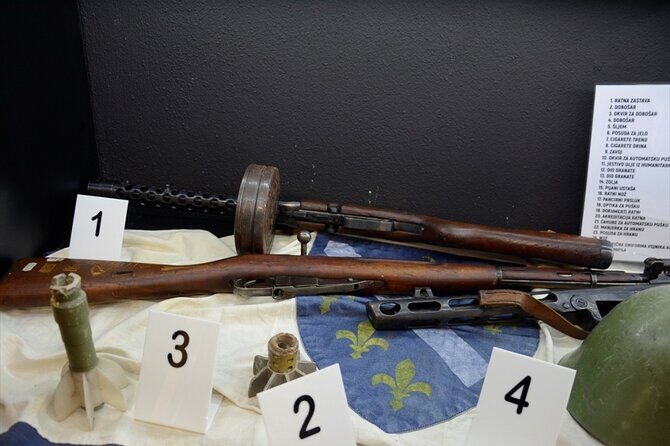
Next you’ll head to the Mostar War Museum, where the tour turns from hidden military planning to lived consequences. This is where the siege of Mostar becomes human scale: how civilians experienced targeting, how a divided city worked in daily routines, and what it meant to live between lines.
The guide uses a board and draws a map of the former Yugoslavia to connect the moving pieces. That matters because the conflict involves multiple groups and shifting control, and it’s hard to hold it all in your head if you’re learning from headlines. Having someone trace it step-by-step helps you keep the timeline straight instead of memorizing dates.
I also like that the museum stop gives room for questions. You’re not stuck with one-way narration. If you’re the type who wants to ask what caused what, this is one of your best chances.
From the guide names shared on tour dates, you may travel with someone like Esmer, Haron (sometimes written Harun), or Vedad—each described as making the history clearer, personal, and orderly. Even when the exact guide varies, the structure stays the same: war history explained in sequence, with direct ties back to Mostar.
Stop 3: Šantića Street and the west front line you can still trace
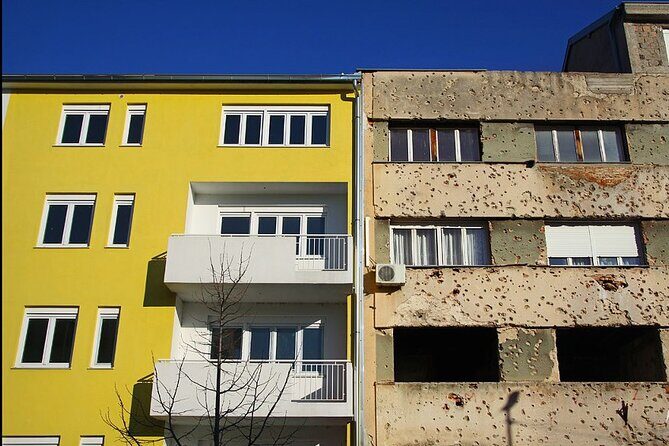
The final part of the walk focuses on where fighting happened closest between Bosnian and Croatian forces. You’ll explore around Šantića Street, then move toward areas near Spanish Square and Boulevard Street. The tour shows you bunkers that still exist in the city center—reminders placed right where life continues.
Here’s the key idea: this isn’t just a history stop. It’s a way to understand Mostar’s invisible boundaries—how the “front line” can become a mental map that shapes neighborhoods long after the fighting stops.
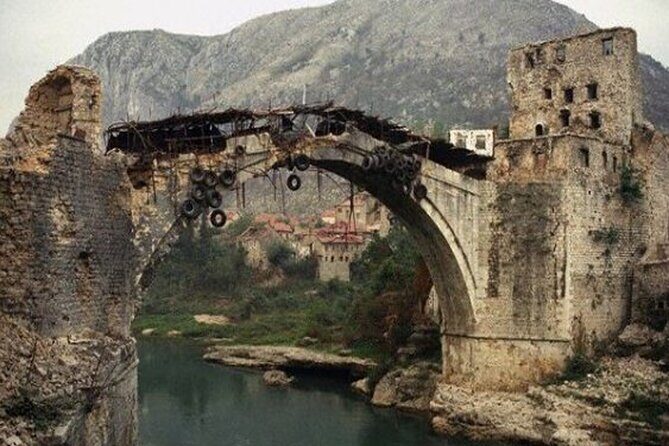
As you walk, your guide will show pictures of key places during the war so you can compare them to what you see now. That compare-and-contrast is useful because it teaches you to notice what’s been rebuilt, what was damaged, and what remains as proof.
One thing to know: this part of the tour may feel less visually dramatic than you expect. It’s street-level, concrete reminders rather than grand monuments. If you’re chasing postcard photos, you may feel underfed. If you want to understand why locals talk the way they do, you’ll get a lot.
The guide’s personal perspective: why it matters more than facts alone
This tour is built around testimony—what it was like to experience the siege, and how the conflict changed life in Mostar. That’s a big reason you’ll hear so many emotional stories tied to the places you visit.
When guides like Esmer share what he and his family lived through, the tour shifts from history class to something more grounded. Several guides also make space for modern questions, including how people hope for a future where Croat and Bosniak communities live together peacefully. That hope doesn’t erase the pain, but it adds balance.
You might also notice a practical side in the way local guides travel with you. One guide-style detail described in the tour experience is sharing a traditional method of drinking Bosnian coffee. Another is pointing you toward a small local café for ćevapi. Those moments are small, but they help you connect the war story to living culture—because Mostar isn’t only the siege. It’s also food, friendships, and daily rituals.

Timing, comfort, and what to wear for this 3-hour format
The tour runs about 3 hours, but it can stretch if your guide takes time to answer questions or tell longer personal stories. Plan for roughly that half-day rhythm: short stops, then more walking and discussion close together.
You’ll ride in an air-conditioned vehicle, and hotel pickup and drop-off are offered if you select that option. That’s worth it in Mostar because the center can be tiring to navigate, especially when you add uphill terrain near the hangar area.
For what to bring:
- Comfortable walking shoes (bumpy ground near the hanger is possible).
- A light layer (mountain air and museum spaces can feel different).
- Water, especially if your guide turns the session into a longer talk.
If you’re sensitive to intense war narratives, treat this as a museum-plus-walk day, not a casual wander. The tour is designed to educate, and the emotional weight is part of that education.
Price and value: what you’re really paying for at about $42.33
At $42.33 per person for a roughly 3-hour guided experience, the value mostly comes from the “human layer.” You’re not paying for access to a fancy attraction. You’re paying for a guide who can connect events from the breakup of Yugoslavia to what you see in Mostar, then keep it understandable.
A few things help justify the price:
- Free admission at the stops listed for the hangar and the museum visit.
- Hotel pickup and drop-off in Mostar if you choose it.
- An English-language guide and a small group size (max 8), which usually means more interaction time.
- A tour structure that gives you a before/after comparison using photos and on-street remnants.
If you only have a short time in Mostar, this is also efficient. You get multiple sites in one run—hanger, museum, then front line streets—without needing to piece together the war story yourself.
Who should book this Mostar war-history tour
This tour fits best if you want meaning, not just movement. You’ll enjoy it most if you:
- Like walking tours with context and timelines.
- Want to understand how the siege affected civilians, not only military strategy.
- Are curious about why Mostar’s bridge and neighborhoods feel so politically charged, even after reconstruction.
It’s also a strong fit for adults and teens. Guides on the experience have described it as appropriate for ages that can handle serious history and questions.
If your travel style is mostly scenery and cafés, you might still like it—but go in expecting fewer “fun stops” and more heavy storytelling. This is history you can stand next to.
Should you book it? My take
Yes, book it if you want to understand Mostar on a deeper level. The combination of a mountain hangar, the War Museum, and a walk near surviving bunkers gives you the full sense of how war was planned, experienced, and left behind.
Skip it only if you’re trying to avoid emotional topics, or if you need a tour that’s mostly visual and light. This one is structured around education and personal accounts, so you’ll leave with a heavier perspective—and a sharper read of the city.
If you do book: bring your questions. With a small group, your guide can actually answer them, and that’s when the tour becomes more than facts on a page.
FAQ
How long is the tour?
The tour is listed at about 3 hours (approx.), with stops that each run around 50 minutes.
Is hotel pickup and drop-off included?
Hotel pickup and drop-off are offered if you select that option. The tour provider also notes pickup is available in Mostar if your accommodation isn’t listed.
What language is the tour in?
The tour is offered in English.
How many people are in a group?
This tour has a maximum of 8 travelers.
What stops will we visit during the tour?
You’ll visit an abandoned aircraft hangar south of Mostar, the Mostar War Museum, and then walk areas around Šantića Street near the west front line, including spots near Spanish Square and Boulevard Street.
Is the museum entrance included?
Yes. Mostar War Museum entrance is included, and the stop is listed with free admission.
Can children join the tour?
Children must be accompanied by an adult. The tour also says most travelers can participate.