REVIEW · MOSTAR
The Death of Yugoslavia Tour in Mostar
Book on Viator →Operated by iHouse Travel · Bookable on Viator
Yugoslavia’s story hits differently in Mostar. This 2.5-hour tour strings together Tito’s socialism, the Cold War’s paranoia, and the fallout of the Yugoslav wars through four real locations in town. You’ll also hear the guide’s narration connect the dots between past ideals and today’s Bosnia.
I especially like the storytelling chapters—each stop has a theme and a time period, so it feels more like a guided lesson than random sightseeing. I also like that the guide may include a music presentation, which helps you feel how culture changed across the decades.
One thing to consider: the sites are not polished tourist attractions. You’re visiting abandoned, decaying places, so the mood is heavy and the scenery is more history lesson than photo stop.
In This Review
- Key highlights worth planning for
- Why Mostar is the setting for Tito, the Cold War, and the Yugoslav wars
- The 5:00 pm meet-up at iHouse Travel and how the tour flows
- Stop 1 at iHouse Travel: setting expectations for a heavy theme
- Stop 2 in Gornje Gnojnice: Yugoslav paranoia and the Cold War years
- Stop 3 in Rodoč: Tito’s tailored socialism and how people lived it
- Stop 4 in Španski trg: 1984 hopes, economic pressure, and the road to war
- Stop 5 at the Partisan Cemetery: Bosnia today and the EU question
- Price and value: what $47.17 is buying you in Mostar
- Who this tour suits best (and who should rethink)
- Should you book the Death of Yugoslavia Tour in Mostar?
- FAQ
- What is the duration of the Death of Yugoslavia tour in Mostar?
- Where does the tour meet, and what time does it start?
- Is the tour offered in English?
- How many stops are included?
- Are food and drinks included?
- Is hotel pickup included?
- What group size should I expect?
- Is there a cancellation option if my plans change?
- Are children allowed on the tour?
Key highlights worth planning for
- Four Mostar sites tied to Yugoslavia and the Cold War, told as a timeline
- Music during the tour (some guides use it to match the era)
- Secret-feeling locations for a more focused, in-the-moment experience
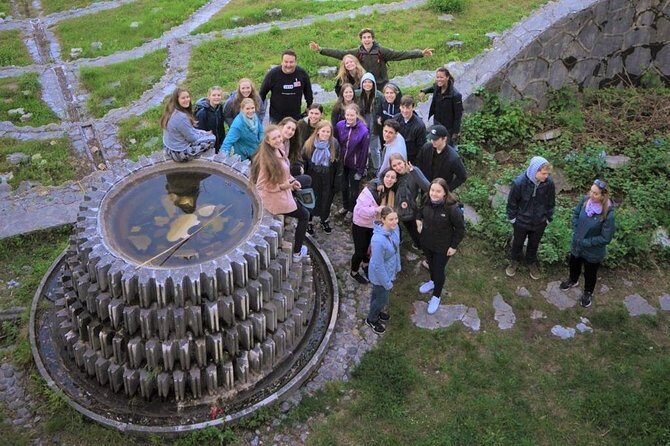
- Small group size with a maximum of 16 people
- Hassle-free round-trip transport from Mostar (with optional pickup details to check)
- Local guide with personal context that often includes everyday-life stories
Why Mostar is the setting for Tito, the Cold War, and the Yugoslav wars
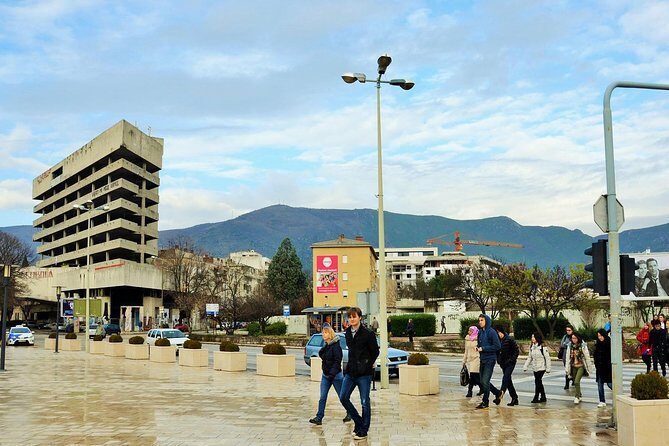
Mostar is already layered: a city shaped by different empires, different loyalties, and shifting borders. That makes it a strong place to understand Yugoslavia’s rise and collapse, because the story isn’t just political. It’s also about daily life—what people hoped for, what they feared, and what they lost.
This tour turns that history into a path you can walk (and ride) through. Instead of treating Yugoslavia as a distant lecture, you’re taken to places that carry the weight of the system that created them—and the war that ended it. The result is a kind of time travel, but with real-world consequences.
If you like history that connects ideology to human experience, this works well. The tour is built around key eras: World War II roots, Tito’s model socialism, the Cold War’s “rules,” and then the national tensions that spiraled into conflict.
You can also read our reviews of more tours and experiences in Mostar.

The 5:00 pm meet-up at iHouse Travel and how the tour flows
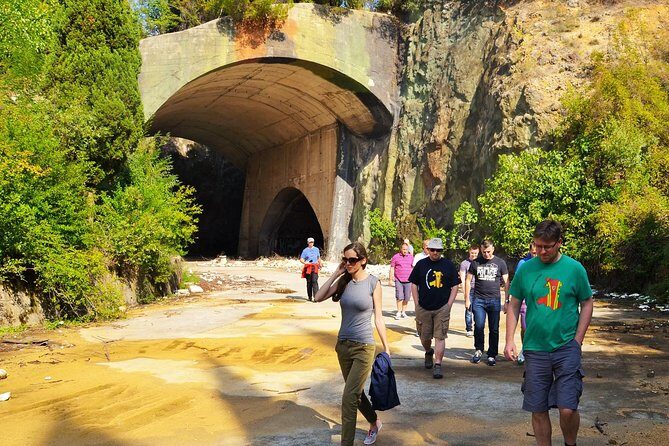
The tour starts at iHouse Travel, Onešćukova 25, Mostar, with an early evening start time of 5:00 pm. It ends back at the meeting point, so you’re not left figuring out your way home. Time-wise, plan on about 2 hours 30 minutes (around 150 minutes).
You’ll also want to think about transport. The experience includes round-trip transportation from Mostar, so you’re not trying to piece together local rides for multiple stops. At the same time, the details matter: hotel pickup and drop-off are not included unless you choose the pickup option. If your hotel pickup matters, confirm it at booking so the logistics are smooth.
The tour is offered in English, runs with a maximum of 16 people, and uses a mobile ticket. That small-group setup helps the guide keep the story moving without getting lost in a crowd.
Stop 1 at iHouse Travel: setting expectations for a heavy theme
The first stop is practical rather than historical—iHouse Travel, where you meet and get the tour underway. You’re essentially being oriented for what comes next: not a “nice day out,” but an explained route through Yugoslavia’s political life and its breakdown.
This matters because the later stops can feel emotionally intense. If you’re the type who likes context before you walk into a place, this format helps. Also, the tour description notes that admission ticket is free at each stop, so you’re paying mainly for guidance, transport, and narration rather than entrance fees.
Stop 2 in Gornje Gnojnice: Yugoslav paranoia and the Cold War years
The tour’s first real location is tied to the theme The Yugoslav Paranoia. You’ll drive toward the site while the guide sets the stage with World War II and the emergence of Socialist Yugoslavia.
Then comes the Cold War layer, specifically the Informbiro period, which is presented as a dark chapter that followed Yugoslavia’s break with the Soviet Union. The tour frames it as a side effect that drove the country toward militarization during the 1950s. In other words, you’re not just hearing dates. You’re hearing why daily life and politics tightened.
One detail I think is smart: the locations are kept secret to make the experience more focused. Even if you know the general themes, not knowing every exact spot ahead of time keeps the attention on the guide’s narrative and the atmosphere you encounter on site.
What you should watch for here is tone. This is likely to feel tense and historical rather than scenic. If you’re expecting a classic Mostar outing, calibrate expectations early.
Stop 3 in Rodoč: Tito’s tailored socialism and how people lived it
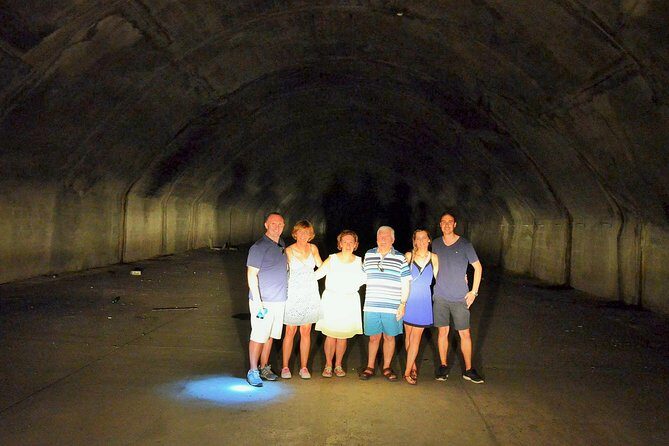
Next you move into People’s life, centered on Tito—his personal life, political achievements, and his attempt to build a “tailor made socialism” that aimed to better meet the needs of Yugoslav people.
The tour then narrows to the hopes and dreams of ordinary life: it starts with Youth Work Actions and moves through heavy industrialization in the 1950s and 1960s. The guide also connects these changes to popular culture, covering the 1970s and 1980s through references to brands, music, automotive industry, and lifestyle.
This stop is the one that helps the story stop being only about leaders. You get a sense of how a system shapes what young people do, what factories build, and what people listen to and drive. It’s easier to understand why the ideals felt real to many—at least for a while.
Practical note: each main stop is described as about 30 minutes, so the pacing stays brisk. If you love long museum-style reading time, this may feel fast. But if you want a strong narrative with several chapters, the rhythm works.

Stop 4 in Španski trg: 1984 hopes, economic pressure, and the road to war
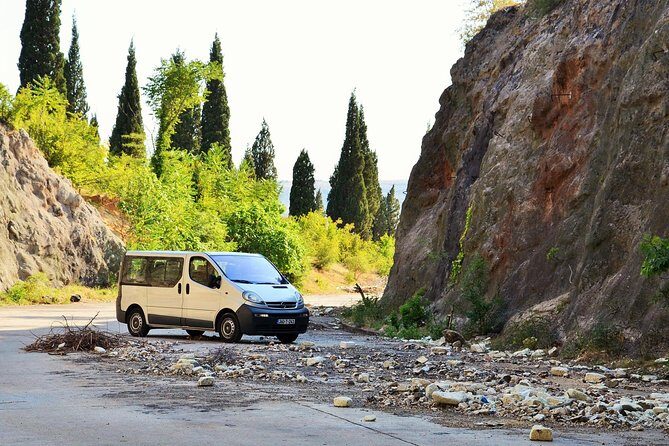
The tour shifts into the 1980s during the drive to the next stop, with special attention on the 1984 Sarajevo Winter Olympics. That period is described as something like a “golden era” of Yugoslav socialism—an era people associate with pride, momentum, and a sense the country was holding together.
Then the guide explains how the upbeat image cracked. The breakdown is framed through two big drivers: economic depression and growing nationalisms. From there, the story moves through the sequence of conflict—first in Slovenia and Croatia, then a year later in Bosnia and Herzegovina, where the tour says it reached its culmination.
This stop is where you’re likely to feel the emotional contrast most sharply. You go from a moment of celebration into the consequences: destruction and the loss of human lives. The tour doesn’t treat the war as a surprise ending; it presents it as a collapse that followed pressures already building.
Also, this is where you’ll want to pay attention to what the guide chooses to emphasize: not just who fought, but what made the “Yugoslav dream” dissolve. That theme carries through to the last stop.
Stop 5 at the Partisan Cemetery: Bosnia today and the EU question
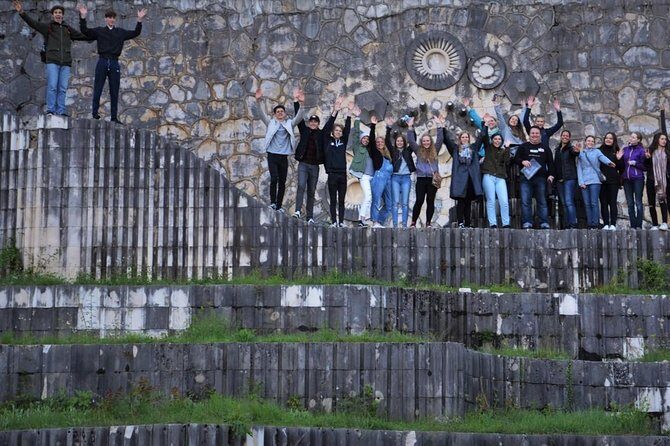
The final chapter is Bosnia and Herzegovina today, starting with a look at the country’s political structure and the problems and challenges it faces at the start of the 21st century. This is an important pivot. It’s easy to get stuck in nostalgia—either for Yugoslavia as an idea, or for national pride. The tour instead points you toward the present reality.
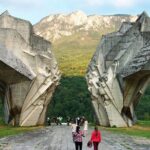
The ending place—Partisan Cemetery—is framed as a way to connect relics of a past that felt glorious with the “complicated reality” of recovery: economic, cultural, and political. The guide also places Bosnia into a bigger frame, including the idea of possible membership in the European Union.
If you want a travel experience that doesn’t end in 1990s history, this is the value. You leave with a question in your head: what comes after a system breaks? And how do societies rebuild with scars still visible?
Price and value: what $47.17 is buying you in Mostar
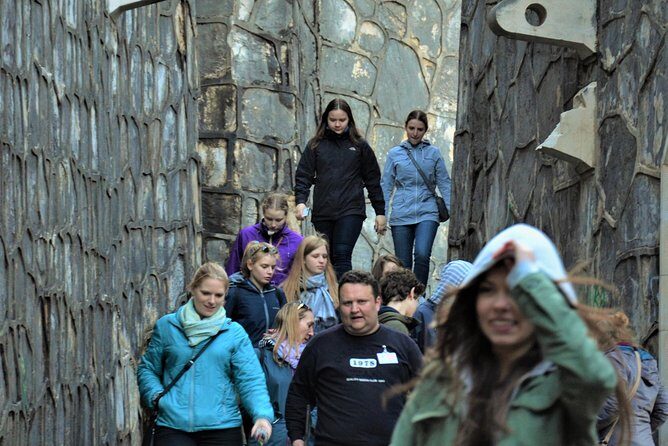
At $47.17 per person for about 2 hours 30 minutes, the price is competitive for what you’re getting, mostly because the fee includes the parts that can otherwise add up fast: local taxes and driver/guide time, plus all taxes, fees, and handling charges.
You’re not paying for museum tickets—each stop notes admission ticket free. You’re paying for route planning, transportation, and the guide’s ability to connect the dots between eras and locations that most people would never find on their own.
Two value notes to consider:
- The tour is capped at 16 people, which usually makes it easier for the guide to keep the story personal and coherent.
- Food and drinks are not included, so that’s an extra cost if you were planning dinner right after. Plan your timing accordingly, especially since it starts at 5:00 pm.
And because this theme is heavy, the guide’s delivery matters. The tour has a strong reputation for guides who bring strong storytelling and humor, and some guides add music to match the time period.
Who this tour suits best (and who should rethink)
This is best for you if you like history with consequences. You’ll enjoy it if you want to understand how ideology shaped youth programs, work, industry, and pop culture—and how economic strain plus nationalism can unravel a shared project.
You’ll also appreciate the small-group format and English guidance, especially if you’re curious but don’t want to do all the research on your own before arriving.
You might consider a different type of Mostar tour if you’re mainly seeking pretty views and comfortable, maintained attractions. The stops are described as abandoned and decaying, and that choice is intentional. This isn’t meant to be a casual walk-through.
Should you book the Death of Yugoslavia Tour in Mostar?
Book it if you want a clear, guided timeline of Tito to the Yugoslav wars, with context that reaches into Bosnia today. I like that the tour mixes politics with everyday-life themes, and I especially like the mention of music presentation, because it helps you hear history instead of only reading it.
Skip it only if you already know you don’t want heavy subject matter or you’re hoping for photogenic sites. The places you visit are real and worn down for a reason. This is a thoughtful route for travelers who want to understand what happened, not just where it happened.
If that’s you, this is one of the most focused ways to understand Yugoslavia’s rise and fall while you’re in Mostar.
FAQ
What is the duration of the Death of Yugoslavia tour in Mostar?
The tour runs for about 2 hours 30 minutes (approximately 150 minutes).
Where does the tour meet, and what time does it start?
You meet at iHouse Travel, Onešćukova 25, Mostar, Bosnia and Herzegovina. The start time is 5:00 pm, and the tour ends back at the meeting point.
Is the tour offered in English?
Yes. The tour is offered in English.
How many stops are included?
The tour includes four Mostar sites tied to Yugoslavia and the Cold War, plus a final chapter focused on Bosnia and Herzegovina today.
Are food and drinks included?
No. Food and drinks are not included.
Is hotel pickup included?
Hotel pickup and drop-off are not included unless you select the pickup option.
What group size should I expect?
The tour has a maximum of 16 travelers.
Is there a cancellation option if my plans change?
Yes. You can cancel for a full refund up to 24 hours before the experience starts, with free cancellation allowed up to that window.
Are children allowed on the tour?
Children can participate, but they must be accompanied by an adult.