REVIEW · SARAJEVO
Bosnian Kingdom Capitals: Travnik & Jajce Tour from Sarajevo
Book on Viator →Operated by Balkland · Bookable on Viator
Capital-hopping Bosnia, minus the stress. This full-day tour strings together two Kingdom capitals—Travnik and Jajce—with Ottoman architecture, medieval fortifications, Roman-era remains, and the Pliva Lakes area, all with a guide on board. I love how the day is packed but organized, with timed stops that keep you moving without feeling rushed. You’ll like the mix of faith sites, museums, and outdoor stops, plus a planned break to eat ćevapi in Jajce. One possible drawback: it’s a 10–12 hour day, and a chunk of that is travel back and forth from Sarajevo.
I also like the human touch: in one of the standout write-ups, Muhmmnad handled the coordination and arranged local guides for Travnik and Jajce, even when the group situation was small. That matters, because these towns are layered and easy to miss if you’re just wandering on your own.
After you meet at Sarajevo City Hall (Brodac 1), the plan is straightforward: you’ll get a morning in Travnik, then head to Jajce for catacombs and fort views, and finish with Pliva Waterfall and the watermills at Mlincici. Expect good weather to help the day go smoothly, because several stops are outdoors.
In This Review
- Key Things I’d Prioritize on This Tour
- Sarajevo to Travnik and Jajce: Why This Format Works
- Getting Picked Up at Sarajevo City Hall (and Staying Comfortable)
- Plava Voda: A Stops-By-Design Start in Travnik’s Orbit
- Tvrdava Stari Grad: The Fortress That Gives Travnik Its Shape
- Šarena Džamija: A 16th-Century Mosque With Ornamentation You Can Spot Fast
- Ivo Andrić Birth House Museum: A Tiny Detour With Big Meaning
- Zavičajni muzej Travnik: More Than a Single Building
- St. John the Baptist Church: Catholic Heritage in a Mixed Town
- Turbe + Hadzi Ali-Begova dzamija: Two Ottoman-Style Stops, Minimal Time
- Jajce Catacombs: Underground Time Travel in 30 Minutes
- Fortress of Jajce: Kingdom Capitals in One View
- AVNOJ Museum: A Different Kind of Capital Story
- Temple of Mithras: Roman-Era Mystery in Jajce
- Pliva Waterfall: Nature Break After the Tight History Stops
- Mlincici Watermills: Old Work Still Telling the Story
- The Jajce Dinner Break and the 2.5-Hour Return to Sarajevo
- Price, What’s Included, and How to Budget Smartly
- Who This Bosnia Kingdom Capitals Tour Fits Best
- Should You Book Balkland’s Travnik and Jajce Tour?
- FAQ
- How long is the Travnik & Jajce tour from Sarajevo?
- Where does the tour start in Sarajevo?
- Is pickup offered?
- What’s included in the price?
- What food is included?
- Are tickets included for every stop?
- What if weather is bad?
Key Things I’d Prioritize on This Tour
- Travnik fortress hilltop views: Stari grad sits above town, so you get real perspective, not just street-level photos.
- Šarena Džamija: A 16th-century Ottoman mosque with eye-catching ornamentation and an easy, short visit.
- Ivo Andrić birthplace museum: A compact stop that connects Bosnia’s literary Nobel Prize story to place.
- Catacombs of Jajce: Underground tunnels with a medieval backstory and a full 30-minute chunk.
- Jajce fortress + Coronation Church area: The fort ties directly to the Kingdom of Bosnia and coronation tradition.
- Pliva Waterfall and Mlincici: Nature break plus the old watermill system—perfect for a slower pace at the end.
Sarajevo to Travnik and Jajce: Why This Format Works
This is the kind of day trip that makes sense if you want variety without DIY chaos. Bosnia’s central towns sit far enough apart that hopping between them on your own can turn into long waits and complicated routing. Here, transportation is included, the vehicle is air-conditioned, and there’s WiFi on board, bottled water, and basic snacks (chips or chocolate bar). That’s useful because you won’t be constantly hunting for coffee or snacks at the wrong moment.
The tour also uses a simple rhythm: short, timed stops in Travnik, then larger “set-piece” sites in Jajce (catacombs and fortress), then a nature finish at Pliva Falls and the mills. It’s a good way to cover a lot of ground in one day while still giving you enough time to actually look around.
One more thing: even though the price is for a person (listed at $150.10), the experience is set up as a private tour/activity, meaning only your group participates. In practice, that can feel more comfortable than a big bus, especially at museums and inside historic buildings where space can get tight.
You can also read our reviews of more tours and experiences in Sarajevo.
- Fall of Yugoslavia, Sarajevo War Tour with Tunnel of Hope Museum and Frontlines
★ 5.0 · 1,314 reviews

Getting Picked Up at Sarajevo City Hall (and Staying Comfortable)
You start at Sarajevo City Hall, Brodac 1. Pickup is offered, but the official meeting point is very clear, which reduces “where do we go?” stress.
The day is long—10–12 hours—and the tour itself notes that remaining time is spent on travel. That’s normal for this region, but you can plan for it. If you’re the kind of person who gets restless in cars, bring a light layer and something to keep your brain busy (music, an offline map, or just people-watching out the window). The tour includes bottled water and small snacks, but lunch and dinner are not included, so you’ll want to treat the meal break as your main reset.
Comfort-wise, you’re in an air-conditioned vehicle with WiFi. That’s especially helpful when the day runs long and you still want your phone charged for photos and maps.
Plava Voda: A Stops-By-Design Start in Travnik’s Orbit
Your first stop is Plava Voda, a national monument area in Travnik. You’ll get about 20 minutes, and the admission is free. This is one of those places where history isn’t behind glass—it’s tied to the landscape and local memory.
Plava Voda is described as including the Derventa cemetery, the Lutvina Kahva café, and the monumental tomb of mufti Mehmed Efendi and his wife Ajiša. The tomb element is the headline here: Ottoman-era memorial architecture with a personal, human scale.
What I like about starting here is that it sets expectations. You’re not jumping straight into castles or museums. You’re seeing how faith, community, and memorial sites shape the area.
If you’re hoping for a long stroll or major photo time, keep your time expectations realistic. Twenty minutes is enough to look, read what’s there, and move on.
Tvrdava Stari Grad: The Fortress That Gives Travnik Its Shape
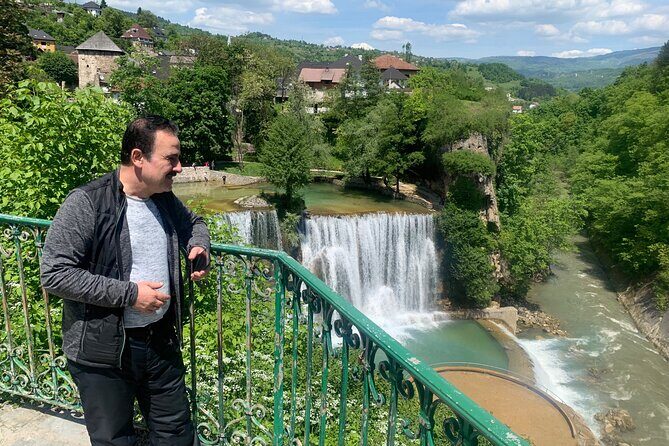
Next comes Tvrdava Stari grad, the medieval fortress often called Old Town. You’ll spend about 35 minutes and the admission is included. It’s perched on a hill, so you’ll naturally feel the advantage: you can see Travnik’s layout from above.
This is also the stop that makes the Ottoman influence easier to grasp. The description focuses on preserved walls, towers, and winding streets within the fortress complex. Even in a short visit, hilltop forts help you understand why people built defense in specific places.
The practical consideration: fortress visits are usually more walking than museums. You’ll want comfortable shoes, and you’ll benefit from slowing down for a few minutes so you actually absorb the views rather than rushing through for photos only.
Šarena Džamija: A 16th-Century Mosque With Ornamentation You Can Spot Fast
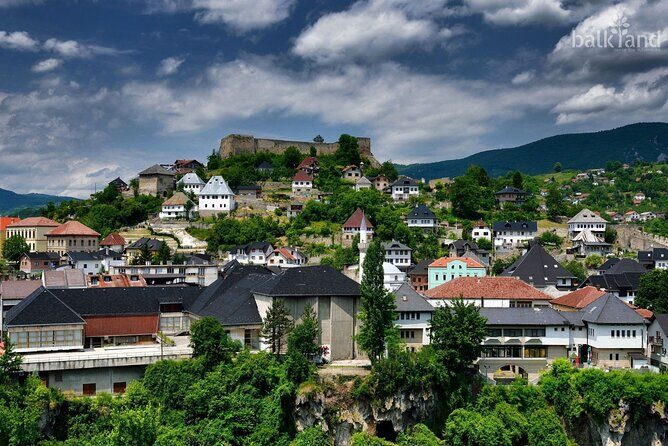
Then you go to Sarena Dzamija (Šarena Džamija), built in the 16th century during Ottoman rule. Admission is included, with about 20 minutes on the schedule.
This is a great time-management stop. Unlike some places that eat up an hour with long galleries, a mosque visit like this can be made meaningful quickly. The highlight here is the architecture and intricate ornamentation—enough to look at details even if you only have a short window.
One tip: dress and behavior matters at religious sites. You’ll be in a functioning religious landmark, so keep it respectful and focus on what you can actually see from where you’re allowed to stand.

Ivo Andrić Birth House Museum: A Tiny Detour With Big Meaning
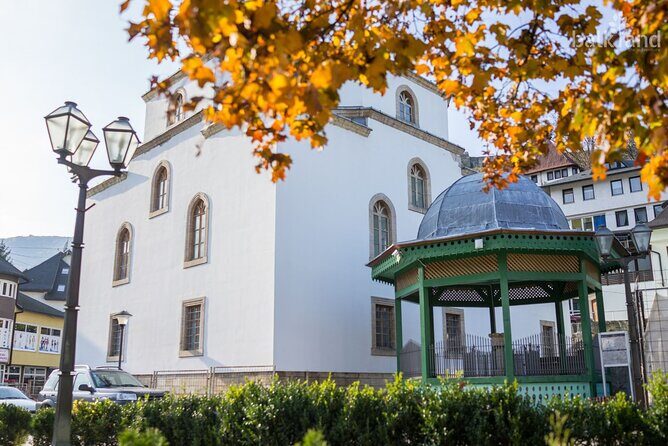
Ivo Andrić is Bosnia’s Nobel Prize-winning author, and this stop ties his story directly to place. You’ll visit the Museum Birth House of Nobel Prize Winner Ivo Andrić for about 15 minutes, with admission included.
Andrić’s birthplace is said to be in Zenjak in Travnik, and the reconstructed house became a memorial museum on August 30, 1974. The museum has a permanent exhibition covering his life and literary works.
What makes this stop feel worth it is that it’s not a random detour. It gives you a cultural reference point while you’re already seeing Ottoman and medieval architecture around town. If you’re the type who likes to connect art and literature to the physical setting, this is one of the best uses of time on the whole Travnik half.
Zavičajni muzej Travnik: More Than a Single Building
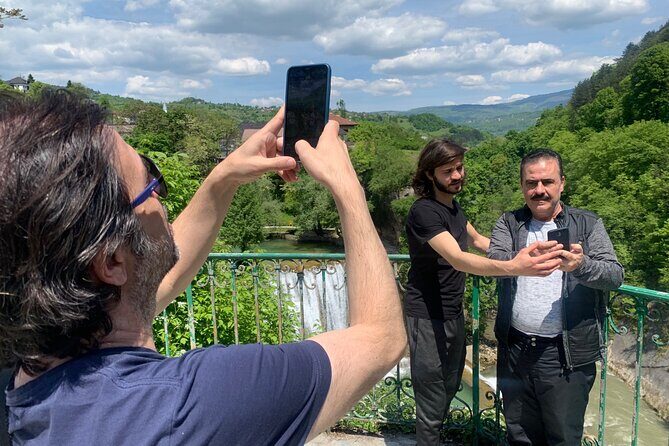
Next is Zavičajni muzej Travnik, about 10 minutes with admission included. The museum’s story is part of the interest: it was established in 1950, and early on, its exhibits were spread across multiple buildings, including an Austro-Hungarian prison site, a gymnasium, and other listed locations.
Since 1972, it’s been housed in a building constructed in 1928 for medical and health purposes, funded by the Rockefeller Foundation, with the permanent exhibition opened in 1975.
Even if you don’t read every label in ten minutes, you’re still getting something valuable: the idea that Travnik was shaped by different eras and powers, and the museum building itself reflects that layering.
St. John the Baptist Church: Catholic Heritage in a Mixed Town
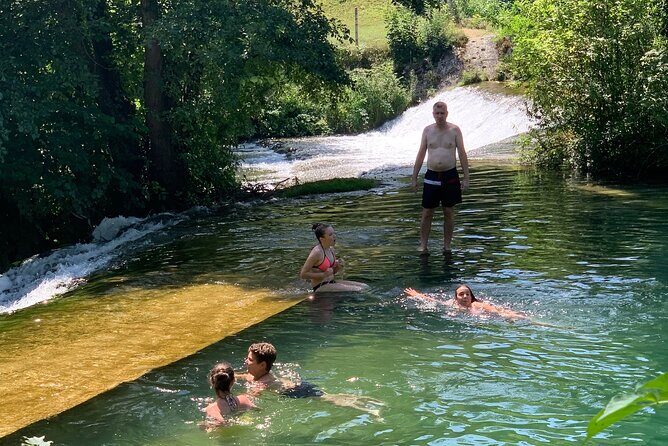
You’ll also stop at Katolička crkva Svetog Ivana Krstitelja (Church of St. John the Baptist), about 10 minutes with admission included. It’s described as a Catholic church built in the mid-19th century.
This is another “short but clarifying” stop. Bosnia’s identity is multi-faith and multi-era, and this church helps show that the story isn’t only Ottoman mosques and fortifications. You’ll see Catholic architectural elements and interior decorations, including religious artwork and an altar.
If you prefer quiet spaces over heavy museum reading, this church can feel like a calm reset.
Turbe + Hadzi Ali-Begova dzamija: Two Ottoman-Style Stops, Minimal Time
Two more Ottoman-style landmarks round out Travnik:
- Turbe (the Vizier’s grave): about 10 minutes, free admission. It’s an Ottoman-style mausoleum for a prominent vizier, meant as a reminder of Ottoman influence.
- Hadzi Ali-Begova dzamija: about 10 minutes, free admission. This historic Ottoman-style mosque is described as a significant Islamic religious landmark.
These are quick visits by design. Their value isn’t in long explanations; it’s in seeing how Ottoman-era architecture shows up in different forms, from memorial structures to places of worship.
Jajce Catacombs: Underground Time Travel in 30 Minutes
After Travnik, the tour shifts to Jajce for medieval and older surprises. First up is the Catacomb of Jajce, about 30 minutes, admission included.
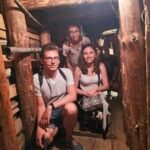
Catacombs are the kind of attraction that can feel either scary or boring—depending on how it’s presented and how much time you give it. Here, the time window is enough to understand what you’re seeing and connect it to the medieval tunnel system described for Jajce.
If you’re traveling with someone who likes history but struggles with museum-heavy days, the catacombs are a strong balance point: real structure, real “you are here” context, and a defined time limit.
Fortress of Jajce: Kingdom Capitals in One View
Next is the Fortress of Jajce, about 30 minutes, admission included. This is a key stop because Jajce served as a former capital of the Bosnian kingdom, and the fortress is tied to the residence of the last two kings.
The standout detail is what’s beneath: the Coronation Church of St. Mary, where the final Bosnian king was crowned. Above, the castle sits on a hill with panoramic views of town and surroundings.
This is one of those places where you should slow down for five minutes. Even if you’re not a “look at every wall” person, a fortress view helps your brain map the whole area. It also makes the next stops feel more connected, because you can see how the town is laid out around the historic core.
AVNOJ Museum: A Different Kind of Capital Story
Then you’ll visit the AVNOJ Museum in Jajce, about 20 minutes, admission included.
This museum focuses on the founding place of Yugoslavia, tied to the second session of AVNOJ in 1943. The description highlights partisan resistance during World War II and the decisions that established the Republic of Yugoslavia. The museum includes artifacts and original items related to the session and aims to show how Bosnia’s state status was re-established and how later Western Balkan countries developed.
In a day that starts with Ottoman tombs and fort walls, this stop adds another layer: 20th-century political turning points. If you’re the kind of traveler who only goes for old buildings, you might think this will be too “political.” But museum artifacts and the specific event focus can make it feel tangible, not abstract.
Temple of Mithras: Roman-Era Mystery in Jajce
You then go to the Temple of Mithras, about 20 minutes, admission included. The tour describes it as a Roman Empire relic, built in the 3rd century AD by Roman soldiers, dedicated to the Indo-Iranian god Mithra.
It’s noted as one of the best-preserved Mithraic icons in the Balkans. That preservation detail matters: better preservation usually means you can actually make sense of the structure and not just see stones that look like they’ve been tossed there.
This stop is a great reminder that Bosnia’s timeline isn’t only Ottoman and medieval. You’re in a region where empires left physical marks that outlast the politics.
Pliva Waterfall: Nature Break After the Tight History Stops
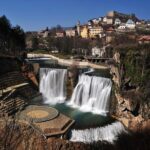
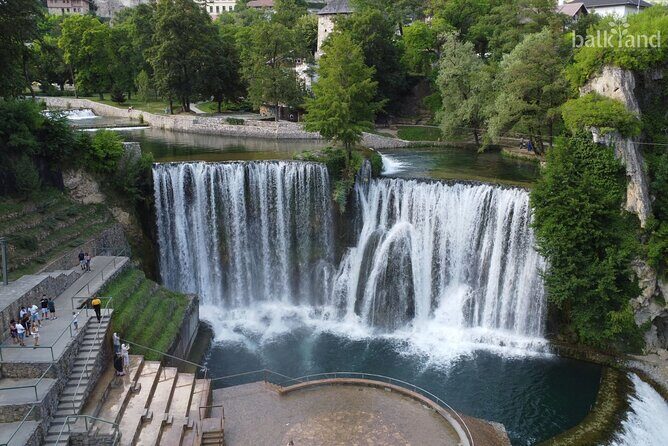
After more cultural stops, the schedule brings you to Pliva Waterfall, about 30 minutes, admission included. The description leans into the sensory side: crystal clear waters cascading over moss-covered rocks, with colored water and sound you can feel.
It also suggests taking a refreshing dip in the natural pools. Whether you’ll do that depends on your comfort level and the day’s conditions, but the option is part of what makes this stop different from another “stand and look” viewpoint.
Do this one with a slower pace. Photos are great, but water sound and mist are the experience.
Mlincici Watermills: Old Work Still Telling the Story
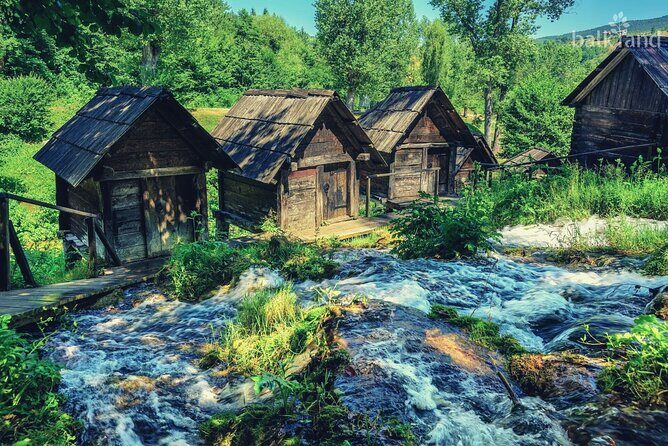
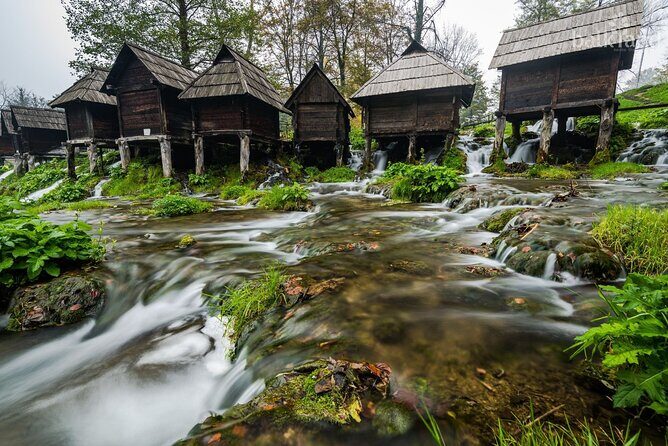
Your final stop is Mlincici, the watermills in Jajce. You’ll spend about 20 minutes, admission included.
These watermills were used for centuries to grind grains into flour using the flow of the Pliva River. The description also ties their flourishing to the Ottoman period and explains their economic role in Jajce’s growth.
The reason I like this stop at the very end is simple: it shifts you away from power and faith and back to daily life. You’ll finish with an image of how people used the river long before factories existed.
The Jajce Dinner Break and the 2.5-Hour Return to Sarajevo
The tour includes a dinner break in Jajce of 45 minutes to 1 hour. Lunch and dinner are not included, so you’re choosing your own meal at that time. This is where the day’s best “eat like a local” moment fits—ćevapi is specifically called out in the overview, and it’s the kind of dish that tends to be easy to order when you’re hungry and time is limited.
After dinner, you’ll head back to Sarajevo in about 2.5 hours, with a scenic drive through the countryside.
Price, What’s Included, and How to Budget Smartly
At $150.10 per person, this tour is priced like a full-day structured experience: transport, guide time, multiple paid admissions, and basic comfort items are all bundled. You’re not paying extra ticket-by-ticket for most stops, and that can matter on a day when you’d otherwise be juggling separate purchases.
What’s included:
- Bottled water and snacks (chips or a chocolate bar)
- Air-conditioned vehicle and WiFi on board
- All fees and taxes
- Admission for most sights listed in the schedule
What’s not included:
- Lunch and dinner
- Alcoholic beverages
- Personal expenses
So my budgeting advice is straightforward: plan for one main meal in Jajce, plus any snacks or drinks you want beyond what’s provided. If you’re the type who drinks coffee often, bring cash/card for that dinner interval.
Also note: you’ll be outdoors at multiple points and indoors at a few. That combination is part of the value because it breaks up fatigue. But it also means you’ll want sun protection and a light layer for changing conditions.
Who This Bosnia Kingdom Capitals Tour Fits Best
This tour is a good match if you want:
- Travnik and Jajce in one day without driving
- A mix of Ottoman architecture, medieval fortifications, and Roman-era archaeology
- Museum time plus outdoor breaks like Pliva Waterfall and Mlincici
- A structured schedule that limits decision fatigue
It’s less ideal if you want a slow, long wander with no driving. This is a “see a lot” day, and the long hours mean you’ll feel travel even if the vehicle is comfortable.
The private-group format can also make this work for couples, small friends groups, or anyone who prefers to avoid the tight choreography of large group buses.
Should You Book Balkland’s Travnik and Jajce Tour?
If your goal is to hit Bosnia’s Kingdom capitals and walk away with a clear mental map of how Travnik and Jajce connect—Ottoman through medieval into Roman and 20th-century stories—this is a strong pick. The biggest reason: the schedule is built around major sites (fortress, catacombs, Pliva Falls) and it fills in context with short museum and religious stops, so you’re not just sightseeing—you’re understanding what you’re looking at.
Before you book, be honest about the day length. If you handle 10–12 hours well, including some travel time, you’ll probably feel satisfied. If you’re hoping for a relaxed half-day, look for something shorter.
FAQ
How long is the Travnik & Jajce tour from Sarajevo?
It runs about 10 to 12 hours, and some of that time is spent on travel. The return drive back to Sarajevo takes about 2.5 hours.
Where does the tour start in Sarajevo?
The meeting point is Sarajevo City Hall, Brodac 1, Sarajevo.
Is pickup offered?
Pickup is listed as offered, and the tour meeting point is at Sarajevo City Hall.
What’s included in the price?
You get bottled water, snacks (chips or chocolate bar), WiFi on board, an air-conditioned vehicle, and all fees and taxes. Admissions are included for most scheduled stops.
What food is included?
Lunch and dinner are not included. The tour includes a dinner break in Jajce (45 minutes to 1 hour), and ćevapi is specifically highlighted in the tour overview.
Are tickets included for every stop?
Not every stop is paid. Some attractions are marked free (such as Plava Voda, Turbe, and Hadzi Ali-Begova dzamija), while others include admission.
What if weather is bad?
The experience requires good weather. If it’s canceled due to poor weather, you’ll be offered a different date or a full refund.
You Might Also Enjoy
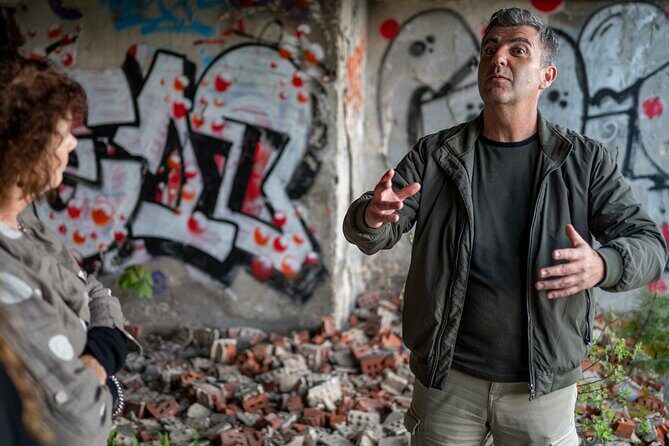
More Tours in Sarajevo
- Fall of Yugoslavia, Sarajevo War Tour with Tunnel of Hope Museum and Frontlines
★ 5.0 · 1,314 reviews
More Tour Reviews in Sarajevo
- Fall of Yugoslavia, Sarajevo War Tour with Tunnel of Hope Museum and Frontlines
★ 5.0 · 1,314 reviews