REVIEW · SARAJEVO
Sarajevo for beginners
Book on Viator →Operated by Cooltour Sarajevo · Bookable on Viator
Sarajevo can feel big on day one, so this 2-hour walking loop gives you a fast, friendly way in. I like that it mixes faith sites and old-town details in a sensible order, and I also like the human touch: coffee or tea included, plus a guide who can explain the what-and-why behind each landmark.
A possible drawback: almost everything is quick-stop viewing, and admission tickets aren’t included for the stops that may be ticketed. If you want long museum time, you’ll need to plan extras after the tour.
In This Review
- Key Points You’ll Care About
- Getting Your Bearings in Old Sarajevo (Start at Trg Fra Grge Martića)
- The Faith-Forward Opening: Cathedral, Orthodox Church, and the Ottoman Feel
- Hotel Europe and the Market Arcades: Where Sarajevo Shops and Negotiates
- The Sarajevo Assassination Moment and Latin Bridge: History in Your Line of Sight
- Emperor’s Mosque, Inat kuća, and the Old Bridges That Explain the City
- Austro-Hungarian and Ottoman Together: City Hall and Bravadžiluk Street
- Kazandžiluk, Sebilj, Baščaršija, and Morića Han: The Part That Feels Like Sarajevo
- Gazi Husrev-beg Mosque and the Jewish Museum Finish: Meaningful Context Without Overload
- Price and Value: $34.92 for 2 Hours, Coffee Included, Admissions Extra
- Who This Sarajevo for Beginners Walk Fits Best
- Should You Book This Sarajevo for Beginners Tour?
- FAQ
- How long is the Sarajevo for beginners tour?
- What does the tour cost?
- What language is the tour offered in?
- Where do you meet and where does the tour end?
- What time does the tour start?
- Is coffee or tea included?
- Are admission tickets included for the stops?
- How large is the group?
- Does the tour use a mobile ticket?
- Is free cancellation available?
Key Points You’ll Care About
- A first-timer route that fits in about two hours without feeling like a sprint
- Coffee and/or tea included so you’re not wandering hungry through Old Sarajevo
- English-speaking guide with strong Q&A energy (and a light, funny tone that keeps it moving)
- Faiths and empires in one loop: Ottoman, Austro-Hungarian, and religious sites side by side
- Historic “you are here” moments around the assassination site and the Latin Bridge story
- Old market textures at places tied to shopping, crafts, and public meeting points
Getting Your Bearings in Old Sarajevo (Start at Trg Fra Grge Martića)
This tour is built for day-one orientation. You start at Trg Fra Grge Martića in the central area of Sarajevo, then you move mostly on foot through the Old Town. With a maximum group size of 18, it’s small enough to ask questions without the whole tour grinding to a halt.
The timing is also beginner-friendly: start at 9:00 am and plan on roughly 2 hours total. That’s long enough to understand the city’s geography—where the main squares and bridges connect—without burning an entire morning. And since it’s offered in English with a mobile ticket, you can keep things simple and show up ready to walk.
Practical tip: wear shoes you trust on uneven sidewalks and cobblestones. You’ll be stopping often, but it’s still a walk.
You can also read our reviews of more tours and experiences in Sarajevo.
- Fall of Yugoslavia, Sarajevo War Tour with Tunnel of Hope Museum and Frontlines
★ 5.0 · 1,314 reviews

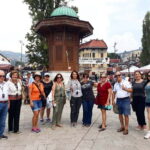
The Faith-Forward Opening: Cathedral, Orthodox Church, and the Ottoman Feel
Right out of the gate, the route frames Sarajevo as a city of overlap. You start at Katedrala Srca Isusova, a simple but beautiful cathedral where you get a quick, respectful look without needing a long detour or extra time. Next comes the Orthodox Church of the Nativity of the Theotokos, another short stop focused on seeing the architecture up close and understanding what it signals about Sarajevo’s layers.
Then the tour moves toward the Ottoman-era Old Town vibe. The point isn’t to turn this into a textbook. It’s to help you notice patterns fast: different religious communities, different building styles, and a city that has had to live with many identities at once.
Possible consideration: because these are brief stops, you won’t get the full interior experience at every location. If you’re the type who wants to linger in quiet spaces, you’ll likely want to return later on your own.
Hotel Europe and the Market Arcades: Where Sarajevo Shops and Negotiates
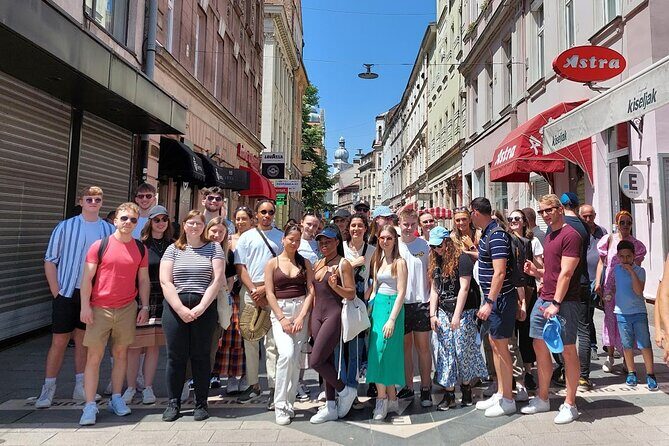
One of the more fascinating early turns is the stop at Hotel Europe, described as the first hotel in Sarajevo and the oldest in South-East Europe. Even if you don’t go inside, just seeing it in context helps you grasp how this city hosted travelers, officials, and commerce long before it became a headline story.
From there, the walk shifts into a market mindset at places tied to traditional trade:
- Tašlihan (remains): you’ll get a quick look at leftover structure from an earlier commercial world.
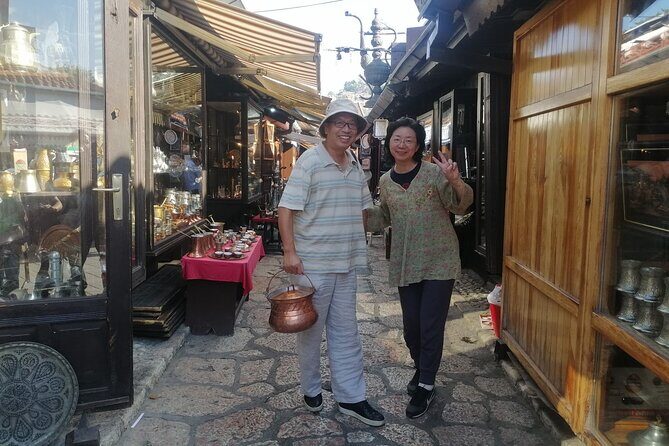
- Gazi-Husrev Beg’s Bezistan: this is framed as Sarajevo’s original shopping mall, the kind of covered market that makes rain, heat, and winter feel less intimidating.
If you like cities where shopping isn’t just an afterthought, this part is for you. It also helps explain why Sarajevo’s Old Town feels like it works on multiple levels at once: commerce, community, and public space all share the same streets.
The Sarajevo Assassination Moment and Latin Bridge: History in Your Line of Sight
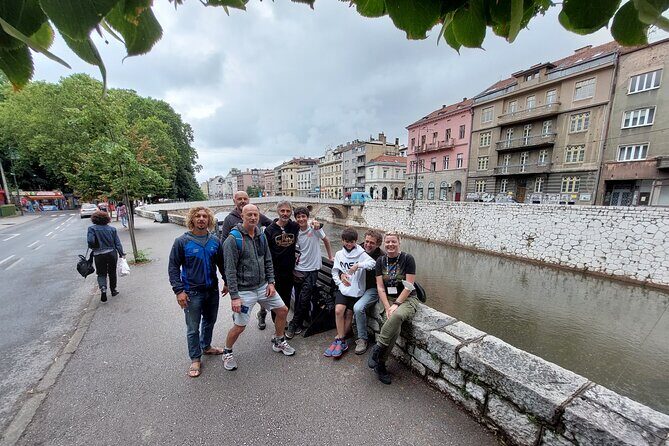
Then the tour hits its most serious, high-impact section: the Location of the Sarajevo Assassination. This is one of those moments where simply standing near the right spot changes how you read history. The stop is short, but it’s positioned deliberately in the route so you connect the story to the city’s street layout—what you’d actually see if you were there in person.
Next is Latin Bridge, noted as a bridge with three names. That detail matters. It hints that Sarajevo’s history isn’t one single narrative. It’s a stack of interpretations, languages, and political meanings layered onto the same physical place.
Practical note: if you’re visiting on a day with lots of crowds, expect slower photo stops. The tour still works, but you may want to be ready to keep your camera moving rather than pause for long shots.
Emperor’s Mosque, Inat kuća, and the Old Bridges That Explain the City
Now you get a change of pace from heavy history to cultural meaning and local stories.
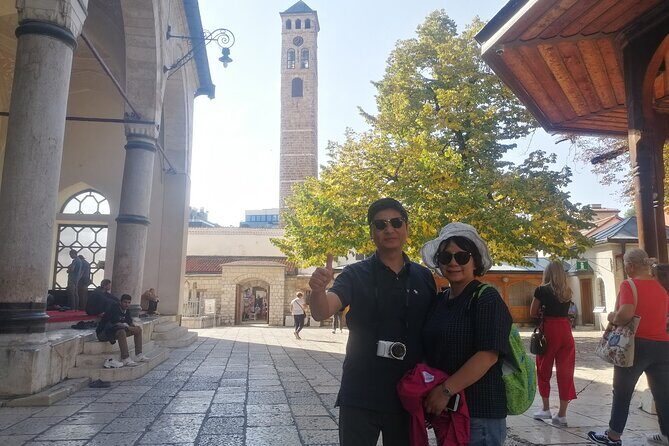
You’ll visit Emperor’s Mosque, described as the oldest mosque in Sarajevo. The way it’s presented helps you see why it’s central to the city’s identity—not just as a building, but as a landmark people use to orient themselves.
Then comes Inat kuća, where you learn what inat is. This is a small stop with big pay-off. Instead of treating Sarajevo as only political history, this is where you start understanding character—how stubbornness, pride, and respect show up in everyday story. It’s the kind of detail that makes a city feel lived-in, not just visited.
The route also includes two bridge moments:
- Seher Cehaja’s bridge: described as the oldest bridge in Sarajevo and the second built.
- Earlier bridge context near the assassination area ties together why these crossings matter to movement, communication, and public life.
If you like “why these places exist” more than “what year it was built,” this sequence will click.


Austro-Hungarian and Ottoman Together: City Hall and Bravadžiluk Street
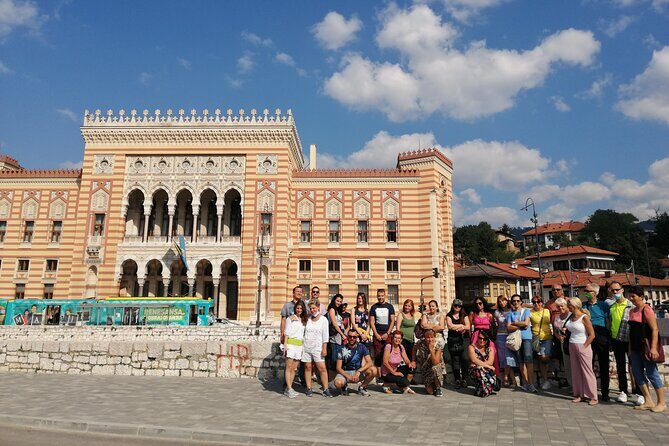
At Sarajevo City Hall, you’ll see how Austro-Hungarian architecture fits into an Ottoman-shaped Old Town. That contrast—planned and imposed empire style sitting beside older urban rhythms—is one of the clearest ways to understand Sarajevo’s dual heritage.
Then you’ll hear the story of the development of Bravadžiluk street. Even without museum-style time, that kind of street-focused explanation gives you the missing link between buildings and daily life. Streets aren’t just lines on a map; they’re how people traded, walked, prayed, and gathered.
This section is also a good reminder for beginners: you don’t need to master every historical period. You just need a framework. After City Hall and Bravadžiluk, you start seeing the framework everywhere.
Kazandžiluk, Sebilj, Baščaršija, and Morića Han: The Part That Feels Like Sarajevo
Next comes the Old Town’s social engine.
You’ll stop at Kazandžiluk, described as one of the most authentic streets in Sarajevo. Then you hit Sebilj, a meeting place for many. From there, you reach Baščaršija, the main square of Sarajevo.
If you’re trying to picture the city as a place where people actually spend time—not just pass through—this is where it happens. Squares and meeting points matter. They show you where locals slow down, talk, and decide where to go next. For a beginner, that’s gold.
One of the quirkiest pauses is Fotokopirnica Morića Han, described as probably the coolest place in Sarajevo. That kind of stop is a reminder: some of the best city details aren’t the biggest attractions. They’re the little, local-purpose spaces that keep a city functioning day to day.
And yes, you’ll likely want a photo or two here—just keep moving so the tour stays on time.
Gazi Husrev-beg Mosque and the Jewish Museum Finish: Meaningful Context Without Overload
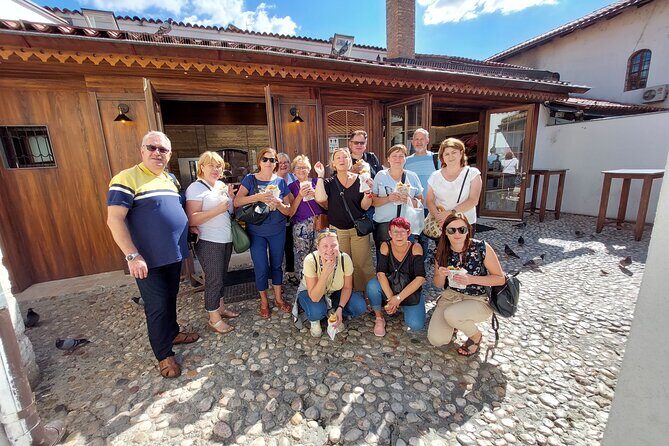
The walk continues with Gazi Husrev-beg Mosque, described as the central mosque in Sarajevo. It’s another quick but important landmark—good for getting your mental map straight.
After that, the tour includes a stop described as different time, different story, followed by the Jewish Museum of Bosnia and Herzegovina. The focus here is on the square and the story of Jews in Bosnia and Herzegovina.
This is a strong closing approach for beginners because it broadens the city beyond the most famous headline associations. You finish with a wider sense of community history, not only political catastrophe. It’s also a smart pacing choice: the first part gives you city orientation, and the final part gives you human context.
Possible consideration: because admissions aren’t included, you may have to decide on the spot whether to pay entry if there’s an interior component you want. If you’re not sure, ask the guide early so you don’t lose time at the end.
Price and Value: $34.92 for 2 Hours, Coffee Included, Admissions Extra
At $34.92 per person for around 2 hours, the value comes from three things:
- Coverage density: you get many major landmarks without spending your whole day plotting a route.
- A guide who can connect dots: the tour format is designed for understanding, not just sightseeing.
- Coffee and/or tea included, which sounds small until you realize it keeps your energy steady during walking-heavy mornings.
But here’s the math you should do before you book:
- Admission tickets are not included at the stops that may require them.
- So your total cost depends on how many interiors you choose to enter.
For first-time visitors, that trade-off often works out. You pay to get oriented fast, then you decide what deserves paid time after you understand what you’re looking at.
Who This Sarajevo for Beginners Walk Fits Best
This is a great fit if you’re:
- Visiting Sarajevo for the first time and want a simple route that won’t leave you lost
- Interested in how faith, empire, and street life overlap
- The kind of person who likes to ask questions and get straight answers in English
It may be less ideal if you’re:
- Hoping for a deep museum-and-interiors day in two hours
- Wanting long quiet time inside multiple buildings
The good news: even if it’s not perfect for a full-day museum plan, it’s very good at building a mental map. And that makes everything you do later easier.
Should You Book This Sarajevo for Beginners Tour?
Yes—if you want Sarajevo explained in a way that works for a first morning, this is a smart booking.
Book it when you:
- Want structure more than wandering
- Prefer a small group size and a guide who can answer questions
- Like city walking tours where the stops add up to a story, not just a checklist
Skip it (or plan something else) if you’re already confident navigating Old Sarajevo and you mainly want long museum time. In that case, you could do a self-guided loop and spend your money on specific interiors you care about.
My practical advice: book this early in your trip. You’ll spend the rest of your days walking with better context—and fewer awkward, map-based pauses.
FAQ
How long is the Sarajevo for beginners tour?
It lasts about 2 hours.
What does the tour cost?
It’s priced at $34.92 per person.
What language is the tour offered in?
The tour is offered in English.
Where do you meet and where does the tour end?
The tour starts at Trg fra Grge Martića (Trg Fra Grge Martića, 71000 Sarajevo, Bosnia and Herzegovina) and ends back at the meeting point.
What time does the tour start?
The start time listed is 9:00 am.
Is coffee or tea included?
Yes, coffee and/or tea is included.
Are admission tickets included for the stops?
No. The stops note that admission tickets are not included.
How large is the group?
The maximum group size is 18 travelers.
Does the tour use a mobile ticket?
Yes, it uses a mobile ticket.
Is free cancellation available?
Free cancellation is available. You can cancel up to 24 hours in advance for a full refund.
You Might Also Enjoy
More Tour Reviews in Sarajevo
- Fall of Yugoslavia, Sarajevo War Tour with Tunnel of Hope Museum and Frontlines
★ 5.0 · 1,314 reviews