REVIEW · MOSTAR
Mostar thru history -private tour
Book on GetYourGuide →Operated by Mostar landmarks tours · Bookable on GetYourGuide
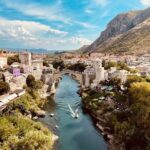
Mostar’s bridges tell stories fast. In a 90-minute private walk, you’ll link UNESCO-era streets, classic Ottoman-era spots, and the riverfront with a local guide who knows how to turn stones into scenes.
I love two things most: you get a UNESCO Old Town guided stroll, and the stop at Kajtaz House comes with two free entry tickets. You’ll also get real talk about local wines and traditional foods, not just dates.
One consideration: it’s moderately demanding, with cobblestones and some tricky footing—especially if you’re using a wheelchair or you want to get close to the old bridge. The guide can help you adapt the plan.
In This Review
- Key highlights worth planning for
- Mostar’s story, in a 90-minute walking rhythm
- Where the tour starts: church-front meeting and fast orientation
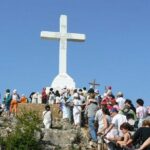
- Peace Tower and Franciscan Church: the “why this place matters” start
- Old Bazar lanes and the UNESCO Old Town feel
- Tabacica Mosque, Turkish bath, and the Crooked Bridge photo moment
- Kajtaz House: the small ticket that changes how you see Mostar
- Koski Mehmed-Pasha Mosque: photo stop and cultural context
- Pesko family residence: war devastation seen up close
- Old clock tower and the return to the UNESCO riverfront rhythm
- The Old Bridge, cave stop, and that classic jump tradition
- Blagaj, wines, and traditional foods: the cultural thread you’ll remember
- Price and what you’re really paying for
- Who this tour suits best (and who might want to plan differently)
- Practical tips for a smoother, happier walk
- Should you book this Mostar Through History tour?
- FAQ
- How long is the Mostar thru history private tour?
- What languages are available for the live guide?
- Is this a private tour or a group tour?
- What’s included in the guided experience?
- Are any entrance fees optional during the tour?
- Does the tour include UNESCO Old Town?
- Is the tour wheelchair accessible?
- What is the cancellation policy?
Key highlights worth planning for
- UNESCO Old Town zone guided on foot with a local licensed guide (also a librarian)
- Kajtaz House visit with two free entry tickets included
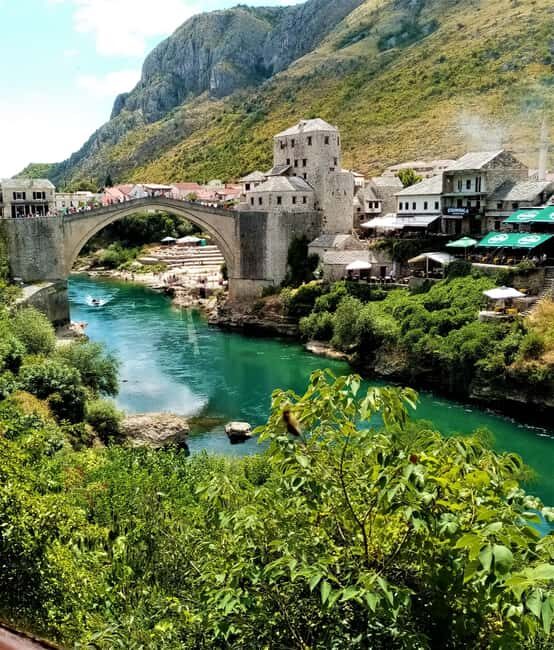
- Photo moments built in at the Crooked Bridge, clock tower, and along the Old Bridge
- Clear context for what changed after the last war, including a stop connected to the Pesko family residence
- A human-sized cultural add-on: stories about Herzegovina wines, traditional foods, and Blagaj’s river-source legend
Mostar’s story, in a 90-minute walking rhythm
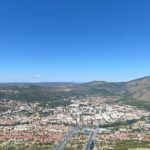
This tour is short on paper and long on meaning. Mostar can feel like a postcard—then you look closer and realize the town is a living timeline: Ottoman-era architecture, Austro-Hungarian-era layers, and the scars of the last conflict all sitting within a few turns of the street.
You’ll move at a walking pace that makes sense for sightseeing, with stops where you can pause, ask questions, and take photos without feeling rushed. The big win here is the guide’s style: they explain events and culture in a way you can actually follow, so you finish with a clearer picture of how the city works.
It’s also priced for what you get. $44 per person for a private, licensed-guided walk is a solid value in a place where self-guided wandering can leave you missing the story. You pay less than a full-day tour would cost, but you still get the “I get it now” effect.
You can also read our reviews of more private tours in Mostar

Where the tour starts: church-front meeting and fast orientation
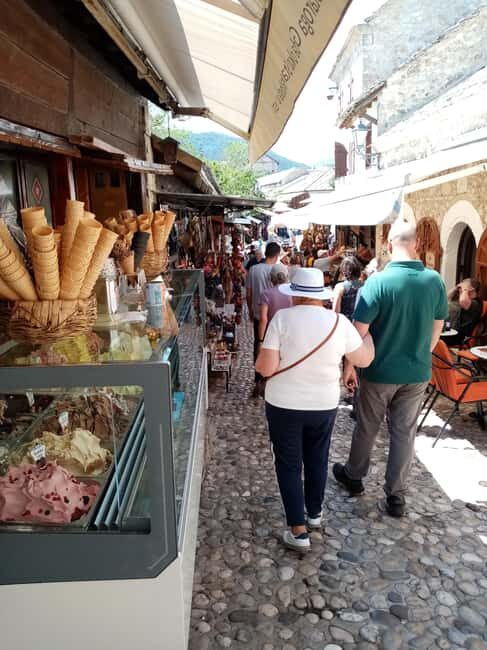
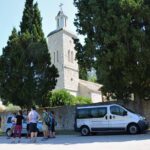
You’ll meet in front of the main entrance to the church. When groups are coming in, the guide typically appears early, which helps you settle in fast and avoid the classic travel stress of searching around with your phone held up like a lonely flag.
From there, the route kicks off with the key landmarks you need for orientation: the walk heads toward the Peace Tower and the Franciscan Church area. This early section matters because it helps you understand Mostar’s geography before you start threading through the Old Town lanes.
If you like learning as you go, this structure works well. You’re not stuck in one museum room reading plaques—you’re outside, walking the same paths that shaped the town’s daily life.
Peace Tower and Franciscan Church: the “why this place matters” start
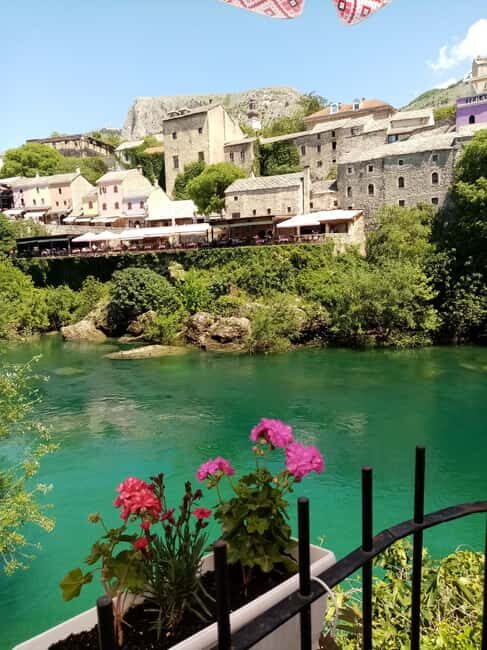
Even if you’ve seen churches on other European trips, the Franciscan zone gives Mostar a distinct flavor. It’s one of those spots where you can feel the mix of cultures in the city’s long back-and-forth history.
What I like about starting here is that it sets a tone: Mostar isn’t one story. It’s multiple communities living side by side, sometimes peacefully, sometimes not. The guide connects those layers as you walk, so later stops make more sense.
You’ll also get your first “street-level” view—where buildings sit, how the riverfront relates to the market streets, and how people historically moved through town.
Old Bazar lanes and the UNESCO Old Town feel
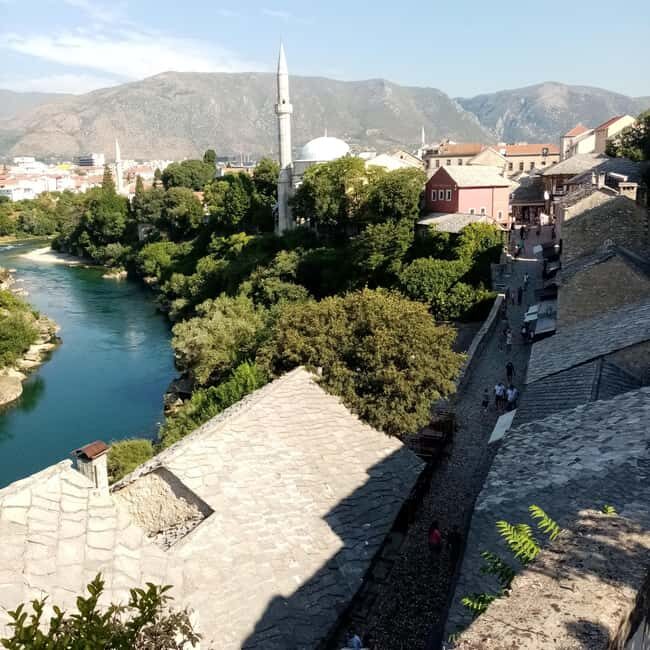
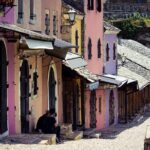
Once you’re into the Old Bazar area, the tour shifts into what Mostar does best: compact streets with big atmosphere. You’ll stroll toward the Old Town zone and continue along the main thoroughfare.
The guide steers you into the right order of sights, and that helps. It’s easy to bounce around in Mostar on your own and miss the connections—like how religious sites, public baths, and market life fit together.
Expect small pauses along the way. This is not just a “see it, move on” route. It’s more like: walk, stop, look, then the story clicks.
Tabacica Mosque, Turkish bath, and the Crooked Bridge photo moment
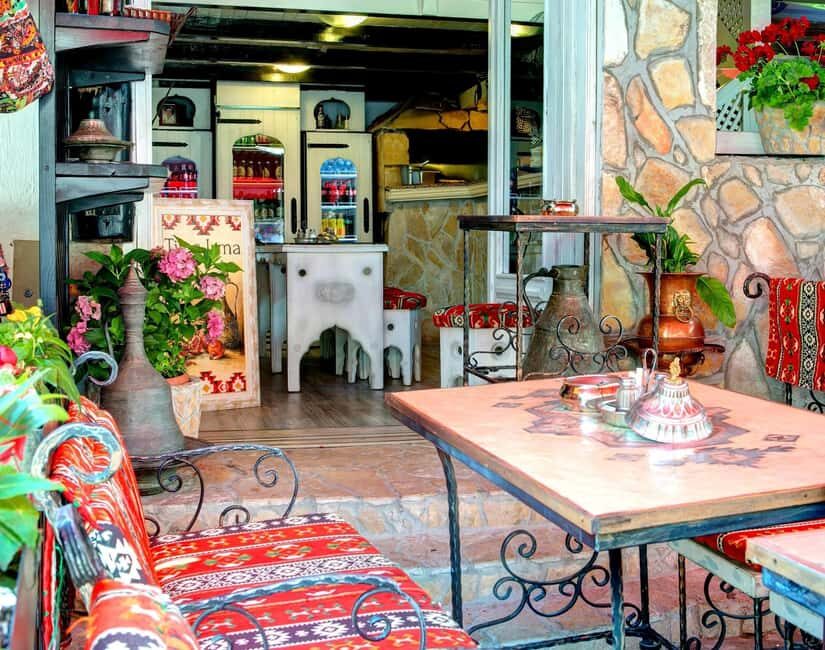
The route brings you past the Tabacica Mosque and the public Turkish bath. These stops are worth your attention because they explain everyday history. Not every heritage site is a palace or a grand square. In Mostar, the public bath and the mosque zone show how daily routines shaped the town.
Then comes one of Mostar’s best photo stops: the Crooked Bridge. It’s often described as the tiniest bridge in Mostar, and the key here isn’t only the angle—it’s the view and the weird charm of something built to fit the town’s needs.
If you want photos without fighting the crowd, time it with the guide’s pacing. You’ll have a planned moment to stop and shoot, and the guide can also suggest where to stand for a cleaner angle of the bridge and the river.
You can also read our reviews of more historical tours in Mostar
Kajtaz House: the small ticket that changes how you see Mostar
This is one of the best parts of the whole experience. You’ll visit Kajtaz House for about 25 minutes, and—key detail—two free entry tickets are included with the tour.
Kajtaz House isn’t about big spectacle. It’s about scale. You see what “home” meant in Mostar’s past, and you understand how ordinary life sat inside the broader city story you’ve been hearing.
I also like that this stop gives you a break from pure outdoor walking. It’s still part of the same narrative, but it lets you reset with something calmer.
If you want a trip where the city feels personal instead of just scenic, this house stop pulls its weight.
Koski Mehmed-Pasha Mosque: photo stop and cultural context
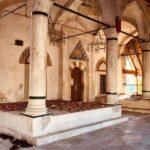
Next you’ll reach the Koski Mehmed-Pasha Mosque area. You’ll have time for a photo stop, so you can capture the mosque and the surrounding Old Town streets.
This stop matters because it completes the “Ottoman-era map” of what you’ve been seeing—especially after the Turkish bath and other mosque-related spots. The guide helps you connect them to how the town functioned, not just how it looked.
You’ll also get the chance to adjust based on what you want. If you’re the type who loves architecture, you can ask questions and slow down for details around the area.
Pesko family residence: war devastation seen up close
One of the most powerful sections of the tour involves the family Pesko residence, where you’ll witness devastation connected to the last war.
This is not a heavy, lecture-only stop. It’s a place that makes the story concrete. You’ll understand what was lost and why rebuilding wasn’t just about restoring buildings—it was also about restoring daily life and trust.
If you prefer history that you can stand in, look at, and absorb with your own eyes, this part is a big reason to book a guided walk here. It’s also where a local guide’s perspective carries extra weight.
A theme that shows up in past guide experiences: they explain events without drowning you in a flood of names and dates. That makes the impact easier to hold onto.
Old clock tower and the return to the UNESCO riverfront rhythm
After the Pesko stop, you’ll continue toward the Old clock tower. A tower like this is a small object, but it helps you “read” time in the city—how people oriented their day, how urban life structured itself.
Then you’ll loop back into the Old Town area again, with stops that keep you oriented: including another look near the Koski Mehmed-pasha Mosque area, before you continue back through the bazar corridors.
At this stage, the tour starts to feel like you’re walking a story you already began learning. You notice more because the guide built the framework earlier.
The Old Bridge, cave stop, and that classic jump tradition
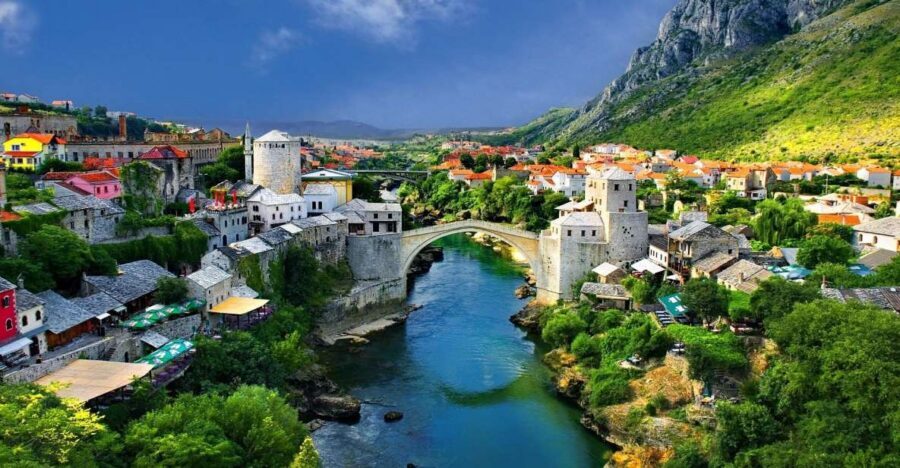
The mid-to-late section is where Mostar looks its most iconic. You’ll visit the area connected to the famous Old Bridge and you may also include a cave stop along the way, depending on your route flow.
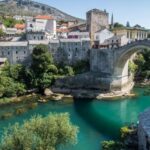
Here’s a unique bonus: if timing lines up, you might even see the Red Bull-style cliff-jump event from the bridge, tied to a tradition that’s been around for about 400 years. Even if you don’t catch the action, the bridge itself is where everything comes together—the river, the stonework, and the crowd-energy of the Old Bridge area.
There’s also an optional moment for river-and-bridge photos, including a walk-under-the-bridge perspective. This is where you can get the shot that looks like it belongs on a travel poster—without feeling like you’re just copying someone else’s picture.
Blagaj, wines, and traditional foods: the cultural thread you’ll remember
Not every tour delivers culture beyond buildings. This one does it in a smart way: you’ll hear stories about wines and traditional foods, and you’ll get background on Blagaj, including the fact that it’s associated with the biggest river source in Europe.
Even when you’re not visiting every location in person, these stories give your walking route more meaning. Blagaj’s river-source legend explains why this region matters, and the food and wine talk makes the culture feel lived-in rather than museum-like.
If you like tours that leave you wanting to eat and taste after the fact, this is a good fit.
Price and what you’re really paying for
At $44 per person for about 90 minutes, the value comes from three things:
- Local, licensed guidance: not just a quick recitation of facts.
- Targeted stops that you’d struggle to stitch together well on your own (Mosque and bath context, bridge rhythm, Kajtaz House).
- Two free entry tickets for the oldest house-museum (Kajtaz House), which turns the tour into more than a scenic walk.
You do need to know what’s not included. Food and drinks are on you. There are also optional add-ons like the war museum (listed as 9 Euro), and there may be entry fees for the Koski Mehmed-pasha Mosque (listed as 8 Euro) depending on whether you choose to go inside.
For most people, this pricing works because Mostar’s best moments are packed into short distances—and a good guide helps you catch what matters without adding extra hours.
Who this tour suits best (and who might want to plan differently)
This tour is ideal if you:
- Want a private walking guide in Mostar’s Old Town zone
- Like history told in plain language, with context that doesn’t rely on a timeline you have to memorize
- Care about seeing how the town’s past still shows up in everyday spaces
It’s also a solid first activity in Mostar. You’ll come away with enough orientation to wander more confidently afterward, knowing what you’re looking at and why it matters.
One note for comfort: it’s listed as wheelchair accessible, but the ancient streets are cobblestoned and crossing the Old Bridge can be difficult. The guide can show you where to observe without forcing risky steps.
If you’re sensitive to uneven ground, wear supportive shoes and plan to take your time.
Practical tips for a smoother, happier walk
The tour includes walking through historic stone streets, so comfortable clothes are a must. In the summer months, bring a hat and sunglasses—it can get sun-heavy.
Also, since this is a private group, you can usually ask your guide to adjust pacing and emphasis. Some past experiences also show that if a specific site can’t be accessed, the guide can rework the route on the fly so you still get a strong story arc.
If you’re planning photo time, tell your guide what you care about most—bridge angles, mosque architecture, or river shots. You’ll get better results when the guide knows your goal.
Should you book this Mostar Through History tour?
Yes, I’d book it if you want Mostar with context, not just views. The UNESCO Old Town walk, the Kajtaz House visit with included tickets, and the chance to understand the town’s layered story through a local licensed guide are the core reasons.
Skip it only if you’re looking for a slow, fully accessible stroll with minimal uneven ground. The tour can be adapted, but the cobblestone reality of Mostar is still part of the experience.
If you’re here for a short stay and you want your time to “click,” this is a smart way to start.
FAQ
How long is the Mostar thru history private tour?
It’s 90 minutes.
What languages are available for the live guide?
The tour is offered with a live guide in English and Dutch.
Is this a private tour or a group tour?
It’s listed as a private group tour.
What’s included in the guided experience?
You get a guided walking tour with a local licensed guide and two free entry tickets for the oldest house-museum of Mostar (Kajtaz House).
Are any entrance fees optional during the tour?
Yes. The war museum is listed as 9 Euro optional, the Koski Mehmed-Pasha Mosque entry is listed as 8 Euro optional, and the oldest house-museum entry is listed as 3 Euro optional.
Does the tour include UNESCO Old Town?
Yes. It includes a guided visit to the UNESCO Old Town zone of Mostar.
Is the tour wheelchair accessible?
It’s wheelchair accessible, but the ancient town cobblestone streets may require assistance, and crossing the ancient bridge is difficult. The guide will show you locations to observe.
What is the cancellation policy?
You can cancel up to 24 hours in advance for a full refund.