REVIEW · SARAJEVO
Sarajevo Assassination: The Spark of World War I
Book on Viator →Operated by Insider Ltd · Bookable on Viator
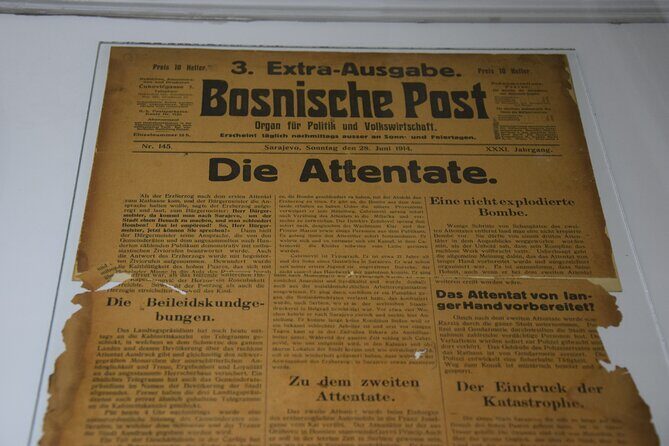
World War I starts with one street corner. This tour turns Sarajevo into a clear, walkable story of the events around Archduke Franz Ferdinand and how one attack helped spark World War I. I like that it is easy to find the meeting spot, and I also like the small-group setup that keeps the pace human.
The main trade-off: two museum stops cost extra. If you do both the VRX museum and the Sarajevo Museum 1878–1918, your total spend rises quickly, even though most other sights are free.
In This Review
- Key takeaways before you go
- How This 2-Hour Sarajevo Route Fits a Full Day
- Easy Start at Sarajevo Insider, Then Off on Foot and Short Stops
- Saint Mark Cemetery: Meeting Gavrilo Princip and Young Bosnia’s Memory
- Austro-Hungarian Governance in the Modern Streets: Presidency, Konak, and City Hall
- VRX Museum: Optional but Powerful for Understanding the Timeline
- Eternal Flame and Markale: Two Stops That Show How Sarajevo Lived
- Katedrala Srca Isusova and the Latin Bridge: Where the Route Becomes Personal
- Sarajevo Museum 1878–1918: Artifacts and the Aftermath (Optional Ticket)
- Konak and Sarajevska Pivara: The Empire’s Home Life and Industry
- What the Licensed Guide Adds (Beyond Facts)
- Price and Value: $29.59 Works Best If You Know Your Museum Plan
- Who This Tour Is For
- Should You Book the Sarajevo Assassination: The Spark of World War I Tour?
- FAQ
- How long is the Sarajevo assassination tour?
- What time does the tour start?
- Is the tour offered in English?
- How big is the group?
- Where do I meet the guide?
- Does the price include museum entry fees?
- Are the other stops free to visit?
- What’s included in the tour price?
- What is the cancellation policy?
Key takeaways before you go
- A tight 2-hour format (then you’re done, with the rest of the day free)
- Max 15 people so you get real attention, not a loud herd
- Princip’s burial site and a memorial to Young Bosnia start you off with context
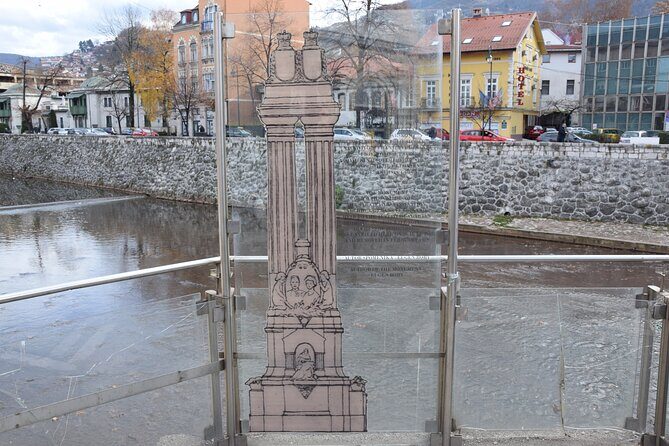
- Latin Bridge and the motorcade area give you the moment the world changed
- Two optional paid interiors let you choose depth vs. budget
How This 2-Hour Sarajevo Route Fits a Full Day
This is a 2-hour, morning-style tour that starts at 10:00 am and ends back at the meeting point. That matters in Sarajevo, because the city is best enjoyed slowly after you get oriented. You’ll leave with a mental map of the key Austro-Hungarian sites and the assassination route, then you can explore on your own.
The tour is priced at $29.59 per person, which is low for what you get: a licensed guide, an air-conditioned vehicle, and a city map included. Most stops are outside and free, so you’re not paying entrance fees every 10 minutes.
One more practical point: because it’s English and capped at 15 travelers, the guide can keep explanations coherent and answer questions without rushing you. It is not a long, exhausting marathon. It is built to connect dots fast.
You can also read our reviews of more tours and experiences in Sarajevo.
- Fall of Yugoslavia, Sarajevo War Tour with Tunnel of Hope Museum and Frontlines
★ 5.0 · 1,314 reviews
Easy Start at Sarajevo Insider, Then Off on Foot and Short Stops
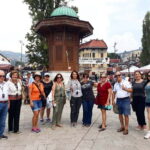
Your tour begins at Sarajevo Insider – City Tours and Excursions, Zelenih beretki 30, Sarajevo. The meeting point is set up so you can actually find it—important when you’re arriving in a city that likes to keep things a little old-school and winding.
You also get a city map, which sounds basic until you realize how many streets in central Sarajevo feel connected. This map helps you turn what you saw on the tour into your own self-guided route later.
And yes, there’s an air-conditioned vehicle for the connections between sites. You’ll still do walking and standing outside at multiple locations, but the transport piece makes the timing work.
Saint Mark Cemetery: Meeting Gavrilo Princip and Young Bosnia’s Memory
Your first major stop is Saint Mark Cemetery, including the Vidovdan Heroes Chapel. This is where Gavrilo Princip and several of his fellow conspirators are buried. The important detail here is not only who is buried there, but why the Austro-Hungarian authorities kept things secret at the time. That secrecy is part of the pressure-cooker atmosphere of 1914.
The chapel adds another layer. It functions as a memorial tied to the Young Bosnia movement—the group connected to the ideas and networks behind the assassination. So in one spot, you get both the personal story (Princip) and the political story (Young Bosnia and the broader tensions).
Timing is generous for a site like this: about 20 minutes, and admission is free. The drawback is also predictable: cemeteries ask for respect and quiet, so you will want to keep your phone away and treat this as a reflective start, not a photo walk.
Austro-Hungarian Governance in the Modern Streets: Presidency, Konak, and City Hall
After the cemetery, the tour shifts to the political center of Sarajevo under Austro-Hungarian rule. You’ll see the Presidency of Bosnia and Herzegovina building from the outside. The key value here is geographic: on June 28, 1914, the Archduke’s motorcade passed through Sarajevo’s streets not far from there. Even if you don’t go inside, the building’s position helps you understand the imperial worldview that shaped governance.
Then you’ll also visit Konak, the former residence of Austro-Hungarian governors. The guide’s focus on decision-making hours is what makes this stop click. It’s not just architecture; it’s the sense that, while Sarajevo had its daily life, the machinery of empire was already moving.
Finally, you’ll reach Sarajevo City Hall (Vijećnica) area. The tour frames it around the official reception tied to Franz Ferdinand, just before the assassination. Admission here is not included, so if you want to enter, you may need a separate ticket (the tour itself does not include entry).
Short stops like these can feel quick, but that is the point of the format. You get the main bearings for later.
VRX Museum: Optional but Powerful for Understanding the Timeline
Next comes Sarajevo Vrx Immersive Museum, where you can experience a virtual, guided-style presentation of Austro-Hungarian Sarajevo and the moments leading up to the assassination. The tour time is around 15 minutes, and the VRX museum entry fee is not included.
You should only add this if you’re the kind of person who learns well by seeing events visualized. If you’re more interested in street-level history and don’t want extra costs, you can treat this as an optional add-on and focus on the outdoor route.
The budget consideration is real: VRX is 20 BAM (about €10) per person. Still, it can be worth it if you want the assassination day to feel less like a textbook chapter.

Eternal Flame and Markale: Two Stops That Show How Sarajevo Lived
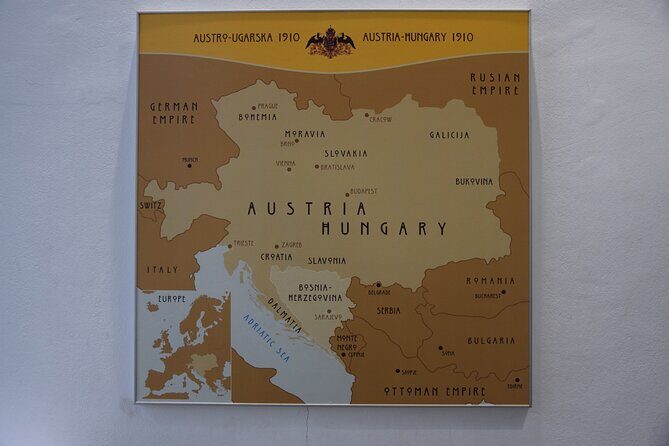
Between the biggest historical sites, you’ll make small connections that help Sarajevo feel like a real place, not just a map of famous corners.
You’ll stop at the Eternal Flame, which is primarily a World War II memorial. Why include it on a WWI-focused route? Because it sits near Austro-Hungarian-era buildings that were part of the imperial story around 1914. This stop helps you see layers of history stacked in the same central area.
Then you’ll reach Pijaca Markale (Markale Market), established during Austro-Hungarian rule. The guide points out that it became a trade hub during the empire’s modernization efforts, which is a reminder that Sarajevo wasn’t only politics and power. It was also daily routines, shopping, and social life.
Even though the assassination is the headline, these short stops let you picture the morning crowd. Admission here is free, and each visit is brief (around 3–5 minutes), which works well within the 2-hour structure.
Katedrala Srca Isusova and the Latin Bridge: Where the Route Becomes Personal
This is the part you remember. The tour passes the Katedrala Srca Isusova, a Neo-Gothic cathedral built in 1889. The guide frames it as part of Austro-Hungary’s attempt to strengthen its presence in Bosnia. It also sits along the motorcade route area, so it’s not random sightseeing—it’s part of the geometry of the day.
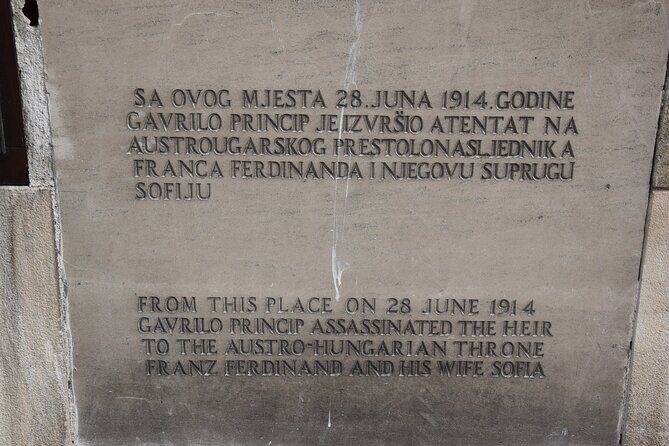
Then comes Latin Bridge, one of Sarajevo’s best-known landmarks. The bridge is tied to Gavrilo Princip firing the shots that changed world history. You get about 15 minutes here, and admission is free.
This is also where good guiding makes history feel real. One of the standout touches from a past participant’s experience is that the guide pointed out the door of the nearby coffee shop used as a key reference for where the fatal shot was fired. Seeing the location described with that kind of specificity makes the moment less abstract.
If you’re the type who likes to visualize events as you walk, this is your stop.
Sarajevo Museum 1878–1918: Artifacts and the Aftermath (Optional Ticket)
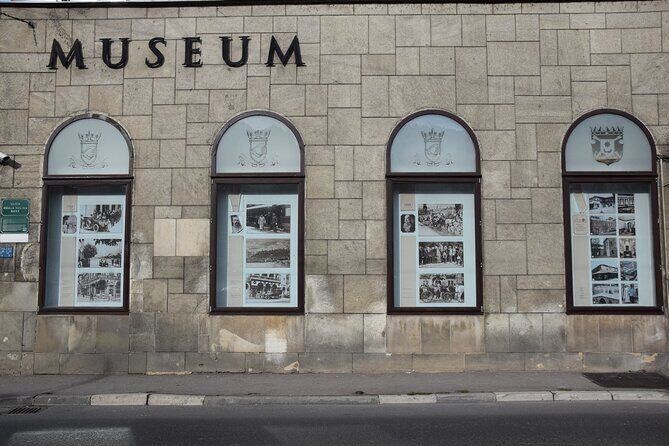
Near Latin Bridge, you’ll have the option to visit Sarajevo Museum 1878 – 1918. This is where the story gets more detailed through exhibits and artifacts related to the Austro-Hungarian period and the assassination.
The museum is about 15 minutes within the tour flow. Admission is not included, and the entry fee is 5 BAM (about €3) per person.
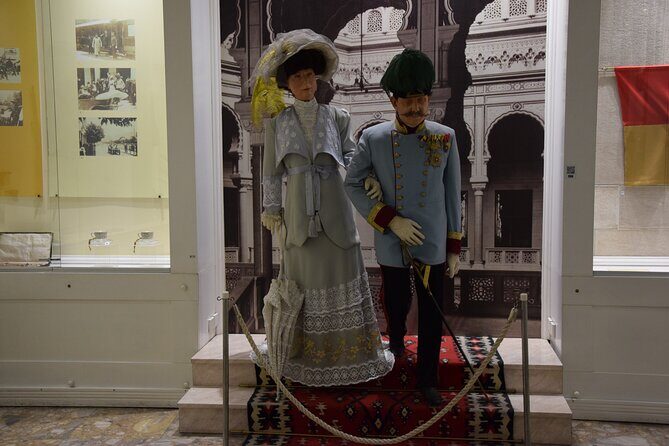
If you add this, you’ll leave with a clearer sense of what Austro-Hungarian rule looked like before 1914 and how nationalist tensions grew afterward. It’s also where exhibits about Franz Ferdinand’s visit and the immediate aftermath help connect the outdoor stops you just walked.
The only downside is simple: it adds cost and time. But in a 2-hour tour, 15 minutes is still a compact investment.
Konak and Sarajevska Pivara: The Empire’s Home Life and Industry
As the tour approaches its closing loop, you’ll pass through spaces that round out what Austro-Hungarian Sarajevo meant to daily people.
Konak highlights the residence of governors and the imperial presence in the city. It’s the earlier stop that makes your later understanding sharper.
Then you’ll make a short visit connected to Sarajevska Pivara (Sarajevo Brewery). The tour frames the brewery as a hub of industrial progress and social gatherings. On the day of the assassination, it becomes a kind of silent witness—proof that people were still eating, chatting, and going about normal life while the political world shifted under everyone’s feet.
This stop is only about 3 minutes, admission is free, and it works best as a mood-setter rather than a deep dive.
What the Licensed Guide Adds (Beyond Facts)
What makes this tour feel worthwhile is the way the guide turns a chain of famous names into an understandable sequence. You’re not just standing at plaques—you’re getting explanations that connect the sites to the flow of June 28, 1914.
There’s also a human, slightly humorous tone. That matters because the subject is tragic and heavy, and humor here is used to keep you listening rather than to make light of suffering.
A practical bonus from one participant’s experience: at the end, they received a book that lays out the fates of the five conspirators in the plot. Even if you already know the ending, having it packaged like that helps you remember who mattered and what happened next.
Price and Value: $29.59 Works Best If You Know Your Museum Plan
At $29.59, you’re paying for a lot of organization: licensed guide, air-conditioned vehicle, a city map, and a structured route through the key assassination-related sites. Since most stops have free admission, your spend mostly stays controlled.
Your likely optional costs are:
- VRX Museum: 20 BAM (about €10), not included
- Sarajevo Museum 1878–1918: 5 BAM (about €3), not included
You can do this tour on a budget by sticking to the outdoor free stops. Or you can pay for more context by adding both museums. Either way, the core tour still gives you the Sarajevo assassination “spine” so the extra interiors feel connected, not random.
Group size is another value point. With a maximum of 15 people, you get a smoother pace and less waiting at each site than you would on a bigger bus tour.
Who This Tour Is For
I think this is ideal if you want:
- A first-time Sarajevo orientation focused on the 1914 assassination trail
- A short morning plan that doesn’t swallow your whole day
- An English-speaking guide who explains the political context, not just the geography
- A small-group experience where you can actually track the story
It is also a strong fit if you love history but don’t want to spend all day reading museum labels. The outdoor stops give you the stage; the optional museums can give you the script.
Should You Book the Sarajevo Assassination: The Spark of World War I Tour?
Book it if you want a tight, guided walk through the key locations tied to Gavrilo Princip, Archduke Franz Ferdinand, and the Austro-Hungarian atmosphere that helped trigger WWI. The price is fair for what’s included, and the small group keeps it thoughtful.
Consider skipping one or both ticketed interiors if you’re trying to keep costs down. The free sights still give you the core story—Latin Bridge, the cemetery, and the surrounding Austro-Hungarian-era landmarks do most of the heavy lifting.
If you can swing the extra fees and you like learning through visual presentation and artifacts, then add the VRX museum and the 1878–1918 museum for a fuller picture.
FAQ
How long is the Sarajevo assassination tour?
It’s about 2 hours long.
What time does the tour start?
The start time is 10:00 am.
Is the tour offered in English?
Yes, it is offered in English.
How big is the group?
The tour has a maximum group size of 15 travelers.
Where do I meet the guide?
Meet at Sarajevo Insider – City Tours and Excursions, Zelenih beretki 30, Sarajevo 71000.
Does the price include museum entry fees?
No. The Sarajevo Museum 1878 – 1918 entry fee is 5 BAM (about €3) per person, and the VRX Museum entry fee is 20 BAM (about €10) per person.
Are the other stops free to visit?
The tour lists free admission for stops like Saint Mark Cemetery (including the Vidovdan Heroes Chapel), Eternal Flame, Markale Market, the cathedral, Latin Bridge, Konak, Sarajevska Pivara, and other exterior sites. City Hall entry is not included.
What’s included in the tour price?
Included items are a licensed guide, an air-conditioned vehicle, and a city map.
What is the cancellation policy?
You can cancel for a full refund if you cancel at least 24 hours before the experience’s start time. Free cancellation is offered up to that point.
If you cancel less than 24 hours before, the amount you paid won’t be refunded.
You Might Also Enjoy

More Tour Reviews in Sarajevo
- Fall of Yugoslavia, Sarajevo War Tour with Tunnel of Hope Museum and Frontlines
★ 5.0 · 1,314 reviews