REVIEW · MOSTAR
Mostar Street Art & Graffiti Tour
Book on Viator →Operated by Touristica - Mostar Tourist Guide · Bookable on Viator
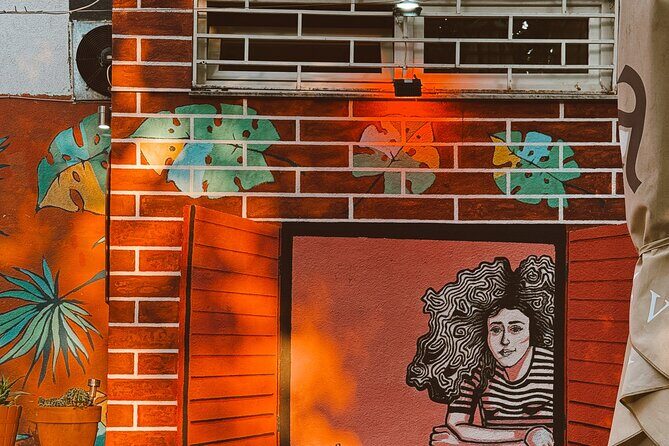
Street art in Mostar is not decoration. It’s a way of talking. This 90-minute walk leads you to wall art, facades, and culture spots, with a local artist guiding the meaning behind what you’re seeing. I love how the tour mixes places (real buildings and squares) with stories (why these images appeared when they did).
You’ll also get time to ask questions and take photos without feeling rushed. The biggest catch to consider is that it’s fully on foot, so plan for a comfortable walking pace through central Mostar for about 1 hour 30 minutes. If you’re expecting a museum-like, inside-only tour, this one is street-level and weather-dependent.
In This Review
- Key things to know before you go
- Street art with meaning: why this Mostar walk works
- Price and value: is $36.01 worth 90 minutes?
- Starting at Hotel Bristol: Neretva Hotel and the art of remembering
- Stop 1: Neretva Hotel (about 10 minutes)
- Fassadenmalerei: learning how facades become conversations
- Stop 2: Fassadenmalerei (about 40 minutes)
- OKC Abrašević: when street art sits inside real culture
- Stop 3: OKC Abrašević (about 10 minutes)
- Španski trg and the Mostar Gymnasium: art beside memory and protest
- Stop 4: Spanish square (about 30 minutes)
- What the guide actually adds (and why you’ll feel it fast)
- Logistics that matter: timing, pace, and how to prepare
- Who this tour is best for
- A practical tip for getting more from the murals
- Should you book this Mostar Street Art & Graffiti Tour?
Key things to know before you go
- Local artist guide: you’ll hear the stories behind the murals, not just descriptions of color and style
- Four focused stops: Hotel Neretva, Fassadenmalerei facades, OKC Abrašević, and Španski trg
- Photo time built in: you get pauses for pictures and questions during the walk
- Small group size: up to 8 people, which helps you actually talk with the guide
- Free admissions at stops: each stop is listed with free ticket access
- English tour: mobile ticket and English-speaking guide make it easy to follow
Street art with meaning: why this Mostar walk works
Mostar has plenty of sights you can tick off fast. This tour takes a different angle. Instead of treating street art as background, you learn how it functions as voice, memory, and protest—sometimes all at once.
What I liked most is that you’re not just looking at graffiti like it’s random. You’re standing in front of buildings that carry scars, renovations, and shifts in who gets to express themselves. That context matters. Without it, you might see the artwork and miss the point.
Also, the group stays small (max 8). That changes the feel. You can ask, pause, and keep up with the story instead of getting swept along like a line at a ticket window.
You can also read our reviews of more tours and experiences in Mostar.

Price and value: is $36.01 worth 90 minutes?
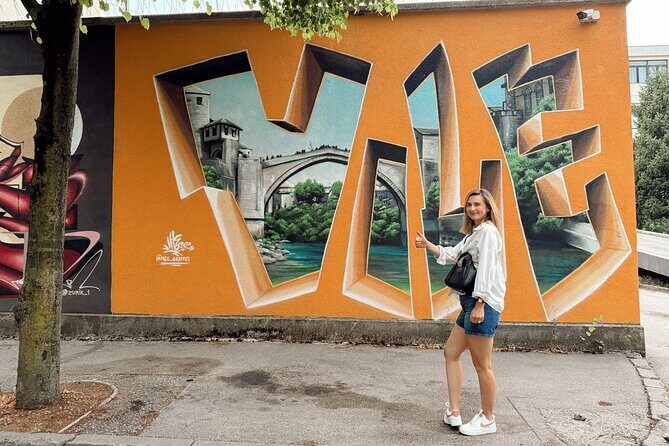
At $36.01 per person, this is priced like a short guided experience. For Mostar, that’s actually fair—especially because the tour includes a guided walk by a local artist plus insider stories tied to specific places.
Here’s where the value comes from for you:
- You’re paying for interpretation, not just movement. The guide connects the art to the city’s social and regional context.
- Stop admissions are free at each listed location, so you’re not paying extra on the spot.
- You get built-in time for photos and questions, which is often missing from quick walks.
The main tradeoff is simple: it’s on foot with no transportation included. If you’re staying a distance away, you’ll want to factor in how you’ll get to the start point at Hotel Bristol, Mostarskog bataljona bb. But once you’re there, the pace is designed for a comfortable city walk.
Starting at Hotel Bristol: Neretva Hotel and the art of remembering
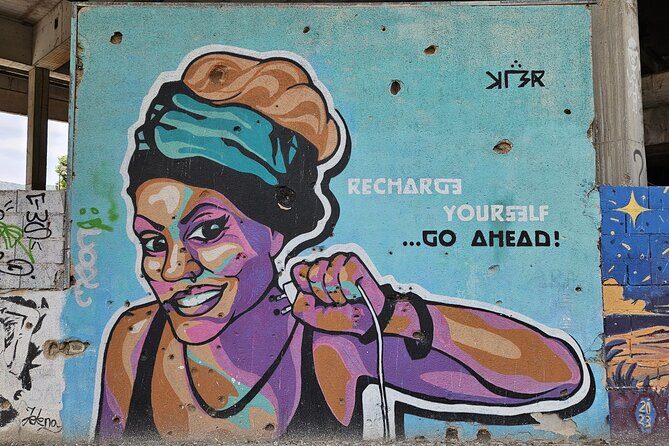
The tour begins at Hotel Bristol and soon gets you to Hotel Neretva, where the whole vibe shifts from streets-as-pictures to streets-as-history.
Stop 1: Neretva Hotel (about 10 minutes)
Hotel Neretva is described as one of Mostar’s architectural gems, restored to reflect an Austro-Hungarian elegance. The key story is what happened after the war: it was left in ruins for years, becoming a visible symbol of destruction. Over time, the area collected raw graffiti and informal street art around that damage.
That combination is the point. You’re looking at architecture that was damaged, then restored, while street marks acted like an ongoing commentary from people living nearby.
What you should watch for: don’t just scan the walls. Pay attention to the contrast between restored elegance and the rough, unfinished feeling you might associate with post-conflict spaces.
Possible drawback: since this stop is short (around 10 minutes), you’ll want your questions ready early. If you’re the type who likes to linger and read everything slowly, this first moment may feel like a quick introduction.
Fassadenmalerei: learning how facades become conversations
Next, you hit Fassadenmalerei, and this is where the tour slows down.
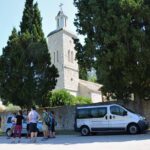

Stop 2: Fassadenmalerei (about 40 minutes)
You’ll stand in front of facades and hear stories about the artists behind the murals, plus the creative process. The guide also connects the art to daily life—how it feels living among it—and includes personal memories from when these works were being painted.
This stop is long for a reason. Murals don’t work like one-off street tags. A facade piece often becomes part of the neighborhood routine: people pass it every day, and the image starts to mean something beyond the day it was created.
I like this part because it teaches you a useful habit for street art anywhere: ask what the artist wanted to say, then ask what the neighborhood turned it into over time.
What you should expect: lots of talking and looking at details, with time to ask questions and take photos.
Possible drawback: 40 minutes is a lot if you’re not in the mood to listen. If you prefer a quick, visual-only tour, you may want to keep your expectations flexible. The payoff is that you come away understanding why the artwork exists here, not just what it looks like.
OKC Abrašević: when street art sits inside real culture
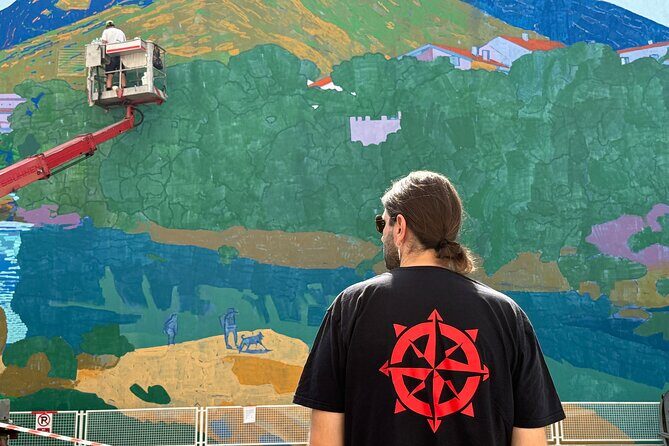
After the facades, you move to OKC Abrašević—described as a living cultural hub, not just a painted wall.
Stop 3: OKC Abrašević (about 10 minutes)
This venue sits among raw urban textures and experimental murals. It’s framed as a long-time meeting point for young creatives, activists, and artists.
That framing matters. You’re not only learning about completed art; you’re learning about the ecosystem that produces it. In other words, the walls aren’t the whole story. The people and the culture around them are.
I also think this is a smart pacing move. After the heavier meaning of Neretva and the detailed facade stop, you get a breath—still short, but with a different angle.
Possible drawback: 10 minutes means you’ll get the overview, not a full tour of the venue itself. If you want to explore longer, plan to continue on your own after the walk ends at Španski trg.
Španski trg and the Mostar Gymnasium: art beside memory and protest

The final stop is Spanish square (Španski trg), and it connects two time periods: Austro-Hungarian heritage and wartime division evolving into expression and reflection.
Stop 4: Spanish square (about 30 minutes)
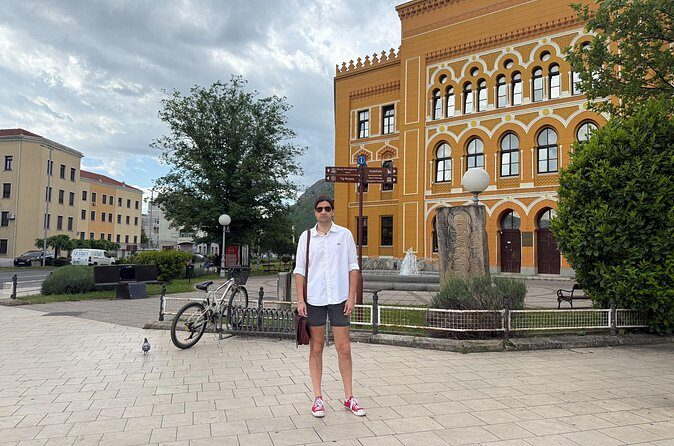
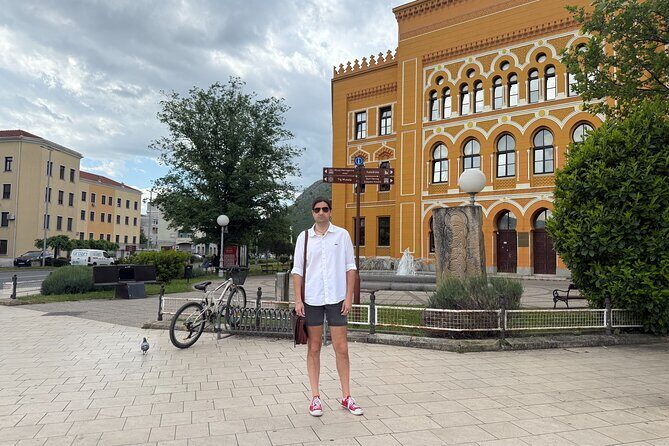
You’ll see the elegant Austro-Hungarian Mostar Gymnasium nearby. Then the story turns toward what young artists do today—graffiti and stencils reclaiming space in a modern voice.
You’ll also hear about the Monument to the Spanish Fighters, and how the area evolved from division during wartime toward protest, expression, and quieter reflection.
This is the part that makes the whole tour click for me. The earlier stops explain the art on walls. This stop shows art and symbols in the same frame as civic identity and memory.
What you should look for: notice how the mood changes from stop to stop. The guide’s explanations help you read the area like a layered document—architecture, monument, and street marks all speaking at once.
Possible drawback: you’ll likely want to linger in this area after the tour, especially if you’re photographing. The tour duration is set for walking, so you should treat the guide time here as the story primer—not the final word.
What the guide actually adds (and why you’ll feel it fast)
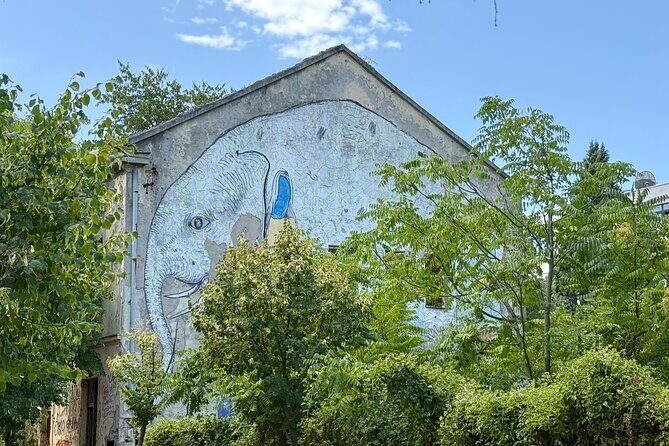
This experience is guided by a local artist, with insider stories behind murals and festivals. Even when the stops are short, the guide’s angle gives you a mental map for what you’re seeing.
Here’s what that means for you during the walk:
- You’ll learn what a symbol might mean instead of just naming it.
- You’ll hear how the creative process is shaped by the community around it.
- You’ll understand why some art looks rough or urgent—it often responds to real life, not art trends.
And the small group size helps you take advantage of time for photos and questions. If you’re curious, don’t be shy. Ask how someone decides where to paint, or what changed when murals were made. Those kinds of questions usually land well here because the tour is built around the people behind the work.
Logistics that matter: timing, pace, and how to prepare
- Duration: about 1 hour 30 minutes
- Walking: fully on foot
- Start/End: starts at Hotel Bristol (Mostarskog bataljona bb) and ends at Španski trg
- Language: offered in English
- Ticket style: mobile ticket
- Group size: maximum 8
Because it’s walking-based, you’ll enjoy it more if you wear comfortable shoes. Also, Mostar weather can change quickly, so bring a light layer if you’re going in shoulder season.
If you’re a solo traveler or you’re short on time—this is a strong pick. It hits multiple meaningful points without making you spend your whole day traveling between them.
Who this tour is best for
This is a great match if you:
- like street art that comes with context, not just visuals
- want a short tour that still tells you why the city looks the way it does
- enjoy asking questions and talking with a local guide
- only have a limited window in Mostar but still want more than the standard checklist
It’s less ideal if you:
- want a purely passive sightseeing stroll with minimal explanation
- hate walking and long-standing still-for-stories moments (there’s plenty of standing at each stop)
A practical tip for getting more from the murals
Go in ready to look twice. First pass: color, style, and placement. Second pass: what the guide says and how that changes your interpretation.
If you care about photos, use the guide’s prompts. The tour includes time for pictures, and the best shots often come when you understand what part of the wall matters—composition, nearby landmarks, or the story behind a specific figure or symbol.
Should you book this Mostar Street Art & Graffiti Tour?
I think you should book it if you want your Mostar experience to feel human and connected. The tour is short, the group is small, and the guide brings interpretation through real places—Hotel Neretva, Fassadenmalerei, OKC Abrašević, and Španski trg—all tied into how expression changed over time.
Skip it only if you mainly want a fast, surface-level photo walk or you don’t want to spend 40 minutes focused on facades and the process behind the murals.
If you’re trying to choose one non-traditional activity in Mostar beyond the old-town rhythm, this is the kind that gives you something you’ll keep thinking about after your photos are taken.