REVIEW · MOSTAR
Mostar Old Town Walking Tour – Best Seller
Book on Viator →Operated by Fortuna Trade Tours Mostar d.o.o. · Bookable on Viator
Old Bridge stories in one easy walk. I love how this route connects the war-era meaning of Mostar’s landmarks to everyday life, and I love that you step inside Bišćevića House to see Ottoman rooms, wooden interiors, and handmade carpets. The pace stays friendly, but one consideration: the cobbled lanes mean you’ll want comfy shoes.
In about 1 to 2 hours, you’ll cover Španjolski trg (Spanish Square), the Old Town streets around the river, and the bridges that make Mostar famous. The tour is in English, the group cap is 15, and you’ll get a mobile ticket. Go with good weather, since this experience depends on it.
In This Review
- Key highlights you’ll feel right away
- Quick Orientation: What this Mostar Old Town walk really covers
- Španjolski trg (Spanish Square): the student crowd and a living meeting point
- Bišćevića House: Ottoman rooms, river views, and the feel of daily life
- Musala and the Neretva River edge: modern contrast, local coffee rhythm
- The riverside mosque detail: when the water shapes prayer
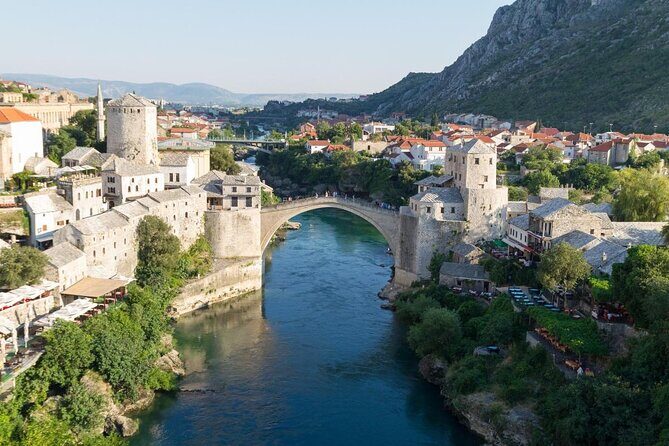
- Old Bridge area of the Old City: Stari Most and what reconstruction means
- Bazar Kujundziluk: coppersmiths, leather masters, and craft lanes
- Kriva Ćuprija (Crooked Bridge): Radobolja, arches, and a 16th-century reference
- Price and value: what $35.50 buys you in Mostar
- Who this Mostar Old Town walk suits best
- Should you book this Mostar Old Town Walking Tour?
- FAQ
- How much is the Mostar Old Town Walking Tour?
- How long is the tour?
- What language is the tour offered in?
- What’s the group size limit?
- What’s included in the price?
- What is not included?
- Where do we meet and where does it end?
- Is a mobile ticket provided?
- Is lunch part of the tour?
- Does the tour depend on weather?
- Can I cancel for a full refund?
Key highlights you’ll feel right away
- Small group (max 15): more chances to ask questions as you walk.
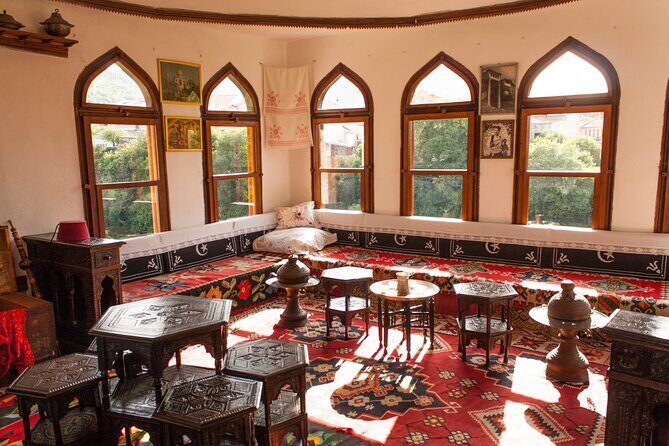
- Bišćevića House entry included: a real look at 17th-century Ottoman family life.
- Old Bridge focus: the stories of Ottoman origins, destruction, and rebuilding.
- Kujundziluk craft area: you’ll pass workshop streets tied to coppersmiths and leather work.
- River details on both banks: Neretva and Radobolja aren’t just views; they shape the town.
Quick Orientation: What this Mostar Old Town walk really covers
This is a compact walking tour that’s built for getting your bearings fast. You’ll move through the Ottoman Old Town core on both sides of the Neretva River, with stops that explain why these places matter—not just what they look like.
The price is $35.50 per person, and the big value piece is that your guide and the entrance fee to Ottoman House Bišćevića are included. Other viewpoints and streets along the way are free to pass through, so you’re mostly paying for the guided storytelling and the one formal interior visit.
Expect a friendly rhythm: about 1 to 2 hours total, with multiple short stop moments. Spanish Square is quick, Bišćevića House and the Old Bridge area get more time, and Kujundziluk sits right in the middle where the town’s craft lanes make sense.
You can also read our reviews of more walking tours in Mostar
Španjolski trg (Spanish Square): the student crowd and a living meeting point
Your walk kicks off at Španjolski trg, a square named for Spanish volunteers who fought in the Bosnian War. It’s the kind of place that works as a social hub, especially near schools and the University of Mostar.
Here’s why this stop is useful for you: it’s not just a landmark sign you pass. It helps set the context for the rest of the walk. Mostar’s story is layered, and starting at a public square makes the rest of the Old Town feel less like a museum and more like a town that still functions.
This is also where you can do a quick reality check on comfort. If the cobblestones already feel rough underfoot, you’ll want to keep that in mind for the rest of the route.
Bišćevića House: Ottoman rooms, river views, and the feel of daily life
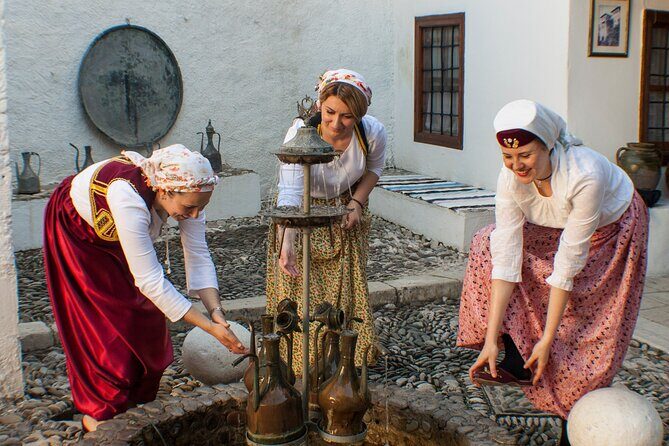
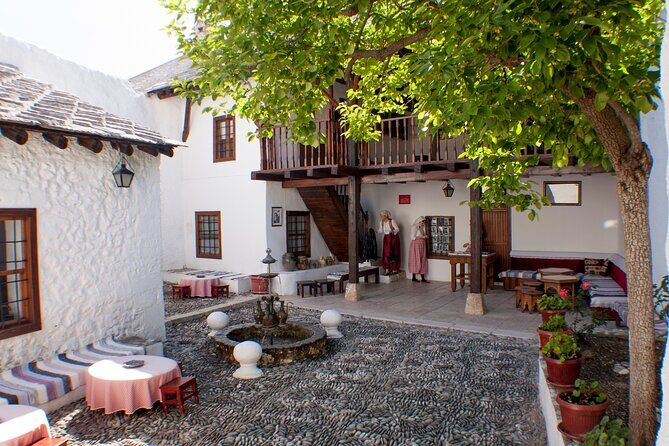
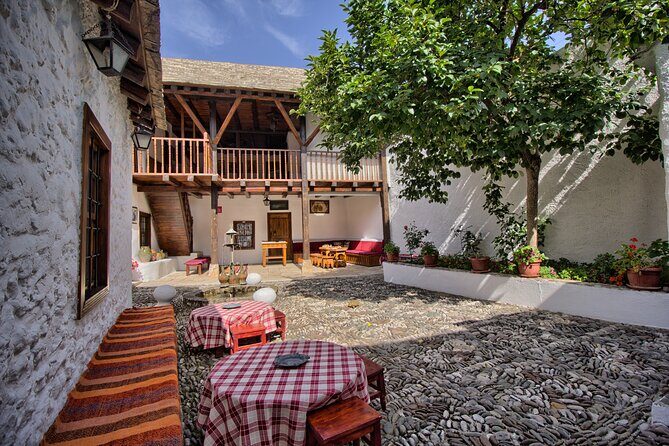
The tour’s main interior stop is Bišćevića House, a 17th-century Ottoman family residence. This is where the included entrance fee earns its keep.
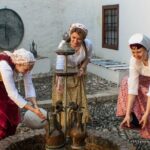
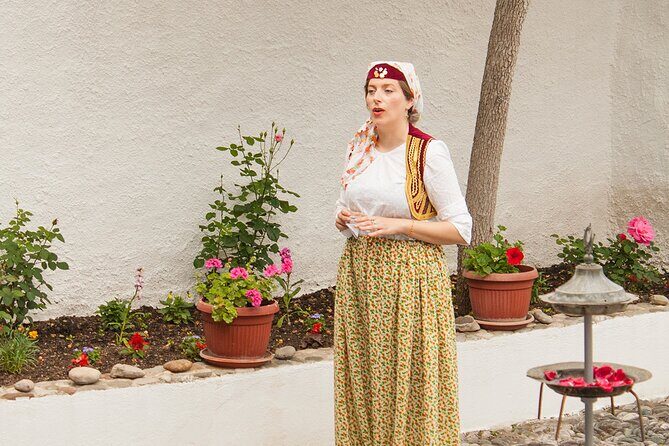
Inside, you’ll see wooden interiors and handmade carpets, plus a calm sense of domestic space with river views. Even if you’re not a deep-dwelling architecture person, you’ll likely appreciate how the layout and materials explain everyday life back then.
What I like about this stop for real travelers like you is that it gives scale. After you’ve seen the bridges and market streets outside, this house helps you imagine what people’s rooms and routines were like within the same river landscape.
Practical note: plan to stay alert during this stop. It’s a short visit, and the guide will likely connect what you’re seeing to the town’s Ottoman-era design ideas.
Musala and the Neretva River edge: modern contrast, local coffee rhythm
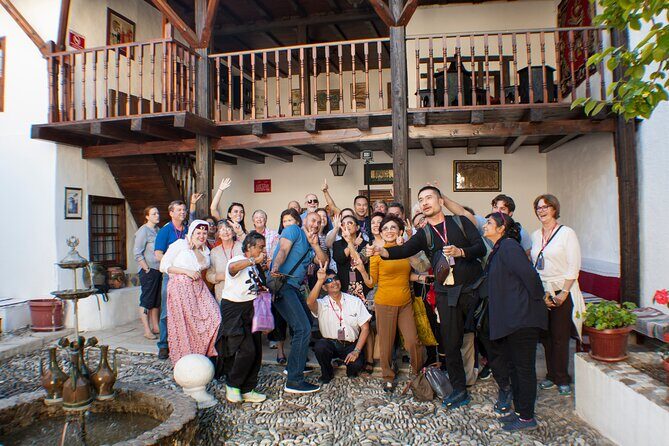
You’ll also spend time around Musala, a spot near the Neretva River that feels more modern than the Ottoman Old Town just a short walk away. That contrast matters, because Mostar isn’t frozen in one time period.
This is a good area for people-watching and for settling into the local coffee culture. It’s also a natural pause point: you’ll get a break from the heaviest landmark talking while still staying in the flow of the walk.
If you like taking quick photos, this is often where you can frame the river and the changing town texture in a single view. Just don’t plan on this being a long stop—it’s more about the atmosphere than an attraction you’ll “finish.”
The riverside mosque detail: when the water shapes prayer
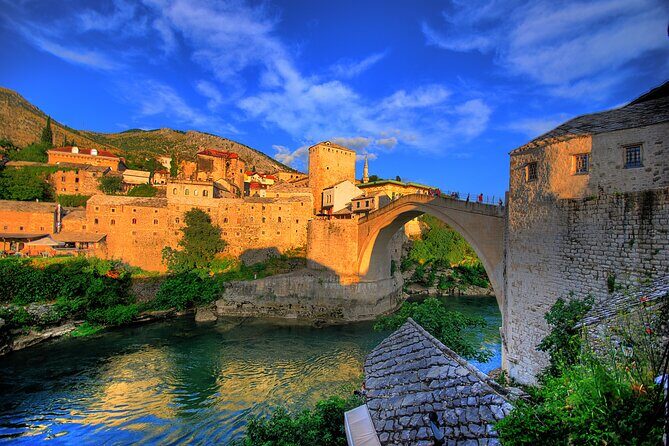
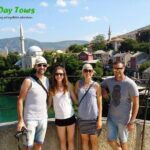
One of the most specific—and memorable—moments comes from the mosque on the right side of the Neretva. This structure was built before 1600, and a rivulet from the Radobolja flows under the mosque before joining the Neretva south of the Old Bridge.
The way the water runs is more than a curiosity. It changes how prayer was done: the Imam could remain on the mainland during prayer while believers were on the water.
If you’re the type of person who likes when a place explains itself with a story, you’ll probably enjoy this segment. It’s the kind of detail that makes Mostar feel less like a list of sights and more like a town where the river is part of daily design.


Old Bridge area of the Old City: Stari Most and what reconstruction means
Then you’re at Mostar’s iconic heart: the Old Bridge area around Stari Most. You’ll learn the story behind its Ottoman origins and how it was destroyed during the war, followed by its symbolic reconstruction.
This is where the tour’s tone matters. The bridge is famous worldwide, but the guided part is what helps you understand why the rebuilding carried meaning beyond “fixing damage.” You’re seeing how a city handles memory in stone and water.
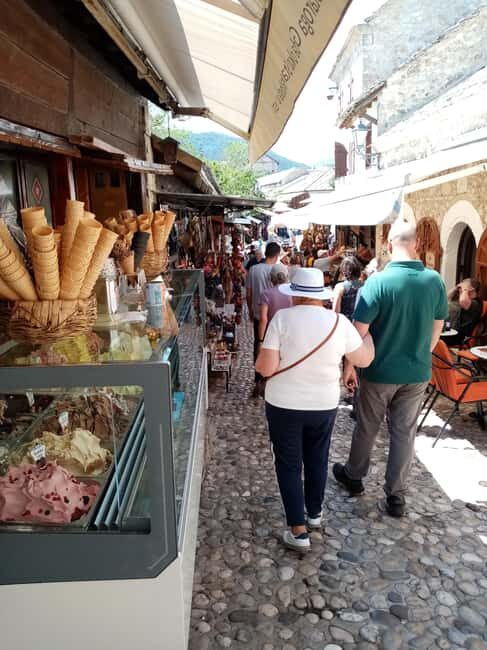
You’ll also walk the cobbled lanes and pass colorful bazaar sections that support the bridge’s role as more than a monument. This is Mostar as a real street network.
Timing note: this area gets about 15 minutes in the plan, so it’s long enough for the main explanation but not so long that you feel stuck in one spot. That’s good because the rest of your time is spent on the Old Town streets that make the bridge feel connected to a living town.
Bazar Kujundziluk: coppersmiths, leather masters, and craft lanes
Next up is Bazar Kujundziluk on the left bank of the Neretva. This area was called Kujundžiluk because of the many coppersmiths, the Kujundžije. Tailors were around too, but the most numerous artisans included tanners and leather processors.
Today, this area works better for browsing than for hunting down a single perfect souvenir. You’ll see small artisan workshops and handicrafts, and the streets are narrow enough that you feel the craft environment in motion.
What you’ll like here is the sense of specialization. Instead of just buying something, you get a mental picture of who made what and why the craft district formed where it did.
Timing note: this segment is planned for about 15 minutes, so keep your shopping mindset light. If you’re tempted to bargain, do it when you’re ready, not when you’re still waiting for the group to move.
Kriva Ćuprija (Crooked Bridge): Radobolja, arches, and a 16th-century reference
You’ll finish with time at Kriva Ćuprija, the Crooked Bridge, tucked in the Old Town’s calmer side streets. It’s believed to be a miniature prototype of the Old Bridge and dates back to the 16th century.
The bridge arches gracefully over the Radobolja River, which makes it feel different from the main Neretva-centered landmarks. This is one of those moments where the “other bridge” makes sense, because it shows how the river crossings shaped town planning.
If you’re a photo person, this is a great place to slow down. The angle and the smaller scale often make it easier to capture the bridge without the biggest crowd energy.
Price and value: what $35.50 buys you in Mostar
Let’s talk value clearly. The tour costs $35.50 per person, runs around 1 to 2 hours, and includes:
- A professional guide
- Entry fee to Ottoman House Bišćevića
Not included is private transportation, lunch, dinner, and tips.
So where does the money go? Mostly into guided context. You’re paying for a smart route, timed stops that add up, and one paid interior entry that’s typically harder to arrange on your own without knowing what to look for.
If you’re trying to see Mostar efficiently without spending extra time figuring out the order of sights, this tour is a strong option. If you already know Mostar well and just want photos, you might choose a self-walk. But for getting the stories straight—especially around the Old Bridge—having a guide saves you guesswork.
Who this Mostar Old Town walk suits best
This is ideal if you:
- Want a structured walk through the main Old Town highlights
- Prefer explanations in English
- Like learning the “why” behind bridges, craft districts, and river details
- Want an experience that stays focused on a short time window (about 1 to 2 hours)
It also fits solo people or small groups because the cap is kept to 15. That keeps it from feeling like a school trip stampede.
If your ideal sightseeing day is mostly slow cafe time, pair this tour with free time afterward. The walk gets you set up, then you can stay with the spots you like best—especially around coffee and river viewpoints.
Should you book this Mostar Old Town Walking Tour?
I’d book it if you want the cleanest way to understand Mostar’s Old Town without turning your day into a puzzle. The combination of Spanish Square context, time at Bišćevića House, and guided coverage of Stari Most gives you a lot of meaning per minute.
Also, the tour’s pacing is a real plus. When the guide is Gordon, the explanations land clearly, and the time feels balanced—enough to appreciate without feeling rushed. For me, that’s what makes this kind of guided walk worth it.
Skip it only if you dislike guided tours, hate cobblestones, or already plan to spend the day inside museums and paid attractions beyond Bišćevića House.
FAQ
How much is the Mostar Old Town Walking Tour?
It costs $35.50 per person.
How long is the tour?
The duration is about 1 to 2 hours.
What language is the tour offered in?
The tour is offered in English.
What’s the group size limit?
The tour has a maximum of 15 people.
What’s included in the price?
The price includes a professional guide and the entrance fee to Ottoman House Bišćevića.
What is not included?
Private transportation, lunch, dinner, and tips are not included.
Where do we meet and where does it end?
Meet at Španjolski trg 8RV4+CR6, Mostar 88000, Bosnia and Herzegovina. The tour ends at Biscevic House, Biščevića bb, Mostar 88000, Bosnia and Herzegovina.
Is a mobile ticket provided?
Yes, the tour includes a mobile ticket.
Is lunch part of the tour?
No, lunch is not included.
Does the tour depend on weather?
Yes. This experience requires good weather. If it’s canceled due to poor weather, you’ll be offered a different date or a full refund.
Can I cancel for a full refund?
Yes. Free cancellation is available up to 24 hours in advance for a full refund.