REVIEW · BANJA LUKA
Discover Banja Luka: Guided Walking Tour
Book on GetYourGuide →Operated by Chill Adventures · Bookable on GetYourGuide
Religion and ruins walk together here, and Banja Luka makes the story readable. You’ll be walking through a city shaped by Ottoman, Austro-Hungarian, and Yugoslav layers—then hit hard by an earthquake that damaged much of the old architecture. Still, what remains is more interesting than a postcard version.
I really like two things about this tour: the way Ferhadija mosque anchors the Ottoman side of the city, and the relaxed rhythm of the river walk that gives your brain a breather between stops. With guide Jakša (who comes across as friendly and quick to answer questions), you’re not just staring at buildings—you’re learning how they connect.
One thing to consider: the earthquake means you’ll see plenty of reconstruction and loss. So if you’re expecting a perfectly preserved historic center, you may feel the gaps more than you’d like. That said, the surviving landmarks still do their job.
In This Review
- Key highlights you’ll feel on the walk
- Why this 3-hour walking route makes sense in Banja Luka
- From your start point to the river: the city’s moving center
- Ferhadija Mosque: Ottoman influence you can actually measure
- Cathedrals side-by-side: Christ the Saviour and Saint Bonaventure
- Austro-Hungarian remnants and Yugoslav-era shapes
- Castel Fortress on the river: the view that ties it all together
- The earthquake effect: what’s missing teaches you, too
- The pace, group setup, and why you’ll get answers
- Price and value: $23 for 3 hours, and what that really buys
- What to bring (and how to make the walk easier)
- Who should book this tour (and who might skip it)
- Should you book Discover Banja Luka?
- FAQ
- How long is the Discover Banja Luka guided walking tour?
- How much does the tour cost?
- Where does the tour start and where does it end?
- What are the main stops included on the tour?
- Is the tour only for walking, or does it include viewpoints and specific sites?
- What languages is the live tour guide available in?
- Is this activity wheelchair accessible?
- What should I bring?
- Is food or drinks included in the price?
- Is there free cancellation?
Key highlights you’ll feel on the walk
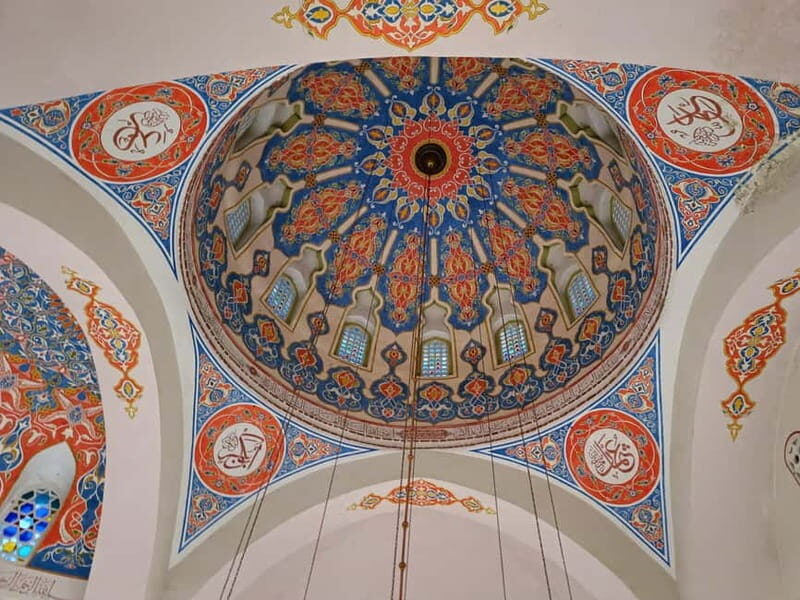
- Ferhadija mosque up close, with context that makes it more than a photo stop
- Religions in the same walk, from Ottoman to Orthodox and Catholic landmarks
- Castel Fortress viewpoints over the river and city center
- A calm river segment that breaks up the more intense history stops
- Brutalist reminders of the Yugoslav era, alongside older surviving forms
Why this 3-hour walking route makes sense in Banja Luka
A walking tour here works because the city’s “history layers” are meant to be seen from different angles and distances. Buildings don’t sit in neat museum boxes; they’re part of neighborhoods, and you feel that as you move.
The total time—about 2 to 3 hours—also fits how this city reads. You get enough pacing to cover the main landmarks (mosques, cathedrals, the fortress), but not so much that you’re slogging through fatigue before the best views.
And yes, the city has that post-earthquake reality. Some structures are damaged or missing, so the guide helps you understand what you’re looking at now—and why the “what’s not there” matters too.
You can also read our reviews of more walking tours in Banja Luka
From your start point to the river: the city’s moving center
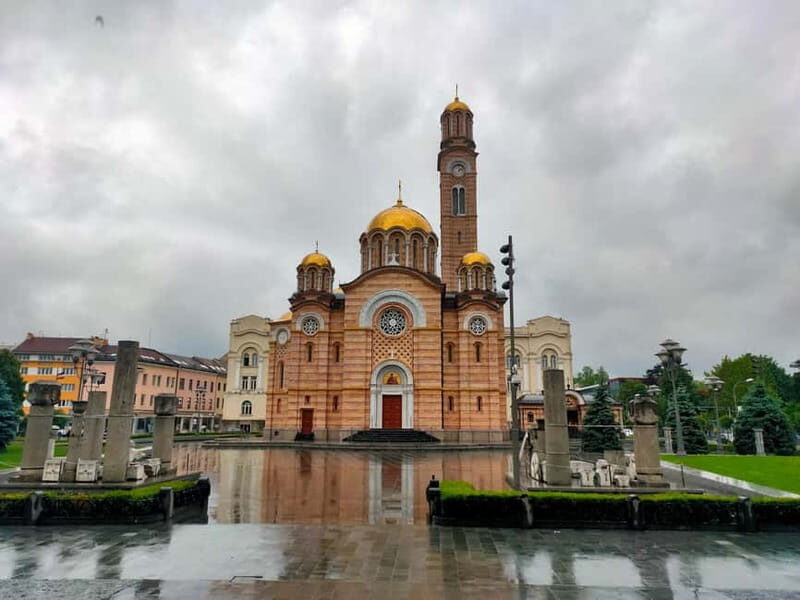
You begin in central Banja Luka and get your bearings fast as you head toward the river area. The river is described as the city’s artery of life, and you’ll feel that in how local streets and landmarks orient toward the water.
This section is a good warm-up. It’s not just walking “to get to the next stop.” It’s your chance to see how the city flows, where the open views are, and where buildings rise or sit back. Even if the architecture you want to see has been affected, the river still helps you make sense of the city’s layout.
If you like photos, this is where you’ll get the easiest compositions. Think bridges, river lines, and that “standing above the water and looking back” feeling before you reach the fortress.
Ferhadija Mosque: Ottoman influence you can actually measure
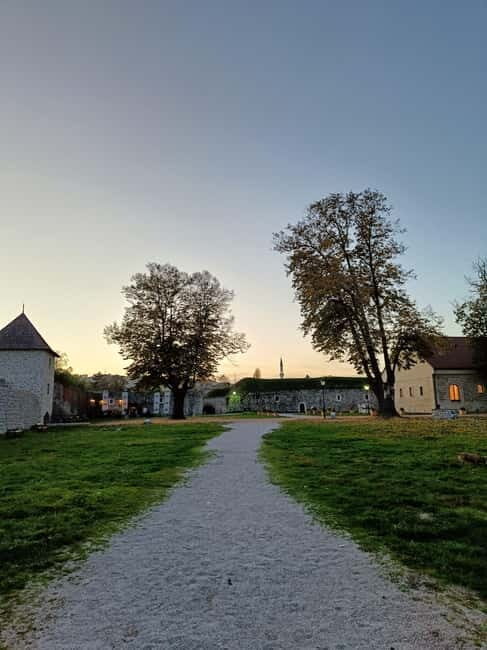
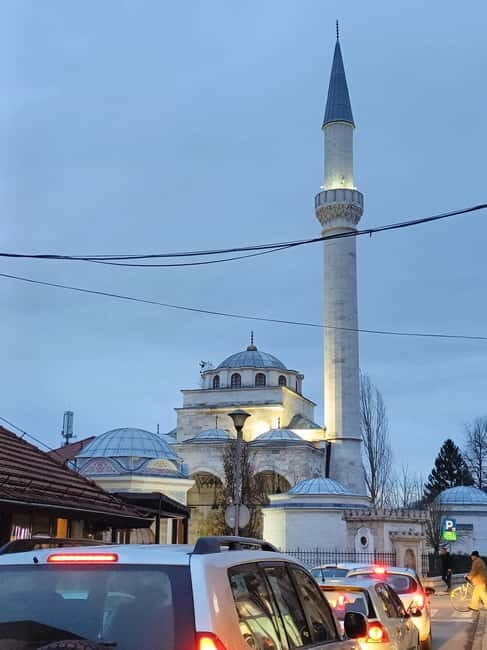
One of the tour’s anchor stops is Ferhadija mosque. Here, you’re not only viewing a religious building—you’re getting the Ottoman layer of Banja Luka explained in practical terms: what it signals about the city’s past, and how faith and culture shape the streets around it.
This is also a “slow down” moment. Mosques tend to pull your attention with their architectural presence, but the guide’s job is to connect form to history. You’ll leave better at noticing details instead of just thinking, I saw a mosque.
Practical tip: bring your camera and take your time. The best shots often come after you walk a little, change your viewpoint, and let the surrounding streets frame the building.
Cathedrals side-by-side: Christ the Saviour and Saint Bonaventure
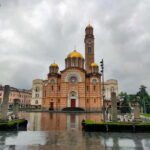
Banja Luka’s religious mix is part of what makes this tour compelling. You’ll also visit the Cathedral of Christ the Saviour and the Cathedral of Saint Bonaventure, giving you a clearer sense of how Orthodox and Catholic communities have both left marks here.
If you’ve visited cities where religions sit in separate zones, this one can feel more like “overlap in real space.” As you move between these cathedrals and the mosque stop, the city’s story stops being abstract. You start thinking in terms of neighbors, streets, and shared geography.
One caution: if you’re hoping for long interior visits, your exact experience may vary depending on openings and on-the-day conditions. The tour focuses on walking and landmark viewing, so expect the most value from the exterior context and the guide’s explanations.
Austro-Hungarian remnants and Yugoslav-era shapes
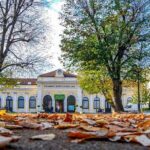
Banja Luka doesn’t just tell one story. You’ll see evidence of Ottoman influence, but also signs of Austro-Hungarian presence and the later Yugoslav era. The walk is designed so you notice “style changes” as you go.
The tour specifically points out remaining Austro-Hungarian buildings and Brutalist structures that show the city’s Yugoslav-era character. Brutalism can be divisive if you only know it from photos. Here, walking next to it helps you understand why it exists where it does and how it reflects a different period of urban thinking.
What I like about including these styles is that it prevents the tour from turning into a single-theme checklist. You end up understanding Banja Luka as a city that kept changing, even through upheaval.
Castel Fortress on the river: the view that ties it all together
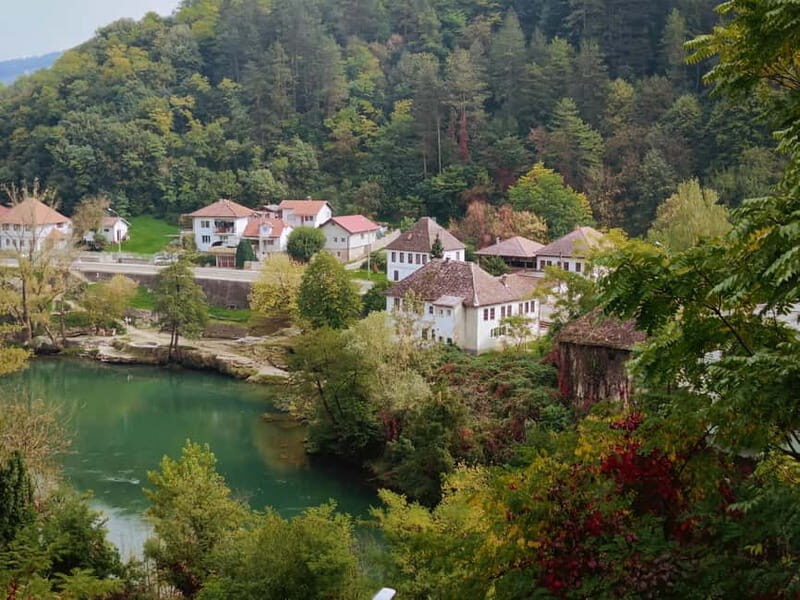
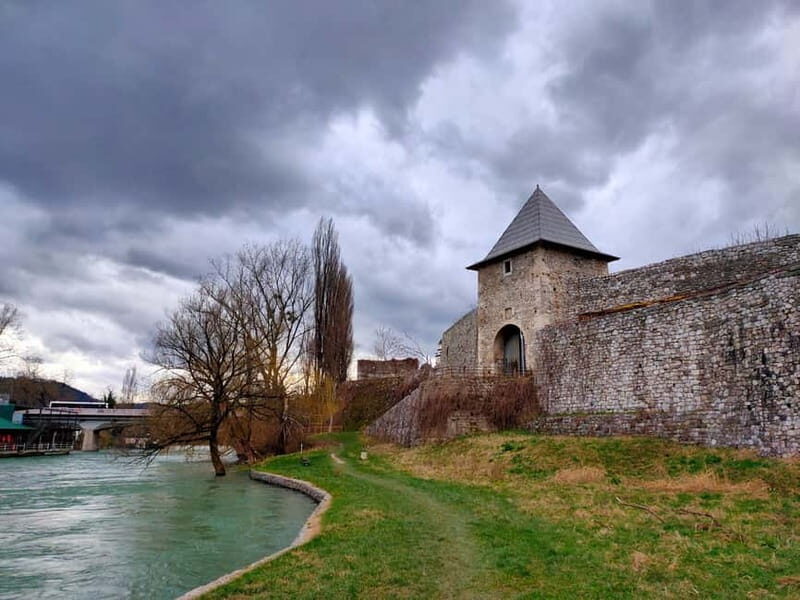
Then comes the big reward: the Castel Fortress on the river. This stop is less about ticking a landmark and more about getting the city in one glance.
From the fortress viewpoint, you can connect the dots between the religious buildings you’ve seen, the street patterns you walked, and the river you’ve been following. It’s the kind of view that helps you stop thinking of Banja Luka as scattered stops and start thinking of it as a system.
This is also a great place to slow down. You’ll likely spend enough time here to take photos and mentally “rewind” the route you just walked. If you only love one stop, make it the fortress. It’s the one that turns history into geography.
The earthquake effect: what’s missing teaches you, too
The city was hit hard by an earthquake, and sadly, much of the historic architecture was destroyed. That reality shows up on the ground, and the tour doesn’t pretend it didn’t happen.
Instead of trying to whitewash the damage, the guide helps you interpret what survived and what changed. That’s valuable, because it turns a difficult subject into useful context for understanding current Banja Luka—not just its old photographs.
Here’s the balanced way to look at it: you might miss certain “expected” architectural scenes. But you gain something else: a sharper sense of how cities rebuild, how identities persist, and how people keep meaningful places alive even when the structure is no longer what it once was.
The pace, group setup, and why you’ll get answers
This is offered as a private group experience, which usually means you can ask questions without feeling like you’re interrupting a machine. The guide is available in multiple languages, including Italian, German, English, and Bosnian/Serbo-Croatian—so you can match your comfort level.
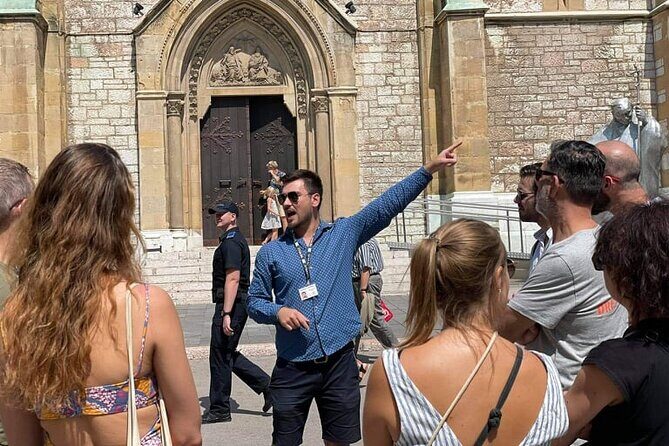
From what you’ll likely notice in the guide’s style, it’s not just a monologue. Jakša has a conversational way of explaining, and he’ll help connect what you’re seeing to broader questions about religion, government, and everyday life in the region.
That matters in a city with overlapping historical narratives. You’ll get more out of the stops if you can ask follow-ups and get direct answers while you’re still standing in front of the building.
Price and value: $23 for 3 hours, and what that really buys
At $23 per person for a roughly 3-hour walking tour, this sits in the “good value” range for a guided experience. You’re paying for two things that matter in this kind of city walk: a guide who can explain the mix of religions and political eras, and a route that strings multiple landmarks together efficiently.
Also, there are multiple planned visits included—Ferhadija mosque, the two cathedral stops, and the Castel Fortress—plus time along the river. So it’s not just one main attraction with a few extras.
What you should budget beyond the tour: personal expenses like drinks or food aren’t included. The tour is designed so you can add a meal or coffee stop on your own schedule if you want.
If you’re comparing options, look at whether the guide covers the “why” behind the mix, not just the “what.” This one is built for interpretation: religion and culture in the same city blocks, plus the earthquake context that explains the current layout.
What to bring (and how to make the walk easier)
You’ll be on foot for about 3 hours, so plan for real walking time. Bring:
- Comfortable shoes (this is the big one)
- Water (especially if it’s warm when you go)
- A camera (you’ll want it at the fortress and along the river)
If you’re sensitive to hills or uneven sidewalk surfaces, comfortable shoes matter even more. The tour is described as wheelchair accessible, but the best experience for anyone with mobility needs is still about planning for the real-world conditions of outdoor walking routes.
Who should book this tour (and who might skip it)
This is a strong fit if you:
- Want a focused, walkable intro to Banja Luka’s cultural mix
- Like seeing how Ottoman, Austro-Hungarian, and Yugoslav-era influences coexist
- Prefer guided storytelling that connects buildings to the wider story of the Balkans
- Enjoy viewpoints and prefer your photos with context
You might consider a different option if you:
- Want lots of time inside buildings (this tour is mainly built around walking and landmark visits)
- Expect a fully intact medieval-style old town with minimal disruption
For most first-timers, though, this kind of guided route is exactly how you get your bearings fast.
Should you book Discover Banja Luka?
I’d book it if you want one smart day window to understand Banja Luka beyond the obvious photos. For the price, you’re getting a guided walk that ties together Ottoman mosque architecture, Orthodox and Catholic landmarks, river scenery, and a fortress viewpoint—plus the earthquake reality that shapes what you see today.
Also, if you appreciate explanations in plain, human terms (and a guide who answers questions), this tour is built for that. Bring good shoes, plan for a walk, and you’ll come away with a city that feels much more readable than when you arrived.
FAQ
How long is the Discover Banja Luka guided walking tour?
It lasts about 2 to 3 hours.
How much does the tour cost?
The price is $23 per person.
Where does the tour start and where does it end?
You start in Banja Luka and return back to Banja Luka.
What are the main stops included on the tour?
The tour includes Castel Fortress, Ferhadija mosque, the Cathedral of Christ the Saviour, and the Cathedral of Saint Bonaventure, plus walking along the river.
Is the tour only for walking, or does it include viewpoints and specific sites?
It includes a mix of walking along the river and visiting specific landmarks, including the Castel Fortress viewpoint.
What languages is the live tour guide available in?
The guide can run the tour in Italian, German, English, Serbo-Croatian, and Bosnian.
Is this activity wheelchair accessible?
Yes, it’s listed as wheelchair accessible.
What should I bring?
Bring comfortable shoes, a camera, and water.
Is food or drinks included in the price?
No. Personal expenses like drinks or food are not included.
Is there free cancellation?
Yes. You can cancel up to 24 hours in advance for a full refund.